 EUR
EUR
 GBP
GBP
 CAD
CAD
 AUD
AUD

 ✨Labor Day✨
 ❤️ Grandparents Day ❤️
 Birthday
 Same Day
 Occasions
 Flowers
 Roses
Roses
 Plants
 Gifts
Gifts
 International Flower Delivery
Arizona's State Flower: Saguaro Cactus Blossom
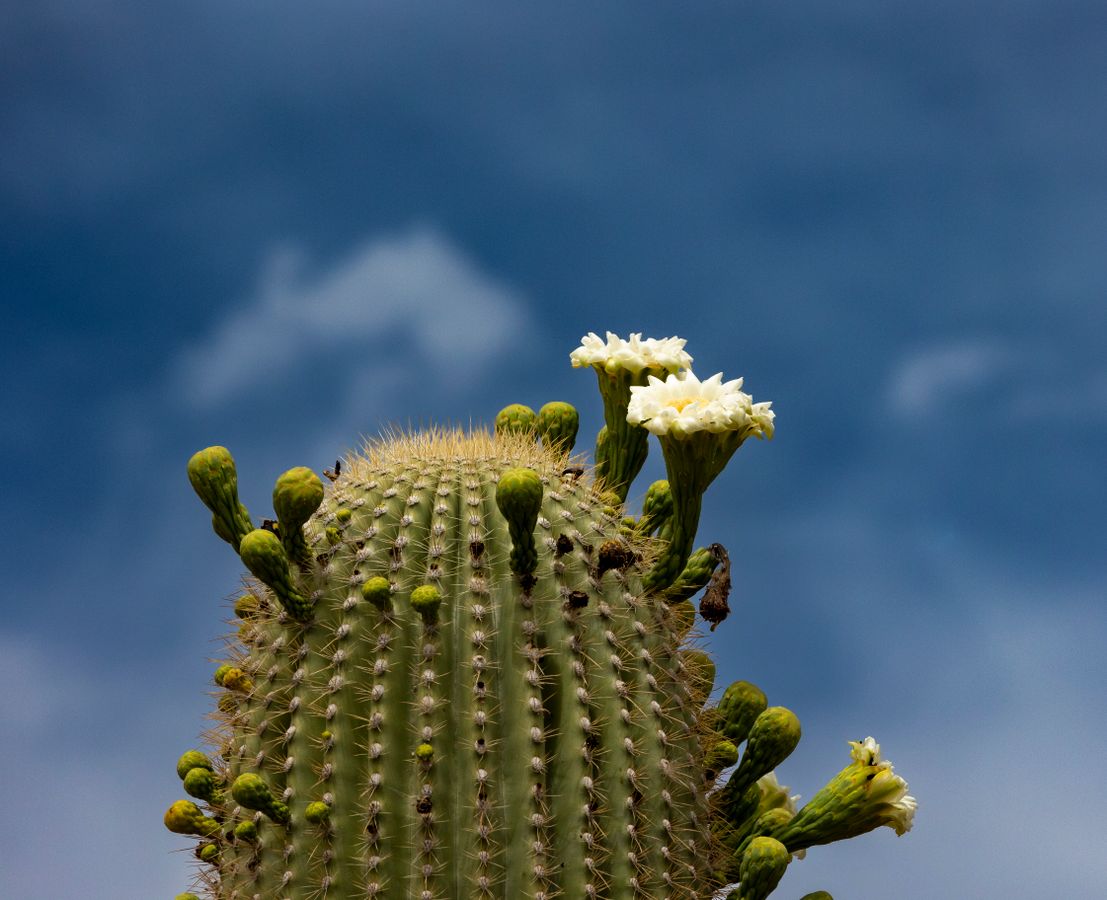
The Arizona state flower is one of those rare natural wonders that can stop you mid-hike and make you forget the 110 °F heat. Picture this: you're standing in the Sonoran Desert at dawn, the sky turning pink, and there — perched at the very top of a towering saguaro cactus — a cluster of waxy white blossoms glows against the pale light. Each flower opened just hours ago in the cool desert night, and by tomorrow afternoon, the petals will already be closing. It's fleeting, dramatic, and honestly, kind of magical.
Whether you've lived in Arizona your whole life or you're just curious about desert botany, this guide covers everything you need to know about the saguaro cactus blossom — its history, symbolism, biology, where to see it, how to grow a saguaro at home, and why it matters so deeply to the desert ecosystem. And if reading about Arizona's floral heritage inspires you to brighten someone's day in Phoenix or Tucson, MyGlobalFlowers, an international flower delivery service, connects you with local florists across the state who handcraft arrangements using the freshest seasonal blooms.
Let's dig in.
Inspired by the saguaro blossom? Send white flowers
Browse fresh white floral arrangements, hand-arranged by local florists and delivered across the US.
What is Arizona's state flower?
The Arizona state flower is the saguaro cactus blossom (Carnegiea gigantea). If you've ever wondered "what is Arizona's state flower?" — now you know, and the answer is as dramatic as the desert itself.
Each bloom measures roughly 3 inches across and features waxy, creamy-white petals surrounding a dense cluster of golden-yellow stamens. The flowers appear in tight groups at the crown and arm tips of the saguaro, giving the cactus an almost regal crown of blossoms during peak season. Up close, the petals feel thick and slightly translucent, built to conserve moisture even while attracting pollinators.
The saguaro itself deserves a moment of respect. This is the largest cactus species in the United States. A mature saguaro can tower over 40 feet tall, weigh several tons, and live between 150 and 200 years. Here's the thing that always gets me: a saguaro doesn't even start growing its iconic arms until it's about 75 years old. That's a lifetime of patience before the cactus takes on the shape we all recognize from Western movies and Arizona postcards.
Arizona is also the only US state whose official flower comes from a cactus. Every other state chose a wildflower, shrub blossom, or tree bloom. The state flower of Arizona stands completely alone in that regard — and that feels fitting for a place as singular as the Sonoran Desert.
History — how the saguaro blossom became the AZ state flower








The Arizona state flower has an origin story rooted in territorial pride and a nationwide trend. Arizona achieved statehood on February 14, 1912, but the new state didn't rush to pick a floral emblem. Interest in an official flower grew throughout the 1920s as a wave of states across the country adopted their own botanical symbols.
The Arizona state legislature officially designated the saguaro blossom as the state flower for Arizona in 1931 — roughly 19 years after statehood. Lawmakers chose the saguaro over other striking desert candidates like the prickly pear blossom, the ocotillo flower, and the desert marigold. The reasoning was straightforward: no other bloom so powerfully represented Arizona's landscape, identity, and ecological uniqueness.
The saguaro grows only in the Sonoran Desert, which spans southern Arizona, a narrow strip of southeastern California, and the northwestern corner of Mexico. That geographic exclusivity made the blossom a natural fit for a state eager to distinguish itself.
Cultural significance also played a role. The Tohono O'odham people have harvested saguaro fruit for centuries, and the saguaro already held deep symbolic meaning for Indigenous communities across the region. Legislators recognized this connection, even if historical records don't show the depth of consultation we'd expect today. The 1931 legislative act cemented Arizona's bond with the saguaro — a bond that had existed long before any government put it on paper.
Symbolism of the saguaro cactus blossom
Arizona's state flower symbolizes endurance, resilience, and the ability to thrive in harsh conditions. A saguaro endures scorching summers, freezing winter nights, prolonged drought, and decades of slow growth before it ever produces a single blossom. When the flowers finally appear, they announce that something extraordinary has survived long enough to create beauty.
There's something deeply poetic about a flower that blooms in the dark — opening after sunset, offering its nectar through the quiet desert night, and closing by the following afternoon. The saguaro blossom teaches a quiet lesson: abundance follows patience, and life appears where you least expect it.
This symbolism explains why cactus-themed arrangements and desert-inspired bouquets have become popular gifts. People send them to celebrate someone's strength after a tough year, to mark a fresh start, or simply to honor a person who — like the saguaro — keeps growing no matter what.
When and where the saguaro blooms
Arizona's state flower follows a precise and spectacular blooming schedule. Timing your visit right can mean the difference between seeing a desert full of white crowns and arriving a week too late.
Peak blooming season
The saguaro blooms from late April through June, with peak flowering concentrated in May and early June. Each individual blossom opens after sunset, stays open through the night, and closes by the next afternoon — giving each flower a lifespan of roughly 24 hours.
This night-blooming strategy serves a purpose. Lesser long-nosed bats arrive after dark to feed on the nectar, pushing their faces deep into the flowers and emerging dusted with pollen. Moths contribute to pollination during the nighttime hours too. By morning, white-winged doves and other birds take over pollination duties before the petals fold shut for good.
Fun fact: a single large saguaro can produce over 100 flowers in a season, but the cactus staggers the blooms over several weeks rather than opening them all at once. The result is a rolling spectacle that rewards repeat visits.
Best places to see the bloom in Arizona
If you want to witness the state flower of Arizona in person, these locations offer the best viewing:
- Saguaro National Park (East and West districts, near Tucson) — the crown jewel, with thousands of saguaros lining easy trails.
- Organ Pipe Cactus National Monument — a remote gem near the Mexican border with stunning diversity of cacti.
- Tonto National Forest — the largest national forest in Arizona, northeast of Phoenix, with saguaros scattered across lower elevations.
- South Mountain Park in Phoenix — one of the largest municipal parks in the US, accessible for a quick morning bloom walk.
- Tucson Mountain Park — adjacent to Saguaro National Park West, with excellent desert loop trails.
Keep in mind that wild saguaros grow only in the Sonoran Desert's lower elevations. You won't find them near Flagstaff, Sedona, or the Grand Canyon — the higher altitude and colder winters make those areas inhospitable for the cactus.
Practical tip: arrive at the trailhead before sunrise. The blooms that opened overnight will still be fresh, and the soft morning light backlights the translucent petals beautifully — ideal for photography. Position yourself so the sun shines through the petals from behind. The effect is stunning.
Fun facts about Arizona's state flower
- The saguaro produces ruby-red fruit in late June and July. Each fruit contains up to 2,000 tiny black seeds, and the sweet red pulp has been a food source for desert communities for thousands of years.
- The Tohono O'odham people celebrate the saguaro fruit harvest — a ceremony called Ha:san Bak — as the beginning of their traditional new year. Tribal members use long poles fashioned from dried saguaro ribs to knock fruit from the cactus tops. The fruit becomes syrup, jam, and a ceremonial wine. This living cultural practice stretches back generations and continues today, typically in late June and July.
- A mature saguaro can store up to 200 gallons of water after a heavy monsoon rain. The cactus's pleated skin expands like an accordion to accommodate the influx.
- Gila woodpeckers carve nesting holes in saguaro trunks. The cactus responds by sealing the wound with hard, callous-like scar tissue, forming a structure called a "saguaro boot." These boots are so durable they outlast the cactus itself and have been found as archaeological artifacts.
- Arizona law protects every saguaro. The Arizona Native Plant Law (Arizona Revised Statutes §3-904) makes it illegal to cut, remove, or destroy a saguaro on any land — public or private — without a specific permit from the Arizona Department of Agriculture. Violators face felony charges and fines reaching $100,000.
- The saguaro blossom appears on the Arizona state seal, reinforcing the cactus's role as a symbol of the state alongside other desert imagery.
- A single saguaro may produce over 40 million seeds during its lifetime, yet only a tiny fraction — perhaps one or two — survive to become a mature cactus. The odds are brutal, but the saguaro compensates with sheer volume.
- Arizona is the only US state whose official flower belongs to a cactus. No other state flower even comes from the cactus family, making the AZ state flower genuinely one of a kind.
Growing and caring for a saguaro cactus
The Arizona state flower belongs to one of the most iconic — and most slow-growing — plants you can cultivate. Growing a saguaro at home requires patience measured in decades, but the reward is a living piece of the Sonoran Desert.
Sunlight and soil requirements
A saguaro needs full sun — at least 6 to 8 hours of direct sunlight daily. South-facing windows work for indoor specimens, but nothing beats outdoor desert sun. Plant your saguaro in well-draining, sandy or gravelly soil. A commercial cactus-specific potting mix provides the right texture and drainage for container planting.
Watering needs
Young saguaros need light watering every 2 to 4 weeks during summer. Mature saguaros in the ground survive on natural rainfall alone across the Sonoran Desert. Overwatering causes root rot — and root rot is the number-one killer of cultivated saguaros. Always let the soil dry out completely between waterings.
Temperature and hardiness
The saguaro thrives in USDA hardiness zones 9 through 11. The cactus tolerates extreme heat above 120 °F but suffers real damage below 20 °F. Extended freezes kill living tissue, so avoid planting saguaros outdoors in northern Arizona or any region with regular hard frosts.
Container growing tips
- ✓Choose a terracotta or unglazed ceramic pot — breathable material prevents moisture buildup around the roots.
- ✓Select a pot at least 1 to 2 inches wider than the cactus base to allow room for gradual growth.
- ✓Ensure the pot has drainage holes. Skip saucers that trap standing water underneath.
- ✓Expect extremely slow growth. A container-grown saguaro likely won't bloom for decades, but the sculptural green column still makes a striking houseplant and a great conversation starter.
Common mistakes to avoid
- ✗Watering on a rigid schedule instead of checking whether the soil has dried completely.
- ✗Placing the cactus in a low-light spot indoors — saguaros stretch and weaken without intense sunlight.
- ✗Using regular potting soil instead of a gritty cactus mix — standard soil retains too much moisture.
- ✗Attempting to transplant a wild saguaro — this is illegal without a permit under Arizona law and almost always fatal to the plant.
The saguaro's role in Arizona's ecosystem





The Arizona state flower doesn't just decorate the desert — it anchors an entire web of life. Ecologists classify the saguaro as a keystone species, meaning its removal would trigger cascading disruptions across the Sonoran Desert ecosystem.
The saguaro provides food, shelter, and nesting sites for dozens of animal species. Gila woodpeckers and gilded flickers excavate nest cavities in the trunk. Once the woodpeckers move out, elf owls — the world's smallest owl species — move in. Cactus wrens (Arizona's state bird!) build nests among the spiny arms. Harris's hawks perch on saguaro tops to scan for prey. Lesser long-nosed bats, a species once endangered, depend on saguaro nectar during their spring migration northward.
I find it remarkable how one plant supports so many creatures. Remove the saguaro, and you don't just lose a cactus — you lose the woodpecker's home, the owl's shelter, the bat's fuel stop, and a primary food source for dozens of bird and insect species.
The interdependence begins at birth. Young saguaro seedlings almost never germinate in open ground. They sprout beneath nurse trees — typically palo verde or ironwood trees — whose canopy provides shade and protects the fragile seedling from sun, frost, and hungry animals. The saguaro may eventually outgrow and outlive its nurse tree, but the relationship during those first vulnerable decades is essential.
Even in death, the saguaro contributes. Dead saguaro skeletons — the woody rib structure that supported the cactus — become shelter for insects and small reptiles. Indigenous peoples historically used these ribs as building material for ramadas and other structures.
Send Arizona desert beauty today
A fresh white bouquet, hand-arranged by a local florist and delivered to the door.
Celebrating Arizona's floral heritage with fresh flowers
Arizona's state flower reminds us that beauty thrives in unexpected places. You can carry that spirit forward by sending someone in Arizona a fresh arrangement that celebrates the desert's warmth, color, and resilience.
MyGlobalFlowers connects you with local florists in cities like Phoenix, Tucson, Scottsdale, and Mesa. Local florists handcraft each arrangement using the freshest seasonal flowers available that day, so the final bouquet may vary slightly from the website photo — and honestly, that's a good thing. Minor substitutions mean your recipient gets the best blooms available, not flowers forced to match an image regardless of freshness.
The delivery cost calculates individually at checkout based on the recipient's location and the arrangement you choose.
Looking for the right occasion? Consider sending flowers for Mother's Day, Valentine's Day, Thanksgiving, the Fourth of July, birthdays, graduations, or simply "just because." A desert-inspired arrangement or a vibrant succulent garden makes a thoughtful gift for anyone who loves Arizona's landscape — or for someone who could use a reminder that beautiful things grow even in tough conditions.
A final thought on the saguaro blossom
Honestly, this surprised me when I first learned it: a saguaro can wait 35 years or more before producing its first flower. Thirty-five years of slow, silent growth in blistering heat and bone-dry soil — and then, one May evening, a crown of white blossoms opens under the stars.
The state flower of Arizona teaches something worth remembering. Patience isn't passive. Growth doesn't have to be fast to be powerful. And the most extraordinary things often emerge from the harshest conditions.
Next time you find yourself in Arizona during late May, wake up before sunrise and drive to Saguaro National Park. Walk the Cactus Forest Trail while the air is still cool. Look up. You might catch the last night-blooming saguaro flowers still open, petals glowing in the first light, before they close for good.
Have you ever seen a saguaro in bloom? Share your experience — or surprise someone in Arizona with a bouquet that celebrates the desert's spirit through MyGlobalFlowers.
Frequently asked questions about arizona state flower
What is Arizona's state flower?▾
Arizona's state flower is the saguaro cactus blossom (Carnegiea gigantea). The creamy-white, waxy flower grows in clusters at the tops and arm tips of the saguaro cactus — the tallest cactus species in the United States. Arizona legislators designated the saguaro blossom as the official state flower in 1931.
When does the saguaro cactus bloom?▾
The saguaro blooms between late April and June, with peak flowering in May and early June. Each individual blossom opens after sunset, remains open through the night for bat and moth pollination, and closes by the following afternoon. The entire bloom cycle for a single flower lasts roughly 24 hours.
Can you grow a saguaro cactus at home?▾
Yes, you can grow a saguaro in a container or in the ground if you live in USDA zones 9 through 11. The cactus requires full sun, extremely well-draining soil, and very infrequent watering. Keep in mind that saguaros grow slowly — often just an inch or so per year — and a container-grown plant probably won't flower for several decades.
Is it illegal to cut down a saguaro cactus in Arizona?▾
Absolutely. Arizona's Native Plant Law (ARS §3-904) protects every saguaro on both public and private land. Anyone who cuts, removes, or destroys a saguaro without a permit from the Arizona Department of Agriculture faces felony charges and fines that can reach $100,000. The law applies even to saguaros on your own property.
What pollinates the saguaro flower?▾
Three main groups of pollinators visit the saguaro blossom. Lesser long-nosed bats and moths pollinate the flowers during the nighttime hours. White-winged doves and other birds take over pollination in the early morning before the flower closes. This relay system maximizes the chances of successful pollination within the bloom's short 24-hour window.
Where is the best place to see saguaro blossoms in Arizona?▾
Saguaro National Park near Tucson offers the most spectacular and accessible viewing, with both an East and West district featuring thousands of cacti along well-maintained trails. Organ Pipe Cactus National Monument, Tonto National Forest, South Mountain Park in Phoenix, and Tucson Mountain Park also provide excellent opportunities. For the best experience, arrive before sunrise to catch the overnight blooms still open in the soft morning light.