EUR
 GBP
 CAD
 AUD

 🎃Halloween🎃
 Birthday
 Occasions
 Same Day
 Flowers
 Roses
 Plants
 Gifts
 International Flower Delivery
Floral Etiquette: A Guide to the Art of Flower Giving and Receiving
Picture this: you spend twenty minutes picking out a stunning bouquet, you feel genuinely proud of yourself — and then you find out you accidentally sent funeral flowers to a birthday party. Or worse, you handed an even number of roses to your friend's Russian grandmother. Flower etiquette trips up even the most thoughtful gift-givers, and honestly, nobody teaches you these rules in school.
That's exactly why this guide exists. Whether you're ordering through MyGlobalFlowers — an international flower delivery service that connects you with local florists worldwide, offering fresh, hand-crafted bouquets starting at $31.00 — or picking up a bunch from the corner shop, knowing the unwritten rules of giving flowers makes the difference between a gesture that warms someone's heart and one that raises eyebrows.
Here's what you'll walk away with: the universal do's and don'ts of flower-giving etiquette, occasion-specific guidance for everything from first dates to funerals, a breakdown of flower color meanings, cultural pitfalls that catch people off guard, and practical tips for choosing and caring for arrangements. Let's get into it.

Get the flowers right every time
Browse our full collection and let a local florist hand-arrange the perfect bouquet for any occasion.
The core rules of flower etiquette
Flower etiquette starts with a handful of universal principles. These apply whether you're celebrating a milestone, expressing sympathy, or simply telling someone you're thinking about them. Get these right, and you're already ahead of most people.
Match the blooms to the occasion
This is the golden rule of floral etiquette, and it sounds obvious — until you realize how many people default to a dozen red roses for every situation. Red roses scream romance. Handing them to your boss after a successful project sends a very different message than you intended.
- You choose bright, cheerful blooms for celebrations like birthdays and graduations.
- You select muted, elegant tones for sympathy and condolence occasions.
- You opt for classic, refined arrangements for professional settings.
- You save deeply romantic flowers — red roses, especially — for partners and love interests.
The specific occasion sections below will give you exact recommendations, but keep this principle as your compass: every flower carries a message, so make sure it's the one you mean to send.
Presentation and wrapping matter
A gorgeous bouquet shoved into a grocery bag loses its magic. Presentation is part of the gift. When you order through a service like MyGlobalFlowers, local florists handle the wrapping and arrangement, so you don't have to worry about this. But if you're buying flowers in person and delivering them yourself, keep a few things in mind:
- You wrap the stems in clean paper or tissue — never plastic wrap alone.
- You remove the price tag before handing over the bouquet.
- You consider a vase or container for occasions where the person might not have one handy.
- You keep the arrangement upright during transport to avoid crushed petals.
Always include a personal note
I always find it surprising how many people skip the card. You put thought into selecting the flowers, you pay for delivery — and then your recipient has no idea who sent the bouquet. That's a wasted moment of connection.
Your note doesn't have to be a sonnet. Even "Thinking of you — Sarah" does the job. For sympathy flowers, something simple like "With love and deepest sympathy" works perfectly. The point is that your recipient sees your name and feels the intention behind the gift.
Flower etiquette for every occasion
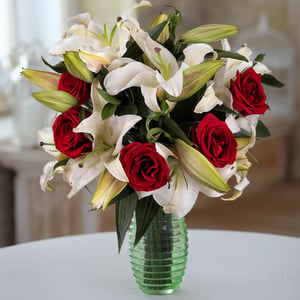
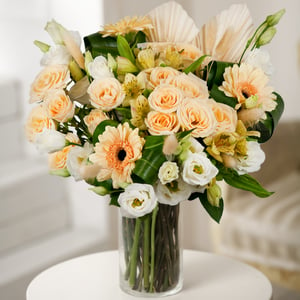
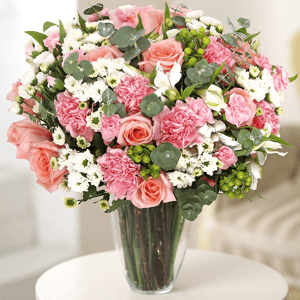
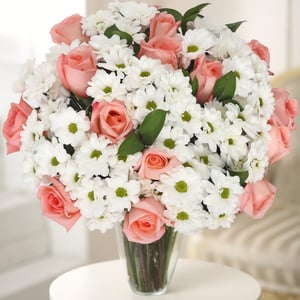
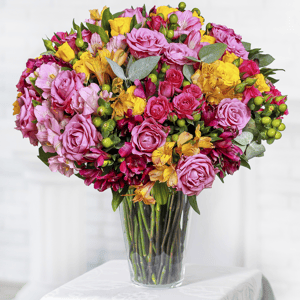
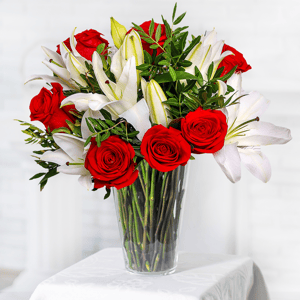
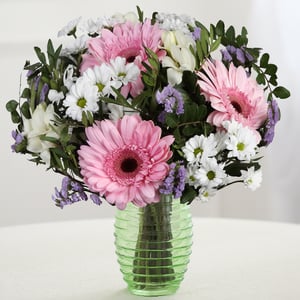
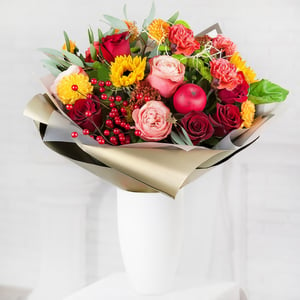
Flower etiquette shifts depending on the event, the relationship, and the setting. Here's your occasion-by-occasion breakdown — what to choose, what to avoid, and the timing details that matter.
First dates
Keep it light. A single stem — maybe a tulip or a gerbera daisy — shows thoughtfulness without overwhelming the other person. A small mixed bouquet in soft colors works well too.
What to avoid: a dozen red roses. Honestly, this one catches people off guard because movies make it look so romantic, but on a first date, an armful of red roses can feel intense. You're saying "I'm interested," not "I'm planning our wedding." Save the red roses for later.
Birthdays
Birthdays are your chance to go bright and cheerful. Sunflowers, gerbera daisies, mixed seasonal bouquets — these all land perfectly. Try to match the arrangement to the person's personality. Your adventurous friend might love bold tropical blooms. Your grandmother might prefer soft pastels and classic garden roses.
There's no wrong color here (with the exception of all-white, which can read as too somber for a celebration). Birthday flower-giving etiquette is flexible — the thought itself is what matters most.
Anniversaries
Roses are the traditional anniversary flower, and for good reason — people associate roses with enduring love. But you're not locked into roses. Orchids communicate luxury and refined beauty. Peonies signal romance and prosperity. A mixed arrangement of the person's favorite flowers shows you've been paying attention, and that can mean more than tradition.
- Red roses express passion and deep love.
- Pink roses convey admiration and gratitude.
- Orchids suggest elegance and lasting commitment.
- Peonies represent romance and good fortune.
Weddings
Wedding flower etiquette comes with a few important boundaries. First, coordinate with the couple's color palette if you're contributing to décor. Second — and this is the key rule — send your congratulatory arrangement to the couple's home, not the venue, unless someone specifically asks you to deliver to the venue.
Avoid sending all-white arrangements. The bridal party traditionally claims white, and you don't want your gift competing with the bride's bouquet. Soft pastels, blush tones, and mixed garden-style arrangements make safe, beautiful choices for wedding congratulations.
Sympathy and funerals
Sympathy flower etiquette requires the most care. There's an important distinction here that many people miss: funeral flowers go to the service or the funeral home, while sympathy flowers go to the bereaved person's home.
- Lilies symbolize the restored innocence of the departed soul.
- White roses express reverence, humility, and respect.
- Chrysanthemums represent grief and mourning in many cultures.
- Soft pastel arrangements offer comfort without overwhelming the space.
Timing matters here. You can send funeral flowers one to two days before the service (confirm with the funeral home). Sympathy flowers for the home arrive any time during the first two weeks — some etiquette experts even suggest sending flowers two or three weeks after the funeral, when the initial wave of support fades and the person may feel most alone.
Get-well-soon
Here's the thing about hospital flowers: many facilities restrict or outright ban certain blooms. Intensive care units, oncology wards, and allergy-sensitive floors often prohibit flowers entirely. Call the facility before you order.
When flowers are allowed, avoid heavily scented varieties like lilies, gardenias, and hyacinths — strong fragrances can trigger headaches or nausea in someone who's already unwell. Choose cheerful, uplifting colors: yellows, oranges, soft pinks. Potted plants make a great alternative because they last longer and give the person something to care for during recovery.
Thank you and hostess gifts
This is a spot where flower arrangement etiquette gets counterintuitive. Your instinct says "bring flowers to the dinner party" — but actually, the gracious move is to send them before or after. Showing up with a bouquet in hand means your host has to pause mid-preparation, find a vase, trim the stems, and arrange the flowers while guests are arriving. That's added stress, not a gift.
Send a thank-you bouquet the day after the event. Include a note referencing something specific you enjoyed ("That lamb was incredible — thank you for a wonderful evening"). This approach shows more thoughtfulness than a last-minute grocery store grab on the way to the party.
Graduations
Graduation season — May through June across most of the US — is peak flower-giving time. Bright mixed bouquets work perfectly. If you know the graduate's school colors, an arrangement that incorporates those colors adds a personal touch.
In Hawaiian tradition, flower leis are a beloved graduation gift. Plumeria, orchid, and tuberose leis are popular choices. Even outside of Hawaii, the lei tradition has gained popularity at graduation ceremonies across the country — it's a beautiful, festive gesture.
Corporate and professional settings
Flower etiquette in the workplace calls for restraint. You want to congratulate, appreciate, or welcome — not create an awkward moment. Stick to neutral palettes: whites, greens, soft yellows, or mixed pastels. Avoid anything that reads as romantic.
- Orchids make sophisticated desk plants that last for weeks.
- Succulents offer a modern, low-maintenance alternative to cut flowers.
- Small, compact arrangements fit on a desk without overwhelming the workspace.
- Green plants add life to an office without carrying romantic connotations.
Theater and performance congratulations
After a performance — whether it's opening night, a piano recital, or a dance show — flowers are one of the most classic congratulatory gestures. Long-stem roses are traditional here, and elegantly wrapped bouquets of mixed flowers work just as well.
The etiquette: you hand the bouquet to the performer after the show, not before (you don't want them juggling flowers backstage). Wait near the stage door or the lobby, and present the arrangement when you see them. A small, hand-tied bouquet is easier for the performer to carry than an oversized arrangement.
What flower colors really mean
Flower etiquette is deeply connected to color symbolism. You don't need to memorize a textbook, but knowing the basics helps you avoid sending a mixed message — literally. Here's your quick-reference guide:
- Red — love, passion, deep respect. The most emotionally charged color. Reserve red for romantic partners or moments of profound admiration.
- Pink — gratitude, admiration, joy. Versatile and safe for almost any occasion. Light pink feels gentle and sweet; hot pink adds energy and fun.
- White — purity, sympathy, new beginnings. Beautiful for weddings and memorials. Be cautious using all-white arrangements for happy celebrations — they can read as somber.
- Yellow — friendship, cheerfulness, warmth. Perfect for platonic relationships and get-well wishes. Worth noting: in some Latin American cultures, yellow implies infidelity or jealousy, so know your audience.
- Orange — enthusiasm, energy, excitement. Great for congratulations, graduations, and "you did it" moments.
- Purple and lavender — dignity, grace, elegance. Purple carries a sense of luxury and works well for older recipients or formal occasions. Lavender feels softer and more whimsical.
My recommendation: when in doubt, go with pink or a mixed-color arrangement. Pink is the Switzerland of flower colors — warm, positive, and almost universally appropriate.
Cultural flower etiquette you should know
Flower etiquette varies dramatically across borders. What's perfectly normal in New York could be deeply offensive in Moscow or Mexico City. This section is worth reading carefully if you're sending flowers to someone in another country — or even to someone from a different cultural background living in the US.
Flower etiquette in the United States
Americans are relatively relaxed about floral rules. Even-numbered bouquets are perfectly fine (unlike in many European and Eastern European countries). There are no strong taboos around specific flower types for most occasions.
The main thing to watch: white lilies carry a strong funeral association for many Americans. Sending a bouquet of white lilies to celebrate a birthday or promotion can feel tone-deaf. Mix white lilies with colorful blooms if you want to include them in a happy occasion — the surrounding color shifts the mood.
Major US flower-giving occasions include Valentine's Day (February 14), Mother's Day (second Sunday in May), and graduation season (May through June). Florists experience their highest demand during these windows, so order early.
European traditions
Europe is where flower-giving etiquette gets specific — and the rules change every few hundred miles.
- Germany — you never bring an even number of flowers. Even numbers are associated with mourning. Also avoid white lilies, white chrysanthemums, and carnations (considered cheap or funereal).
- France — chrysanthemums are strictly graveyard flowers. The French place chrysanthemums on graves during Toussaint (All Saints' Day, November 1). Giving someone chrysanthemums for their birthday is essentially wishing them dead.
- United Kingdom — an old superstition says red and white flowers together symbolize blood and bandages, bringing bad luck. You may encounter this belief less in modern Britain, but older recipients might still take notice.
- Italy — chrysanthemums carry the same funereal weight as in France. Yellow flowers can also signal jealousy.
Latin American customs
Flower etiquette across Latin America carries layers of symbolism tied to cultural and spiritual traditions.
- Mexico — yellow flowers can imply jealousy or infidelity. Marigolds (cempasúchil) hold deep spiritual significance, especially during Día de los Muertos. People use marigolds to guide the spirits of the deceased — sending marigolds as a casual gift could confuse or offend.
- Brazil — purple is the color of mourning. Avoid purple flowers for celebrations. Red roses are popular for romance, similar to the US.
- Colombia — one of the world's top flower-producing countries. Colombians appreciate flowers deeply, and orchids (the national flower) carry special significance.
Asian and Middle Eastern customs
Cultural flower etiquette in Asia and the Middle East follows traditions that differ significantly from Western norms.
- China — white flowers symbolize death and mourning. Red and gold represent prosperity and good fortune, making them ideal for celebrations like Lunar New Year and weddings. Avoid giving cut flowers during hospital visits — the act of "cutting" flowers is associated with cutting short someone's life.
- Japan — white flowers also carry mourning associations. Chrysanthemums are the imperial flower, reserved for formal occasions and funerals. Avoid giving four of anything — the number four sounds like the word for death in Japanese.
- United Arab Emirates — during Ramadan, confirm with the recipient before sending flowers. Floral gifts are generally welcome, but the timing and context matter. Modest, elegant arrangements work best.
- India — marigolds and jasmine are auspicious flowers, commonly used in religious ceremonies and celebrations. An old tradition says you should not give flowers at night — morning or afternoon delivery is more appropriate.
Russian and Eastern European etiquette
Flower etiquette in Russia and much of Eastern Europe follows one rule above all others: always give an odd number of flowers for happy occasions. Even numbers are strictly reserved for funerals. This isn't a soft guideline — it's a deeply held cultural norm. Giving someone twelve roses for their birthday could genuinely upset them.
Yellow flowers also carry a superstition of separation and infidelity in Russian tradition. While younger generations may care less about this, many people still avoid yellow blooms as gifts.
By the way, this is one of the biggest advantages of ordering through MyGlobalFlowers. When you place an order for delivery in Moscow, Kyiv, or Prague, local florists assemble the arrangement. These florists understand regional customs instinctively — they know to use odd numbers, they know which blooms carry negative connotations, and they build the bouquet accordingly. You don't have to memorize every cultural rule yourself.
Flower etiquette mistakes people actually make
Flower etiquette isn't just about knowing the right moves — it's about avoiding the wrong ones. Here are the blunders I see most often, and every one of them is completely preventable.
- ✗You send strongly scented flowers to someone in the hospital. Lilies and gardenias smell gorgeous at home. In a hospital room with limited ventilation, strong fragrances can trigger nausea, migraines, or allergic reactions. Always choose mild-scented or unscented blooms for get-well arrangements.
- ✗You choose funeral-associated flowers for a celebration. White lilies for a birthday in the US, chrysanthemums for a housewarming in France — both read as funereal. Check the occasion-specific guidance above before selecting.
- ✗You bring flowers to a dinner party and expect the host to arrange them on the spot. Your host is coordinating food, drinks, music, and guests. Asking them to also find a vase and trim stems mid-party adds unnecessary stress. Send flowers the day before or after instead.
- ✗You send an even number of stems to someone in Russia or Eastern Europe. This is one of the most common cross-cultural mistakes. Even numbers mean mourning. Period. If you're unsure, order through a service with local florists who know the convention — they'll get the count right automatically.
- ✗You forget to include a card. Your recipient receives a beautiful bouquet from... nobody? Always include a note. Even "Congrats! — Mike" takes five seconds and makes the gesture complete.
- ✗You choose red roses for a casual friendship or work colleague. A dozen red roses from a coworker sends a very different message than you intended. Stick to mixed arrangements, sunflowers, or pastel tones for platonic and professional relationships.
- ✗You order a generic arrangement without considering the person or the occasion. The best bouquet reflects the person receiving it. Do they love purple? Are they minimalist? Do they have a favorite flower? Spending two extra minutes thinking about this transforms a nice gift into a meaningful one.
When you shouldn't send flowers at all
Flower etiquette also means knowing when flowers aren't the right call. This topic rarely comes up in guides, but it matters.
- Jewish mourning traditions (shiva): during shiva, food and charitable donations are more appropriate than flowers. Flowers are not traditionally part of Jewish mourning customs, and sending them could feel tone-deaf to a grieving family observing this tradition.
- Muslim funerals: flowers are generally not customary at Muslim funerals. Charitable donations in the deceased person's name are the preferred gesture of sympathy.
- Hospitals with flower restrictions: ICU wards, oncology floors, and neonatal units frequently ban flowers due to infection-control policies and allergy risks. Call the facility's front desk before ordering — you'll save yourself the cost and the awkwardness of a rejected delivery.
- Certain professional contexts: sending flowers to a workplace colleague of the opposite sex can sometimes be misinterpreted as romantic, especially in formal corporate environments. When in doubt, choose a potted plant, a gift card, or a team-addressed arrangement instead.
- When the person has explicitly said "no flowers": some people request donations to a charity or organization in lieu of flowers. Respect the request — sending flowers anyway, however well-intentioned, disregards their wishes.
How to keep your flowers fresh after they arrive

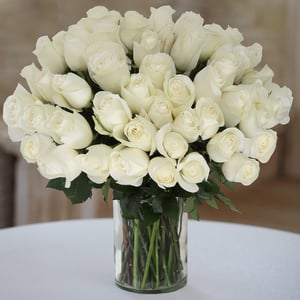
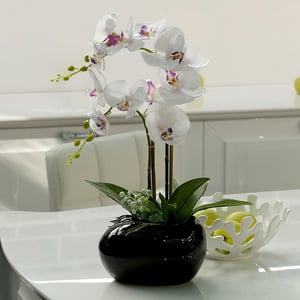
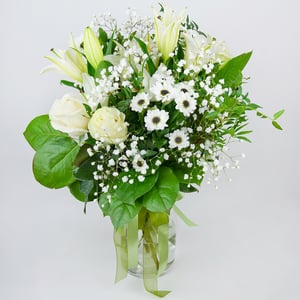
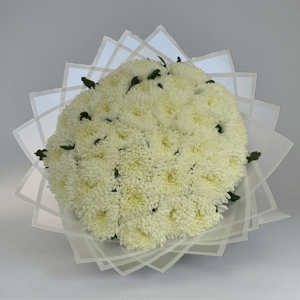
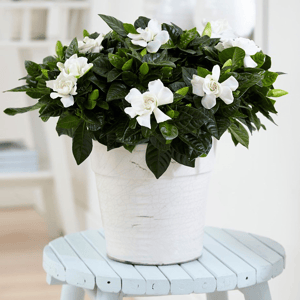
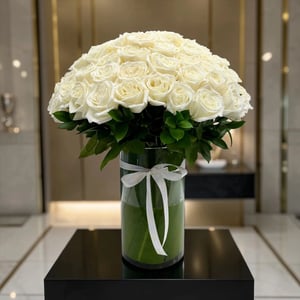
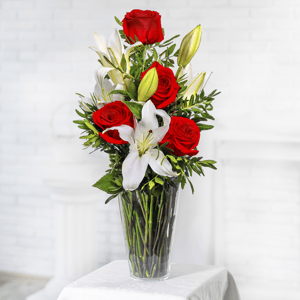
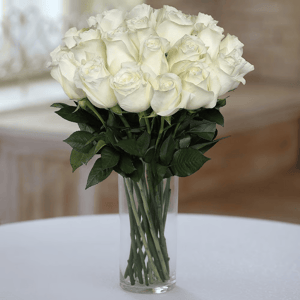
Flower etiquette extends beyond the giving — it also covers the receiving. When a beautiful arrangement arrives at your door, a few simple steps help the blooms last days longer. Local florists assemble every MyGlobalFlowers bouquet fresh on the day of delivery, so you're starting with the best possible foundation. Here's how to maintain it:
- You trim the stems at a 45-degree angle as soon as the bouquet arrives — this increases the surface area for water absorption.
- You remove any leaves that sit below the waterline — submerged leaves breed bacteria and shorten the flowers' life.
- You change the water every two days — fresh water keeps bacteria at bay.
- You place the vase away from direct sunlight, heating vents, and fruit bowls — ethylene gas from ripening fruit wilts flowers faster than you'd expect.
- You move the arrangement to the coolest room during summer if you live in a hot-climate state like Texas, Arizona, or Florida — flowers can wilt within hours in 90°F+ heat.
- You add the flower food packet if one is included — otherwise, a teaspoon of sugar and a few drops of bleach per quart of water provides similar nutrients and antibacterial protection.
These steps are simple, but they genuinely make a difference. A bouquet that might last four days without care can easily last eight to ten days with it.
Send the right flowers today
A fresh bouquet chosen for your specific occasion, hand-arranged and delivered by a local florist.
How to choose the right arrangement (practical decision guide)
Flower etiquette guides tell you what to give and when — but the practical question remains: how do you actually narrow down your choice? Here's a straightforward framework.
Budget. Bouquets at MyGlobalFlowers start at $31.00, making a simple, elegant arrangement accessible for casual occasions — a thank-you, a thinking-of-you, a "just because." For milestones like anniversaries, major birthdays, or sympathy, a larger premium arrangement carries more weight. You don't need to overspend; you need to match the scale of the gesture to the significance of the moment.
Flower type. Let the occasion guide you:
- Roses communicate romance and deep emotion.
- Sunflowers radiate cheer and positive energy.
- Orchids convey elegance and sophistication.
- Mixed seasonal bouquets offer versatility and suit almost any occasion.
Arrangement style. Hand-tied bouquets feel personal and intimate — perfect for hand-delivery or romantic occasions. Basket arrangements suit sympathy contexts because your recipient doesn't need to find a vase during an already difficult time. Potted plants work as lasting gifts for offices, hospitals (where allowed), and people who love watching things grow.
Add-ons. Many orders allow you to include chocolates, greeting cards, or small gifts. Check the options at checkout to add a personal touch beyond the blooms themselves.
Delivery timing. You order early in the day — before noon in the recipient's local time zone — for same-day or next-day delivery. The local florist assembles the arrangement fresh, and the courier delivers it that day. The exact delivery fee calculates at checkout based on the recipient's location.
One more thing worth knowing: because local florists craft every arrangement by hand, bouquets may differ slightly from the website photo depending on local flower availability. The florist substitutes individual stems with equal-value alternatives, preserving the overall style, color palette, and value. This is actually one of the things I appreciate about artisan floristry — you're getting a hand-crafted arrangement made from the freshest locally available blooms, not a mass-produced product assembled in a warehouse hundreds of miles away.
Final thoughts
Flower etiquette isn't about memorizing a rigid list of rules. It's about pausing for a moment before you order and asking yourself: what will this mean to the person receiving it? What message am I sending — not just with the card, but with the color, the type, the timing, and the presentation?
The best bouquet isn't the most expensive one. It's the one that fits the moment and the person. A single sunflower that makes your friend smile is worth more than a hundred-dollar arrangement that doesn't land right.
Browse the MyGlobalFlowers catalog to find the right arrangement for your next occasion — and now you'll know exactly which blooms to pick. Local florists in your recipient's city will assemble the bouquet fresh and deliver it by hand, so the gesture arrives exactly the way you intended.
What's the most memorable bouquet you've ever received — or sent? I'd love to hear your story.
Frequently asked questions about flower etiquette
Is it rude to send flowers without a card?▾
Not rude, but definitely a missed opportunity. Without a card, your recipient might spend the rest of the day wondering who sent the bouquet. Always include at least a short personal note — even a single sentence transforms an anonymous delivery into a meaningful gesture.
How many flowers should you include in a bouquet?▾
In the US, the number of stems doesn't carry strict symbolism. Focus on fullness and visual balance rather than counting individual flowers. For recipients in Russia, Eastern Europe, or Germany, always send an odd number — even numbers are reserved for mourning and funerals.
Can you send flowers to a workplace?▾
Absolutely. Birthday bouquets, congratulations arrangements, and thank-you flowers are welcome in most offices. Avoid deeply romantic flowers — a dozen red roses for a colleague sends the wrong signal. Choose compact, desk-friendly arrangements in neutral or cheerful colors.
What flowers are inappropriate for a hospital visit?▾
Strongly scented blooms like lilies, gardenias, and hyacinths can trigger headaches or allergic reactions. Some hospitals ban flowers entirely in certain units, including ICU and oncology wards. Call the facility's front desk before ordering to confirm their policy.
Should you send flowers before or after a dinner party?▾
Ideally, send them the day before as a "looking forward to tonight" gesture, or the day after as a thank-you. Arriving with flowers in hand puts pressure on the host to find a vase, trim stems, and arrange the bouquet in the middle of welcoming guests. A post-event thank-you bouquet is always a gracious and stress-free touch.
What's the best time to order flowers for same-day delivery?▾
Place your order before noon in the recipient's local time zone. This gives the local florist enough time to assemble a fresh arrangement and the courier enough time to complete the delivery the same day. For holidays like Valentine's Day and Mother's Day, order a day or two in advance — florists handle significantly higher volume during peak seasons.