 EUR
EUR
 GBP
GBP
 CAD
CAD
 AUD
AUD

 ✨Labor Day✨
 ❤️ Grandparents Day ❤️
 Birthday
 Same Day
 Occasions
 Flowers
 Roses
Roses
 Plants
 Gifts
Gifts
 International Flower Delivery
Tiger Lilies: Exploring the Meaning and Fascinating History of These Bold Flowers
- 🐯 Recognized by tall stems and dramatically recurved orange petals with dark spots.
- 💫 They carry bold symbolism — confidence in Victorian floriography, devotion transcending death in Korean legend.
- 🐱 A true blue tiger lily doesn't exist in nature, and the flower is extremely toxic to cats.
**Meta title:** Tiger lilies: meaning, symbolism & care tips **Meta description:** Discover tiger lily meaning, symbolism, color varieties, care tips, and gifting ideas. Learn what tiger lilies represent and how to grow them in your garden.
Tiger lilies: exploring the meaning and fascinating history of these bold flowers
Tiger lilies stopped me in my tracks the first time I saw them growing wild along a roadside in upstate New York. Those fiery, freckled petals curving backward like tiny flames — honestly, no other flower has that kind of swagger. If you've ever spotted a tall, spotted lily and thought, "What is that?", you were almost certainly looking at a tiger lily.
In this guide, we're diving deep into everything you need to know about these show-stopping blooms. You'll learn about tiger lily meaning and symbolism, the real story behind color varieties (including the truth about the so-called blue tiger lily), legends that span centuries, care tips for cut stems and garden beds, and the best occasions to gift tiger lilies to someone you care about. And if you're ready to send a bouquet right now, MyGlobalFlowers — an international flower delivery service — connects you with local florists who craft gorgeous tiger lily arrangements by hand. But first, let's get to know this flower a little better.
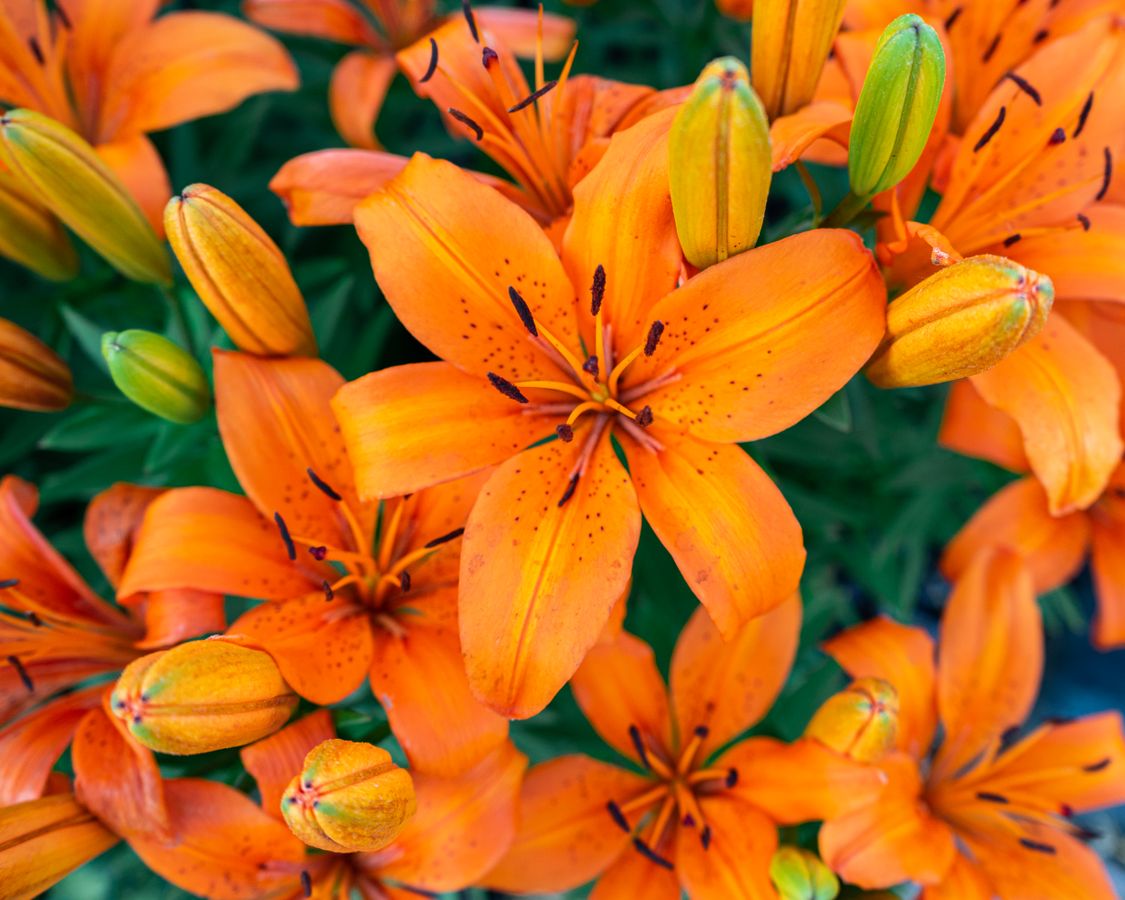
Send vibrant tiger lily arrangements
Browse fresh lily bouquets and orange arrangements, hand-delivered by local florists near your recipient.
What is a tiger lily flower?
Tiger lilies belong to the species Lilium lancifolium (sometimes listed as L. tigrinum), and the tiger lily flower is one of the most instantly recognizable blooms in any garden. Picture this: tall, sturdy stems reaching 48 to 60 inches high, topped with clusters of downward-facing flowers whose petals recurve — meaning the petals curl dramatically backward, showing off deep orange surfaces covered in dark brown or black spots. The effect looks remarkably like a tiger's coat, which is exactly how the flower earned its name.
A few other details make tiger lilies easy to identify. Lance-shaped leaves grow all the way up the stem. Small dark bulbils — tiny bulbs that look like little beads — form along the stem at leaf axils. These bulbils are one of the reasons tiger lilies spread so enthusiastically. The bloom season hits mid to late summer, typically July through August in most US growing zones. And here's a fun fact: tiger lilies are vigorous perennials hardy in USDA zones 3 through 9, which covers the vast majority of the continental United States. Once established, tiger lilies come back year after year with almost zero fuss.
Tiger lily meaning and symbolism




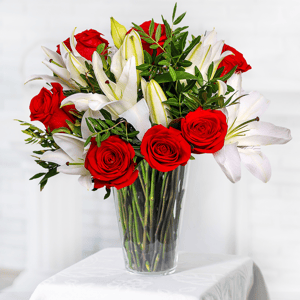


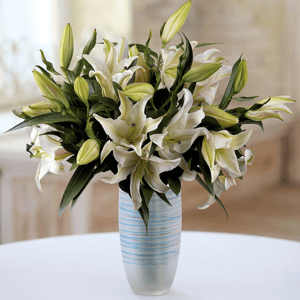
Tiger lily meaning goes far deeper than "pretty orange flower." Across cultures and centuries, the tiger lily flower meaning centers on confidence, pride, wealth, prosperity, courage, and positive energy. These are not shy, wallflower blooms. Tiger lilies walk into a room and own it.
During the Victorian era, when people communicated through floriography — the language of flowers — tiger lily symbolism carried a wonderfully bold message: "I dare you to love me." Giving someone a tiger lily was an act of romantic bravery, a declaration that the giver was passionate and unapologetic about their feelings. I find it fascinating that a single flower could say something so daring without a word.
East Asian traditions
In Chinese and Korean culture, tiger lilies connect to motherhood, fertility, and devotion. One of the most beloved stories is a Korean legend: a hermit once found a wounded tiger with an arrow lodged in its body. The hermit carefully removed the arrow and nursed the tiger back to health. The two became inseparable friends. The tiger asked the hermit to make a promise — when the tiger eventually died, the hermit would use his powers to transform the tiger's body into a flower so the two would never truly be apart. Years later, the tiger died, and a brilliant spotted flower appeared where the tiger had lain. But when the hermit later drowned in a river, the tiger lily spread across the land, searching endlessly for its lost friend. The tigerlily meaning in this tradition is loyalty so fierce that not even death can end it.
Western traditions
In Western flower symbolism, tiger lilies represent confidence, independence, and fierce beauty. What do tiger lilies represent when you hand a bouquet to someone? You're essentially saying: "You are bold, you are valued, I admire your strength." That message works for a best friend, a proud parent, or a partner who never backs down from a challenge.
Christian symbolism
Some Christian interpretations see orange lilies as symbols of Christ's compassion. The dark spots on the petals represent drops of blood, turning the tiger lily into a flower of sacrifice and grace.
Tiger lily color varieties — beyond classic orange
Tiger lilies are best known in blazing orange, but several color varieties exist. Let's walk through each one.
Classic orange tiger lily
The classic orange tiger lily is the variety most people recognize. Fiery orange petals covered in dark brown or black spots create a look that's warm, energetic, and unmistakably wild. Orange tiger lilies pair beautifully with deep greens, burgundy dahlias, and golden sunflowers in mixed arrangements.
Red tiger lily
The red tiger lily features deep reddish-orange petals that lean toward crimson. Red tiger lily cultivars symbolize passion, desire, and intense admiration. These blooms make a stunning statement in romantic arrangements or bold table centerpieces — especially when you want to go beyond predictable red roses.
White tiger lily flower
The white tiger lily flower offers creamy white petals with subtle spotting. White tiger lilies symbolize purity, renewal, and sympathy. Florists frequently include white tiger lilies in wedding bouquets, memorial tributes, and sympathy arrangements. The soft color brings a quiet elegance that balances the flower's naturally dramatic shape.
Blue tiger lily — myth vs. reality
Here's the thing about the blue tiger lily: a true blue tiger lily does not exist in nature. I know — disappointing. Those gorgeous blue-spotted lilies you've seen on social media are either dyed flowers or digitally altered photos. Some hybrid Asiatic lilies do come in lavender or light purple tones, but a genuine blue tiger lily is not botanically real. Seeds marketed as "blue tiger lily" online will not produce blue flowers. Save your money.
If you love blue flowers and want that striking contrast, try pairing classic orange tiger lilies with blue delphiniums or purple irises. The color combination is absolutely electric, and every stem will be genuine.
Yellow, pink, and other hybrid tiger lilies
Beyond the main colors, hybridizers have developed some gorgeous variations. 'Citronella' produces cheerful yellow petals dotted with dark spots. 'Pink Tiger' offers soft pink blooms that feel romantic without being overly sweet. Double-flowered varieties like 'Flore Pleno' pack extra petals into each bloom for a lush, almost peony-like effect. These hybrids expand the tiger lily palette and give gardeners — and gift-givers — even more options.
Tiger lilies in myths, legends, and culture
Tiger lilies carry rich cultural significance that stretches across continents. The Korean legend of the tiger and the hermit deserves a closer look. According to the story, the hermit and the tiger lived together for years after the hermit healed the tiger's arrow wound. Their friendship was so deep that the tiger feared death would separate them forever. The hermit used his spiritual powers to honor the tiger's wish, transforming the great cat's body into a vivid spotted flower. When the hermit later drowned, the tiger lily multiplied and spread along riverbanks and hillsides, forever searching for its companion. In Korea, tiger lilies still symbolize devotion that transcends mortality.
In pop culture, the character Tiger Lily from J.M. Barrie's Peter Pan introduced the flower's name to generations of children and boosted its recognition worldwide. The name evokes bravery, independence, and a spirit that refuses to be tamed — qualities the flower embodies perfectly.
And here's a fun old superstition: some folk traditions claim that smelling tiger lilies will give you freckles. It's completely untrue, of course, but honestly, I love the idea that a flower could leave its spots on you like a tiny souvenir. Tiger lilies also hold a birth flower connection — these blooms are often associated with the month of July, making tiger lily bouquets a thoughtful birthday gift for anyone born in midsummer.
When to give tiger lilies — perfect occasions
Tiger lilies fit a surprising number of occasions. Here are some of the best moments to send tiger lily arrangements.
- Birthdays — Tiger lilies celebrate confidence and joy, making the tiger lily flower an ideal birthday gift, especially for July birthdays.
- Mother's Day (second Sunday of May) — Tiger lilies honor a mother's fierce, protective love. The East Asian connection to motherhood makes this choice extra meaningful.
- Thanksgiving (fourth Thursday of November) — Orange tiger lilies complement autumn tablescapes perfectly, bringing warmth and natural beauty to your holiday gathering.
- Congratulations and promotions — Tiger lilies say "I'm proud of you" with energy and enthusiasm.
- Sympathy — White tiger lily arrangements offer gentle comfort during difficult times.
- "Just because" — Tiger lilies brighten any ordinary Tuesday and remind someone you're thinking about them.
You can send tiger lily arrangements through MyGlobalFlowers, where local florists craft each bouquet by hand. One thing worth knowing: the final arrangement may vary slightly from website photos because florists substitute individual stems with equally beautiful alternatives based on seasonal availability. That's actually a benefit — you get the freshest possible flowers, not stems that have been sitting around waiting to match a picture.
How to care for tiger lilies in a vase
Tiger lilies can last 7 to 10 days in a vase when you treat them right. Here's how to get the most out of your cut stems, especially during hot US summers when air conditioning runs nonstop.
- ✓Stems — Trim 1 to 2 inches off each stem at a 45-degree angle before placing the flowers in water.
- ✓Water — Fill the vase with room-temperature water mixed with the provided flower food packet.
- ✓Leaves — Remove any leaves that fall below the waterline to prevent bacterial growth.
- ✓Freshness — Change the water every two days and re-trim the stems each time.
- ✓Placement — Keep the vase away from direct sunlight, heating vents, and air conditioning drafts.
- ✓Pollen anthers — Remove the orange pollen-bearing anthers as soon as buds open. Tiger lily pollen stains clothes, tablecloths, and countertops, and the stains are nearly impossible to remove. This tip alone will save you a lot of frustration.
⚠️ Important safety note: Tiger lilies are extremely toxic to cats. Even a small amount of pollen, a nibbled petal, or water from the vase can cause kidney failure in cats. Keep tiger lily arrangements in a room your cat cannot access. My advice: if you have cats, choose a different flower entirely or display tiger lilies in a completely cat-free space. Dog owners can relax — tiger lilies are not toxic to dogs.
Growing tiger lilies in your garden — quick US guide
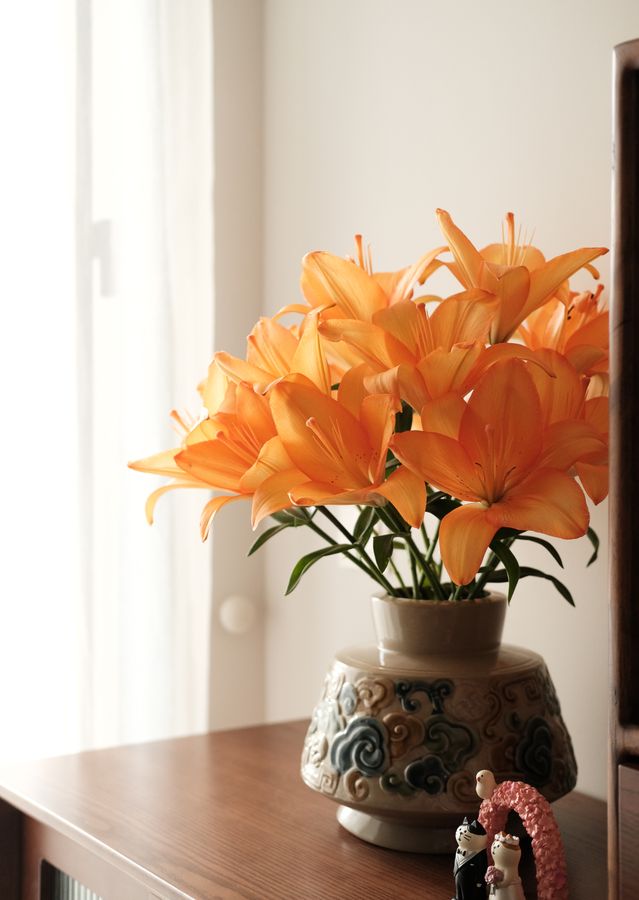





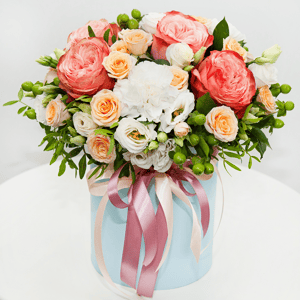


Tiger lilies are some of the easiest perennials to grow, and a few simple steps will set you up for years of spectacular summer blooms.
- Planting time — Plant bulbs in fall (September through October) or early spring for best results.
- Depth and spacing — Set bulbs about 6 to 8 inches deep, spaced 8 to 12 inches apart.
- Soil — Use well-drained soil with slightly acidic to neutral pH (5.5 to 6.5).
- Sunlight — Provide full sun to partial shade — at least 6 hours of direct sunlight per day.
- Water — Maintain consistent moisture but never leave the soil waterlogged.
- Fertilizer — Apply a balanced 10-10-10 fertilizer in early spring as new growth appears.
- Propagation — Collect bulbils from stems in late summer and plant them about 2 inches deep. These small bulbs will develop into blooming plants within 2 to 3 years.
One important warning: Tiger lilies can carry the lily mosaic virus without showing any symptoms. The virus spreads through aphids to nearby Asiatic and Oriental lilies, potentially damaging or killing those plants. Plant tiger lilies at least 50 feet away from other lily varieties to protect your garden.
Send a statement bouquet today
A fresh lily arrangement, hand-crafted by a local florist and delivered to the door.
Common mistakes with tiger lilies (and how to avoid them)
Tiger lilies are forgiving, but a few common mistakes can cut their beauty short — or cause real problems.
- ✗Fruit bowls nearby — Placing cut tiger lilies near fruit releases ethylene gas, which speeds up wilting dramatically.
- ✗Pollen left on anthers — Forgetting to remove pollen anthers leads to permanent orange stains on fabric and furniture.
- ✗Planting too close to other lilies — Growing tiger lilies right next to Oriental or Asiatic lilies risks spreading the mosaic virus.
- ✗Overwatering potted plants — Watering potted tiger lilies too frequently causes root rot and kills the bulb.
- ✗Cats accessing bouquets — Letting cats near tiger lily arrangements risks fatal toxicity.
- ✗Buying "blue tiger lily" seeds — Assuming blue tiger lily seeds sold online will produce blue flowers wastes your time and money. The resulting plants will be orange or a different color entirely — never blue.
A final thought on tiger lilies
My favorite part about tiger lilies is their unapologetic boldness. These flowers don't whisper — tiger lilies announce themselves with color, height, and those unforgettable spots. Giving a tiger lily bouquet is a small act of courage, a way of saying "be bold, be proud, be you" to someone who matters. Growing tiger lilies in your garden is an act of optimism: you plant a bulb in the fall, trust the process, and get rewarded with towering, wild beauty the following summer.
What's your favorite tiger lily color — classic orange, dramatic red, or elegant white? I'd love to know.
Whenever you're ready, browse tiger lily arrangements in the MyGlobalFlowers catalog and surprise someone who deserves a little wildness in their day.
Frequently asked questions
What do tiger lilies symbolize?▾
Tiger lilies symbolize confidence, pride, courage, wealth, and positive energy. In the Victorian language of flowers, tiger lily symbolism conveyed the bold message "I dare you to love me." In East Asian cultures, tiger lilies represent motherhood, devotion, and loyalty.
Are blue tiger lilies real?▾
No. True blue tiger lilies do not exist in nature. Images of blue tiger lilies online are either digitally altered photos or dyed flowers. Some Asiatic lily hybrids come in lavender or light purple, but a genuine blue tiger lily is not a real plant.
Are tiger lilies toxic to cats?▾
Yes — tiger lilies are extremely toxic to cats. Every part of the plant, including the pollen and vase water, can cause acute kidney failure. Keep tiger lily bouquets and garden plants completely out of reach of any cat.
When do tiger lilies bloom in the US?▾
Tiger lilies bloom in mid to late summer, typically from July through August across most US growing zones. Exact timing depends on your local climate and USDA hardiness zone. Warmer southern zones may see blooms slightly earlier.
Can you grow tiger lilies indoors?▾
You can grow tiger lilies in large containers indoors, but the plants need at least 6 hours of direct sunlight daily. A south-facing window or supplemental grow lights help meet that requirement. Indoor tiger lilies also need a cold dormancy period in winter, so most gardeners find outdoor growing far easier.
What is the difference between a tiger lily and a daylily?▾
Tiger lilies (Lilium lancifolium) are true lilies with recurved petals, dark spots, and bulbils along the stem. Daylilies (Hemerocallis) belong to an entirely different plant family. Daylily blooms last only one day each, while individual tiger lily flowers last several days. The two plants look somewhat similar from a distance but are not closely related.