EUR
 GBP
 CAD
 AUD

 🎃Halloween🎃
 Birthday
 Occasions
 Same Day
 Flowers
 Roses
 Plants
 Gifts
 International Flower Delivery
23 Beautiful Japanese Flowers: Their Names, Meanings, and Symbolism
- 🌏 Title tag: Japanese Flowers: 23 Stunning Blooms, Names & Meanings
- 💡 Meta description: Discover 23 beautiful Japanese flowers — their names, meanings, and symbolism.
- 🌸 Through MyGlobalFlowers, you can send flower arrangements featuring many traditional Japanese blooms — like peonies, lilies, chrysanthemums, and roses — to recipients in multiple countries.
Title tag: Japanese Flowers: 23 Stunning Blooms, Names & Meanings
Meta description: Discover 23 beautiful Japanese flowers — their names, meanings, and symbolism. Explore hanakotoba, pink and red blooms, girl names, and seasonal guides.
Japanese flowers carry secrets most Americans never hear about. In Japan, every petal speaks — a single bloom can say "I love you," "I'm sorry," or "goodbye forever," depending on the species and color. This hidden language, called hanakotoba, has shaped Japanese art, poetry, tattoos, and even baby names for centuries. And honestly, once you start learning it, you'll never look at a bouquet the same way again.
In this guide, you'll explore 23 traditional Japanese flowers — their Japanese names, symbolic meanings, seasonal bloom times, and cultural stories. You'll also discover flowers native to Japan, learn which pink and red Japanese flowers stand out, find gorgeous Japanese flower names for girls, and pick up practical care tips that work in US climates. Whether you're a gardener, a tattoo enthusiast, a new parent brainstorming names, or someone who simply loves flowers, this one's for you.
And here's a quick note: if any of these blooms inspire you to send a meaningful arrangement to someone you care about, MyGlobalFlowers, an international flower delivery service, lets you order Japanese-inspired bouquets from the US for delivery in countries around the world. Local florists assemble every arrangement by hand using the freshest seasonal flowers available.
Japanese flowers and their meanings — the language of hanakotoba
Japanese flowers don't just look beautiful — they communicate. Hanakotoba (花言葉), which literally translates to "flower words," is Japan's own language of flowers. Each bloom carries one or more specific meanings, and people use these meanings intentionally when gifting, decorating, or naming.
Picture this: you hand someone a red camellia in Japan, and you've just silently told them "I'm in love with you." Give them a yellow chrysanthemum, and you've expressed nobility and reverence. The flower does the talking.
This concept might sound familiar. Victorian England had its own version — floriography — where lovers exchanged coded bouquets to express feelings they couldn't say aloud. Hanakotoba works similarly, but it's woven much deeper into everyday Japanese life. Flower meanings influence:
People choose specific blooms for weddings, funerals, and celebrations based on hanakotoba
Tattoo artists select flowers to encode personal stories on the skin
Parents name their children after flowers to wish them certain qualities
Artists and poets reference flower symbolism in paintings, woodblock prints, and haiku
Understanding Japanese flowers and their meanings adds a whole new layer to how you appreciate — and gift — these blooms.

23 traditional Japanese flowers — names, symbolism, and beauty
Here's the heart of this guide. These 23 Japanese flowers represent centuries of cultural significance, and each one brings something unique to the story. I've included the Japanese name, kanji, symbolic meaning, bloom season, colors, and a specific cultural detail you probably won't find elsewhere.
1. Sakura (桜) — cherry blossom
Meaning: The fleeting nature of life, renewal, beauty in impermanence
Season: Spring (late March–mid April)
Colors: Pale pink, white, deep pink
Sakura is the quintessential pink Japanese flower — and the most iconic Japanese tree with pink flowers you'll ever see. Every spring, millions gather under cherry blossom canopies for hanami (flower viewing) parties. The blossoms last only about two weeks, which is exactly the point. Sakura reminds you that beauty is temporary, so you'd better pay attention while it's here. Washington, D.C.'s Tidal Basin hosts over 3,000 cherry trees — a gift from Japan in 1912 that still draws visitors every spring.
2. Ume (梅) — plum blossom
Meaning: Perseverance, hope, the arrival of spring
Season: Late winter to early spring (February–March)
Colors: White, pink, deep red
Ume blooms before sakura — often while snow still lingers on the ground. That's why the plum blossom represents endurance and hope. Japanese plum blossom festivals (ume matsuri) celebrate these trees as the first sign that winter is ending. Here's a quick way to tell ume apart from sakura: plum blossoms have rounded petals and sit directly on the branch, while cherry blossoms have notched petals and dangle from thin stems.
3. Tsubaki (椿) — camellia
Meaning: Admiration, perfection, a noble death (depending on color)
Season: Winter to early spring (December–April)
Colors: Red, pink, white
The red camellia — a striking red Japanese flower — means "in love" in hanakotoba. But tsubaki carries a darker association too. The entire flower head drops from the branch at once, rather than losing petals gradually. Samurai associated this with beheading, so gifting camellias to someone who's ill is considered bad luck. I've always found it fascinating how a single flower can hold both romance and dread simultaneously.
4. Botan (牡丹) — peony
Meaning: Wealth, honor, bravery, good fortune
Season: Late spring (April–June)
Colors: Pink, red, white, purple, yellow
Botan is the "king of flowers" in Japanese culture. Enormous, lush, and fragrant, peonies appear in everything from kimono patterns to samurai tattoos — where they symbolize bravery despite their soft, romantic appearance. The Hase-dera temple in Nara hosts a famous peony garden with over 150 varieties.
5. Kiku (菊) — chrysanthemum
Meaning: Longevity, rejuvenation, nobility
Season: Fall (October–November)
Colors: Yellow, white, red, orange, purple, pink
Kiku holds such status in Japan that the Imperial Family uses a 16-petal chrysanthemum as its official seal. The Japanese passport features the same design. Every autumn, exhibitions display meticulously grown chrysanthemum displays called kiku ningyo — chrysanthemum dolls shaped from living flowers. One important note: white chrysanthemums are funeral flowers in Japan. Don't gift them for happy occasions to someone who follows Japanese traditions.
6. Fuji (藤) — wisteria
Meaning: Love, tenderness, sensitivity
Season: Late spring (April–May)
Colors: Purple, violet, lavender, white, pink
Wisteria vines create cascading curtains of purple and lavender blooms that look almost unreal. The Ashikaga Flower Park in Tochigi features a 150-year-old wisteria tree with a canopy spanning over 1,000 square yards. Fuji wisteria also grows beautifully in the American South — zones 5–9 are ideal. The Fujiwara clan, one of Japan's most powerful historical families, took their name from this flower.
7. Ajisai (紫陽花) — hydrangea
Meaning: Gratitude, apology, heartfelt emotion
Season: Summer (June–July, coinciding with the rainy season)
Colors: Blue, purple, pink, white
Hydrangeas bloom during Japan's tsuyu rainy season, turning temple gardens into surreal mosaics of blue and purple. In hanakotoba, ajisai once carried a negative meaning — fickleness — because the flowers change color based on soil pH. Today, the meaning has softened to gratitude and deep emotion. Over 10,000 hydrangeas bloom at Meigetsuin Temple in Kamakura each June.
8. Hasu (蓮) — lotus
Meaning: Purity, spiritual awakening, rebirth
Season: Summer (July–August)
Colors: Pink, white, pale yellow
The lotus grows in muddy water yet produces immaculate flowers — making it one of Buddhism's most powerful symbols. Japanese temples across Kyoto and Nara feature lotus ponds where pink and white blooms open each morning and close by afternoon. You can find lotus growing in water gardens across the US too, especially in zones 4–10.
9. Asagao (朝顔) — morning glory
Meaning: Brief love, willful promises
Season: Summer (July–September)
Colors: Blue, purple, pink, white, red
Each morning glory bloom lasts just a single day — opening at dawn and withering by afternoon. In Edo-period Japan, breeders competed to create the most exotic color mutations, turning morning glory cultivation into an obsession. Tokyo's Iriya Morning Glory Festival has celebrated these flowers every July since the 1800s.
10. Himawari (向日葵) — sunflower
Meaning: Adoration, loyalty, vitality
Season: Summer (July–August)
Colors: Yellow, orange, gold
Sunflowers aren't native to Japan — they originated in the Americas — but the Japanese have embraced them fully. The Hokkaido Sunflower Festival attracts visitors to fields containing millions of blooms. Himawari symbolizes admiration and radiance, and the Japanese name literally means "turning toward the sun."
11. Yuri (百合) — lily
Meaning: Purity, chastity, motherhood
Season: Summer (June–August)
Colors: White, pink, orange, yellow, red
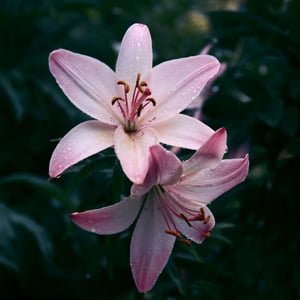
White lilies represent purity and are popular in both weddings and Christian ceremonies in Japan. The wild yamayuri (mountain lily) grows in Japanese forests and produces enormous, fragrant blooms with spotted petals. Yuri is also one of the most beloved Japanese flower names for girls.
12. Kinmokusei (金木犀) — orange osmanthus
Meaning: Truth, noble person, modest beauty
Season: Fall (September–October)
Colors: Orange, golden-yellow
You smell kinmokusei before you see it. The tiny orange flowers release an intensely sweet, apricot-like fragrance that drifts through entire neighborhoods in autumn. Many Japanese people say the scent of kinmokusei is their strongest autumn memory. Honestly, this one surprised me — such tiny flowers producing such an unforgettable perfume.
13. Sumire (菫) — violet
Meaning: Sincerity, small happiness, modesty
Season: Spring (March–May)
Colors: Violet, purple, white
Violets grow wild across Japan's roadsides and forest edges. Their small size and gentle color embody humility. In the Tale of Genji — the world's first novel, written in the 11th century — violets appear as symbols of quiet, understated love.
14. Hanashobu (花菖蒲) — Japanese iris
Meaning: Good news, faith, wisdom
Season: Early summer (June)
Colors: Purple, blue, white, lavender, bicolor
Japanese irises bloom in waterlogged gardens and along streams, creating mirror-like reflections in the standing water. The Meiji Shrine's iris garden in Tokyo displays over 1,500 varieties. Japanese irises differ from bearded irises — they're larger, flatter, and lack the upright "beards." They thrive in moist conditions, making them great for rain gardens in the US.
15. Kosumosu (コスモス) — cosmos
Meaning: Harmony, order, peaceful love
Season: Fall (September–November)
Colors: Pink, white, crimson, orange, yellow
Cosmos fields blanket the Japanese countryside in autumn, especially in Hokkaido and the Kanto region. The flower name comes from the Greek word for "order" and "harmony," and its delicate appearance on slender stems captures that feeling perfectly. Pink cosmos are among the most popular pink Japanese flowers of the autumn season.
16. Higanbana / Majushage (彼岸花 / 曼珠沙華) — red spider lily
Meaning: Final goodbye, lost memory, never to meet again
Season: Early fall (September)
Colors: Vivid red
This striking red Japanese flower blooms along rice paddies, riverbanks, and — notably — near cemeteries during the autumn equinox (o-higan). The bulbs are toxic, and farmers historically planted them around rice paddies to repel moles and mice. The red spider lily's association with death makes it one of the most symbolically intense traditional Japanese flowers. Anime and manga frequently use higanbana to signal loss or the afterlife.
17. Momo (桃) — peach blossom
Meaning: Femininity, softness, an enchanting personality
Season: Spring (March–April)
Colors: Pink, deep rose, white
Momo is another beloved pink Japanese flower that blooms on a Japanese tree with pink flowers — the ornamental peach. March 3rd is Hinamatsuri (Girls' Day/Doll Festival), and families display peach blossoms to wish daughters health and happiness. Peach blossom branches create gorgeous arrangements and pair beautifully with ume and sakura for a complete spring palette.
18. Sakurasou (桜草) — Japanese primrose
Meaning: Desire, long-lasting love
Season: Spring (April–May)
Colors: Pink, magenta, white
Sakurasou — literally "cherry blossom herb" — grows wild in moist meadows and along streams. Edo-period samurai cultivated sakurasou as a refined hobby, breeding hundreds of named varieties. Today, wild sakurasou populations are declining, and the species is protected in several Japanese prefectures.
19. Bara / Akaibara (薔薇 / 赤い薔薇) — rose / red rose
Meaning: Love, passion, beauty
Season: Late spring and fall (May–June, October–November)
Colors: Red, pink, white, yellow, orange
Roses aren't native to Japan, but Japanese rose breeders have developed some of the world's most celebrated hybrid varieties. The Akaibara (red rose) carries the same universal meaning of passionate love. In hanakotoba, different rose colors carry distinct messages — yellow roses mean jealousy, while white roses mean innocence. Japan's Keisei Rose Garden near Tokyo cultivates over 10,000 rose bushes spanning 1,600 varieties.
20. Nadeshiko (撫子) — dianthus / fringed pink
Meaning: Pure love, an ideal Japanese woman (yamato nadeshiko)
Season: Summer (June–August)
Colors: Pink, white, red
Nadeshiko holds a special place in Japanese culture. The phrase "yamato nadeshiko" describes an idealized Japanese woman — graceful, strong, and beautiful. The Japanese women's national soccer team adopted the nickname "Nadeshiko Japan." The flower itself features delicately fringed petals — another lovely pink Japanese flower with deep cultural roots.
21. Kikyo (桔梗) — balloon flower
Meaning: Endless love, honesty, return of a friend
Season: Summer (June–August)
Colors: Blue-purple, white, pink
Before opening, kikyo buds puff up into perfect balloon shapes — hence the English name. The five-pointed star-shaped bloom appears frequently in Japanese family crests (kamon). Akechi Mitsuhide, the famous samurai who betrayed Oda Nobunaga, used the kikyo crest. Balloon flowers grow easily in US gardens, thriving in zones 3–8.
22. Sasanqua (山茶花) — camellia sasanqua
Meaning: Modesty, quiet contemplation
Season: Fall to early winter (October–December)
Colors: Pink, white, red
Sasanqua is tsubaki's quieter cousin. The flowers are smaller, the petals drop individually (not the entire head — so no samurai associations), and the plant blooms earlier in the season. Sasanqua camellias make excellent hedges and grow wonderfully in the US Southeast — zones 7–9 are ideal. Their gentle pink and white blooms offer color when most other flowers have faded.
23. Shidekobushi (四手辛夷) — star magnolia
Meaning: Love for nature, dignity
Season: Early spring (March–April)
Colors: White, pale pink
Star magnolia is one of the most beautiful flowers native to Japan. The narrow, star-shaped petals unfurl before leaves appear, creating a halo of white or blush pink on bare branches. Shidekobushi is endemic to a small region of central Japan and is classified as a near-threatened species. These trees grow well in US gardens — zones 4–8 — and reach only about 15–20 feet tall, making them perfect for smaller yards.

Flowers native to Japan — endemic species you should know
Many traditional Japanese flowers actually originated elsewhere. Sunflowers came from the Americas. Roses trace back to China and the Middle East. Cosmos arrived from Mexico. When people search for flowers native to Japan, they're looking for species that evolved on the Japanese archipelago — true endemics or near-endemics.
Here's the distinction: "traditional" Japanese flowers are culturally significant blooms that Japan has adopted, bred, and celebrated for centuries. "Native" Japanese flowers are species that originate from Japan's ecosystems. Some overlap — like sakura and ume — but many don't.
Here are notable flowers native to Japan that deserve more attention:
Lacecap hydrangea (Gaku-ajisai, ガクアジサイ) — the original wild hydrangea from Japan's coastal regions, featuring flat flower heads with tiny fertile flowers surrounded by a ring of larger decorative petals. All those big mophead hydrangeas you see in American gardens descend from this species.
Star magnolia (Shidekobushi) — endemic to a narrow region of Honshu, covered above as number 23 on the list.
Japanese andromeda (Asebi, 馬酔木) — an evergreen shrub producing dangling clusters of small bell-shaped white or pink flowers in early spring. The Japanese name literally means "horse-drunk tree" because the leaves are toxic to livestock.
Japanese snowbell (Egonoki, エゴノキ) — a graceful tree with pendulous white bell-shaped flowers that dangle beneath the branches in May and June. Japanese children traditionally used the fruit to make soap for washing clothes.
Fringed iris (Himeshaga, ヒメシャガ) — a delicate miniature iris native to Japan's mountain forests, blooming in pale lavender with fringed petals in late spring.
Tiger lily (Oniyuri, 鬼百合) — while tiger lilies grow across East Asia, some populations are native to Japan. The bright orange, spotted flowers are a classic summer sight along rural roadsides. The bulbs are edible and appear in traditional Japanese cooking.
Japanese anemone (Shumeigiku, 秋明菊) — tall stems topped with elegant pink or white flowers that bloom in early fall. Japanese anemones naturalize easily in US shade gardens.
Yamabuki (山吹) — Japanese kerria — a spring-blooming shrub with golden-yellow flowers so vivid that "yamabuki-iro" became the Japanese word for a specific shade of gold. The plant grows in forest understories and along stream banks.
These native species adapted to Japan's volcanic soils, humid summers, and snowy winters over millennia. Many translate well to US gardens, especially in the Pacific Northwest, Mid-Atlantic, and Southeast regions.
Pink Japanese flowers — from cherry blossoms to peonies
Pink holds a special place in Japanese aesthetics. The color represents spring, youth, femininity, and celebration — and some of the most famous Japanese flowers bloom in shades of pink.
Here's your guide to the most beloved pink Japanese flowers:
Sakura (cherry blossom) — the icon. Pale pink petals drifting in spring breezes define Japan's most photographed season. The Japanese tree with pink flowers you picture when you think of Japan? That's a somei yoshino cherry.
Momo (peach blossom) — deeper pink than sakura, momo blooms on another stunning Japanese tree with pink flowers, particularly celebrated during Girls' Day on March 3rd.
Nadeshiko (dianthus) — fringed pink petals that gave their name to the ideal of Japanese feminine grace.
Kosumosu (cosmos) — soft pink cosmos sway on slender stems across autumn fields.
Sasanqua (camellia sasanqua) — delicate pink blooms appear when autumn turns to winter.
Hasu (lotus) — pink lotus varieties carry sacred Buddhist significance and bloom in temple ponds during summer.
Botan (peony) — lush, layered pink peony blossoms symbolize wealth and honor.
Sakurasou (Japanese primrose) — bright magenta-pink wildflowers that dot moist meadows in spring.
In Japanese gift-giving, pink flowers work beautifully for birthdays, new baby celebrations, and graduations. Pink arrangements feel fresh, optimistic, and full of warmth — a natural fit for congratulatory moments.
Red Japanese flowers — bold blooms with deep symbolism
Red Japanese flowers carry intense emotion — but the specific emotion depends entirely on the flower. Red can mean passionate love, fierce courage, or even death. Context matters more than color alone.
Here are the standout red Japanese flowers:
Tsubaki (red camellia) — declares "I'm in love with you" in hanakotoba. A bold, romantic red Japanese flower with waxy, layered petals.
Higanbana / Majushage (red spider lily) — signals final goodbyes and the world beyond. Blooms near cemeteries and along rice paddies in September. One of the most visually dramatic flowers you'll encounter — curved, spidery petals in electric red.
Akaibara (red rose) — universal symbol of passionate love, embraced in Japan as fully as anywhere else.
Red chrysanthemum — represents love and deep passion in hanakotoba, distinct from the white chrysanthemum's funeral association.
Red peony (botan) — adds bravery and boldness to the peony's existing wealth symbolism.
Japanese tattoo culture leans heavily into red flowers. The higanbana appears in irezumi (traditional Japanese tattooing) to represent transformation and acceptance of mortality. Red camellias and red peonies symbolize romantic love, courage, and the willingness to risk everything. I'd recommend learning the hanakotoba meaning of any flower before choosing it for a tattoo — the symbolism runs deep, and knowledgeable observers will read it immediately.
Looking for romantic flowers?
Browse romantic flowers from local florists and pick one that suits the moment.
Japanese flower names for girls — blooms that inspire names
Japanese parents have named daughters after flowers for centuries. These names aren't just pretty — each one expresses a wish for the child's personality, appearance, or future. The practice reflects hanakotoba meanings, seasonal associations, and aesthetic values.
Here are popular Japanese flower names for girls, along with their meanings:
Sakura (桜) — "cherry blossom." Evokes beauty, grace, and the appreciation of fleeting moments. One of the most popular Japanese flower names for girls in recent decades.
Hana (花) — simply "flower." Versatile, warm, and timeless. Parents choose Hana to wish their daughter a life of beauty and brightness.
Sumire (菫) — "violet." Suggests sincerity, humility, and quiet strength.
Yuri (百合) — "lily." Implies purity and elegance.
Ren (蓮) — "lotus." Carries Buddhist overtones of spiritual growth and rising above adversity. Used for both boys and girls.
Kaede (楓) — "maple." While technically a tree name, Kaede connects to the beauty of autumn foliage and symbolizes graceful change.
Tsubaki (椿) — "camellia." Suggests admiration and quiet perseverance through winter.
Ran (蘭) — "orchid." Represents refinement, elegance, and rare beauty.
Momoko (桃子) — "peach child." A sweet, classic name associated with softness, femininity, and Girls' Day.
Ayame (菖蒲) — "iris." Conveys good news and wisdom. Ayame is a favorite in both classic literature and modern naming.
Kikyo (桔梗) — "balloon flower." Implies endless love and honest character.
Nadeshiko (撫子) — "dianthus/pink." Embodies the ideal of graceful Japanese femininity. Parents choose this name to wish their daughter both inner strength and outer beauty.
Japanese flower names for girls reflect the season of birth too. A girl born in spring might receive the name Sakura or Momo. An autumn baby might be called Kikyo or Kaede. The name becomes a lifelong connection to the natural world — a reminder of the season, the flower, and the qualities the parents admired in it.
Japanese maple flowers — the overlooked bloom
Here's something most people don't realize: Japanese flowers include the blooms of the Japanese maple. When you think of Japanese maples (Acer palmatum), you probably picture fiery red and orange leaves in autumn. But these trees produce actual flowers every spring — and almost nobody talks about them.
Japanese maple flowers appear in April and May, usually right as the new leaves unfurl. The blossoms form in small hanging clusters called corymbs. Each individual flower measures only about 1/4 inch across and features tiny reddish-purple sepals with lighter-colored petals. The flowers are subtle — easy to miss entirely against the backdrop of emerging foliage.
So why do they matter? These small flowers play a real ecological role. Bees, small flies, and other pollinators visit Japanese maple blooms for nectar and pollen. After pollination, the flowers develop into samaras — those helicopter-like winged seeds that spin to the ground in late summer. Without the flowers, no seeds — and no new maple trees.
Japanese culture celebrates the maple under two names: Momiji (紅葉) refers to the autumn color-changing display, while Kaede (楓) is the broader name for the maple tree itself. Both names appear as popular given names and poetic references. The spring flowers rarely receive poetic attention — the autumn show steals the spotlight entirely.
If you grow a Japanese maple in the US (they thrive in zones 5–9), take a close look at your tree in mid-spring. You'll spot those tiny reddish-purple clusters — a secret bloom hiding in plain sight.
Japanese knotweed flowers — beauty with a bad reputation
Let's talk about the most controversial Japanese flowers on this list. Japanese knotweed (Fallopia japonica) — known as Itadori (虎杖) in Japan — produces clusters of small creamy-white flowers in late summer and early fall, typically from August to October. The flower sprays are delicate, lacy, and genuinely attractive.
But the plant they grow on? That's a different story entirely.
Japanese knotweed is classified as one of the world's most invasive species outside its native range. In the US, knotweed spreads aggressively through underground rhizomes. A tiny fragment of root — as small as half an inch — can generate a new plant. The stems grow up to 10 feet tall in a single season, and the root systems can damage building foundations, break through asphalt, and displace native vegetation.
What the flowers look like: Small, creamy white to greenish-white flowers appear in branching, upright sprays along the upper portions of the stem. Each individual flower is tiny — about 1/8 inch — but the clusters create a noticeable frothy appearance. Leaves are large, heart-shaped or shovel-shaped, with a flat base. Stems are hollow, bamboo-like, and speckled with reddish-purple.
Here's the interesting flip side. In Japan, knotweed is a respected plant. People harvest young spring shoots as a wild vegetable — the tart, lemony flavor works in stir-fries and soups. Traditional medicine uses knotweed root for various remedies. The plant coexists with natural competitors in Japan, keeping it in balance. Outside Japan, without those natural checks, knotweed overwhelms everything.
US-specific warning: Japanese knotweed is classified as invasive in most US states. Many states — including New York, Oregon, and Washington — run active removal programs. Homeowners should never plant Japanese knotweed intentionally. If you spot it on your property, contact your local extension office for removal guidance. Cutting alone won't eliminate it — the root system requires professional treatment.
Japanese flowers by season — a year-round blooming calendar
Japan experiences four distinct seasons, and Japanese flowers mark each transition beautifully. Use this quick-reference calendar to know what blooms when — useful for planning a Japan trip, choosing seasonal arrangements, or timing your US garden plantings.
Spring (March – May)
Ume (plum blossom) — February through March, the first herald of spring
Sakura (cherry blossom) — late March through mid-April, peaking around early April
Momo (peach blossom) — March through April, celebrated on Girls' Day (March 3rd)
Fuji (wisteria) — April through May, cascading purple curtains
Sakurasou (primrose) — April through May, bright pink wildflowers
Shidekobushi (star magnolia) — March through April, white star-shaped blooms
Sumire (violet) — March through May, understated purple
Summer (June – August)
Ajisai (hydrangea) — June through July, the rainy season flower
Hasu (lotus) — July through August, sacred temple ponds
Asagao (morning glory) — July through September, single-day blooms
Himawari (sunflower) — July through August, fields of gold
Yuri (lily) — June through August, fragrant and elegant
Nadeshiko (dianthus) — June through August, fringed pink petals
Hanashobu (Japanese iris) — June, waterside gardens
Fall (September – November)
Kiku (chrysanthemum) — October through November, the imperial flower
Kosumosu (cosmos) — September through November, fields of pink and white
Kinmokusei (osmanthus) — September through October, unforgettable fragrance
Kikyo (balloon flower) — June through August (bridges summer and early fall)
Higanbana (red spider lily) — September, vivid red near equinox
Winter (December – February)
Tsubaki (camellia) — December through April, winter's signature bloom
Sasanqua (camellia sasanqua) — October through December, bridging fall and winter
Ume (plum blossom) — blooms as early as January in warmer areas, overlapping into spring
Suisen (narcissus/daffodil) — December through February, bright and cheerful

How to incorporate Japanese flowers into your life in the US
Japanese flowers aren't something you can only admire from a distance. You can grow them, gift them, arrange them, and send them — right here in the US.
Gifting Japanese flowers for US occasions
Many traditional Japanese flowers work perfectly for American celebrations:
Mother's Day (second Sunday of May) — peonies, lilies, and pink camellias make thoughtful, elegant choices
Valentine's Day (February 14th) — red roses remain classic, but red camellias add a unique, culturally rich twist
Sympathy and memorial occasions — white chrysanthemums carry deep respect, though you should know that Japanese tradition reserves white kiku for funerals specifically
Birthdays and celebrations — sunflowers (himawari) bring radiant joy, and cosmos offer soft autumn beauty
One cultural crossover warning: avoid gifting white chrysanthemums as a cheerful birthday bouquet to someone who follows Japanese customs. The flowers mean longevity and honor, yes, but their strong funeral association in Japan could send the wrong message.
Growing Japanese flowers in US gardens
Many traditional Japanese flowers thrive across US hardiness zones:
Cherry trees flourish in Washington, D.C., the Pacific Northwest, and much of the Mid-Atlantic region (zones 5–8)
Wisteria grows vigorously across the South and into the Midwest (zones 5–9)
Camellias love the mild winters of the Southeast (zones 7–9)
Japanese irises perform beautifully in rain gardens and along ponds (zones 4–9)
Balloon flowers (kikyo) adapt to a wide range and tolerate cold well (zones 3–8)
Ikebana — Japanese flower arranging
Ikebana, the Japanese art of flower arranging, focuses on minimalism, balance, and the relationship between flowers, branches, and empty space. Unlike Western arrangements that aim for fullness, ikebana uses just a few stems placed with extreme intention. The practice is growing popular in the US as a mindfulness exercise — part meditation, part art.
Ordering Japanese-inspired arrangements
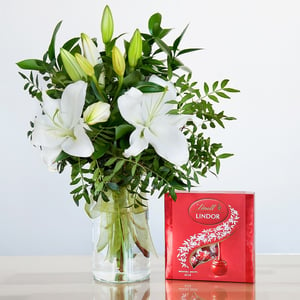
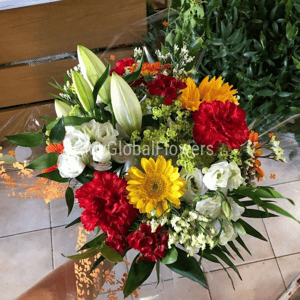
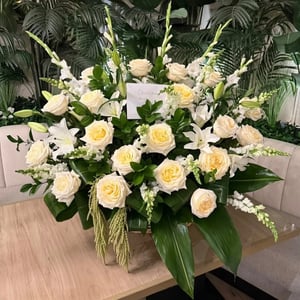
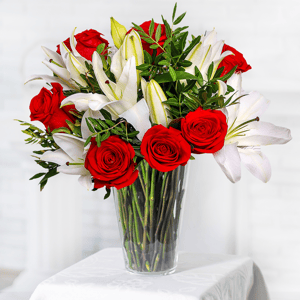
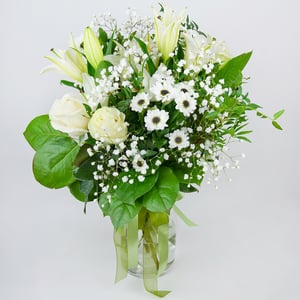
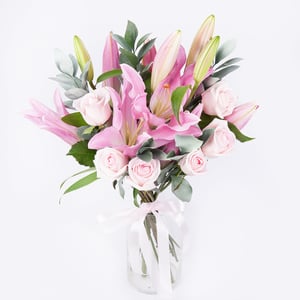
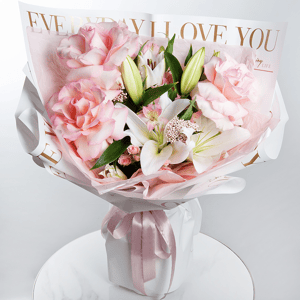
Through MyGlobalFlowers, you can send flower arrangements featuring many traditional Japanese blooms — like peonies, lilies, chrysanthemums, and roses — to recipients in multiple countries. Local florists assemble each bouquet by hand using the freshest available seasonal flowers. Arrangements may vary slightly from website photos, as florists substitute individual stems with equal-value alternatives based on what's freshest that day. This flexibility is actually a hallmark of genuine artisan craftsmanship — your recipient gets the most vibrant, long-lasting flowers possible rather than a rigid copy of an image. The delivery cost is calculated at checkout based on location and timing.
Common mistakes when choosing Japanese flowers — and how to avoid them
Japanese flowers carry layered cultural meanings, and missteps happen easily. Here are mistakes to watch for —
Send flowers today
Choose a bouquet, add a message, and a local florist hand-delivers it.