 EUR
EUR
 GBP
GBP
 CAD
CAD
 AUD
AUD

 Birthday
 Same Day
 Occasions
 Flowers
 Roses
Roses
 Plants
 Gifts
Gifts
 International Flower Delivery
South Dakota State Flower: The Pasque Bloom
- 🌼 The South Dakota state flower is one of those rare blooms that can genuinely stop you mid-drive.
- 💡 Legislators officially adopted the Pasque flower on March 5, 1903, making South Dakota one of the earliest US states to designate an official state flower.
- 🌸 Or better yet, plant a Pasque flower in your own garden and watch it surprise you year after year with its stubborn, beautiful insistence on being first.
The South Dakota state flower is one of those rare blooms that can genuinely stop you mid-drive. Picture this: you're cruising across the Great Plains in late March, the grass is still brown, patches of snow cling to the north-facing slopes, and then—right there on a windswept hillside—you spot clusters of soft purple petals pushing through semi-frozen ground. No leaves on the trees yet. No green anywhere. Just these brave little flowers announcing that spring is, against all odds, on its way. Here on the MyGlobalFlowers blog, an international flower-delivery service, we love telling the stories behind iconic blooms. And this one? It deserves way more attention than it gets.
In this article, you'll learn the South Dakota state flower name, the botanical backstory behind it, the surprisingly dramatic legislative history of its adoption, what the bloom looks like up close, where and when to find it, what it symbolizes, how to grow it in your own garden, and a handful of fun facts that'll make you the most interesting person at any prairie-themed dinner party. Let's get into it.
What is the South Dakota state flower name?
The South Dakota state flower name is the Pasque flower, scientifically known as Pulsatilla hirsutissima. Older field guides and botanical texts list it under a former classification, Anemone patens, so don't be confused if you see that name floating around—same plant, updated taxonomy.
The word "pasque" comes from the Old French word pasque, meaning Easter. The name fits perfectly because the flower blooms right around the Easter season, sometimes even earlier. I find it fascinating that a single word can tie a wildflower to centuries of linguistic history spanning from medieval France to the American prairie.
You'll also hear the Pasque flower called by several common names, depending on where you are and who you're talking to:
Wild crocus — because the bloom resembles a crocus at first glance.
Easter flower — a direct nod to its Easter-season blooming.
May Day flower — for populations that peak bloom a bit later in the season.
Prairie smoke — inspired by the wispy, feathery seed heads that appear after the petals fall.
Wind flower — a poetic reference to the way the blooms sway on exposed prairie hillsides.
Botanically, the Pasque flower belongs to the buttercup family (Ranunculaceae), a large plant family that includes familiar relatives like clematis, delphinium, and—yes—the common buttercup.

History of how South Dakota chose the Pasque flower
The South Dakota state flower didn't earn its title without a bit of competition. Legislators officially adopted the Pasque flower on March 5, 1903, making South Dakota one of the earliest US states to designate an official state flower.
The path to adoption wasn't unanimous, though. Some South Dakotans championed the cactus flower, arguing it better represented the state's rugged western landscape. Supporters from Rosebud County pushed for the wild rose—a choice that would later become the state flower for North Dakota and a symbol in several neighboring states. But the Pasque flower had something the others didn't: it was undeniably, unmistakably a prairie original.
Here's the thing—the Pasque flower won because it perfectly embodies the spirit of South Dakota. The bloom is native to the state's grasslands, it appears earlier than almost any other wildflower, and it thrives in harsh, wind-battered conditions. Legislators saw resilience in those purple petals, and they chose accordingly.
The original bill described the bloom as "the pasque or wind flower." Over time, legislators shortened the official name to simply "pasque flower." Then, in 1919, the state revised the law to update the scientific name from Anemone patens to Pulsatilla hirsutissima, reflecting shifts in botanical classification. It's a small legal detail, but it shows how seriously South Dakota takes its floral emblem.



What the Pasque flower looks like
The South Dakota state flower is a study in tough beauty. The entire plant stands just 6–8 inches tall—compact, low to the ground, built for wind. Every part of it, from the stems to the buds, is covered in soft, silvery hairs that give the flower an almost ethereal, fuzzy quality. Those tiny hairs aren't just decorative—they insulate the plant against freezing temperatures and harsh prairie gusts.
The petals range from lavender to deep purple, though you'll occasionally find white specimens. Each bloom cradles a cluster of bright yellow stamens at the center, creating a striking contrast that practically glows in the early spring light. If you've ever seen a crocus or a wood anemone, you'll recognize the general shape—cup-like, open-faced, and inviting to early-season pollinators.
But here's my favorite detail about the Pasque flower: what happens after it blooms. Once the petals drop, the flower produces feathery seed heads that look like delicate wisps of silver smoke rising from the prairie. That's exactly where the common name "prairie smoke" comes from. The seed heads catch the wind and spiral away, carrying the next generation of Pasque flowers across the grassland. It's genuinely one of the most photogenic stages of any wildflower's life cycle.
Where and when the Pasque flower blooms
The South Dakota state flower grows wild across tallgrass and mixed-grass prairies throughout the state. You'll find Pasque flowers from the eastern farmlands near Sioux Falls all the way to the western buttes and badlands, though the densest populations tend to cluster on open, undisturbed grassland.
Peak bloom runs from late March through May, making the Pasque flower one of the earliest wildflowers in the entire Northern Great Plains. In a mild year, you might spot blooms by mid-March. In a harsh winter, they'll hold off until April. Either way, Pasque flowers consistently appear before the grass has greened up—a visual signal that winter's grip is loosening.
The plant thrives on well-drained, rocky, or sandy slopes, especially south-facing hillsides that warm up fastest in spring. South Dakota spans USDA Hardiness Zones 3–5, and the Pasque flower handles all of them with ease. The bloom doesn't need coddling. It needs space, sunlight, and soil that doesn't hold water.
Symbolism and meaning of the Pasque flower
The South Dakota state flower carries deep symbolic weight—more than most people realize.
Resilience and new beginnings sit at the heart of its meaning. The Pasque flower blooms while snow still lingers on the ground. The plant doesn't wait for perfect conditions. It pushes through frost, cold wind, and bare soil to announce that spring is coming. For a state that endures long, brutal winters, that kind of tenacity resonates deeply.
The connection to Easter and spring renewal adds a spiritual dimension. Blooming right around Holy Week, the Pasque flower has long been associated with rebirth, hope, and the turning of seasons. European traditions carried this symbolism for centuries before settlers brought the name to the American prairie.
For the Lakota people, the Pasque flower holds traditional significance tied to the arrival of spring. The bloom served as a natural calendar marker—its appearance told communities that the season of growth and movement was beginning. Honestly, I think this is one of the most meaningful layers of the flower's story. Long before any legislature voted on state symbols, the Pasque flower was already an emblem of renewal on these plains.
Looking for mixed bouquets?
Browse mixed bouquets from local florists and pick one that suits the moment.
How to grow the Pasque flower in your garden
The South Dakota state flower isn't just a wildflower to admire from your car window—you can grow it at home. The Pasque flower adapts surprisingly well to garden settings, as long as you respect its preferences. Here's what you need to know.
Soil requirements
Pasque flowers demand well-drained, slightly alkaline soil. Think rocky, gritty, lean. Heavy clay or waterlogged ground will rot the roots fast. If your garden soil tends toward dense or wet, amend the planting area with coarse sand or fine gravel to improve drainage.
Sunlight
Give your Pasque flower full sun to partial shade. Aim for at least six hours of direct sunlight daily. In the wild, the bloom gravitates toward open, exposed sites—so mimic that in your garden by avoiding spots shaded by buildings or dense tree canopy.
USDA hardiness zones
Pasque flowers grow in Zones 3–8, which covers much of the northern and central United States. Whether you're gardening in Montana, Minnesota, Ohio, or even parts of the mid-Atlantic, the Pasque flower can thrive in your climate.
Planting tips
Sow seeds in fall for natural cold stratification—the freezing and thawing cycle breaks seed dormancy. If you're planting in spring, refrigerate seeds for 4–6 weeks beforehand to simulate winter conditions. When you plant, set the crown at soil level. Burying the crown too deep invites rot.
Watering and care
Water sparingly once your Pasque flower establishes itself. Overwatering kills Pasque flowers faster than drought. The plant's taproot reaches deep into the soil for moisture, so supplemental watering is rarely necessary after the first growing season. Cut back old foliage in late fall. One critical rule: do not divide or transplant mature plants. The taproot resents disturbance, and a transplanted Pasque flower rarely recovers.
Common mistakes to avoid
Planting in soggy soil — guarantees root rot and plant death.
Fertilizing too heavily — the Pasque flower prefers lean, nutrient-poor conditions. Rich soil produces leggy, weak growth.
Mowing prairie areas before seed heads mature — wait until the feathery seeds have dispersed before cutting back naturalized areas.
Fun facts about the South Dakota state flower
The Pasque flower produces no nectar — early-season bees visit it solely for pollen, making it a critical (if stingy) food source when almost nothing else is blooming.
Native Americans used Pasque-flower extracts in traditional remedies — but here's an important note: the plant is toxic if ingested raw. The fresh plant contains protoanemonin, a compound that irritates skin and mucous membranes. Never consume any part of a Pasque flower.
South Dakota became one of the first US states to adopt an official state flower — legislators made the designation in 1903, just a few years behind early adopters like Oklahoma (mistletoe, 1893) and Vermont (red clover, 1894).
The Pasque flower appears on South Dakota highway signs — it also shows up on state-themed merchandise, postcards, and tourism materials across the state.
Every part of the living plant wears fine silky hairs — these hairs insulate the bloom from freezing temperatures, functioning like nature's own fur coat and allowing the flower to survive late-season frosts that would destroy less hardy blooms.
Celebrating the Pasque flower — gift ideas and occasions
The South Dakota state flower connects beautifully to several US holidays and occasions. Think Easter arrangements (the name practically demands it), Mother's Day bouquets for the second Sunday in May, spring birthdays, or a housewarming gift for someone moving to South Dakota.
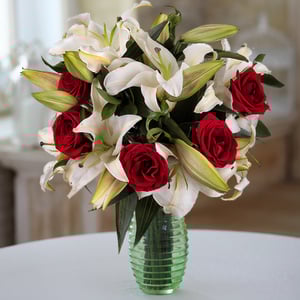
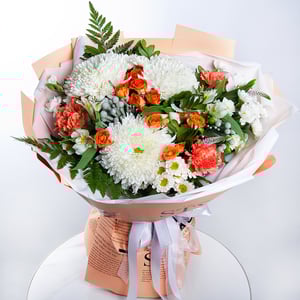
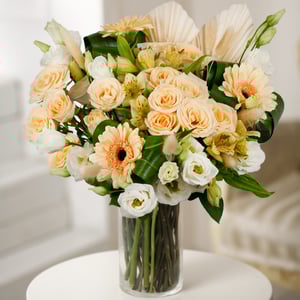
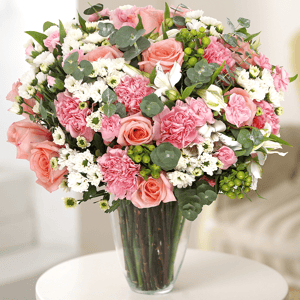
Now, here's a practical reality: Pasque flowers are rarely sold as cut flowers. The delicate blooms wilt quickly once cut, so you won't find them at your local florist. But you can absolutely celebrate the spirit of South Dakota's state flower by sending spring wildflower bouquets or purple-themed arrangements to someone you care about. Lavender roses, purple lisianthus, violet-tinged irises—these blooms capture the same prairie palette.
If you'd like to send a bouquet inspired by South Dakota's prairies, browse spring arrangements on MyGlobalFlowers. Local florists assemble each bouquet by hand, so the final design may vary slightly depending on seasonal availability—an honest touch that keeps every arrangement fresh and one-of-a-kind. The delivery price calculates individually at checkout based on your specific order and destination.

Other official symbols of South Dakota
The South Dakota state flower is just one piece of a larger symbolic tapestry. Here are a few other official emblems that round out the state's identity:
State bird → The Ring-necked Pheasant represents South Dakota's strong hunting tradition and agricultural landscape.
State tree → The Black Hills Spruce grows in the rugged western highlands and anchors the state's forested identity.
State animal → The Coyote embodies the adaptability and scrappiness of Great Plains wildlife.
State gemstone → The Fairburn Agate, found in the badlands, showcases stunning natural banding patterns unique to the region.
State dessert → Kuchen, a German-style cake, reflects the strong European heritage of South Dakota's settlers.
State nickname → "The Mount Rushmore State" connects South Dakota to its most famous landmark.
Notice a theme? Every symbol reflects something rugged, resilient, and beautiful—exactly the qualities the Pasque flower brings to the list.

Final thoughts
Honestly, the Pasque flower might be one of the most under-appreciated state flowers in the US. It doesn't have the fame of Texas's bluebonnet or California's poppy. You won't find it splashed across Instagram hashtags. But if you've ever stood on a South Dakota hillside in early spring and watched those purple cups trembling in the wind—snow still visible on distant ridges, the air sharp and cold—you understand why this flower earned its place.
The Pasque flower doesn't wait for permission. It blooms first, it blooms tough, and it blooms in conditions that would discourage almost any other plant. That's a metaphor worth sitting with.
Next time you're driving through the Dakotas this spring, slow down on the back roads and scan those south-facing slopes. Or better yet, plant a Pasque flower in your own garden and watch it surprise you year after year with its stubborn, beautiful insistence on being first.
Have you ever spotted a Pasque flower in the wild? Share your story.
Send flowers today
Choose a bouquet, add a message, and a local florist hand-delivers it.