 EUR
EUR
 GBP
GBP
 CAD
CAD
 AUD
AUD

 ✨ Father's Day ✨
 Birthday
 Occasions
 Same Day
 Flowers
 Roses
Roses
 Plants
 Gifts
Gifts
 International Flower Delivery
Blue flowers meaning: everything you need to know about nature's rarest blooms
Blue flowers meaning goes far deeper than most people realize — and honestly, that's what makes these blooms so captivating. Picture this: you're standing in a garden bursting with reds, yellows, and pinks, and then one single blue bloom catches your eye. It stops you. Something about blue flowers feels different, almost magnetic. They're rare, they're mysterious, and they carry some of the most layered symbolism in the entire floral world.
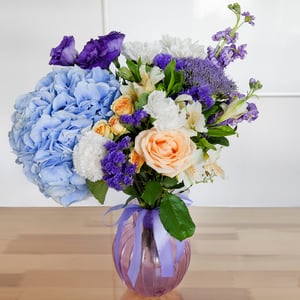
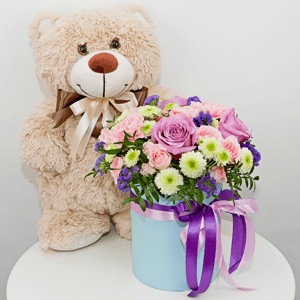
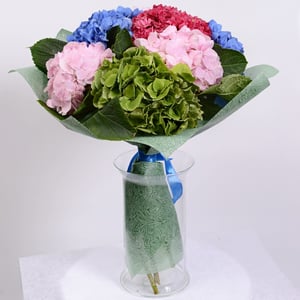
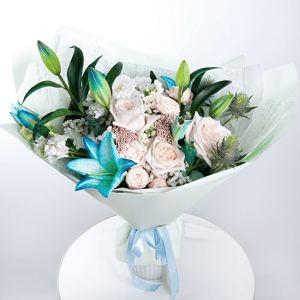
Send the mystery of blue
Browse blue and blue-toned bouquets, hand-arranged and delivered fresh.
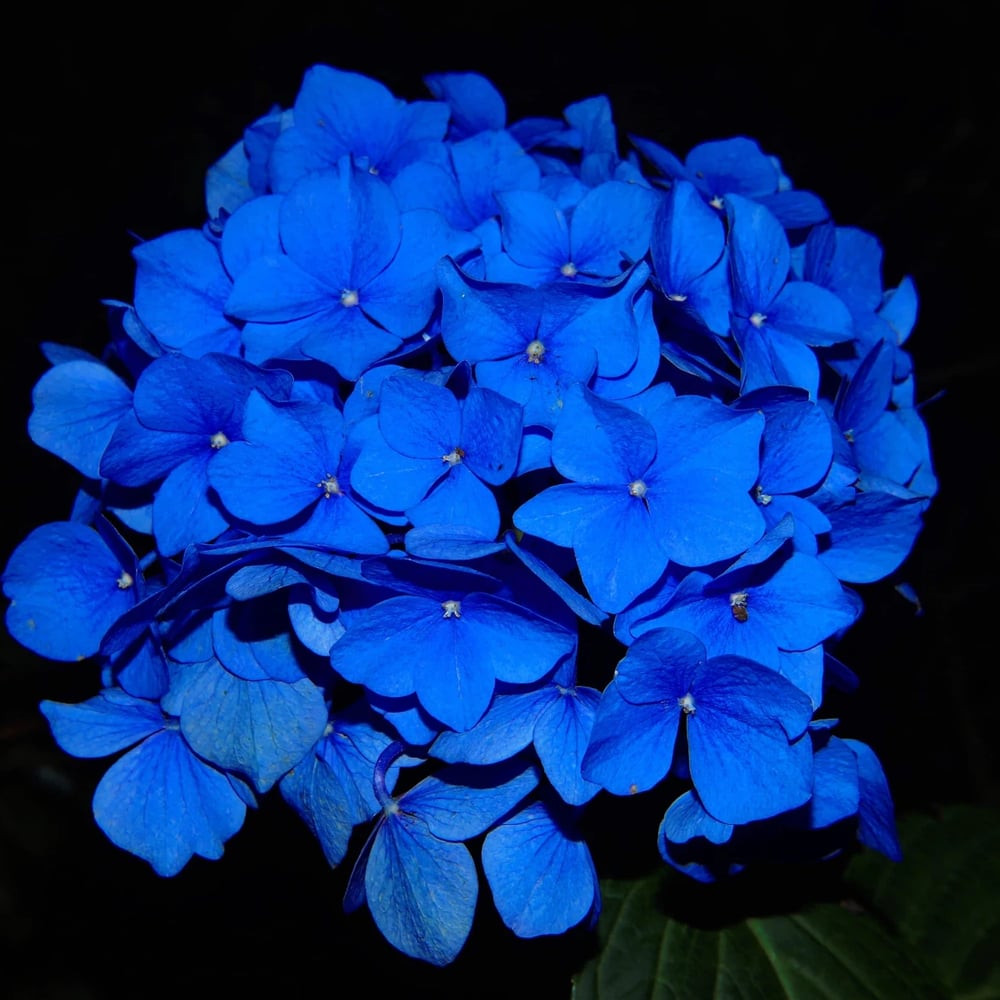
I've always found it fascinating that blue is one of the hardest colors for nature to produce. Fewer than 10% of flowering plants create true blue petals. That scarcity alone makes blue blooms feel special — like a quiet secret the garden keeps for the most observant visitors.
In this guide, you'll learn what blue flowers symbolize across cultures and centuries, discover the specific meanings behind ten popular blue varieties, and figure out exactly which blue blooms to send for every occasion — from Valentine's Day to Memorial Day to those "just because" moments. Whether you're choosing flowers for someone you love or simply curious about floral symbolism, you're in the right place. And when you're ready to send blue flowers to someone special, MyGlobalFlowers, an international flower delivery service, connects you with local florists who hand-deliver stunning arrangements in cities across the US and around the world.
What do blue flowers mean?
Blue flowers meaning centers on a powerful cluster of emotions: serenity, trust, mystery, depth, and the beautifully unattainable. These aren't flowers that shout for attention. They whisper. And that quiet confidence is exactly what draws people to them.
Here's the thing — the color blue itself triggers strong psychological responses. Researchers have found that looking at blue lowers heart rate and blood pressure. People associate blue with open skies, deep oceans, and calm evenings. Blue flowers tap into all of that. They carry a sense of peace that no red or orange bloom can replicate.
So what do blue flowers symbolize on a deeper level? They represent honesty, loyalty, and emotional intelligence. They also symbolize longing — that bittersweet ache for something just out of reach. That dual nature is what makes blue flowers so compelling. They can comfort someone grieving and express passionate, unrequited love. The meaning shifts depending on the specific bloom, the shade, and the context.
The rarity factor matters too. Because true blue pigment is so uncommon in the plant kingdom (plants lack the genetic pathways to easily produce blue), every blue flower feels like a small miracle. Nature usually achieves "blue" through pH tricks, light refraction, or pigment combinations rather than straightforward blue pigmentation. That biological rarity reinforces the symbolic meaning: blue flowers represent something precious, something you don't encounter every day.
Blue flowers symbolism through history and culture
Blue flowers meaning has evolved across thousands of years and dozens of civilizations. Understanding that history helps you appreciate why a single blue bloom can carry so much emotional weight today.
Ancient Egypt, Greece, and Rome
The sacred blue lotus (Nymphaea caerulea) held enormous significance in ancient Egypt. Egyptians depicted blue lotus flowers on temple walls, tombs, and papyrus scrolls. They associated the bloom with the sun god Ra because the blue lotus opens at dawn and closes at dusk. Priests used blue lotus in religious ceremonies, and Egyptians believed the flower symbolized rebirth, creation, and divine connection.
In ancient Greece, blue flowers appeared in myths about the gods. The Greeks connected the iris — named after their rainbow goddess Iris — with messages between heaven and earth. Romans adopted similar associations, planting blue flowers near graves to guide souls peacefully into the afterlife.
The Romantic era and the "Blaue Blume"
This is where blue flower symbolism gets really interesting. In the late 1700s, German writer Novalis wrote an unfinished novel called Heinrich von Ofterdingen. In the story, a young poet dreams of a radiant blue flower that becomes his obsession — a symbol of infinite longing, poetic inspiration, and the quest for something transcendent that can never be fully grasped.
The "Blaue Blume" (blue flower) became the defining symbol of the entire German Romantic movement. Other writers, painters, and musicians picked up the image. The blue flower stood for everything the Romantics valued: yearning over possession, the journey over the destination, the spiritual over the material. Honestly, this one surprised me when I first dug into it — a single fictional bloom essentially shaped an entire artistic era across Europe.
That Romantic legacy still echoes today. When you give someone a blue flower, you're tapping into centuries of association with deep longing, idealism, and emotional depth — even when you don't consciously know the history.
Victorian flower language
Victorians took floral symbolism and turned it into a full communication system called floriography. During an era when people couldn't openly express emotions, flowers became coded messages. Blue blooms carried specific meanings within this system:
- ✓Forget-me-nots communicated "remember me always" and true, faithful love.
- ✓Blue violets expressed loyalty and devotion.
- ✓Blue hyacinths signaled constancy — but also carried a note of sorrow or regret.
A Victorian suitor who sent a blue bouquet wasn't just being pretty. That person was making a promise — "I am faithful to you." The recipient understood every petal.
Blue flowers in Asian traditions
Japanese culture holds morning glories (asagao) in high regard. These blue trumpet-shaped flowers bloom at dawn and fade by afternoon, symbolizing the fleeting beauty of life — a concept deeply connected to Japanese aesthetics and the idea of mono no aware (the pathos of things).
In Chinese tradition, blue chrysanthemums represent nobility and scholarly refinement. Chinese artists frequently painted blue blossoms in ink wash paintings to evoke clarity of thought and emotional restraint. Blue flowers in Chinese culture often suggest something elevated, intellectual, and slightly beyond ordinary reach.
Blue flowers and their meanings — a guide to popular varieties
Blue flowers meaning changes significantly depending on which bloom you choose. Here's a detailed guide to ten popular blue flowers, each with its own story to tell.
Blue rose — mystery, the impossible, unrequited love
Blue roses don't exist naturally — florists create them through dyeing or tinting white roses. That's precisely why blue roses symbolize the impossible, the mysterious, and unrequited love. A deep indigo rose says, "You are extraordinary and unattainable." Send blue roses when you want to make a bold, unforgettable impression on someone who appreciates the unconventional.
Forget-me-not — true love, remembrance, loyalty
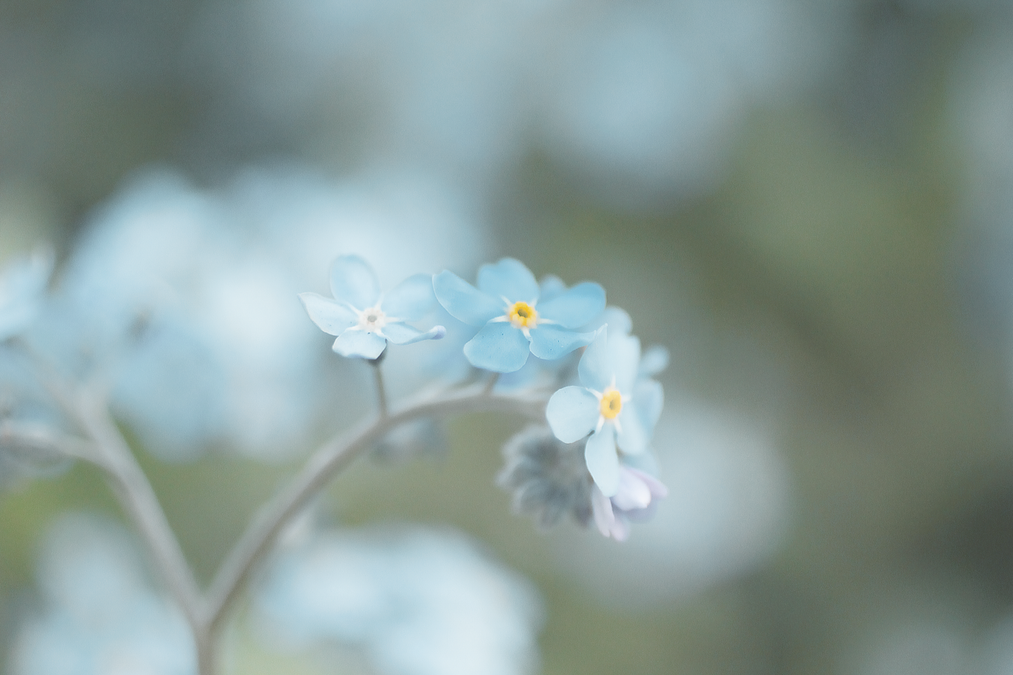
These tiny, five-petaled sky-blue flowers pack enormous emotional punch. Forget-me-nots symbolize enduring love and faithful remembrance. Medieval legends say a knight, drowning in a river, threw a bunch of these flowers to his beloved and cried, "Forget me not!" Give forget-me-nots to express a bond that time and distance can't break.
Blue hydrangea — gratitude, understanding, sometimes apology
Blue hydrangeas are lush, globe-shaped clusters that create instant visual impact. The meaning of blue flowers like hydrangeas centers on heartfelt gratitude and deep understanding. Some traditions also connect blue hydrangeas to apology — acknowledging that you understand someone's pain. These work beautifully for thank-you gestures or moments when you want to say, "I see you, and I appreciate you."
Delphinium (larkspur) — joy, positivity, open heart
Delphiniums grow in tall, dramatic spikes covered in vivid blue florets. These flowers radiate joy, positivity, and an open-hearted spirit. A delphinium bouquet celebrates new beginnings and big achievements. I'd recommend delphiniums for graduations, promotions, or anyone starting a fresh chapter in life.
Cornflower (bachelor's button) — hope, fertility, devotion
Cornflowers are wildflowers with an electric cobalt-blue hue that looks almost surreal against a meadow backdrop. They symbolize hope, fertility, and quiet devotion. In European folk tradition, young men in love wore cornflowers in their buttonholes — hence the name "bachelor's button." These are perfect for casual, heartfelt arrangements.
Blue iris — faith, wisdom, courage
The blue iris stands tall on a sturdy stem, with elegant ruffled petals that suggest both strength and grace. Blue irises represent faith, wisdom, and courage. The flower's name honors the Greek goddess who carried messages between gods and humans. Send blue irises to someone facing a big decision or stepping into a leadership role.
Blue hyacinth — constancy, sincerity, deep regret
Blue hyacinths are dense, fragrant clusters that perfume an entire room. The symbolism carries two sides: sincerity and constancy on one hand, deep regret and sorrow on the other. Greek mythology links hyacinths to the death of Hyacinthus, a youth loved by Apollo. Choose blue hyacinths carefully — they're stunning for expressing genuine emotion, but the regret association means they can carry unintended weight in romantic contexts.
Bluebell — humility, everlasting love, gratitude
Bluebells are delicate, bell-shaped flowers that carpet woodland floors in spring. They symbolize humility, everlasting love, and gratitude. English folklore says fairies used bluebells to lure travelers — a charming reminder that these gentle flowers hold hidden power. Give bluebells to someone you love quietly and deeply.
Morning glory — affection, unrequited love, brief beauty
Morning glories open their trumpet-shaped blue blooms at sunrise and close by afternoon. That fleeting lifespan gives morning glories their meaning: affection that's intense but perhaps impermanent, unrequited love, and the preciousness of short-lived beauty. These flowers suit someone who values living fully in the present moment.
Blue orchid — rarity, luxury, spiritual strength
Blue orchids (often Phalaenopsis orchids dyed or infused with blue pigment, though Vanda coerulea produces natural blue tones) convey rarity, luxury, and spiritual strength. An orchid arrangement makes a sophisticated statement. Send a blue orchid to someone whose elegance and inner strength you admire — it's a gift that says, "You are one of a kind."
Blue flowers that mean love
Blue flowers meaning takes a distinctly romantic turn when you know which blooms carry messages of the heart. Not every blue flower speaks of love — but several do, each in a uniquely nuanced way.
Forget-me-nots express devoted, enduring love. These are the flowers that say, "My love for you doesn't fade." They're ideal for anniversaries, especially milestone years when you want to honor a long-shared history.
Blue roses communicate love that feels extraordinary, otherworldly, and perhaps just out of reach. A blue rose on Valentine's Day tells your partner, "What we have isn't ordinary." It's a bold alternative to the classic red rose — and honestly, it tends to spark much more conversation.
Bluebells carry the meaning of everlasting, humble love. These are perfect for "just because" gestures — the kind of Tuesday afternoon surprise that says, "I love you and I was thinking about you."
Morning glories represent affection with a note of longing. They suit new relationships where feelings are intense and everything feels electric. They also speak to unrequited love — the kind that aches beautifully.
Here's an important distinction: blue flowers express love differently than red or pink blooms. Red shouts passion. Pink whispers sweetness. Blue communicates depth, loyalty, and emotional complexity. When you choose blue flowers for a romantic occasion, you're telling someone that your love has layers — and that's a powerful message.
What do blue flowers represent in spiritual and emotional contexts?
Blue flowers meaning extends well beyond romance and celebration. These blooms carry deep spiritual and emotional significance that makes them uniquely suited for life's more reflective moments.
In spiritual traditions, blue connects to the throat chakra — the energy center governing communication, truth, and self-expression. Practitioners of crystal healing and chakra work often recommend surrounding yourself with blue when you need to speak your truth or listen more deeply. Blue flowers serve that purpose beautifully. Place blue irises on your desk before a difficult conversation. Set a vase of blue hydrangeas in your meditation space.
Many spiritual traditions also associate blue with divine connection. Blue appears in Christian iconography (the Virgin Mary's robes), Hindu art (Lord Krishna's skin), and Buddhist symbolism (the blue lotus of wisdom). Blue flowers can represent your connection to something larger than yourself.
On the emotional side, blue flowers promote calm, peace, mental clarity, and introspection. Therapists and wellness practitioners sometimes recommend blue flowers for clients dealing with anxiety or grief. The blooms create a visual anchor of tranquility in a chaotic environment.
Practical ways to use blue flowers for spiritual and emotional support:
- ✓Send blue irises to someone starting a new chapter — a new job, a move, a fresh start after a tough year.
- ✓Give blue hydrangeas to a friend going through a difficult time. The gratitude and understanding symbolism tells your friend, "I'm here and I care."
- ✓Choose blue hyacinths for a sympathy arrangement. The deep sincerity meaning offers comfort without being heavy-handed.
- ✓Place bluebells in a recovery room. The soft, humble energy brings gentle encouragement.
Best occasions to send blue flowers in the US
Blue flowers meaning aligns beautifully with specific moments throughout the American calendar. Here's a practical guide to matching blue blooms with US occasions — something most flower guides overlook completely.
- ✓Mother's Day (second Sunday in May):
Blue hydrangeas express deep gratitude. A lush hydrangea arrangement tells your mom, "Thank you for everything." The soft blue tones feel elegant without being over the top. - ✓Graduation season (May–June): Delphiniums celebrate new beginnings, joy, and open-hearted optimism. A tall delphinium bouquet makes a striking graduation gift that stands out from the sea of generic congratulations bouquets.
- ✓Memorial Day (last Monday in May): Forget-me-nots carry the perfect message: remembrance and enduring honor. Include forget-me-nots in arrangements placed at memorials or given to veterans' families.
- ✓Sympathy and funerals:
Blue irises convey faith, peace, and courage. A blue-and-white sympathy arrangement feels calm and respectful — a thoughtful alternative to all-white arrangements. - ✓Baby showers (especially for boys):
Blue flowers remain a classic choice for welcoming a baby boy. Cornflowers, blue delphiniums, and blue hydrangeas create cheerful, celebratory arrangements. - ✓Valentine's Day (February 14):
Blue roses offer a unique twist on romance. Skip the expected red and surprise your partner with blue roses that say, "Our love is extraordinary." - ✓"Thinking of you" and get-well moments:
Bluebells and blue hyacinths bring soft comfort. These flowers say, "I'm here" without overwhelming someone who's already going through a lot. - ✓Thanksgiving (November):
Mix blue hydrangeas with autumn tones like warm oranges and deep golds for an unexpected, sophisticated holiday centerpiece that celebrates gratitude.
How to choose the right blue bouquet
Blue flowers meaning depends not just on the variety but also on the shade, combination, and overall arrangement. Choosing the right blue bouquet starts with two questions: Who is your recipient? What message do you want to send?
Light blues — hydrangeas, forget-me-nots, bluebells — create a feeling of softness, calm, and tenderness. Choose light blue arrangements for comfort, gratitude, and gentle love.
Deep blues — irises, delphiniums, blue roses — project strength, confidence, and admiration. Go with deep blue blooms when you want to make a statement: "I respect you," "I believe in you," or "You amaze me."
Mixed blue-and-white arrangements blend elegance with purity. These combinations work especially well for sympathy, spiritual occasions, and formal celebrations like weddings or milestone anniversaries.
Blue-and-purple pairings add richness and drama. Combine blue irises with lavender roses for a bouquet that feels luxurious and emotionally layered.
When you order through MyGlobalFlowers, local florists assemble each bouquet by hand. The arrangement may vary slightly from the photo on the website because the florist selects the freshest seasonal blooms available. That's actually a good thing — you get an artisan arrangement crafted with care, not a factory-stamped copy. Every bouquet carries the personal touch of a skilled florist who knows local flowers and puts real craftsmanship into each stem.
How to care for blue flowers after delivery
Blue flowers meaning lasts in your heart forever, but the actual blooms need a little TLC to stay fresh as long as possible. Here's how you keep your blue bouquet looking gorgeous:
- ✓Trim the stems at a 45-degree angle — cut about half an inch off the bottom — before placing the flowers in water. That angled cut increases the surface area for water absorption.
- ✓Change the water every two days. Fresh water prevents bacterial growth, which is the number-one killer of cut flowers.
- ✓Keep the vase away from direct sunlight, heating vents, and air conditioning ducts. This matters especially in US homes with central air, where dry forced air can dehydrate petals quickly.
- ✓Remove any leaves that fall below the waterline. Submerged leaves decompose and cloud the water, shortening your bouquet's life.
- ✓Add the flower food packet that often comes with delivered bouquets. That little packet contains sugar (for energy), citric acid (to lower water pH), and bleach (to kill bacteria). It genuinely works.
- ✓Move the bouquet to a cool spot overnight. A cooler room (around 65°F) slows the blooms' metabolism and extends freshness by several days. Your kitchen counter is fine during the day, but a cooler hallway or entryway works better at night.
- ✓Mist delicate petals lightly with a spray bottle every morning. Hydrangeas and delphiniums especially benefit from a little extra humidity on their petals.
Follow these steps and you can easily extend your blue bouquet's life by four to seven days beyond what you'd get with no care at all.
Common mistakes when sending blue flowers (and how to avoid them)
Blue flowers meaning is nuanced — and that nuance can trip you up if you're not paying attention. Here are the most common mistakes people make and simple ways to sidestep them.
- ✗Picking blue flowers for romance without checking the specific bloom's meaning.
Blue hyacinths, for example, can imply deep regret — not exactly the Valentine's Day vibe you're going for. Always look up the individual flower before you order. - ✗Assuming all blue flowers look the same.
Blue spans a huge spectrum: powder blue, periwinkle, cobalt, cerulean, indigo, navy. A powder-blue hydrangea creates a completely different mood than a deep-blue iris. Think about tone and atmosphere before choosing. - ✗Forgetting to include a personal note.
Blue flowers carry layered, sometimes ambiguous meanings. A handwritten card removes any guesswork and lets your recipient know exactly what you meant. Even a single sentence — "These reminded me of you" — makes a difference. - ✗Ordering too late for same-day delivery.
Place your order before noon in your recipient's time zone (EST, CST, MST, or PST) for the best chance at same-day delivery. Local florists need time to source, arrange, and hand-deliver the bouquet. - ✗Overlooking cultural context for multicultural recipients.
While blue is universally associated with calm and trust in most Western cultures, some cultures attach different connotations. When you're sending blue flowers to someone from a different background, a quick consideration goes a long way.
Conclusion
Blue flowers hold a kind of quiet magic that no other color in the floral world can match. They speak to the deepest parts of us — our longing, our loyalty, our search for peace and meaning. Every time I research blue flower symbolism, I discover another layer, another story, another reason to appreciate these rare and extraordinary blooms.
My personal takeaway? Don't save blue flowers for a "special" occasion. Sometimes the most powerful gesture is an unexpected one — a Tuesday afternoon delivery of forget-me-nots, a single blue iris on a friend's doorstep during a hard week, a blue hydrangea arrangement that simply says, "I was thinking about you."
So here's my question for you: what's your favorite blue bloom, and who would you send it to?
When you're ready to turn that thought into a real bouquet, explore the . Local florists in cities across the US and worldwide will hand-deliver something beautiful to anyone you care about. And if this guide helped you see blue flowers in a new way, share it with someone who'd appreciate it — everyone deserves to know the story behind the bloom.
Find your blue bouquet
Browse the full collection and let a local florist deliver it fresh today.
Frequently asked questions
What do blue flowers mean in a relationship?▾
Blue flowers express deep loyalty, emotional trust, and enduring devotion in a relationship. Forget-me-nots and bluebells speak to lasting love, while blue roses suggest a bond that feels rare and extraordinary. The specific bloom you choose adds its own shade of meaning, so pick a flower that matches the stage and depth of your relationship.
Are blue flowers rare in nature?▾
Yes — genuinely blue flowers are among the rarest in the plant kingdom. Fewer than 10% of flowering plants produce true blue blooms. Most "blue" flowers use pigment combinations, pH-dependent color changes, or light-scattering structures to create the appearance of blue. That natural scarcity is a big reason blue flowers carry such powerful symbolism.
What is the best blue flower to give as a sympathy gift?▾
Blue irises are an excellent choice for sympathy. They represent faith, peace, and courage — exactly the message you want to send during a difficult time. Blue-and-white arrangements combining irises with white lilies or roses create a calming, respectful tribute. Blue hydrangeas also work well because they express deep understanding and emotional support.
Can you mix blue flowers with other colors in a bouquet?▾
Absolutely. Blue flowers pair beautifully with white for elegance and sympathy, with purple for richness and depth, with pink for a soft romantic feel, and with yellow or orange for a vibrant, eye-catching contrast. Mixing colors lets you layer meanings and create a bouquet that tells a more complex story.
What does a blue rose symbolize?▾
A blue rose symbolizes mystery, the impossible, and unattainable love. Because blue roses don't occur naturally, they represent something beyond the ordinary — a love or a dream that transcends everyday experience. Blue roses make a dramatic, memorable gift for someone who values uniqueness and isn't afraid of bold romantic gestures.
When is the best time to send blue flowers?▾
Blue flowers suit nearly any time of year. They're especially meaningful on Mother's Day (blue hydrangeas for gratitude), Memorial Day (forget-me-nots for remembrance), graduation season (delphiniums for new beginnings), and Valentine's Day (blue roses for unique romance). Blue flowers also work perfectly for sympathy, recovery, and "thinking of you" moments — occasions that don't follow a calendar but still call for something thoughtful.