 EUR
EUR
 GBP
GBP
 CAD
CAD
 AUD
AUD

 ✨ Father's Day ✨
 Birthday
 Occasions
 Same Day
 Flowers
 Roses
Roses
 Plants
 Gifts
Gifts
 International Flower Delivery
Blumen Verschicken
There are roughly 90 recognized species in the genus Lilium — and that's before you count the thousands of hybrid cultivars breeders have developed over the past century. So when someone says "I love lilies," the natural follow-up is: which type? The world of lilies is enormous, gorgeous, and honestly a little overwhelming. That's exactly why this guide exists. Whether you're shopping for a bouquet, planning a garden bed, or simply trying to figure out what that stunning flower is in your neighbor's yard, you've come to the right place. — an international flower delivery service that connects you with local florists worldwide — put this guide together so you can explore every corner of the lily universe with confidence.
Find your perfect lily
Shop the full lily collection, hand-arranged and delivered fresh by a local florist.
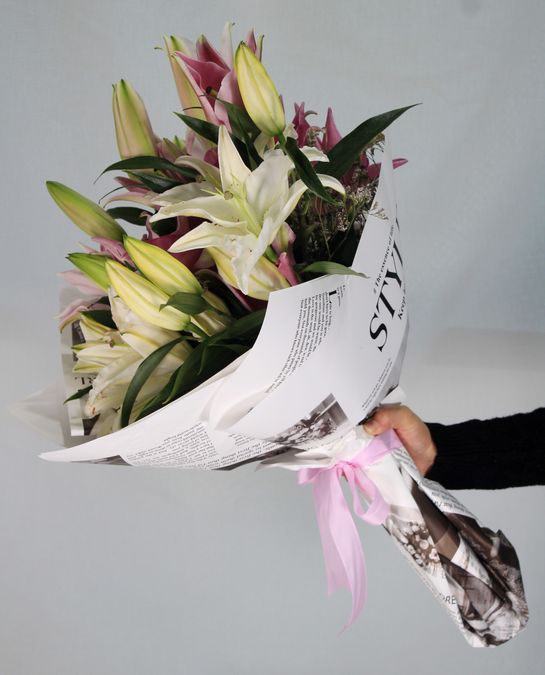
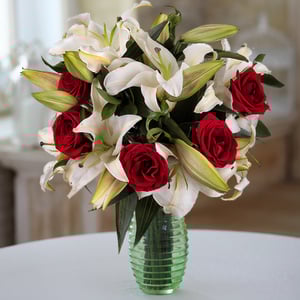
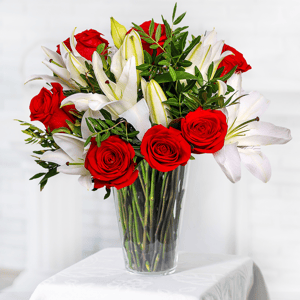
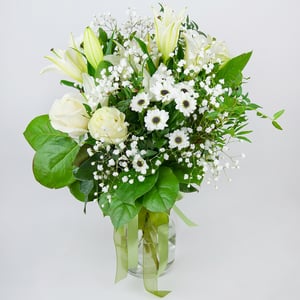
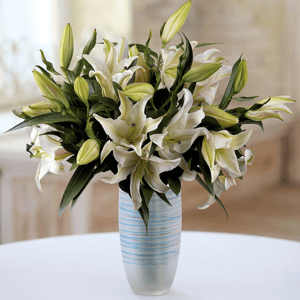

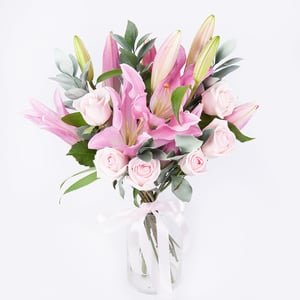
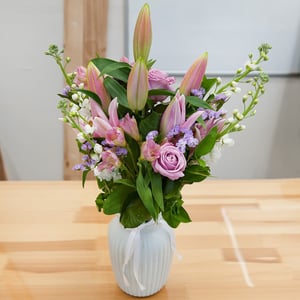
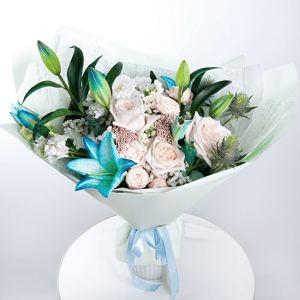
Here's what you'll learn: the names and characteristics of all major lily divisions, how to tell different types of lilies apart by their leaves and flower shapes, which varieties are common at US garden centers and florist shops, which rare types of lilies collectors obsess over, a dedicated look at types of pink lilies for every occasion, and practical care tips for both garden beds and fresh-cut bouquets. Let's get into it.
What makes a true lily? (Quick botany primer)
Before we talk about different types of lilies, let's clear up a surprisingly common confusion. Plenty of plants carry the word "lily" in their name but have zero relation to the genus Lilium. Daylilies (Hemerocallis) grow from tuberous roots, not bulbs, and each bloom lasts just 24 hours. Calla lilies (Zantedeschia) belong to the arum family. Lily of the valley (Convallaria majalis) is a woodland groundcover in a completely separate botanical order. Peace lilies (Spathiphyllum) aren't even close.
True lilies share a specific set of traits:
- ✓True lilies grow from scaly bulbs — not tubers, corms, or rhizomes.
- ✓True lilies produce six-tepaled flowers (three petals plus three petal-like sepals that look identical).
- ✓True lilies send up a single unbranched stem from the bulb each growing season.
- ✓True lilies bear prominent stamens with large, pollen-heavy anthers.
Once you know these markers, you'll never confuse a daylily with a Stargazer again.
Different types of lilies leaves — how to identify lilies by foliage
Here's a trick most casual gardeners don't know: you can identify types of lilies by their leaves alone, long before the first bud opens. Lily foliage falls into two main arrangements.
Whorled leaves circle the stem in distinct rings, like the spokes of a wheel. Martagon lilies (Division II) display this pattern most clearly. The leaves are broad, elliptical, and often slightly glossy.
Alternate (scattered) leaves attach individually along the stem in a spiral pattern. Asiatic, Oriental, and Longiflorum lilies all follow this arrangement. The leaves tend to be lance-shaped — narrow, pointed, with parallel veins running the length of each blade.
Beyond arrangement, pay attention to texture and width. Asiatic lily leaves are usually narrow (about ½ inch wide), matte, and medium green. Oriental lily leaves are wider (up to 1½ inches), darker green, and noticeably glossier. Trumpet lily foliage falls somewhere in between — medium width, slightly waxy. These differences in types of lilies leaves might seem subtle, but they become second nature once you start looking.


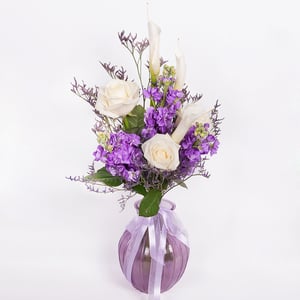

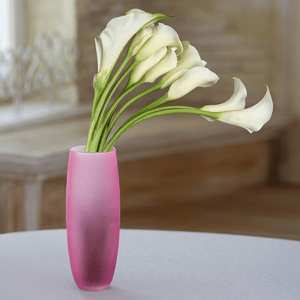

Complete types of lilies list — all major divisions
The Royal Horticultural Society and the North American Lily Society recognize nine horticultural divisions for types of lilies. This classification system organizes every registered cultivar by parentage and flower form. Here's the full types of lilies list, broken down so you can navigate it easily.
Asiatic lilies (Division I)
Asiatic lilies bloom earliest — often by late May or early June in most US zones. The flowers face upward, outward, or slightly downward depending on the cultivar, and they come in the widest color range of all types of lilies: red, orange, yellow, pink, white, cream, lavender, and near-black. One thing Asiatics don't offer? Fragrance. The blooms are essentially unscented, which actually makes them ideal for indoor arrangements and dinner tables where heavy perfume would compete with food.
Popular cultivar names include 'Enchantment' (classic orange-red), 'Tiny Ghost' (deep burgundy-black), and 'Forever Susan' (bicolor orange and maroon). Most Asiatics reach 24–36 inches tall and thrive in USDA Zones 3–8. The alternate, lance-shaped leaves are narrow and abundant along the stem.
Martagon lilies (Division II)
Martagon lilies produce downward-facing Turk's-cap flowers — the petals curve back sharply toward the stem, creating an elegant pendant shape. Each stem can carry 20, 30, even 50 small blooms in a candelabra-like arrangement. I always find Martagons fascinating because they genuinely look like something from a Renaissance painting.
The whorled leaf arrangement sets Martagons apart from every other division at a glance. These lilies tolerate partial shade better than any other type, making them perfect for woodland gardens. They also naturalize beautifully, spreading slowly into large clumps over the years. Popular names: 'Claude Shride' (deep maroon), 'Manitoba Morning' (pink-mauve with darker spots). Height ranges from 36 to 72 inches. Hardy in Zones 3–7.
Candidum / Euro-Caucasian hybrids (Division III)
Division III traces its heritage to the Madonna lily (Lilium candidum), one of the oldest cultivated flowers in Western civilization. These types of lilies produce pure white, fragrant, outward-facing blooms on sturdy stems. A unique trait: the Madonna lily forms a basal rosette of leaves in autumn that persists through winter, photosynthesizing during mild spells. You plant these bulbs shallowly — just 1–2 inches deep — unlike most other lilies. Division III hybrids remain relatively uncommon in the US market, but specialty bulb suppliers carry them.
American hybrids (Division IV)
American hybrids descend from native North American species like Lilium pardalinum (Leopard Lily), L. canadense (Canada Lily), and L. superbum (Turk's Cap Lily). These are rare types of lilies in commercial trade, yet they hold enormous ecological importance. Native pollinator insects and hummingbirds evolved alongside these species. American hybrids prefer moist, acidic soils — think along stream banks and the edges of deciduous forests. Gardeners in the eastern US with damp, shady properties should seriously consider these underappreciated beauties.
Longiflorum lilies (Division V)
Picture this: a pure white, trumpet-shaped flower with a perfume so sweet it fills an entire room. That's the Easter lily — the defining member of Division V. Nearly all commercially grown Easter lilies in the US come from a narrow coastal strip along the Oregon-California border, where the climate is uniquely suited to their needs.
Longiflorum lilies bloom naturally in midsummer, but growers force them into bloom for Easter by manipulating temperature and light. Outdoors, they're reliably perennial in USDA Zones 7–9 and marginally hardy in Zone 6 with heavy mulching. The flowers face outward to slightly downward, and each stem typically carries 3–8 blooms.
Trumpet and Aurelian lilies (Division VI)
Trumpet and Aurelian lilies are the skyscrapers of the lily world. These types of lilies routinely reach 4–6 feet tall, and some specimens hit 8 feet in ideal conditions. The flowers are large, outward-facing trumpets with a powerful fragrance that carries on warm evening air. Colors tend toward white, yellow, gold, apricot, and soft pink.
Popular cultivar names include 'African Queen' (apricot-orange), 'Golden Splendor' (deep yellow), and 'Regale Album' (white with a gold throat). These lilies need full sun, excellent drainage, and staking in windy locations. Hardy in Zones 4–8. Honestly, a row of Trumpet lilies in full bloom is one of the most dramatic sights in any garden.
Oriental lilies (Division VII)
If you ask me, Oriental lilies are the showstoppers of the entire genus. The blooms are massive — 6 to 10 inches across — with flat or recurved petals, prominent papillae (raised bumps on the inner petals), and a fragrance so rich it borders on intoxicating. They bloom in late summer, extending the lily season well into August and September.
The most famous cultivar? 'Stargazer' — a vibrant deep pink with white edges and dark speckles. Other beloved names include 'Casa Blanca' (pure white, widely used in wedding bouquets), 'Muscadet' (white with pink freckling), and 'Sorbonne' (solid rose-pink). Orientals thrive in USDA Zones 5–8 and prefer acidic, humus-rich soil. Their leaves are wider and glossier than Asiatic types — a useful identification clue.
Interdivisional hybrids (Division VIII)
Division VIII is where modern lily breeding gets really exciting. Breeders cross different types of lilies across divisions to combine the best traits of each parent. The results include:
- ✓LA hybrids (Longiflorum × Asiatic) produce large, upward-facing blooms with a light fragrance and sturdy stems — perfect for the cut flower industry.
- ✓OT hybrids / Orienpets (Oriental × Trumpet) deliver the massive bloom size and fragrance of Orientals with the vigor and cold-hardiness of Trumpets.
- ✓AO hybrids (Asiatic × Oriental) offer extended bloom times and expanded color palettes.
Popular OT cultivar names include 'Silk Road' (white flushed with crimson), 'Conca d'Or' (yellow fading to cream), and 'Royal Sunset' (orange-apricot). These hybrids tend to be tall, vigorous, and disease-resistant — a win all around. Zones 4–8 for most varieties.
Species lilies (Division IX)
Division IX encompasses the wild, unaltered species of Lilium. Gardeners drawn to naturalistic planting love these types of lilies for their authenticity and ecological value. Key species include:
- ✓Lilium regale (Regal Lily) produces white trumpets with a purple-stained reverse and a gorgeous fragrance. Easy to grow from seed.
- ✓Lilium henryi displays orange Turk's-cap flowers on arching 6-foot stems. Remarkably adaptable to alkaline soil.
- ✓Lilium lancifolium (Tiger Lily) features orange, heavily spotted, recurved blooms. Tough, vigorous, and nearly indestructible in Zones 3–9.
Species lilies vary widely in their requirements, so always research the specific species before planting.
Common types of lilies you'll find everywhere
Not all types of lilies are equally easy to track down. Here are the common types of lilies that dominate US garden centers, grocery store floral departments, and professional florist shops — the ones you're most likely to encounter.
- ✓Asiatic lilies bloom from late spring to early summer, carry no fragrance, and work beautifully in garden beds, containers, and cut-flower arrangements.
- ✓Oriental lilies bloom in mid-to-late summer, fill any room with a strong, sweet fragrance, and serve as the go-to choice for elegant bouquets and event florals.
- ✓Easter lilies (Longiflorum) appear seasonally in spring, offer a moderate-to-strong fragrance, and remain the iconic potted plant for the Easter holiday.
- ✓Tiger lilies bloom in midsummer, have no significant fragrance, and bring bold, spotted color to cottage gardens and wildflower-style plantings.
- ✓Stargazer lilies (an Oriental cultivar so famous it deserves its own line) bloom in late summer, deliver an unmistakable strong fragrance, and anchor countless florist bouquets and sympathy arrangements.
- ✓LA hybrids bloom from early to midsummer, carry a light fragrance, and dominate the professional cut-flower market due to their long vase life and sturdy stems.
MyGlobalFlowers offers bouquets featuring many of these popular lily varieties. Local florists select the freshest blooms available in your area, so the arrangement always arrives at peak beauty.
Rare types of lilies for collectors and adventurous gardeners
Ready to go beyond the ordinary? These rare types of lilies reward the patient gardener — and they make phenomenal conversation starters.
Lilium mackliniae (Manipur Lily) — a delicate bell-shaped species from northeastern India. The flowers are soft pink, nodding, and only about 2–3 inches long. This species needs cool, moist conditions and dislikes heat. Growing it in the US requires careful site selection or container culture in a cool greenhouse.
Lilium nepalense (Nepal Lily) — one of the most striking species on Earth. The large, pendulous, trumpet-shaped flowers are greenish-yellow with a deep maroon-purple blotch inside. This tropical-montane species demands cool roots, warm humid air, and perfect drainage. Not for beginners, but unforgettable for anyone who succeeds.
Lilium lankongense — a Chinese species with fragrant, pink, Turk's-cap flowers. It's rare in cultivation because seed germination is slow and unpredictable. Specialist bulb dealers occasionally offer it.
Lilium pumilum (Coral Lily) — a dainty species from Central Asia with small, nodding, scarlet-red flowers. It grows only 12–18 inches tall, making it one of the shortest true lilies. Short-lived but easy from seed.
Lilium philadelphicum (Wood Lily) — a native of eastern North America, this species produces upward-facing orange-red flowers in dry, open woodlands. Populations have declined due to habitat loss and deer browsing, making it a conservation priority. You can support native plant nurseries that propagate Wood Lilies ethically.
Types of pink lilies — a color guide
Pink is one of the most requested colors in the flower world, and types of pink lilies span nearly every division. Here's your quick reference guide to the best pink lily options.
Asiatic pinks
'Tiny Diamond' produces soft pastel-pink, upward-facing blooms on compact 18-inch stems — perfect for containers. 'Elodie' is a standout: a double-flowered Asiatic with ruffled pink petals and no pollen. The double form makes 'Elodie' an exceptional cut flower because you don't have to worry about pollen staining your tablecloth.
Oriental pinks
'Stargazer' remains the undisputed queen of types of pink lilies — deep fuchsia-pink with white petal edges and dark spots. 'Sorbonne' delivers a similar look with a slightly lighter, rosier hue. 'Acapulco' glows in hot pink without speckling. And the Roselily™ 'Samantha' is a pollen-free double Oriental in soft blush-pink — it's gaining popularity fast in the bridal market.
OT hybrid pinks
'Tabledance' opens in rich raspberry-pink with a lighter center. 'Zelmira' offers a more delicate pink-and-white bicolor effect. OT pinks tend to be tall (3–5 feet), making them dramatic statement flowers in bouquets and garden borders alike.
Species pinks
Lilium speciosum var. rubrum produces recurved, heavily spotted, deep rose-pink flowers with a spicy-sweet fragrance. Lilium japonicum displays a soft, shell-pink trumpet form — extremely refined and understated.
Pink lilies are popular choices for Mother's Day bouquets, Valentine's Day gestures, and baby girl celebrations across the US. When you order a lily bouquet through MyGlobalFlowers, the local florist may substitute specific cultivar names with equally beautiful pink varieties based on seasonal availability — and that's actually a plus. You get the freshest possible flowers, hand-selected by someone who knows what looks best that day.
Different types of lilies flowers — shapes, sizes, and petal forms
Different types of lilies flowers come in a surprising range of shapes. Understanding flower form helps you choose the right lily for your garden design or bouquet aesthetic.
- ✓Trumpet — elongated, funnel-shaped blooms that flare open at the mouth. Classic examples include Easter lilies and Division VI Trumpets.
- ✓Bowl or cup — wide, open, upward-facing flowers. Many Asiatic cultivars display this form.
- ✓Flat or open-faced — petals spread nearly flat, creating a star-like silhouette. Orientals like 'Casa Blanca' typify this shape.
- ✓Recurved (Turk's cap) — petals curve back sharply toward the stem, exposing the long stamens. Martagons and Tiger Lilies showcase this elegant pendant form.
- ✓Star-shaped — petals separate distinctly with visible gaps between them. Some LA hybrids and species display this geometry.
- ✓Double — extra layers of petals replace the stamens and anthers, meaning these flowers produce no pollen. Doubles like 'Elodie' (Asiatic) and the Roselily™ series (Oriental) are fantastic for allergy sufferers and indoor bouquets. No pollen also means no staining — a real practical advantage.
Flower size varies dramatically across types of lilies flowers. Species blooms like L. pumilum measure just 2 inches across. Large Oriental and OT hybrids spread 8–10 inches — dinner-plate territory. Most Asiatics fall in the 4–6-inch range. When designing a mixed border or selecting flowers for an arrangement, consider how bloom size affects visual weight and proportion.
Best types of lilies for every occasion
Lilies carry meaning, and the right type of lily can elevate any occasion. Here's a US-centric guide to matching types of lilies to life's biggest (and smallest) moments.
- ✓Mother's Day (second Sunday of May): pink and white Orientals, Stargazers, and pollen-free Roselily doubles say "thank you" with elegance and fragrance.
- ✓Easter: Easter lilies (Longiflorum) are the obvious — and perfect — choice. A potted Easter lily remains one of the most-gifted plants in American homes each spring.
- ✓Valentine's Day: red Asiatics like 'Monte Negro' pair beautifully with red roses for a luxurious, romantic arrangement.
- ✓Sympathy and funerals: white Orientals ('Casa Blanca') and white Longiflorum lilies convey peace, reverence, and respect.
- ✓Birthdays: bright Asiatic mixes bring cheerful energy. Tiger lilies suit bold personalities who love something a little wild.
- ✓Thanksgiving: warm-toned Asiatics in orange, gold, and burgundy complement fall tablescapes alongside autumn leaves and candles.
- ✓Housewarming and congratulations: OT hybrids with big, dramatic blooms make a statement that says "this is a big deal."
You can send lily bouquets to loved ones across the US through MyGlobalFlowers. Local florists hand-deliver fresh arrangements directly to the door, and the delivery cost calculates at checkout based on the recipient's location.
How to care for lilies — in the garden and in the vase
Garden care tips for US climates
Getting the best from your lilies starts with understanding a few basics that apply across most types of lilies in the ground.
- ✓Planting time: fall (September through November) works best in most US zones. Gardeners in Zones 3–5 can also plant in early spring as soon as the soil is workable.
- ✓Soil: lilies demand well-drained soil. Slightly acidic to neutral pH (6.0–6.5) suits the majority of divisions. Amend heavy clay with coarse sand, perlite, or compost before planting.
- ✓Sun: most lilies need 6+ hours of direct sunlight daily. Martagons tolerate partial shade — they actually prefer it.
- ✓Planting depth: bury bulbs at a depth equal to 3× the bulb's height. A 2-inch bulb goes 6 inches deep.
- ✓Mulch: apply 2–3 inches of organic mulch to keep bulbs cool, especially in hot southern states (Zones 7–9) where summer soil temperatures soar.
- ✓Staking: tall Trumpets and Orientals benefit from staking in windy areas. Insert the stake at planting time to avoid piercing the bulb later.
- ✓After blooming: deadhead spent flowers to prevent seed formation, but leave the stem and leaves intact until they yellow and wither naturally. The bulb needs that foliage to photosynthesize and store energy for next year's growth.
Cut lily care — keeping your bouquet fresh longer
A fresh lily bouquet can last 7–14 days with the right care. Here's how to maximize vase life.
- ✓Trim each stem at a 45-degree angle using a clean, sharp knife (not scissors — scissors crush the vascular tissue).
- ✓Remove pollen anthers before they open. Use a tissue or paper towel and gently pluck them off. This prevents orange pollen from staining furniture, clothing, and tablecloths — a practical tip that saves you a lot of headaches.
- ✓Strip any leaves that would sit below the waterline. Submerged foliage breeds bacteria fast.
- ✓Change the water every 2 days and add the flower food packet that came with the bouquet.
- ✓Place the vase away from direct sunlight, heating vents, and fruit bowls. Ripening fruit releases ethylene gas, which speeds wilting.
- ✓Keep bouquets in the coolest room during hot US summers — especially in the South and Southwest. Avoid positioning the vase where an AC unit blows directly on the flowers, though. Cold drafts can shock the petals just as much as heat.
Common mistakes with lilies and how to avoid them
Even experienced gardeners slip up with lilies. Here are the most common errors — and straightforward fixes.
- ✗Planting bulbs too shallow. A bulb planted just an inch or two deep sits in the freeze-thaw zone and bakes in summer. Bury each bulb at 3× its height, minimum.
- ✗Overwatering. Lilies hate soggy soil. Waterlogged conditions rot the bulb from the bottom up. Ensure your planting site drains freely, especially during winter dormancy.
- ✗Confusing daylilies with true lilies. Different plants, different needs, different results. Daylilies (Hemerocallis) are tough perennials that tolerate neglect. True lilies (Lilium) need better drainage, deeper planting, and more attention to soil pH.
- ✗Forgetting to remove pollen anthers from cut lilies. Lily pollen stains are notoriously stubborn. Brush pollen off dry fabric with tape or a stiff brush — never rub it with a damp cloth, which sets the stain.
- ✗Ignoring lily toxicity to cats. All true Lilium species pose extreme danger to cats. Even small amounts of pollen, a nibbled petal, or water from the vase can trigger acute kidney failure. Keep lily bouquets and potted lilies completely out of homes with cats. This is not an exaggeration — it's a veterinary emergency every single time.
- ✗Planting in heavy clay without amending drainage. Clay soil compacts around the bulb, traps moisture, and invites fungal disease. Mix in generous amounts of coarse sand, perlite, or aged bark to open up the soil structure.
Lilies as gifts — sending the perfect lily bouquet
Sending types of lilies as a gift is one of the most thoughtful gestures you can make — and it's easier than you might think. Here's how ordering through MyGlobalFlowers works:
- ✓You browse the catalog and pick a lily bouquet (or a mixed arrangement featuring lilies) online.
- ✓A local florist in the recipient's city receives the order and assembles the bouquet using the freshest available lilies.
- ✓A courier hand-delivers the arrangement directly to the door.
The bouquet may vary slightly from the website photo because the florist selects what's freshest and most vibrant that day. Think of it as artisan craftsmanship — no two arrangements are exactly identical, and that personal touch is part of the charm. Delivery cost is calculated individually at checkout based on the recipient's location and timing.
By the way, lily bouquets make exceptional gifts precisely because they carry a sense of occasion. A simple bunch of Asiatics feels cheerful and approachable. A grand arrangement of 'Casa Blanca' Orientals feels like a special event. You can send flowers to a friend across town or to family in another country — MyGlobalFlowers partners with local florists worldwide, so the flowers always arrive fresh and locally sourced.
Wrapping up: your lily journey starts here
With so many types of lilies out there — from the bold Asiatics that kick off summer to the fragrant Orientals that close it, from the rare Manipur Lily to the ubiquitous Easter lily on every church altar in April — there's genuinely a variety for every garden, every vase, and every occasion. The diversity within this single genus still amazes me after years of writing about flowers. Trumpets that tower over your head. Tiny species blooms you could miss if you blinked. Pollen-free doubles that sit safely on a dining table without staining a single napkin.
Start with one type, and I guarantee you'll end up wanting three more by next season. That's just how lilies work — they pull you in.
Browse lily bouquets in the and surprise someone you care about — or treat yourself. You deserve flowers too.
What's your favorite type of lily? Drop a comment and let us know.
Explore artisan arrangements
Shop artisan arrangements, hand-crafted and delivered fresh today.
Frequently asked questions
What are the most common types of lilies?▾
Asiatic, Oriental, Easter (Longiflorum), Tiger, and Stargazer lilies dominate US gardens and florist shops. LA hybrids are also extremely common in the professional cut-flower industry. You'll find at least one of these types of lilies at virtually any garden center or grocery store floral section.
What's the difference between a lily and a daylily?▾
True lilies (*Lilium*) grow from bulbs and produce flowers that last about two weeks on the plant. Daylilies (*Hemerocallis*) grow from tuberous roots, and each individual bloom lasts just one day (though the plant produces many buds in succession). Daylilies aren't lilies at all, botanically speaking — the two genera belong to different plant families.
Are lilies toxic to cats?▾
Yes. All true *Lilium* species pose extreme danger to cats. Even small amounts of pollen, petals, or water from the vase can cause acute kidney failure. Keep lily bouquets out of homes with cats entirely. Contact your veterinarian immediately if your cat interacts with any part of a true lily.
What types of pink lilies exist?▾
Pink lilies span several divisions: Asiatic pinks like 'Elodie' and 'Tiny Diamond,' Oriental pinks like 'Stargazer,' 'Sorbonne,' and 'Acapulco,' OT hybrids like 'Tabledance' and 'Zelmira,' and species such as *L. speciosum* var. *rubrum* and *L. japonicum*. The Roselily™ series also offers pollen-free double pink Orientals.
How do you identify different types of lilies by their leaves?▾
Look at leaf arrangement first. Martagon lilies have whorled leaves arranged in rings around the stem. Asiatic and Oriental lilies have alternate, lance-shaped leaves scattered along the stem. Leaf width also helps: Asiatic leaves are narrow (about ½ inch), Oriental leaves are wider and glossier (up to 1½ inches), and Trumpet lily leaves fall in between. Vein pattern, texture, and color shade provide additional clues.
Can you send lilies as a gift to someone in the US?▾
Absolutely. Services like MyGlobalFlowers connect you with local florists who hand-deliver fresh lily bouquets to the recipient's door. The florist selects the freshest available lilies based on seasonal stock, so the arrangement always arrives vibrant and beautiful. Delivery cost is calculated at checkout based on the recipient's location.