 EUR
EUR
 GBP
GBP
 CAD
CAD
 AUD
AUD

 ✨Boss’s Day✨
 Birthday
 Occasions
 Same Day
 Flowers
 Roses
Roses
 Plants
 Gifts
Gifts
 International Flower Delivery
First Communion Wishes & Quotes
- ✝️ The best first communion wishes combine a personal detail about the child with a short blessing — generic messages get forgotten, specific ones get framed.
- ✍️ Tailor your wording to the child's personality and your relationship: parents, grandparents, godparents, aunts, and uncles each bring a different emotional angle.
- 💐 Pair your card with a meaningful gift like flowers, a keepsake cross, or a children's Bible — the U.S. Catholic Conference recommends gifts that reinforce faith rather than just mark the occasion.
First communion wishes help you put real emotion into a card that a child will keep for decades. Around 17.5 million Catholic children in the United States celebrate this sacrament each year between ages 7 and 8, typically during spring. You want your message to land — not sound like a greeting card pulled off a shelf 5 minutes before Mass. This guide gives you ready-to-use quotes, messages tailored for girls and boys, Bible verses, and practical tips for writing something genuinely personal.
What first communion means and why your words matter
First communion wishes carry weight because the sacrament itself carries weight. In Catholic tradition, First Holy Communion marks the moment a child receives the Eucharist for the first time. The Catholic Church sets the age of reason at approximately 7 years old — a threshold established by Pope Pius X in his 1910 decree Quam Singulari. Most parishes in the U.S. schedule First Communion Masses between April and June, right in the heart of spring.
Why does your card matter so much? Kids at this age read things literally. They notice who showed up, who wrote something real, and who just signed their name. A thoughtful message gives the child a tangible reminder of love on a day that can feel overwhelming — the white dress, the church full of relatives, the solemnity of the altar.
Your words don't need to sound like Scripture. They need to sound like you.

Short and sweet first communion messages
- First communion messages work best when they stay brief and warm. A long paragraph can overwhelm a 7-year-old reader. Here are messages you can copy directly into a card:
- "May God's love walk with you today and every day after. So proud of you!"
- "What a special day! You stood up tall, and heaven smiled."
- "Jesus is with you now in a brand-new way. That's something to celebrate."
- "Your faith shines bright. Keep letting that light grow."
- "Today you joined a table that stretches across the whole world. Welcome."
- Each message runs under 20 words. That's intentional. Short lines stick. A child rereads a short message; a child skips a long one.








First holy communion wishes for a girl
First communion wishes for a girl often lean on themes of grace, inner beauty, and courage. You want to honor who she actually is — not just the white dress she's wearing.
Messages from parents
"Dear [Name], you amaze us every single day. Today, God gets to be even closer to you. We love you beyond words."
"Watching you walk to the altar filled my heart. Your faith is already stronger than you know, sweetheart."
Messages from grandparents
"My darling granddaughter, I prayed for this day before you were born. God answered beautifully."
"You remind me of your mother on her First Communion day — full of light and a little bit nervous. That's exactly right."
Messages from godparents
- "I made a promise at your Baptism to guide your faith. Seeing you receive Communion today tells me God has done most of the guiding himself."
- "You are brave, kind, and loved. Today proves all three."
- Notice how each message names the relationship. That specificity transforms a generic wish into a keepsake.
First holy communion wishes for a boy
First communion wishes for a boy can highlight strength, adventure, and purpose. Boys at age 7 or 8 respond to language that treats them as capable.
Messages from parents
"Son, today you took a step that grown men find humbling. We couldn't be prouder."
"God gave you a bold heart. Now He's giving you the Eucharist to fuel it. Use both well."
Messages from grandparents
"Your grandfather received his First Communion at St. Patrick's in 1962. Today you carry that same tradition forward, and it means the world to me."
"You knelt, you prayed, you received. Three simple things that change everything."
Messages from aunts and uncles
- "Hey buddy — big day! God's got great plans for a kid like you."
- "I watched you up there today and thought: that kid is going to do amazing things. This is just the start."
- The key difference here? Boys often respond to forward-looking language — "what comes next" rather than "how lovely you looked."
First communion quotes from Scripture
First communion quotes from the Bible anchor your card in the tradition the child just entered. The U.S. Conference of Catholic Bishops (USCCB) recommends several passages for First Communion liturgy. Here are the most fitting ones for a card:
- John 6:35 — "I am the bread of life. Whoever comes to me will never go hungry."
- Psalm 34:8 — "Taste and see that the Lord is good."
- 1 Corinthians 11:26 — "For whenever you eat this bread and drink this cup, you proclaim the Lord's death until he comes."
- Philippians 4:13 — "I can do all things through Christ who strengthens me."
- Proverbs 3:5-6 — "Trust in the Lord with all your heart and lean not on your own understanding."
- Pick one verse. Write it at the top of the card, then add your personal note below. That combination — sacred text plus your own voice — hits differently than either one alone.
Looking for a first communion gift?
Browse arrangements from local florists and pick one that suits the occasion.
First holy communion quotes from saints and popes
- First holy communion quotes from Church leaders add depth without sounding preachy. These voices have resonated with Catholic families for centuries.
- St. Thomas Aquinas wrote, "O sacred banquet, in which Christ is received." Aquinas composed this prayer in the 13th century, and parishes still recite the words during Communion hymns today.
- Pope Francis told a crowd of 100,000 First Communicants in St. Peter's Square in October 2022: "Jesus does not remain distant from us. He comes very close." That directness works perfectly in a child's card.
St. Thérèse of Lisieux described her First Communion in her autobiography Story of a Soul (1897): "It was a kiss of love. I felt I was loved." Thérèse was 11 years old when she received the Eucharist — older than most American children today, because French parishes at the time required more preparation.
Pope St. John Paul II said, "The Eucharist is the heart of the Church." He wrote those words in his 2003 encyclical Ecclesia de Eucharistia.
You can quote any of these directly on a card, followed by the attribution. A saint's words carry an authority your own words don't need to carry — and that's the point.
What to write when you're not religious
Not everyone sending first communion wishes shares the child's faith. Maybe you're a non-Catholic family friend, a neighbor, or a relative from a different tradition. That's completely fine. The child's family invited you because they value your presence.
- Focus on the child, not the theology:
- "Today is a huge milestone for you. I'm so happy to celebrate with your family."
- "You worked hard to prepare for this day, and that dedication says a lot about who you are."
- "Watching you grow up is one of my favorite things. Today is another chapter in a great story."
- "Your family is so proud, and I am too. Keep being exactly who you are."
- Skip phrases that feel forced — "May God bless you" rings hollow coming from someone who doesn't pray. Sincerity always outperforms formality.

First communion messages by relationship
First communion messages land harder when you acknowledge your specific bond with the child. Here's a quick-reference guide:
| Relationship | Tone to strike | Example opening line |
|---|---|---|
| Parent | Deep pride, emotional vulnerability | "My sweet [Name], today changed both of us." |
| Grandparent | Legacy, continuity, family story | "Three generations at the same altar..." |
| Godparent | Responsibility, spiritual partnership | "I stood beside you at Baptism, and I stand beside you now." |
| Aunt/Uncle | Warmth, playfulness, encouragement | "Your coolest aunt/uncle is also your biggest fan today." |
| Family friend | Respect, celebration, warmth | "Your parents' joy today is contagious." |
| Sibling | Inside jokes, genuine pride | "You did it! And you only fidgeted twice." |
This table gives you a starting point. Customize from here.


Practical tips for writing a standout card
- First communion wishes deserve more than 30 seconds of thought. Here's how to write a card that lasts:
- Start with the child's name. "Dear [Name]" is simple but grounding. The child sees their name and knows the message belongs to them.
- Mention one specific detail. Reference something real — their favorite hymn, the way they practiced receiving the host, the family dinner planned afterward.
- Keep the message under 50 words. Long messages lose young readers. Say what matters and stop.
- Use your own handwriting. A 2019 study from Indiana University found that handwriting activates more areas of the brain than typed text. The child's brain will process your handwritten card more deeply.
- Include a small token. Tuck in a holy card, a $10 bill, or a pressed flower. Physical objects transform a card into a keepsake box.
- Avoid these mistakes:
- Writing "Congrats on your communion!" as if the child just won a soccer trophy. Acknowledge the sacred dimension.
- Comparing the child to siblings. Each First Communion belongs to one child alone.
- Using language the child can't read. Write at a 2nd-grade reading level — most First Communicants are in 2nd grade.
How to pair your card with the right gift
- A card gains power when you pair the words with a meaningful gift. The average American family spends between $100 and $200 on First Communion gifts, according to a 2023 survey by the National Retail Federation's consumer data.
- Gift ideas that complement your wishes:
- A children's Bible with the child's name engraved (around $25–$40)
- A rosary bracelet in sterling silver ($30–$60)
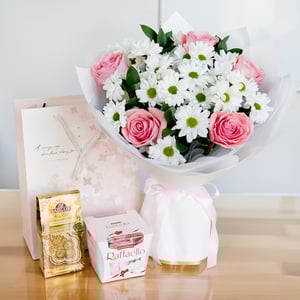
- A bouquet of white flowers — lilies or roses — delivered by a local florist on the morning of the ceremony
- A savings bond or contribution to a 529 education plan ($50+)
- A framed print of the child's patron saint
White flowers hold special significance. White symbolizes purity in Catholic tradition, and lilies specifically recall the Virgin Mary. A local florist can prepare a small arrangement the morning of the ceremony, so the flowers arrive fresh.
Timing your card and gift
Most First Communion ceremonies in the U.S. take place on Saturday mornings or Sunday afternoons between April and June. Mail your card at least 5 business days before the ceremony date. The USPS average delivery time for first-class mail runs 2–5 business days.
Attending in person? Hand the card directly to the child after Mass. That moment of eye contact matters more than the envelope.
Ordering flowers? Place the order at least 2 days in advance. Local florists deliver same-day in most cities, but weekend demand during communion season (April through June) can strain availability. Ordering by Thursday guarantees Saturday delivery.
Here's what sticks with me about writing first communion wishes: the child won't remember every guest at the party or every gift on the table. But a card with real words, written in your own hand, tucked into a drawer — that card shows up again 15 years later when the child cleans out their childhood room. And suddenly your words matter all over again. So take 5 minutes. Write something true. That's the whole secret.
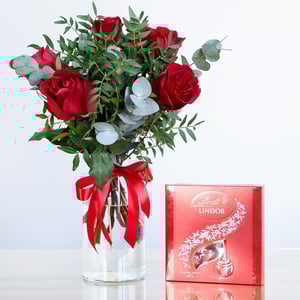
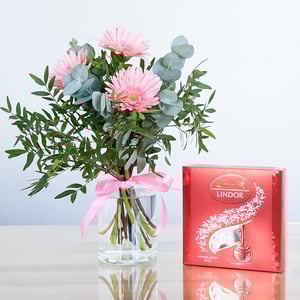
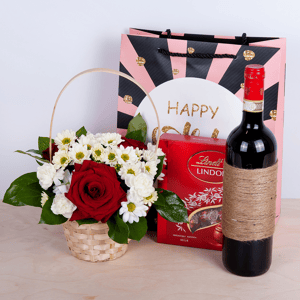
Send a first communion bouquet
Choose your bouquet, add a message, and let a local florist hand-deliver it.
FAQ
What do you write in a first communion card?▾
Write the child's name, a short personal message (under 50 words), and optionally a Bible verse. Keep the tone warm and age-appropriate — most First Communicants are 7 or 8 years old.
What is the difference between "first communion wishes" and "first holy communion wishes"?▾
Both phrases mean the same thing. "First Holy Communion" uses the full liturgical name of the sacrament, while "First Communion" is the everyday shorthand. Catholic doctrine treats both as identical.
Can non-Catholics give first communion cards?▾
Absolutely. Focus your message on the child's growth and the pride the family feels. You don't need to quote Scripture or reference Catholic theology — genuine warmth matters most.
What Bible verse works best for a first communion card?▾
John 6:35 ("I am the bread of life") directly connects to the Eucharist and resonates with children because of its simplicity. Psalm 34:8 ("Taste and see that the Lord is good") is another strong choice — concrete and sensory.
How much money do you give for first communion?▾
Close family members typically give $50–$100. Godparents often give $100–$200 or a meaningful keepsake. Friends and extended family usually give $25–$50. There's no official rule — give what feels right for your relationship and budget.
Should I give flowers for first communion?▾
White flowers — especially lilies, roses, or daisies — make a thoughtful gift. A small bouquet from a local florist costs $30–$60 and carries symbolic meaning in Catholic tradition. Pair the flowers with a handwritten card for maximum impact.