 EUR
EUR
 GBP
GBP
 CAD
CAD
 AUD
AUD

 ✨Boss’s Day✨
 Birthday
 Occasions
 Same Day
 Flowers
 Roses
Roses
 Plants
 Gifts
Gifts
 International Flower Delivery
Best Flowers for a Funeral
- 🌸 White lilies, roses, and chrysanthemums remain the most common and appropriate funeral flowers across the U.S., with arrangements typically ranging from $50 to $350 depending on size and style.
- ✍️ Keep your card message short and genuine — two sentences beat a paragraph every time — and send flowers to the funeral home at least 2–3 hours before the service starts.
- 💐 Color matters: white signals peace, red expresses deep love, purple conveys dignity, and you should avoid overly bright tropical blooms unless the family specifically requests them.
Funeral flowers carry a weight that words alone can't match. Over 80% of American funerals include floral arrangements, and the National Funeral Directors Association reports that families spend between $200 and $600 on sympathy flowers for a single service. Choosing the best flowers for funeral services matters because the right blooms speak directly to the grieving — and the wrong choice can feel hollow. This guide walks you through every step: which flowers to pick, what colors mean, how to send them, and exactly what to write on the card.
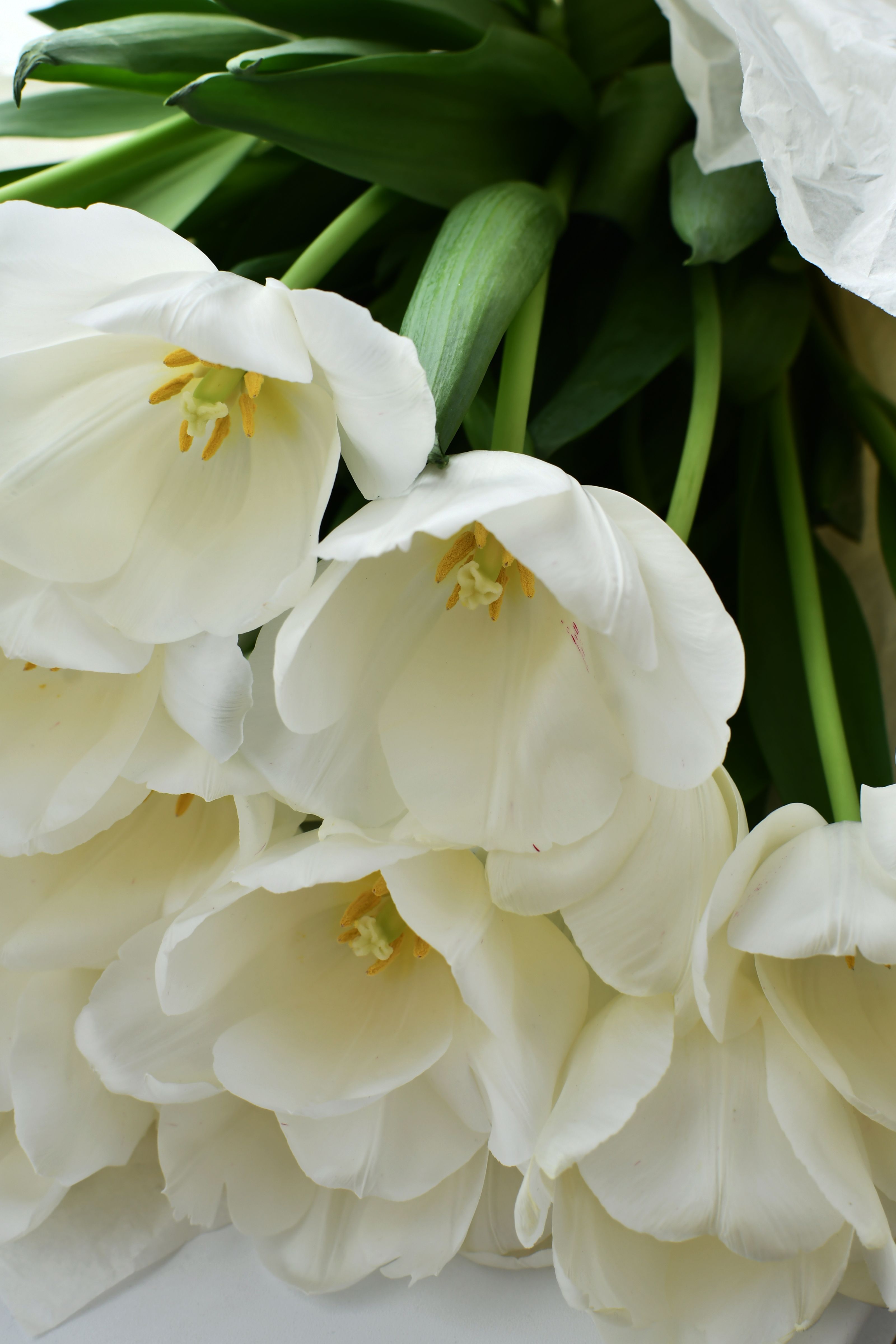
What kind of flowers work best for a funeral?
The best flowers for funeral services strike a balance between beauty, symbolism, and restraint. Not every bloom fits. Here's a breakdown of the 8 most trusted options across American funeral homes.
Lilies
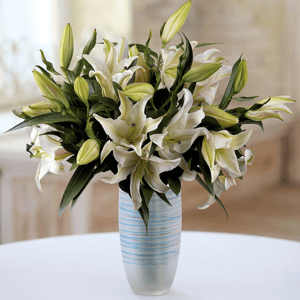
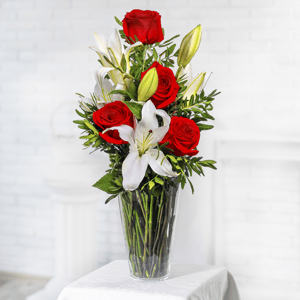
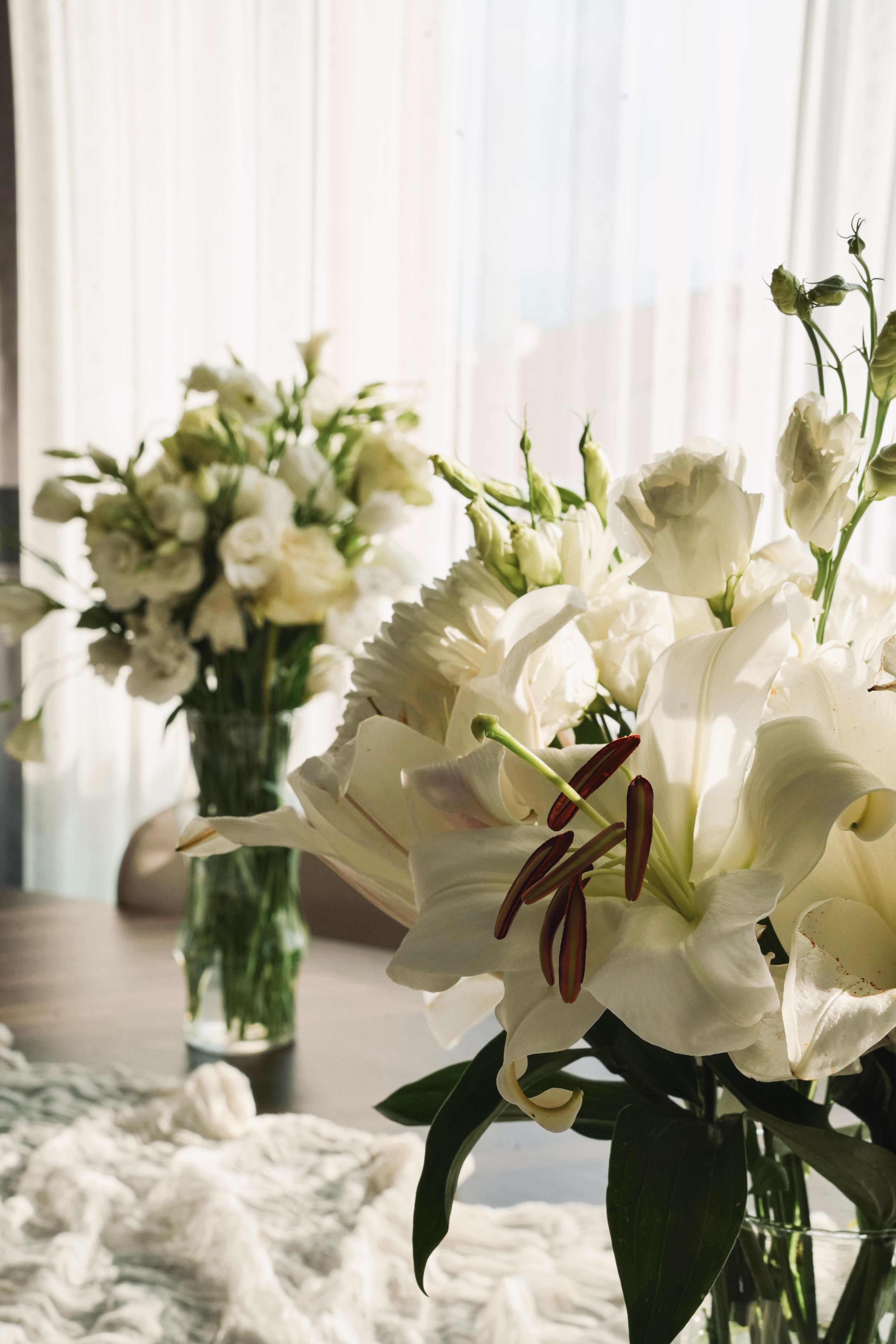
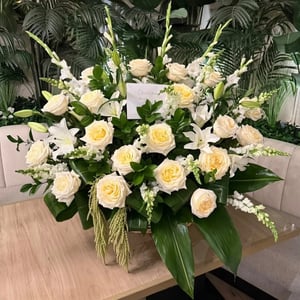
Stargazer lilies and white Oriental lilies dominate U.S. funeral arrangements. White lilies represent the restored innocence of the soul after death. A single stem measures 6–8 inches across. Florists in every state stock white lilies year-round, making them a reliable choice for same-day orders.
Roses
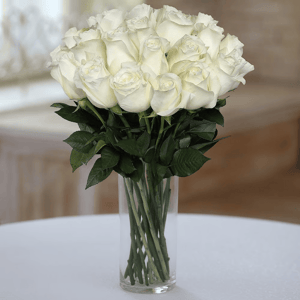
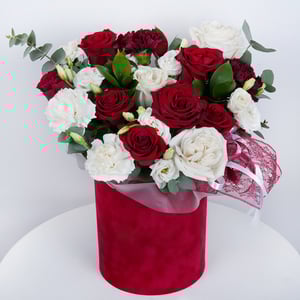
Roses carry specific meaning based on color. Red roses declare deep love. White roses signal reverence. Pink roses show gratitude. Yellow roses honor a close friendship. A standard funeral rose arrangement holds 12–24 stems and costs between $60 and $150 at most local florists.
Chrysanthemums
In the U.S., chrysanthemums express loyalty and devotion. Fun fact — in many European countries, mums appear exclusively at funerals. American florists, though, mix chrysanthemums into both sympathy and celebration arrangements. White and gold varieties work best for services.
Carnations
Carnations last longer than most cut flowers — up to 2–3 weeks with proper care. Red carnations signify admiration. White carnations suggest pure love. A full carnation spray starts around $45, making carnations one of the most budget-friendly sympathy flowers.
Gladioli
Gladioli stand 2–4 feet tall. Their height makes gladioli a go-to for standing sprays. The name comes from the Latin word gladius (sword), representing strength and moral character. Funeral homes across the Midwest and South regularly feature gladioli in service displays.
Orchids
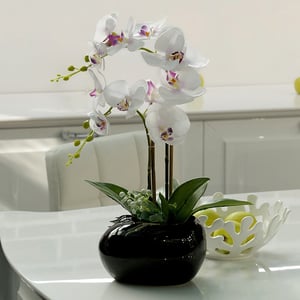
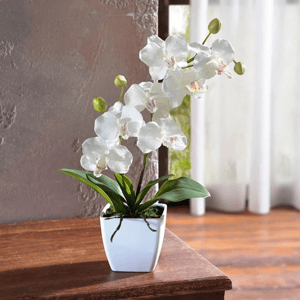
Orchids communicate everlasting love. A potted phalaenopsis orchid makes a thoughtful sympathy gift because the plant can bloom for 2–3 months after the service. Orchid plants range from $40 to $120. The family takes the orchid home as a living reminder.
Hydrangeas
Hydrangeas add volume and softness to arrangements. A single hydrangea bloom can measure 6–12 inches across, filling out a spray without needing dozens of stems. Blue and white hydrangeas appear most often in sympathy designs.
Peace lilies (Spathiphyllum)
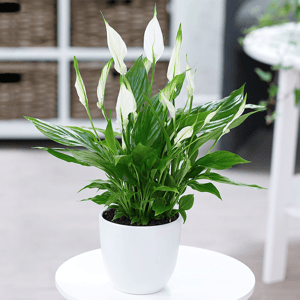
Peace lily plants aren't cut flowers — they're living plants that thrive indoors for years. A medium peace lily costs $30–$50 and grows 1–4 feet tall. Many families prefer peace lilies because the plant outlasts the service, sitting on a windowsill as a quiet memorial.
What color flowers for a funeral? A color-by-color guide
Color sends a message before anyone reads your card. The sympathy flowers color you choose tells the family something specific. Get it right.
White flowers for funeral services
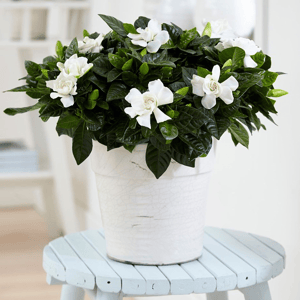
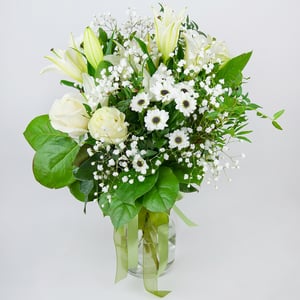
White remains the standard. White flowers for funeral arrangements convey peace, purity, and sympathy. You can't go wrong with white — it fits Catholic masses, Protestant services, nondenominational memorials, and celebrations of life alike.
Best white options:
- White roses (reverence and humility)
- White lilies (innocence and rebirth)
- White carnations (pure love and remembrance)
- White orchids (eternal devotion)
Red flowers: deep love and grief
Red says "I loved this person profoundly." A dozen red roses communicates romantic or familial love. Red carnations express admiration. Spouses, partners, and children often choose red arrangements.
Pink flowers: gratitude and gentleness
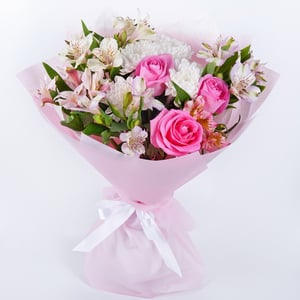
Pink flowers soften a room. Light pink roses express sympathy and grace. Dark pink blooms communicate gratitude. Pink works especially well for grandmothers, mothers, aunts, and close female friends — though no rule limits pink to women.
Purple funeral flowers: dignity and admiration
Purple funeral flowers carry royal associations. Lavender roses suggest enchantment and dignity. Deep purple irises honor wisdom. Purple arrangements stand out in a room of whites and greens, and many families specifically request purple for military veterans and community leaders.
Yellow flowers: friendship and warmth
Yellow signals close friendship and a sunny disposition. A bouquet of yellow roses or yellow chrysanthemums says "I treasured our friendship." A quick caution: in some Latin American cultures, yellow carries negative associations at funerals. Know the family's background before choosing yellow.
Blue flowers: calm and serenity
Blue hydrangeas, delphiniums, and irises create a sense of peace. Blue flowers for death-related occasions have grown in popularity over the past decade. True blue roses don't exist in nature — florists tint white roses blue — so stick with naturally blue hydrangeas or delphiniums for authenticity.
Types of funeral flower arrangements
Funeral home flowers come in specific formats. Each format serves a different purpose and goes in a different location. Here's what to know before you order.
Casket sprays
The immediate family typically selects the casket spray. A full casket spray covers the entire lid and costs $200–$500. A half-casket spray covers the lower half (for open-casket services) and runs $150–$350. Only one casket spray tops the casket — everyone else sends other arrangement types.
Standing sprays and wreaths
Standing sprays display on easels beside the casket. Standing sprays measure 5–6 feet tall on average. Wreaths carry circular symbolism — eternal life, unbroken bonds. Both cost between $100 and $300. Extended family, close friends, and employers typically send standing arrangements.
Sympathy bouquets and baskets
Bouquets and baskets sit on side tables in the funeral home viewing room. Smaller bouquets start at $40. Larger basket arrangements can reach $150. These work well for coworkers, neighbors, and acquaintances who want to express condolences without an oversized display.
Sympathy plants
Living plants go home with the family. Popular choices include peace lilies, succulent gardens, and potted orchids. A succulent garden arrangement costs $35–$75 and requires minimal watering — practical for a grieving household.
Heart-shaped arrangements
Heart-shaped funeral tributes communicate romantic love or deep familial bonds. A solid red-rose heart can cost $250–$400. Spouses and children most often choose heart designs.
Funeral flowers for men
Choosing funeral flowers for a man doesn't mean avoiding flowers altogether. It means adjusting the palette and structure. Skip the pastel pinks and soft lavenders if the person preferred bold aesthetics.
Strong choices for a man's service:
- Deep red roses paired with dark green foliage
- White gladioli in a tall standing spray
- Blue delphiniums mixed with white lilies
- A fireside basket arrangement with autumn tones — bronze, rust, and gold
- Purple irises alongside white chrysanthemums
Funeral flowers for a man often include more structural greens (ferns, eucalyptus, monstera leaves) and fewer soft, round blooms. A florist can build a masculine arrangement around strong lines and muted tones. Just mention the person's personality when you order.
Unusual funeral flowers and creative ideas
Not every service calls for classic lilies and roses. Some families celebrate a life lived boldly. Unusual funeral flowers break tradition with intention.
Funeral flowers ideas beyond the standard:
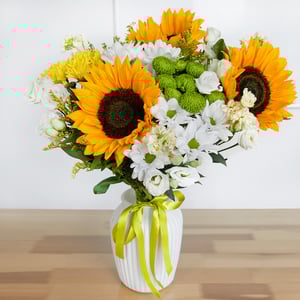
- Sunflowers for someone who radiated warmth (a single sunflower stem costs about $3–$5)
- Protea for a person who valued courage and transformation
- Dried flower wreaths that the family keeps permanently
- Wildflower meadow arrangements for nature lovers
- Potted herb gardens (rosemary means remembrance; thyme means courage)
- Succulents arranged in a decorative box — a lasting, low-maintenance tribute
One growing trend: families request donations to environmental charities instead of flowers, then display a single statement arrangement at the service. If you want to respect that wish but still send something tangible, a potted plant often fits the spirit of "no flowers, please."
Looking for the right sympathy tribute?
Browse funeral and sympathy arrangements delivered by local florists to the service or the family home.
How to send flowers to a funeral
Sending flowers to a funeral home requires timing, accuracy, and a bit of coordination. Here's the step-by-step process.
Step 1: confirm the funeral home details
Call the funeral home directly or check the obituary. You need the full name and street address of the funeral home, the name of the deceased, and the date and time of the service. Most obituaries on Legacy.com or the local newspaper list all three.
Step 2: place your order early
Order at least 1–2 days before the service. Local florists typically need 3–4 hours for same-day arrangements, and funeral homes prefer receiving flowers at least 2–3 hours before visitation starts. A Monday morning service? Place your order by Saturday afternoon.
Step 3: include the deceased's name on the order
Every delivery to a funeral home must include the deceased's full name. Without the name, the funeral home staff can't match your flowers to the correct service — many funeral homes host multiple services daily.
Step 4: write your card message
Keep the message personal. More on that below.
Step 5: choose a delivery window
Most funeral homes accept deliveries between 8:00 AM and 12:00 PM on the day of the service. Call the specific funeral home to confirm their receiving hours. Some funeral homes in major cities (New York, Los Angeles, Chicago) handle 5–10 services per day and have strict delivery cutoffs.
What to write on funeral flowers
Your condolence flowers message doesn't need to be long. It needs to be real. Two genuine sentences beat a full paragraph of generic sympathy language.
Short sympathy message examples
- "With deepest sympathy. The Hendersons."
- "You are in our thoughts and prayers. Love, Sarah and Michael."
- "In loving memory of Uncle David. We miss you already."
- "Gone from our sight, but never from our hearts."
- "Thinking of your family during this difficult time. — The Millers"
Funeral message for close relationships
- "Dad, you gave us everything. We carry your love forward."
- "Mom, your laughter still echoes in every room. Forever loved."
- "To our dear friend Tom — you made the world brighter. Rest easy."
Sympathy note tips
Write in your own voice. Don't copy a poem you found online unless the poem genuinely meant something to the deceased or the family. Sign with your full name — grieving families receive dozens of cards, and "Love, J" won't help them remember who sent what.
A common mistake: writing "I know how you feel." You don't. Nobody does. Replace that line with something specific: "I remember how your mom made the best pecan pie at Thanksgiving — I'll miss her warmth."
Thank you notes for funeral flowers
After the service, families often send thank you notes for funeral flowers. If you're the one writing thank-yous, here's what helps.
Guidelines for thank you notes
- Send notes within 2–4 weeks after the funeral
- Mention the specific arrangement ("the beautiful white lily spray")
- Keep each note to 2–4 sentences
- Handwrite when possible — a handwritten note carries more weight than a printed card
Thank you note examples
- "Dear Susan, thank you for the gorgeous rose arrangement. It brought real comfort during a very hard week. With gratitude, the Martinez family."
- "Tom and Lisa — your standing spray was one of the first things we saw when we walked in. It meant the world. Thank you."
- "Thank you for the peace lily. It now sits in Mom's favorite window. She would have loved it."
What to do with funeral flowers after the service
This question catches many families off guard. The service ends. You're left with a car full of arrangements. Here are practical options.
- Donate to a hospital or nursing home. Many hospitals accept fresh arrangements. Call ahead — some facilities only take sealed or potted plants due to allergy policies.
- Share with neighbors and friends. Split large arrangements into smaller vases and drop them on doorsteps.
- Dry or press meaningful blooms. Hang stems upside down in a cool, dark room for 2–3 weeks. Pressed flowers also make keepsake bookmarks.
- Compost spent flowers. Remove any plastic, foam, or ribbon first. Flower stems break down quickly in a compost bin.
- Leave flowers at the gravesite. Many cemeteries allow fresh flowers on headstones for 7–10 days before groundskeepers remove them. Check with the specific cemetery.
Common mistakes when choosing sympathy flowers
Knowing what to avoid saves embarrassment and ensures your gesture lands well.
Mistake #1: Sending flowers that conflict with cultural or religious practices. Jewish funerals traditionally don't include flowers — donations to charity honor the deceased instead. Buddhist services may welcome white and yellow flowers but avoid red. Ask when in doubt.
- ✗Mistake #2: Waiting too long to order. Florists report a 35% spike in same-day funeral orders — and those orders often arrive late. Order 1–2 days ahead.
- ✗Mistake #3: Choosing an overly festive arrangement. Bright tropical bouquets with birds of paradise and hot pink gerbera daisies look out of place at most traditional services. Match the tone to the ceremony.
- ✗Mistake #4: Forgetting to include the deceased's name on the delivery. The funeral home can't place anonymous flowers correctly.
- ✗Mistake #5: Sending an arrangement that's too large for the space. A massive 6-foot standing spray overwhelms a small chapel. Ask the funeral home about the size of the viewing room.
Keeping sympathy flowers fresh: care tips after delivery
If you receive funeral flowers and want them to last at home, follow these steps.
- Trim each stem at a 45-degree angle with sharp scissors — cut about 1 inch off the bottom.
- Fill a clean vase with cool water and add the flower food packet (most arrangements include one).
- Remove any leaves that sit below the waterline. Submerged leaves breed bacteria.
- Place the vase away from direct sunlight, heating vents, and fruit bowls. Ripening fruit releases ethylene gas, which wilts flowers faster.
- Change the water every 2 days. Add a fresh pinch of sugar and 2–3 drops of bleach per quart of water to keep bacteria down.
- In warmer states — Texas, Florida, Arizona — keep arrangements in air-conditioned rooms. Heat above 75°F shortens vase life by 30–50%.
- Fresh-cut sympathy flowers typically last 5–10 days with proper care. Chrysanthemums and carnations outlast roses and lilies by several days.
One last thought
Grief strips away the unnecessary. A well-chosen bouquet won't fix anyone's pain, and it shouldn't try to. What flowers do — quietly, reliably — is show up. They tell a grieving person "I thought about you today." That small signal of presence matters more than the arrangement's size, cost, or color. Pick flowers that feel honest, write a message in your own words, and send them on time. That's enough. That's always enough.
Send sympathy flowers
Choose a tribute, add your message, and let a local florist deliver it to the funeral home or family.
Frequently asked questions
What are the most appropriate flowers for a funeral?▾
White lilies, white roses, chrysanthemums, and carnations remain the most widely accepted funeral flowers in the U.S. These blooms fit nearly every religious and cultural context. When uncertain, white arrangements always work.
Can I send flowers to a funeral home the day before the service?▾
Yes. Most funeral homes prefer receiving flowers the day before or the morning of the service. Call the funeral home to confirm their receiving schedule — many close between 9:00 PM and 7:00 AM.
How much should I spend on sympathy flowers?▾
A thoughtful bouquet or basket starts at $40–$60. Standing sprays and wreaths range from $100 to $300. Casket sprays — usually purchased by the immediate family — cost $200–$500. Spend what feels right for your relationship and budget.
Are flowers appropriate for every funeral?▾
No. Some cultures and religions discourage flowers. Jewish shiva traditions favor food donations and charitable contributions. Some families state "in lieu of flowers" in the obituary — respect that request and donate to the listed organization instead.
What should I write on a sympathy card if I didn't know the deceased well?▾
Keep the message simple: "Thinking of you and your family during this time. With sympathy, [Your Name]." You don't need a deep personal anecdote. Acknowledging the loss and signing your full name is enough.
Can I send funeral flowers from another state?▾
Absolutely. Place your order online or by phone with a florist who works with local florists in the city where the service takes place. Local florists assemble and hand-deliver the arrangement — your flowers don't travel cross-country.