 EUR
EUR
 GBP
GBP
 CAD
CAD
 AUD
AUD

 🎃Halloween🎃
 Birthday
 Occasions
 Same Day
 Flowers
 Roses
Roses
 Plants
 Gifts
Gifts
 International Flower Delivery
Pansy Flower Meaning & Symbolism
- 🌸 The pansy flower meaning centers on loving thoughts and remembrance, rooted in the French word pensée ("thought") — a connection documented since the 15th century.
- 🎨 Each pansy color carries a distinct message: purple signals admiration, yellow means cheerfulness, white stands for purity, and red or orange communicates romantic passion.
- 🏳️🌈 Beyond the garden, pansy symbolism stretches into queer history, Shakespearean literature, and Victorian-era coded communication — making this one of the most culturally layered flowers you can grow or gift.
The pansy carries over 500 years of symbolic weight — from Shakespeare's love potions to Victorian secret messages — and knowing pansy meaning helps you pick the right bloom for the right moment. Whether you're choosing flowers for a friend, planting a spring garden, or just curious about floral symbolism, this small face-like flower packs a surprising depth of history. You'll walk away knowing exactly what pansies say, color by color, and why different cultures read different stories into the same petals.
Pansy flower meaning: the basics
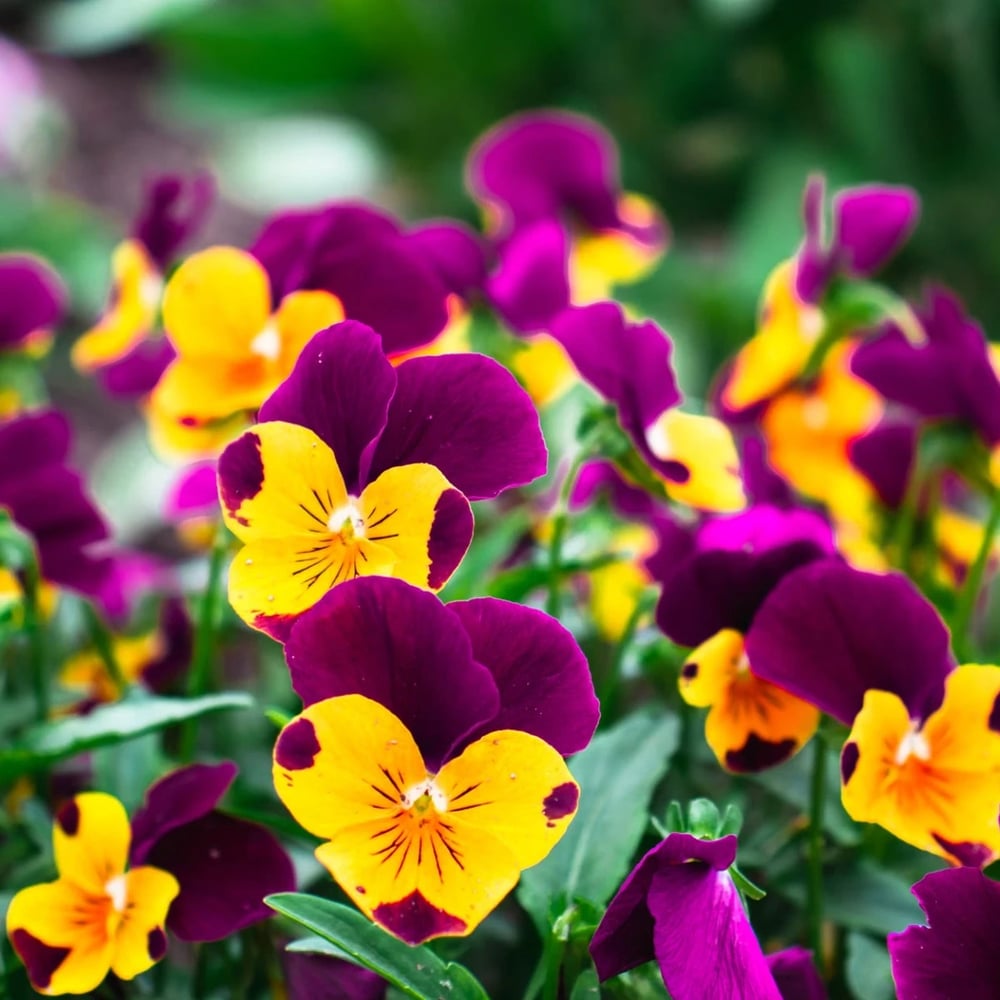
Pansy flower meaning starts with a single French word. Pensée translates to "thought" or "remembrance." English speakers borrowed the word around the 1400s, and by the mid-15th century, the flower had already earned its reputation as a token of thinking about someone.
Botanically, the pansy belongs to the species Viola × wittrockiana. Breeders created this hybrid primarily from Viola tricolor — the wild European Johnny-jump-up — crossed with other wild violet species. The Merriam-Webster dictionary traces the term to Middle English and Middle French, confirming the thought-and-memory link.
So what does a pansy actually communicate? A simple message: "I'm thinking of you." That core sentiment has held steady for centuries.
Where the name comes from: etymology and early history
The pansy gets its name from the Old French pensée, first recorded in English-language gardening texts around 1450. Shakespeare cemented the connection in A Midsummer Night's Dream (written around 1595–96). Oberon calls the pansy "love-in-idleness" and uses its juice to make characters fall in love at first sight.
Before Shakespeare, medieval herbalists already recognized the flower. They called the pansy "heartsease" — a folk name still used today in parts of England. Heartsease referenced the plant's supposed ability to cure heartbreak.
Here's a quick timeline:
- 1400s — English adopts "pansy" from French pensée
- 1595–96 — Shakespeare features the pansy in A Midsummer Night's Dream
- 1810s — Lady Mary Elizabeth Bennet begins systematic pansy breeding at her estate near London
- 1830s — Breeders develop the first large-faced garden pansies with dark "blotch" markings
- 1841 — The first pansy society forms in England
The word stuck. And the meaning stuck with the word.
Pansy symbolism across cultures
Pansy symbolism shifts depending on where and when you look. The flower doesn't carry just one message.
Victorian flower language
Victorian-era Americans and Brits communicated secret emotions through flowers. A practice called "floriography" exploded in popularity during the 1830s and 1840s. The pansy meant "think of me" — senders tucked pansies into small bouquets called tussie-mussies to express affection without words.
Kate Greenaway's 1884 book Language of Flowers listed the pansy under "thoughts." That reference became a go-to guide for Americans exchanging floral gifts during the Gilded Age.
Freethinking and secular movements
The pansy also became an emblem of freethought in the late 1800s. The American Secular Union and the Freethinkers of America adopted the pansy as a symbol. Why? The French root — pensée, meaning "thought" — aligned with free thinking and intellectual independence.
Religious and spiritual meanings
Some Christian traditions read the pansy's three overlapping color zones as a reference to the Holy Trinity. The five petals occasionally symbolize the five wounds of Christ in Catholic folk traditions. These readings remain informal — no major denomination endorses them officially.
Pansy symbolism in Asian contexts
In Japanese hanakotoba (the language of flowers), the pansy symbolizes "think of me" and "caring." Japanese gardeners favor smaller-faced violas, but the symbolism runs parallel to the Western tradition.
Pansies meaning by color
Pansies meaning changes dramatically with color. Below you'll find a breakdown with specific occasions that suit each shade — including a few U.S. holidays where pansies fit perfectly.
Purple pansies
Purple pansies convey admiration, dignity, and royalty. They work well for Mother's Day (the second Sunday in May) or as a thoughtful thank-you gesture. Deep purple varieties like 'Delta Premium Deep Blue' display rich, almost velvety tones.
Yellow pansies
Yellow pansies radiate cheerfulness and positive energy. They brighten a housewarming gift or a "just because" delivery. Avoid yellow pansies for sympathy arrangements — yellow reads as too lighthearted for grief.
White pansies
White pansies signal purity, innocence, and spiritual love. They suit memorial tributes, sympathy gestures, and Memorial Day (the last Monday in May). White pansies pair naturally with greenery for cemetery plantings.
Red and orange pansies
Red pansies express romantic passion. Orange pansies communicate warmth and excitement. Both colors work for Valentine's Day (February 14) or anniversary celebrations. The 'Matrix Red Blotch' cultivar shows a striking dark center against crimson petals.
Blue pansies
Blue pansies represent trust, loyalty, and calm. They suit friendship gifts and get-well arrangements. The rare 'True Blue' cultivar (developed by Syngenta) produces among the most saturated blue tones in the pansy world.
Black or near-black pansies
So-called black pansies — actually very deep purple — symbolize mystery and sophistication. Halloween arrangements and Gothic-themed gardens favor 'Black Moon' and 'Halloween II' cultivars.
| Color | Meaning | Best occasion |
|---|---|---|
| Purple | Admiration, dignity | Mother's Day, Teacher Appreciation |
| Yellow | Joy, cheerfulness | Housewarming, friendship |
| White | Purity, remembrance | Memorial Day, sympathy |
| Red/Orange | Passion, excitement | Valentine's Day, anniversaries |
| Blue | Trust, loyalty | Friendship, get-well |
| Black | Mystery, sophistication | Halloween, artistic gifts |
Pansy meaning in queer history
The pansy meaning queer community members may recognize traces back to early 20th-century America. During the 1920s and 1930s, mainstream newspapers used "pansy" as slang — often derogatory — for effeminate men and gay men. The "Pansy Craze" of 1930–1933 saw drag performers and openly gay entertainers fill nightclubs in New York City, particularly in Times Square and Harlem.
Historian George Chauncey documented the Pansy Craze in his 1994 book Gay New York. Chauncey noted that the word carried a double edge: outsiders used "pansy" to mock, while some queer performers reclaimed the label as a badge of visibility.
By the mid-20th century, the slur faded somewhat from everyday speech. More recently, LGBTQ+ communities have reclaimed the pansy as a positive emblem. Artists, zine makers, and tattoo enthusiasts now embrace pansy imagery as a nod to queer resilience. The flower's longstanding link to "free thought" adds another layer to the reclamation.
Worth noting: context matters enormously. The word still functions as a slur in some settings. Understanding the full history lets you navigate conversations with awareness.
Have someone on your mind?
Let them know with a bouquet that simply says ‘thinking of you’.
Pansies in literature and art
Pansies hold a long literary resume. A quick rundown:
- Shakespeare's A Midsummer Night's Dream (c. 1595) — Oberon squeezes pansy juice onto Titania's eyelids to create erratic, magical love
- Shakespeare's Hamlet (c. 1600) — Ophelia distributes flowers, including pansies, during her descent into madness; she says "pansies, that's for thoughts"
- D.H. Lawrence's poem "Pansies" (1929) — Lawrence titled an entire poetry collection after the flower, playing on the French pensée
- Georgia O'Keeffe's pansy paintings (1926) — O'Keeffe painted close-up pansies that challenged viewers to see the flower's face-like structure at large scale
Victorian artists frequently depicted pansies on greeting cards, calling cards, and decorative china. The flower's "face" — formed by contrasting petal markings — made pansies naturally photogenic and artistically compelling long before Instagram.
How to choose and care for pansies in the U.S.
Pansies thrive across USDA Hardiness Zones 4 through 8. Most American gardeners plant pansies in early spring (March through April) or early fall (September through October). Pansies tolerate light frost down to about 25°F (−4°C), which makes fall planting popular in Southern states like Georgia, Texas, and the Carolinas.
Picking the right variety
- 'Delta' series — compact plants reaching 6–8 inches tall, good for containers
- 'Matrix' series — uniform blooms with strong color saturation, excellent for mass bedding
- 'Majestic Giants' series — blooms spanning up to 4 inches across, eye-catching for borders
- 'Cool Wave' series — trailing habit reaching 24 inches wide, designed for hanging baskets
Planting and soil tips
Place pansies in a spot that gets 4–6 hours of direct sunlight daily. Use well-drained soil with a pH between 5.4 and 5.8. Space plants 6–9 inches apart to encourage airflow and reduce fungal disease risk.
Watering and feeding
Water pansies at the base — not from overhead — to keep foliage dry. Apply a balanced 10-10-10 fertilizer every 3–4 weeks during the growing season. In hot Southern summers (above 80°F), pansies may go dormant or decline; gardeners in USDA Zones 7–8 often treat pansies as cool-season annuals.
Common mistakes to avoid
- Overwatering — soggy roots invite crown rot; water only when the top inch of soil feels dry
- Planting in full shade — pansies produce fewer blooms without at least 4 hours of sun
- Ignoring deadheading — spent flowers left on the plant signal the pansy to stop producing new buds; pinch off faded blooms regularly
- Skipping slug control — slugs love pansies; set beer traps or apply iron phosphate bait around plant bases
Sending pansies as a gift: what to know
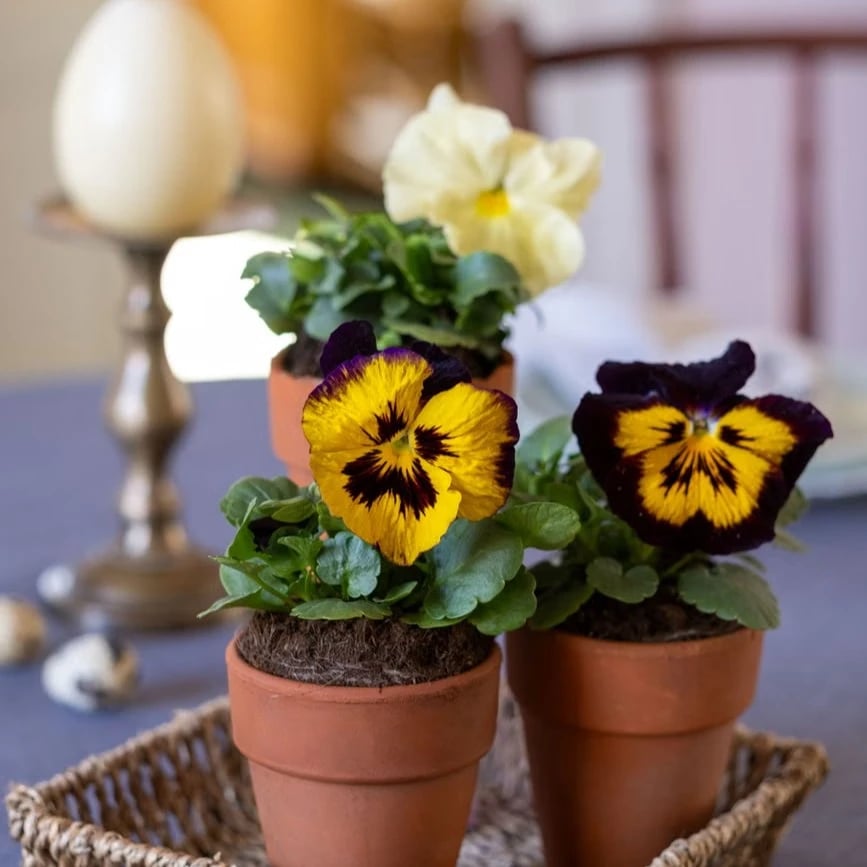
Fresh pansies work beautifully in small arrangements, potted gifts, and seasonal planters. A potted pansy arrangement costs roughly $20–$45 at most U.S. florists, depending on container size and cultivar selection.
When you order pansy arrangements, keep a few things in mind:
- Timing — order at least one day ahead for local delivery; same-day delivery works best when you place orders before noon in the recipient's time zone
- Season — local florists stock pansies most reliably from October through May; summer availability drops in warmer states
- Pairings — pansies combine well with ranunculus, sweet peas, and spring bulbs like daffodils
- Message — include a note referencing the pansy's meaning; something like "thinking of you always" reinforces the flower's symbolism
Local florists hand-deliver potted pansies and pansy-mixed bouquets across most U.S. metro areas. A delivery photo confirmation — offered by many online flower services — lets you see exactly how the arrangement looks when the recipient opens the door.
Pansies vs. violas vs. violets: clearing up the confusion
People mix these three up constantly. Here's the breakdown.
All pansies belong to the genus Viola, which contains roughly 500 species worldwide. "Violet" typically refers to wild species like Viola odorata (sweet violet). "Viola" in garden-center language usually means small-flowered hybrids (blooms under 2 inches). "Pansy" refers to large-flowered hybrids (blooms 2–4 inches across), mostly descended from Viola × wittrockiana.
The symbolism overlaps. Violets emphasize modesty and faithfulness. Violas share the pansy's "think of me" message but carry a more casual, wildflower tone. Pansies deliver the most deliberate and emotionally weighted version of the thought-and-remembrance theme.
Your next step with pansies
A single pansy holds centuries of human emotion — thought, love, memory, defiance, and beauty — all in a face-shaped bloom that fits in the palm of your hand. Pick the right color, understand the backstory, and this small flower communicates something remarkably specific.
So here's my take: next time you walk past a flat of pansies at the garden center, stop for a second. Think about who you'd give one to. Then actually do it. Few gestures say "I'm thinking of you" more simply or more sincerely.
What color pansy speaks to you? Drop your pick in the comments — or send one to someone who needs a reminder that you care.
No occasion needed to show you care.
Surprise someone with flowers, just because they matter to you.