 EUR
EUR
 GBP
GBP
 CAD
CAD
 AUD
AUD

 ✨Boss’s Day✨
 Birthday
 Occasions
 Same Day
 Flowers
 Roses
Roses
 Plants
 Gifts
Gifts
 International Flower Delivery
Pink flowers names
Pink flowers account for roughly 1 in 5 blooms sold by florists across the United States each year, and knowing their names gives you real power—power to pick the right stem for a birthday, a wedding centerpiece, or that bare corner of your garden begging for color. This guide to pink flower names covers 30+ varieties sorted by size, shade, season, and use. You'll learn which pink blooms thrive as perennials in USDA zones 3–9, which ones look jaw-dropping in bouquets, and what each shade actually means.
- 🌸 Pink flowers range from baby-pink sweet peas to hot-pink dahlias, and each shade carries a distinct meaning—light pink signals grace, while deep pink expresses gratitude.
- 🌿 At least 12 common pink varieties (including peonies, azaleas, and phlox) grow as perennials across USDA zones 4–8 and return year after year without replanting.
- 💐 Mixing 3 shades of pink in one bouquet—light, medium, and dark—creates a layered, professional look you can build at home in under 10 minutes.
What do pink flowers mean? Pink flower meaning and symbolism
Pink flower meaning shifts with the shade. Victorian-era floriography guides from the 1830s assigned specific emotions to every tint of pink, and many of those associations survive today.
Symbolism by shade
- Baby pink flowers express innocence, new beginnings, and first love—popular for baby showers and christenings.
- Light pink flower tones signal admiration, gentleness, and sympathy—common at memorial services.
- Medium (classic) pink stands for gratitude and appreciation—think Teacher Appreciation Week or Mother's Day (second Sunday of May).
- Hot pink flowers shout joy, confidence, and playfulness—great for milestone birthdays.
- Dark pink flowers convey deep thankfulness and recognition—often chosen for retirement parties and anniversary dinners.
- A single pink rose says "thank you." A dozen says it louder. Context matters just as much as color, so pair your shade with the right occasion and you'll never send the wrong message.
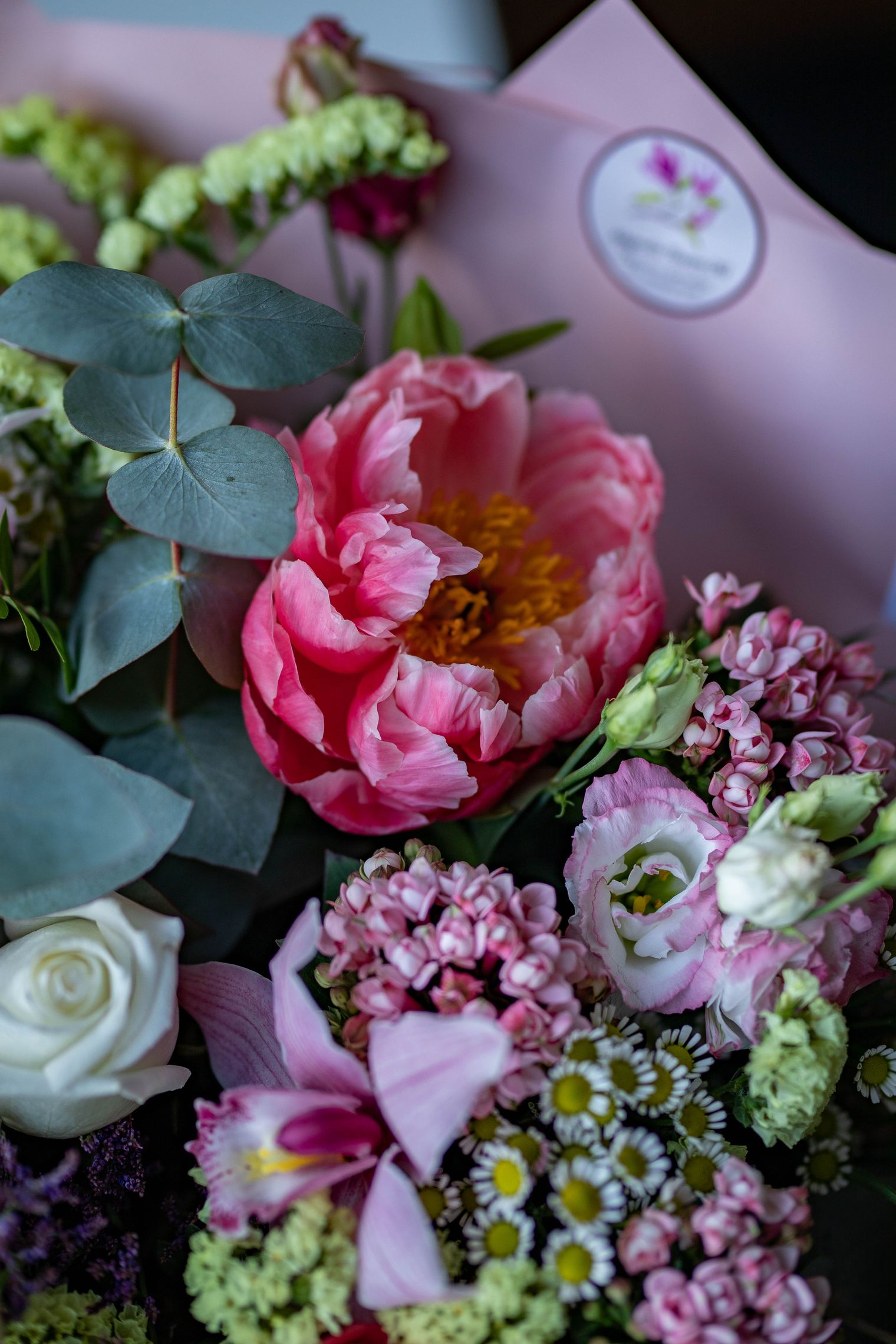
30 types of pink flowers — a complete guide to pink flower names
Below you'll find 30+ pink flower names grouped by their best use. Some appear in more than one category because they serve double duty.
Pretty pink flowers for bouquets and arrangements
- These pink flower names dominate florist coolers for good reason: long vase life, reliable availability, and a wide palette of shades.
- Rose (Rosa spp.) — The pink rose remains the #1 best-selling pink cut flower in the U.S. Stems typically last 7–12 days in a vase. Varieties like 'Sweet Avalanche' skew baby pink; 'Hot Explorer' leans fuchsia.
- Peony (Paeonia lactiflora) — Peonies bloom May through June and produce ruffled heads up to 8 inches across. 'Sarah Bernhardt'—named after the French actress in 1906—stays the most requested cultivar.
- Ranunculus (Ranunculus asiaticus) — The pink buttercup flower with paper-thin, layered petals. Each stem carries 3–5 buds. This flower peaks in March and April across California's cooler coastal farms.
- Tulip (Tulipa spp.) — Pink tulips signal caring and affection. Holland ships over 2 billion tulip bulbs globally each year, and pink ranks among the top 5 colors sold.
- Carnation (Dianthus caryophyllus) — A light pink carnation means "I'll never forget you." Carnations hold the record for longest vase life among common cuts: up to 21 days with proper care.
- Lisianthus (Eustoma grandiflorum) — Often mistaken for roses, lisianthus offers a softer, more ruffled look. Florists price lisianthus 20–30% below garden roses, making it a budget-savvy swap.
Pink stock flower (Matthiola incana) — Stock adds vertical height and a clove-like fragrance to pink flower arrangements. One stem carries 15–20 tiny florets. Stock thrives in cool weather, so spring and fall bouquets feature it most often.
Sweet pea (Lathyrus odoratus) — Fragrant, delicate, and genuinely cute pink flowers. Sweet peas last only 3–5 days once cut, so enjoy them fast.
Small pink flowers that add delicate charm
- Small pink flowers work as fillers, ground covers, and dainty accents. Florists call them "texture flowers."
- Wax flower (Chamelaucium uncinatum) — Tiny star-shaped blooms, each about ¼ inch wide. Wax flower dries beautifully and keeps its color for months.
- Astilbe (Astilbe spp.) — Feathery plumes in soft pink. Astilbe grows 12–48 inches tall and thrives in shady spots, USDA zones 4–8.
- Heather (Calluna vulgaris) — Fine-textured sprigs of dusky pink. Heather originates from Scottish and Scandinavian moorlands and tolerates poor, acidic soil.
- Dianthus "Pinks" (Dianthus plumarius) — The flower that literally gave the word "pink" to the English language. Each bloom spans about 1 inch. Fringed petals look as if someone trimmed them with pinking shears—hence the name.
- Forget-me-not, pink variety (Myosotis sylvatica) — Clusters of 5-petaled blooms barely ⅓ inch across. Pink forget-me-nots self-seed freely and return each spring.
Big pink flowers that make a bold statement
- Large blooms command attention. Use them as focal points in arrangements or garden beds.
- Dahlia (Dahlia spp.) — Dinner-plate dahlias can reach 12 inches in diameter. 'Café au Lait' blends blush and cream; 'Otto's Thrill' stays pure pink. Dahlias grow from tubers and bloom July through first frost.
- Hibiscus (Hibiscus rosa-sinensis) — Tropical hibiscus flowers measure 4–8 inches wide. Each bloom lasts only 24–48 hours on the plant, but the bush produces new flowers daily from late spring through fall.
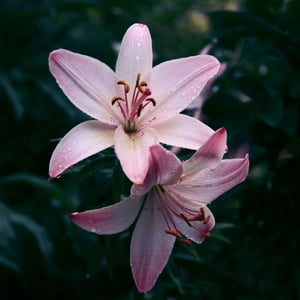
- Stargazer lily (Lilium 'Stargazer') — A pink flower with a speckled face, intense fragrance, and 6–8-inch blooms. Heads up: lily pollen stains fabric permanently, so remove the anthers before placing lilies indoors.
Hydrangea (Hydrangea macrophylla) — Mophead hydrangeas produce globes 6–12 inches across. Soil pH determines color: acidic soil (below 6.0) turns hydrangeas blue, while alkaline soil (above 7.0) turns them pink. Add garden lime to push blooms pinker.
Pink flower bushes and shrubs
A bush with pink flowers anchors a landscape for years, sometimes decades.
Azalea (Rhododendron spp.) — Azaleas explode with color in April and May. The Azalea Trail in Mobile, Alabama stretches 37 miles and attracts thousands of visitors every spring. Azaleas prefer partial shade and acidic, well-drained soil.
- Camellia (Camellia japonica) — Camellias bloom in winter and early spring when little else flowers. Some cultivars, like 'Debutante,' produce pure pink blooms up to 5 inches wide.
- Rose of Sharon (Hibiscus syriacus) — A deciduous shrub hardy to USDA zone 5. Rose of Sharon grows 8–12 feet tall and blooms from July to September.
- Weigela (Weigela florida) — Trumpet-shaped, hot pink flowers cover this 6–10-foot shrub in late May and June. Hummingbirds love weigela.
- Butterfly bush 'Pink Delight' (Buddleja davidii) — Spikes reach 10–15 inches long. This pink flower bush attracts monarchs, swallowtails, and painted lady butterflies by the dozen.
Pink perennial flowers that come back every year
- Pink perennial flowers save you money and effort. Plant once, enjoy for years.
- Peony — Already mentioned for bouquets, peonies also rank among the longest-lived perennials. Some peony plants in colder climates have survived over 100 years.
- Phlox (Phlox paniculata) — Tall garden phlox blooms in midsummer and reaches 2–4 feet. 'Bright Eyes' features a pale pink petal with a hot pink eye.
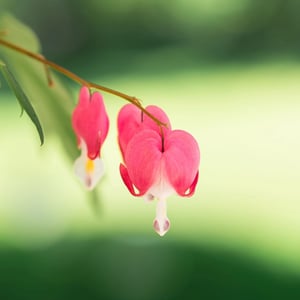
- Bleeding heart (Dicentra spectabilis) — Heart-shaped dangling flowers appear in April and May. Each arching stem carries 15–20 tiny hearts. Bleeding heart goes dormant by midsummer, so pair the plant with hostas to fill the gap.
- Echinacea 'Magnus' (Echinacea purpurea) — A rosy-pink coneflower native to the central U.S. Echinacea tolerates drought, attracts goldfinches, and blooms June through September.
- Coral bells (Heuchera spp.) — Tiny pink bell-shaped flowers dangle from wiry stems above colorful foliage. Coral bells grow 12–18 inches tall and handle partial shade well.
Pink spring flowers to welcome the season
- Pink spring flowers signal winter's end. These bloom between March and May across most of the U.S.
- Cherry blossom (Prunus serrulata) — Washington, D.C.'s National Cherry Blossom Festival celebrates over 3,700 cherry trees gifted by Japan in 1912. Peak bloom typically falls between late March and mid-April.
- Hyacinth (Hyacinthus orientalis) — Each bulb sends up one dense spike packed with 40–60 tiny florets. The fragrance fills an entire room. Plant hyacinth bulbs in October, 6 inches deep.
- Tulip — Pink tulips bloom mid-spring. The Holland, Michigan tulip festival in early May draws around 500,000 visitors annually.
- Magnolia (Magnolia × soulangeana) — Saucer magnolias produce 5–10-inch pink-and-white chalice-shaped flowers before leaves emerge in early spring.
Cactus with pink flowers and succulents with pink flowers
Desert plants surprise people with their pink blooms. Two standouts deserve your attention.
Easter cactus (Hatiora gaertneri) — This Brazilian cactus blooms in March and April. Star-shaped pink flowers open at the tip of each leaf segment. Keep soil barely moist, and give the plant 12–14 hours of darkness nightly for 6 weeks before the desired bloom time.
Echeveria 'Perle von Nürnberg' — A succulent with pink flowers and dusty-lavender rosettes. Flower stalks rise 12 inches above the rosette in summer. This succulent needs bright light and fast-draining soil—a standard cactus mix works fine.
Pink buttercup flower and pink flower with yellow center
Ranunculus — Already listed above, the pink buttercup flower deserves a second mention for its yellow-green center peeking through dozens of delicate petals. Ranunculus corms cost roughly $0.50–$1.00 each and produce 5–7 stems per corm over the season.
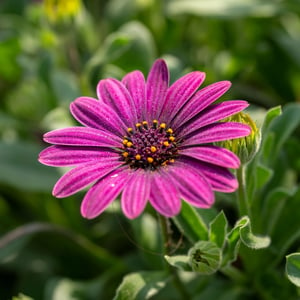
Gerbera daisy (Gerbera jamesonii) — A classic pink flower with a yellow center. Each bloom sits atop a leafless stem 12–18 inches tall. Gerbera daisies rank as the 5th most popular cut flower worldwide, behind roses, carnations, chrysanthemums, and tulips.
Cosmos (Cosmos bipinnatus) — 'Sensation' cosmos features daisy-like pink petals around a bright yellow disk. Cosmos grows from seed to flower in just 60–90 days. Direct-sow seeds after your last frost date.
Shades of pink — from baby pink to hot pink
Baby pink flowers
Baby pink flowers lean almost white with a faint rosy blush. Think sweet peas, ranunculus in the 'Hanoi' variety, and pale David Austin roses like 'Keira.' These tones dominate baby shower decorations and soft, romantic wedding palettes.
Light pink flower tones
Slightly warmer than baby pink, light pink flower tones suit sympathy arrangements and Mother's Day bouquets. Peonies in the 'Angel Cheeks' cultivar, cherry blossoms, and light pink lisianthus all fall here. Aesthetic pink flowers on social media platforms (Instagram alone has over 14 million posts tagged #pinkflowers) usually feature this tone because of its soft, photogenic appeal.
Classic / medium pink
Medium pink reads clearly as "pink." Roses in the 'Aqua' variety, snapdragons, and stock flowers hit this range. Classic pink works for almost every occasion—Valentine's Day, birthdays, congratulations, just-because.
Hot pink flowers
Hot pink flowers demand energy. Bougainvillea, fuchsia, hot pink dahlias, and 'Stargazer' lilies all vibrate with intensity. Use hot pink sparingly as an accent—two hot pink stems among a dozen lighter blooms create contrast without overwhelming the arrangement.
Dark pink flowers
Dark pink edges toward magenta and cerise. Dianthus, dark-edged tulips like 'Barcelona,' and deep pink carnations occupy this territory. Dark pink flowers express serious gratitude and deep emotion, so save them for moments that call for weight and sincerity.
How to build a stunning pink flower bouquet
General tips for pink flower arrangements
- Start with 1 focal bloom (peony, dahlia, or garden rose) as the center.
- Add 3–5 secondary stems (ranunculus, tulips, or lisianthus) around the focal bloom.
- Tuck in 5–7 texture flowers (astilbe, wax flower, or heather) to fill gaps.
- Include 2–3 types of greenery (eucalyptus, ruscus, or pittosporum) for contrast.
- Mix at least 2 shades of pink to prevent the bouquet from looking flat.
Four bouquet "recipes" to try
- The romantic blush — 5 garden roses ('Sweet Avalanche'), 3 ranunculus, 7 sweet peas, silver dollar eucalyptus. All baby to light pink. Cost from a local florist: roughly $65–$90.
- The bold birthday — 3 hot pink dahlias, 5 medium pink snapdragons, 4 fuchsia carnations, variegated pittosporum. Bright and lively. Cost: around $55–$80.
- The garden mix — 3 peonies (when in season, May–June), 4 pink stock stems, 5 cosmos, 3 bleeding hearts, seeded eucalyptus. This arrangement screams springtime.
- The minimalist — 7 pink tulips, nothing else. Just tulips in a clear glass vase. Simple. Striking. Under $25 at most grocery stores.
Looking for pink blooms?
Browse arrangements from local florists and pick one that suits the occasion.
How to care for pink flowers after they arrive
- Fresh cuts last longer when you follow a few specific steps. Here's what to do the moment your bouquet arrives.
- Trim stems at a 45-degree angle using sharp shears—dull scissors crush the stem fibers and block water uptake.
- Remove every leaf that falls below the waterline. Submerged leaves breed bacteria within 24 hours.
- Fill a clean vase with cool (not cold) tap water and add the flower food packet. One packet treats roughly 1 quart of water.
- Place the vase away from direct sunlight, heating vents, and fruit bowls. Ripening fruit releases ethylene gas, and ethylene shortens flower life by 2–3 days.
- Change the water every 2 days. Re-trim the stems by ½ inch each time.
- Keep indoor temperatures around 65–72 °F. Warmer rooms (above 75 °F) accelerate wilting noticeably.
- For gardeners in hotter parts of the U.S.—think Texas, Arizona, or Florida—water pink perennial flowers early in the morning (before 8 AM) to reduce evaporation and heat stress.
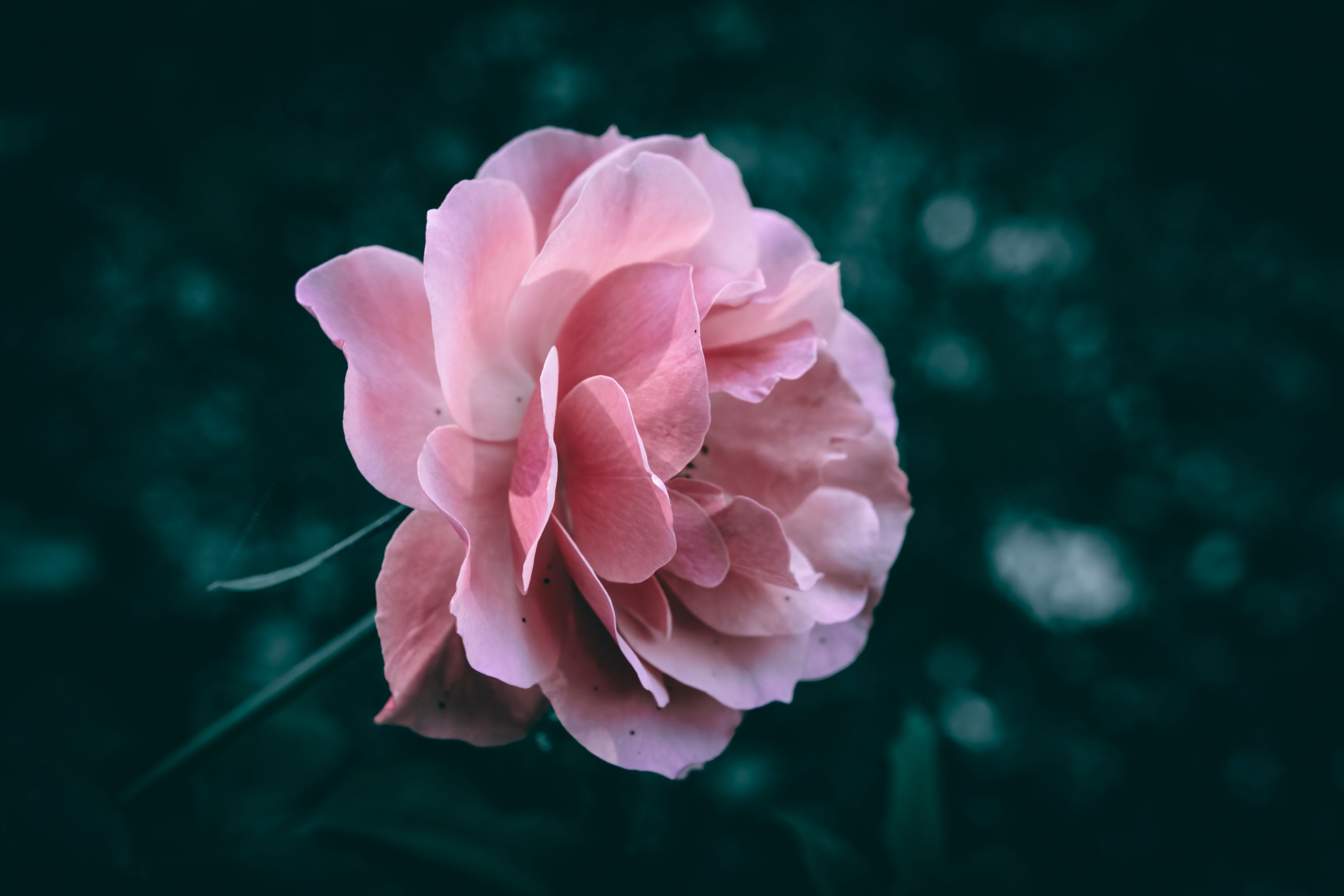
Common mistakes when choosing or growing pink flowers
- Ignoring soil pH for hydrangeas. You want pink hydrangeas? Test your soil first. A pH below 6.0 pushes hydrangeas toward blue. Add dolomitic lime in fall to raise pH gradually over the winter.
- Planting sun-lovers in shade. Dahlias, cosmos, and zinnias need at least 6 hours of direct sunlight daily. Stick them under a tree and you'll get leggy stems with few blooms.
- Overwatering succulents with pink flowers. Echeveria and Easter cactus rot quickly in soggy soil. Water only when the top inch of soil feels completely dry—roughly every 10–14 days indoors.
Skipping the conditioning step for cut flowers. Dropping fresh-cut stems straight into a decorative vase without trimming and hydrating them first shaves 3–4 days off vase life. Always hydrate stems in a bucket of water for at least 2 hours before arranging.
Choosing fragrance-heavy flowers for small spaces. Stargazer lilies and hyacinths pack a powerful scent. In a tiny apartment, that fragrance can trigger headaches. Use fragrant blooms in open living rooms or outdoor settings instead.
Aesthetic pink flowers for social media and events
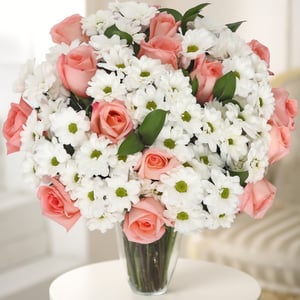
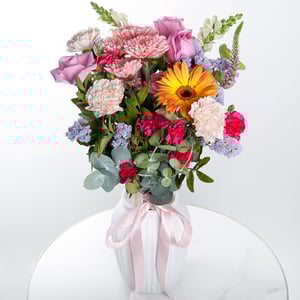
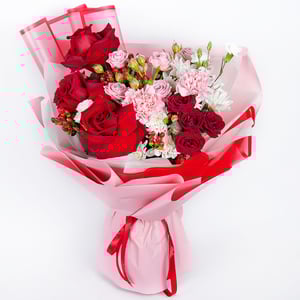
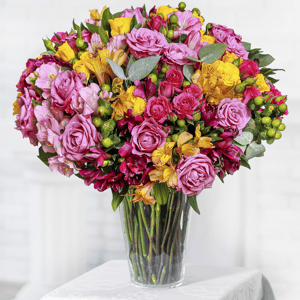
- Aesthetic pink flowers dominate wedding Pinterest boards and Instagram flat-lays. The most photogenic options share a few traits: soft, diffused petal edges; muted or pastel tones; and an organic, slightly "undone" look.
- Top picks for aesthetic pink arrangements:
- 'Café au Lait' dahlia — muted blush, highly textured, Instagram's darling since roughly 2016.
- 'Juliet' garden rose (David Austin, introduced 2006) — peach-pink, cupped shape, costs $4–$7 per stem wholesale.
- Dried pink pampas grass — technically not a flower, but the feathery plumes pair beautifully with fresh pink blooms in boho-style arrangements.
- Lisianthus in pale pink — ruffled edges photograph like watercolor.
- Pink ranunculus — the layered petals catch light in ways that make even phone cameras produce stunning shots.
- For weddings, combine 2–3 of these aesthetic pink flowers with trailing greenery (smilax or jasmine vine) and a few dark pink accents for depth.
Bringing it all together
Pink covers an enormous range—from barely-there blush to screaming fuchsia—and every shade tells a different story. The most practical move? Start with the occasion. A thank-you calls for medium pink. A baby shower calls for the palest blush. A "just because" surprise on an ordinary Tuesday calls for whatever shade makes you smile.
Grab a single variety or mix five. Grow them in your Zone 6 backyard or order them from a local florist for same-day delivery. Either way, pink flowers soften hard days and mark good ones.
What's your favorite pink bloom? If you haven't decided yet, start with a peony. Nobody regrets a peony.
Send flowers today
Choose your bouquet, add a message, and let a local florist hand-deliver it.
Frequently asked questions
What do pink flowers symbolize?▾
Pink flowers symbolize gratitude, admiration, grace, and joy. Lighter shades lean toward innocence and sympathy, while darker and hotter pinks express energy and deep appreciation.
Which pink flowers bloom in spring?▾
Cherry blossoms, tulips, hyacinths, peonies (late spring), magnolias, and bleeding hearts all bloom between March and May across USDA zones 4–8.
What is the best pink flower bush for my yard?▾
Azaleas and weigela perform well in zones 5–8 with partial shade to full sun. Both require acidic to neutral soil and minimal pruning beyond deadheading.
Can a cactus produce pink flowers?▾
Yes. The Easter cactus (Hatiora gaertneri) and several Mammillaria species produce vivid pink blooms. Give the Easter cactus 6 weeks of long, dark nights to trigger flowering.
How long do pink cut flowers last in a vase?▾
Vase life depends on the species. Carnations last up to 21 days. Roses average 7–12 days. Sweet peas fade after 3–5 days. Trim stems and change water every 2 days to maximize freshness.
What is a pink flower with a yellow center called?▾
The gerbera daisy and cosmos both feature pink petals around a yellow center. Ranunculus shows a yellow-green center when fully open. All three work well in mixed bouquets and garden beds.