 EUR
EUR
 GBP
GBP
 CAD
CAD
 AUD
AUD

 ✨Boss’s Day✨
 Birthday
 Occasions
 Same Day
 Flowers
 Roses
Roses
 Plants
 Gifts
Gifts
 International Flower Delivery
Flowers that represent strength
Flowers that represent strength have been speaking on our behalf for centuries — long before greeting cards, long before text messages, and definitely long before emoji. Think about it: when someone you love faces surgery, finishes chemo, graduates against all odds, or simply survives a brutal year, words can feel too small. A bloom that literally means "you are strong" carries a weight that language sometimes can't.
That's exactly why I put this guide together. Whether you're searching for a flower meaning strength and courage to celebrate a bold milestone or you need flowers that symbolize strength and healing to comfort someone in recovery, you'll find the right match here. I'll walk you through 15 powerful flowers, explain the history behind each one, match them to real-life US occasions, and share practical tips — from card messages to climate-specific care — that most guides skip entirely.
A bloom that literally means "you are strong" carries a weight that language sometimes can't.
And when you're ready to send that perfect bouquet, MyGlobalFlowers, an international flower delivery service, connects you with local florists who hand-craft and deliver arrangements in cities across the US and around the world. You can order from anywhere in the US, and a local florist in the destination city assembles your bouquet with the freshest seasonal stems available.
Let's get into it.
Find a bouquet that says "stay strong"
Hand-arranged bouquets delivered by local florists worldwide.
Why flowers have become symbols of strength and courage
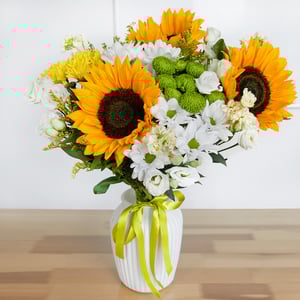
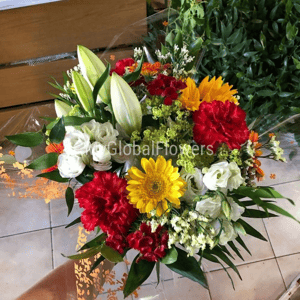
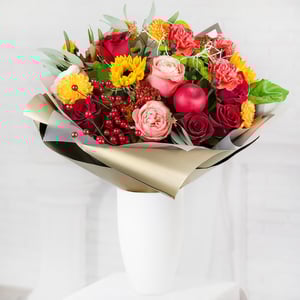
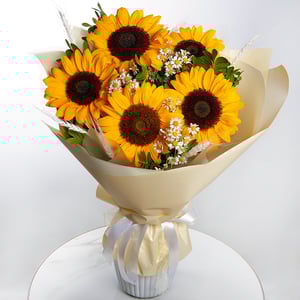
Flowers that represent strength didn't earn their meanings overnight. The tradition runs deep — and understanding the backstory makes every bouquet you send more intentional.
The Victorian language of flowers
During the Victorian era in the 1800s, British and American society considered it improper to express strong emotions openly. So people turned to floriography — the language of flowers. Every bloom, every color, and even the way you held a bouquet carried a coded message. A gladiolus told someone "you have integrity." A protea said "you are bold beyond measure." Published dictionaries cataloged these meanings, and families across the US adopted the practice with enthusiasm.
How ancient cultures set the stage
Victorians didn't invent the idea, though. Ancient Egyptians associated the lotus with divine rebirth. Japanese culture tied the cherry blossom to the fleeting courage of samurai warriors. Celtic traditions turned the thistle into a national emblem of fierce resilience. These cross-cultural associations layered over centuries, giving us the rich floral vocabulary we use today.
Flowers symbolize courage in modern American life
Fast-forward to modern US gifting culture, and flowers representing strength show up everywhere — at Veterans Day ceremonies, on graduation stages, in hospital rooms, and at celebrations for personal milestones like finishing rehab or surviving a divorce. Americans spend over $2 billion on flowers every Mother's Day alone, and a growing number of people choose blooms specifically for their symbolic meaning, not just their appearance. Knowing what flower represents strength gives your gift a second layer — beauty plus purpose.
15 powerful flowers that symbolize strength

Flowers that represent strength come in surprising variety. Some look delicate but carry fierce symbolism. Others look tough and mean exactly what you'd expect. Here are 15 flowers that mean strength, each with its own story and perfect occasion.
1. Gladiolus
Gladiolus takes its name from the Latin word "gladius," meaning sword. Roman gladiators carried these blooms into the arena, and the flower became synonymous with strength of character, moral integrity, and honor. Honestly, once I learned that backstory, I never looked at gladiolus the same way again.
This flower suits Veterans Day tributes, military homecomings, and retirement celebrations for first responders. The tall, sword-like stems also make a striking addition to Fourth of July arrangements.
Styling tip: Pair gladiolus with deep red roses and blue delphinium for a patriotic color scheme that still feels elegant.
2. Lotus
Here's a flower that doesn't just sit there looking pretty — it has story. It starts out in murky, muddy pond water, pushes its way up through the muck, and breaks the surface to bloom in flawless beauty. That whole journey from darkness into light is exactly why the lotus has become such a powerful symbol across cultures: it's about strength, spiritual grit, and deep personal transformation.
In Buddhist and Hindu traditions, it's all about enlightenment — waking up, rising above. But here in the US, you'll also find the lotus resonating on a very human level with people who've been through addiction, mental health battles, or just a really rough stretch of life. It's that quiet "I made it through" kind of symbol.
If you're thinking of using them in decor: lotus blossoms are stunning in low, shallow bowls. Honestly, you don't need much — just float a single stem in a clear glass container with a few river stones at the bottom, and you've got yourself a minimalist, almost meditative centerpiece that feels calm without trying too hard.
3. Protea
Named after the Greek god Proteus — who could change shape at will — the protea symbolizes bold transformation, courage, and diversity of strength. The king protea, South Africa's national flower, can survive wildfires because its seeds actually need fire to germinate. Talk about resilience.
I'd recommend protea for someone starting a new business, changing careers, or celebrating any moment that required serious guts. The flower literally tells someone "you thrive under pressure."
Styling tip: A single king protea makes a dramatic focal point. Surround it with eucalyptus and soft pink roses for contrast between boldness and warmth.
4. Sunflower
The sunflower follows the sun across the sky — a behavior called heliotropism — and this persistent optimism gives it the meaning of endurance, warmth, and unwavering strength. Sunflowers also grow in nearly every US state, making them a deeply American bloom.
Sunflowers work perfectly for graduations, "thinking of you" gestures during hard times, and as cheerful hospital bouquets (bonus: they have very little fragrance, so they won't overwhelm a shared room).
Styling tip: Combine sunflowers with white daisies and wild greenery for a rustic, uplifting arrangement that feels like a warm hug.
5. Echinacea (coneflower)
Echinacea grows wild across the American Midwest, thriving in drought, poor soil, and blazing summer heat. Native Americans used this coneflower medicinally for centuries — as a remedy for infections, pain, and snake bites. That dual symbolism of healing and toughness makes echinacea a perfect flower representing strength and healing.
Send echinacea-inspired arrangements for post-surgery recovery or to encourage someone facing a chronic illness. The flower says "you have the power to heal."
Styling tip: Pair echinacea with black-eyed Susans and wild grasses for a native wildflower bouquet that celebrates American botanical heritage.
6. Peony
The peony looks soft and romantic, but its meaning runs much deeper. In Chinese culture, the peony symbolizes honor, prosperity, and bravery — particularly the courage required of a compassionate heart. The phrase "king of flowers" in Chinese tradition refers directly to the peony.
Peonies peak in late spring, making them ideal for Mother's Day (the second Sunday of May) and late-May graduations. They also suit anyone who demonstrates quiet strength — the kind that doesn't need to announce itself.
Styling tip: Lush pink and blush peonies paired with soft garden roses create a bouquet that looks gentle but speaks volumes about inner strength.
7. Magnolia
We're talking over 100 million years old. Fossil records don't lie: this tree has been around since before bees even existed. It outlasted ice ages, watched continents drift apart, and somehow shrugged off mass extinctions that took out way bigger and fiercer creatures. In the American South, where magnolias are practically part of the landscape, people have long seen them as a symbol of endurance, quiet dignity, and just plain stubbornness in the face of hardship.
So who's a magnolia arrangement really for? Think of someone who's picking up the pieces after a loss — maybe a widow figuring out a new chapter, a family gutting out a house after a hurricane, or just anyone who's been through the wringer and came out the other side. This flower doesn't shout; it simply stands there, glossy leaves and all, quietly embodying the words "still standing."
If you're styling them at home: go big, but keep it simple. A few large magnolia blossoms paired with some trailing jasmine and deep, dark greenery is all you need. Don't overcrowd it — let the magnolia take center stage. Its elegance speaks for itself, and honestly, it doesn't need any flashy competition.
8. Iris
The iris takes its name from Iris, the Greek goddess of the rainbow, who served as a messenger between heaven and earth. Fittingly, the flower itself carries a message of wisdom, courage, and admiration — a particular kind of strength that is grounded in knowledge and faith.
Blue irises are especially appropriate for Memorial Day tributes and sympathy arrangements, where their calm, steady hue conveys respect without sadness. Purple irises add further layers of meaning, evoking dignity and royalty, which makes them a thoughtful choice for honouring a lifetime of courage and accomplishment.
Fittingly, the flower itself carries a message of wisdom, courage, and admiration — a particular kind of strength that is grounded in knowledge and faith.
When designing an arrangement, combining irises with white lilies and lavender stock creates a regal and purposeful palette. The overall effect communicates strength and reverence, yet the composition remains light and graceful, never heavy or sombre.
9. Edelweiss
Edelweiss grows at elevations above 6,000 feet in the Alps, clinging to limestone cliffs and withstanding freezing winds. For centuries, Alpine climbers regarded the flower as a mark of bravery and devotion — the more perilous the climb required to reach it, the greater the significance of the bloom. Its name translates to "noble white," and the flower has come to symbolise daring courage and deep commitment.
This rare and resilient plant thrives where few others can survive, which only adds to its mystique. In mountain communities, presenting an edelweiss was once considered a profound gesture of loyalty and valour. Today, it remains a powerful emblem for those who admire quiet fortitude and unwavering dedication, whether in matters of the heart or in the face of life's steepest challenges.
While edelweiss isn't common in everyday US bouquets, dried edelweiss makes a thoughtful addition to a gift for someone who's conquered a personal mountain — literally or figuratively. Think: finishing a marathon, summiting a peak, or beating a long illness.
Styling tip: Incorporate dried edelweiss into a rustic arrangement with thistle and dried lavender for an alpine-inspired gift that feels rare and intentional.
10. Amaryllis
The name amaryllis comes from the Greek word amarysso, meaning "to sparkle." Yet the flower's symbolism leans less toward brightness and more toward quiet determination and hard‑won pride. In the language of floriography, amaryllis represents the strength required to achieve something truly beautiful — the reward that follows persistent, often unseen effort.
Amaryllis blooms in the depth of winter, which makes it a natural choice for holiday gifting and Thanksgiving centrepieces. The bold red variety, in particular, feels fitting for celebrations of accomplishment — promotions, graduations, or any milestone reached after years of dedication.
When it comes to styling, red amaryllis stems paired with pine branches and subtle gold accents create a striking winter arrangement. The combination feels festive without being ostentatious, and the amaryllis itself remains the focal point, drawing the eye with its sculptural form and vivid colour. For a non‑holiday look, white amaryllis with eucalyptus offers a fresh, elegant alternative.
11. Cherry blossom
Every spring, Washington, D.C., fills with over a million and a half visitors who come to see the cherry blossoms along the Tidal Basin. That festival isn't just about pretty flowers — it speaks to something deeper that Americans share with the Japanese: a quiet awe for things that don't last.
In Japan, the sakura has always been more than a tree. Its brief, almost violent explosion of petals each year is read as a mirror of human life — beautiful, intense, and over before you know it. The samurai took that lesson to heart. They wore the blossom as a reminder that courage matters most when time is short. Not because death is glorious, but because every moment counts.
That festival isn't just about pretty flowers — it speaks to something deeper that Americans share with the Japanese: a quiet awe for things that don't last.
That same idea — strength through accepting impermanence — travels easily across cultures. It shows up in the American enthusiasm for the cherry blossom festival, but also in the way people use sakura branches for life's turning points: a move to a new city, a fresh start after loss, or simply honouring someone who faced a hard change with grit.
If you're arranging them at home, don't overthink it. A tall, clear vase, no clutter, just the branches. Their shape and colour do all the work. The simpler the display, the more the blossoms speak.
12. Thistle
There's a story the Scots tell about how the thistle became their national symbol. It involves a Viking raid, a barefoot invader, and one very unfortunate step. According to the legend, Norse soldiers tried to sneak up on a Scottish camp at night. One of them, in the dark, planted his foot right on a thistle. The yelp that followed woke the defenders, who promptly fought off the attack. That prickly plant saved the day — and ever since, it's stood for protection, resilience, and a certain stubborn defiance.
What I find striking about the thistle is its split personality. From the outside, it's all spikes and armour — not exactly welcoming. But then there's that purple crown bursting from the top, vivid and surprisingly soft. It's a perfect match for someone who's learned to keep their guard up, yet still carries warmth and colour inside. That's why thistles often turn up in bouquets meant for people who've stood their ground — against bullies, against injustice, against whatever life threw at them.
If you're putting together an arrangement, try pairing thistles with lavender, dusty miller, and white ranunculus. The contrast works beautifully: the thistle brings the edge, the others bring softness and texture. Together, they create something modern, balanced, and far from predictable.
13. Dahlia
The dahlia is the national flower of Mexico and carries meanings of inner strength, creativity, and graceful commitment to growth. With over 42,000 registered varieties, the dahlia demonstrates that strength takes many forms — no two blooms look identical, and each one is striking.
Dahlias peak in late summer and early fall, making them excellent for Labor Day gatherings and September birthdays. Their architectural shape also makes them a favorite for bold, modern arrangements.
Styling tip: Pair dinner-plate dahlias (some reach 10–12 inches across) with smaller spray roses and seasonal foliage for a bouquet that commands attention.
14. Orchid
Some flowers earn their symbolism through legend or history. The orchid earns it through sheer persistence. Pick one up, look at its roots, its leaves, the careful way it holds itself — and you understand immediately why this plant has come to stand for something more than just exotic beauty.
In ancient Greece, orchids were associated with virility and strength. In China, they shifted meaning toward scholarly integrity and moral character. Two different cultures, two different readings, but both point to the same core idea: this is a flower for those who carry themselves with quiet authority.
Pick one up, look at its roots, its leaves, the careful way it holds itself — and you understand immediately why this plant has come to stand for something more than just exotic beauty.
And then there's the practical side. Give an orchid decent conditions, and it will outlast most other houseplants — some species go on for decades, blooming year after year. That kind of endurance makes it a fitting gift for someone working through a long recovery. The blooms don't fade in a week; they stay, month after month, as a subtle reminder that healing takes time but keeps going.
Professionally, it works just as well. A new office, a promotion, a milestone reached after years of effort — the orchid doesn't shout about it, but it doesn't need to. Its presence says enough.
If you want to keep things clean and understated, go with a single white phalaenopsis in a simple ceramic pot. No extras, no clutter. Just the plant, its blooms, and a quiet confidence that needs no embellishment.
15. Carnation
Most people don't think of carnations as a flower with much weight behind it. They're the ones that fill out bouquets, the background players. But if you look closer, they carry more meaning than many of their showier counterparts.
Christian tradition tells a story: the carnation first appeared from the tears of the Virgin Mary as she wept for her son. That image alone — a flower born of a mother's grief — ties it forever to love that doesn't give up, love that endures no matter what. And in Korea, the meaning shifts slightly but stays just as deep. There, red and pink carnations have become a way to say thank you to parents. They acknowledge the kind of strength that goes into raising children, the kind that asks for nothing in return.
But if you look closer, they carry more meaning than many of their showier counterparts.
That's why carnations show up so often on Mother's Day, during Teacher Appreciation Week, or in any gesture meant for someone whose quiet, steady effort usually goes unnoticed. And here's another thing: they last. Cut a carnation, put it in water, and it can stay fresh for up to two weeks. That's not just convenient — it feels right for a flower that honours endurance.
From a styling perspective, massing carnations in a single colour — deep red or soft pink, for example — in a round arrangement yields a surprisingly lush and contemporary look. The effect challenges the flower's "filler" reputation and allows its natural fullness and texture to take centre stage.
Flowers that symbolize strength and healing — what to send during tough times
Flowers that represent strength take on special importance when someone you care about faces illness, surgery, or grief. Choosing the right bloom — and avoiding common missteps — can make your gesture genuinely comforting rather than accidentally awkward.
Flowers for recovery and healing
When you're choosing flowers to support someone on the mend, the best picks are those that manage to be both tough and gentle at the same time. Take echinacea — it's been used medicinally for generations, so its connection to healing isn't just symbolic. Sunflowers are another solid choice: they're bright and cheerful, but they don't overwhelm with perfume, which matters in a closed room. Peonies bring their own kind of warmth — they feel courageous and dignified without being showy. Orchids, as we've mentioned, keep blooming for weeks, which feels like a quiet nod to the slow, steady pace of getting better. And the lotus, with its story of rising through murky water into light, fits perfectly for anyone starting over after a hard stretch.
What to avoid sending to a hospital
Not every flower works well in a medical setting, even when the intention is good. Lilies are a prime example — their pollen and strong scent can easily trigger headaches or allergies, which is the last thing a recovering patient needs. Oversized bouquets might seem impressive, but they take up precious space in a small room and can get in the way of nurses and equipment. White chrysanthemums, lovely as they are, carry funeral associations in several cultures — a detail that's easy to overlook but important to remember. And potted plants with soil? They can introduce bacteria, which is a real risk for anyone with a weakened immune system. A little thoughtfulness up front makes sure your gift brings comfort, not complications.
US hospital delivery etiquette
Most US hospitals accept flower deliveries between 8:00 AM and 8:00 PM, but policies vary. ICU wards, burn units, and oncology floors often restrict or prohibit flowers entirely. Call the hospital before you order. When you place your order through MyGlobalFlowers, include the patient's full name and room number so the local florist can coordinate a smooth delivery.
For hospice settings, smaller, low-fragrance arrangements work best. Choose calming colors — soft yellows, gentle greens, warm whites — that bring comfort without overstimulation.
Flowers that symbolize strength and courage — blooms for bold milestones
Flowers that represent strength aren't just for tough times. They also celebrate the bold, brave, and downright gutsy moments in life. Here's how to match flowers that symbolize courage to specific milestones.
Graduations
A graduate just powered through years of study, exams, and probably too many ramen dinners. Gladiolus (integrity and moral strength) or dahlias (inner strength and commitment) honor that effort beautifully. Bright colors — orange, red, or school-specific hues — add celebratory energy.
Military homecomings and Veterans Day
For someone returning from service or a Veterans Day tribute on November 11th, gladiolus and irises convey honor, courage, and admiration. A red, white, and blue palette (red carnations, white irises, blue delphinium) creates a patriotic arrangement with real emotional depth.
Career changes and new businesses
Leaving a stable job to chase a dream takes enormous courage. Protea — the flower of bold transformation — is the ideal choice. Pair it with sunflowers for optimism and you've got a bouquet that says "you're brave, and you're going to thrive."
Overcoming addiction
Recovery milestones deserve recognition. The lotus, with its journey from mud to magnificence, carries the most fitting flower meaning for strength and courage in this context. Keep the arrangement clean and simple — the symbolism does the heavy lifting.
Divorce recovery
Starting over after a marriage ends requires a specific kind of bravery. Cherry blossoms (embracing change with grace) and magnolias (endurance and dignity) both communicate respect for that strength without being heavy-handed.
Flowers that symbolize resilience — nature's toughest blooms
Flowers that represent strength include some genuinely tough botanical specimens. These aren't fragile hothouse darlings — they're survivors. And the parallel between their hardiness and human resilience makes them exceptionally meaningful gifts.
Desert and drought survivors
Echinacea thrives across the Midwest in prairie heat, clay soil, and extended drought. The protea survives South African wildfires. Sunflowers grow in poor soil across the Great Plains with minimal water. These flowers that symbolize resilience earned their meaning the hard way — by literally refusing to quit.
Alpine warriors
Edelweiss clings to rocky cliffs above 6,000 feet. Thistle pushes through rocky, inhospitable ground across Scotland and the American West. Both flowers carry sharp defenses — proof that resilience sometimes requires a little edge.
US-native wildflowers with resilience meaning
America grows its own symbols of toughness. Echinacea blankets the prairies from Nebraska to Tennessee. Black-eyed Susans (close relatives of sunflowers) grow wild along roadsides from coast to coast. Indian paintbrush survives wildfire-prone zones in the West. Sending a wildflower-inspired arrangement tells your recipient "you're as resilient as the American landscape itself."
Picture this: a friend moves to a new state alone, starts over with nothing, and builds a life. A bouquet of wildflowers that symbolize strength and resilience says more than any Hallmark card ever could.
How to choose the right flower meaning for strength
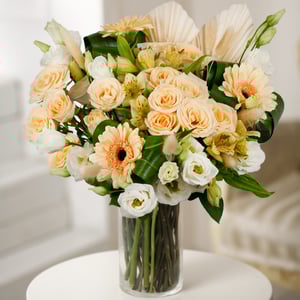
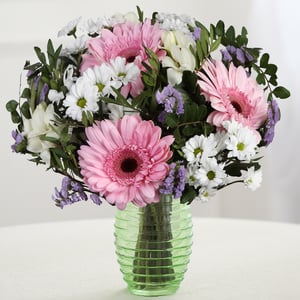
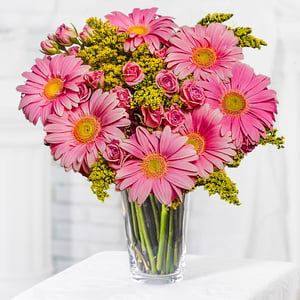
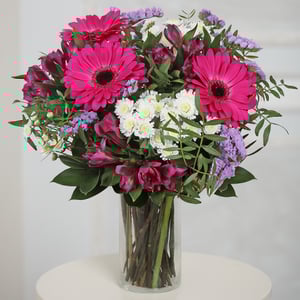
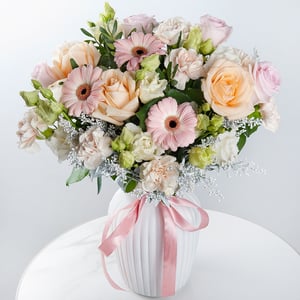

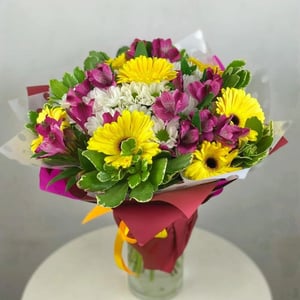
With 15 flowers that represent strength to choose from, how do you pick the right one? Here's a practical decision framework.
Match the occasion to the emotion
- Recovery or healing: Choose lotus, echinacea, or orchid —flowers for strength that also carry healing energy
- Bold achievement: Choose gladiolus, protea, or amaryllis —flowers that celebrate hard-won victory
- Quiet endurance: Choose magnolia, carnation, or cherry blossom— flowers honoring perseverance without fanfare
- Defiant courage: Choose thistle, dahlia, or sunflower —flowers that say "nothing can stop you"
How color modifies flower meaning
Once you've chosen a flower for its strength-related symbolism, the colour adds another layer — sometimes subtle, sometimes dramatic. The same bloom can say something entirely different depending on its shade, so it pays to choose thoughtfully.
Red, for instance, speaks of bold, passionate strength — the kind that charges forward and takes action. White, on the other hand, leans quieter: resilience, a clear sense of purpose, endurance without fanfare. Yellow brings warmth and optimism, a reminder that hope holds up even when things get hard. Purple signals dignity earned through struggle — nobility, not from birth, but from experience. Orange is the colour of fierce energy and determined joy, while pink carries a gentler strength: nurturing, compassionate, and quietly powerful.
So when you're putting together a bouquet, think about more than just the flower. The colour shapes the message just as much as the bloom itself.
What to write on the card
A beautiful bouquet without a personal note loses half its meaning. The words you send matter — they turn a beautiful gesture into something truly personal. Here are a few approaches that work well with strength-themed flowers, depending on the situation:
For someone in the middle of a hard fight: "You're the strongest person I know. These flowers are just a small reminder that the world sees it too."
The words you send matter — they turn a beautiful gesture into something truly personal.
For a milestone that took real grit: "Every petal in this bouquet represents a moment you refused to give up. I'm so proud of you."
For someone navigating illness or recovery: "Healing takes courage. You have more than enough. Thinking of you every day."
For a big achievement: "You bloomed through it all. Congratulations on this incredible milestone."
For anyone who simply keeps going no matter what: "For the person who bends but never breaks — this bouquet is yours."
Choose the one that fits, or use them as inspiration to write something even more personal. Either way, don't skip the card.
How to care for your strength-symbolizing bouquet

Even the most resilient flowers need a little help to stay fresh. A few simple habits can extend their life significantly, so you get the most out of your arrangement.
Start with the basics: trim the stems at a slight angle before placing them in water — this helps them drink more easily. Change the water every couple of days, and add the flower food that usually comes with the bouquet. Keep the vase away from direct sunlight, heating vents, and ripening fruit (which releases ethylene and speeds up wilting).
A few simple habits can extend their life significantly, so you get the most out of your arrangement.
If any leaves sit below the waterline, remove them. They'll rot otherwise and encourage bacteria. And if a stem starts to look tired, don't hesitate to give it a fresh cut — sometimes that's all it takes for a second wind.
With a little attention, your bouquet can keep its colour and shape for well over a week. That matters, especially when the flowers are meant to say something that lasts.
7 care steps for maximum vase life
- ✓Trim the stems at a 45-degree angle before placing them in water— this increases the surface area for water absorption
- ✓Remove any leaves that fall below the waterline to preventbacterial growth
- ✓Change the water every two days, or daily in humid Southernstates where bacteria multiply faster
- ✓Add flower food to the water if the florist includes a packet— this nourishes stems and fights bacteria
- ✓Keep the bouquet away from direct sunlight, heating vents, andA/C units that dehydrate petals
- ✓Mist the petals lightly in dry Western climates (Arizona,Nevada, Colorado) to prevent premature wilting
- ✓Move the arrangement to a cool spot overnight — lowertemperatures slow the blooming cycle and extend freshness
A note on seasonal substitutions
Your local florist selects the freshest available stems for every arrangement. Because flower availability shifts with the seasons, the florist may substitute individual stems with equal-value alternatives that preserve the bouquet's overall style, color palette, and beauty. Honestly, this one surprised me at first — but it's actually a hallmark of artisan floristry. A skilled florist adapts to what's freshest and most beautiful on any given day, and the result often exceeds what a cookie-cutter arrangement could deliver.
Common mistakes when sending flowers for strength (and how to avoid them)
Even the most meaningful flowers can lose their impact if they're chosen or delivered without care. Below are some frequent missteps — and straightforward ways to avoid them.
Choosing funeral‑associated flowers for someone recovering
White lilies and white chrysanthemums carry strong bereavement connotations in many cultures. Sending them to someone healing from surgery or illness can feel disconcerting rather than uplifting. A safer choice would be bright, cheerful blooms such as sunflowers, gerbera daisies, or colourful carnations, which convey warmth and encouragement.
Overwhelming a hospital room with heavy fragrance
Strongly scented flowers — stargazer lilies, gardenias, and hyacinths, for instance — can trigger headaches or nausea in patients and their roommates. When sending flowers to a hospital, it is wise to opt for low‑fragrance varieties like sunflowers, irises, or tulips, which offer visual appeal without the olfactory overload.
A safer choice would be bright, cheerful blooms such as sunflowers, gerbera daisies, or colourful carnations, which convey warmth and encouragement.
Forgetting the card message
A beautiful bouquet without a note is like a gift without a sender — the recipient may not even know whom to thank. Always include a card. Even a brief line, such as "Thinking of you — stay strong," transforms a generic gesture into a personal and thoughtful one.
Expecting the bouquet to match the website photo exactly
Florists craft each arrangement by hand, using the best seasonal flowers available on the day. The final bouquet may differ slightly from the online image, but the florist preserves the overall style, colour palette, and value. This is not a flaw; it simply means that a real artisan composed your arrangement with care, using the freshest stems on hand.
Ignoring delivery timing
Most services allow you to select a delivery window that aligns with the recipient's schedule or hospital visiting hours. The cost is calculated individually based on your order, destination, and chosen timeframe. Leaving timing to chance — especially for hospital or surprise deliveries — is an avoidable risk, so it pays to plan ahead.
Sending strength across the miles
There's something about a gift that carries meaning beyond its surface beauty. A bouquet chosen for its symbolism — for what it says about endurance, courage, or quiet resolve — does more than decorate a room. It tells the recipient: I see what you're carrying. I respect your fight. And I believe you have what it takes to keep going. That kind of message is worth sending, whether across town or across the country.
So which flower speaks to you most in this context? Maybe it's the lotus, rising from murky water into light. Maybe it's the gladiolus, standing tall and straight like a blade. Or perhaps it's the thistle, thriving in rocky ground where little else would dare to grow. Each offers its own version of strength — and each reminds us that resilience takes many forms.
Browse the MyGlobalFlowers catalog to find a bouquet that says exactly what you mean. A local florist will assemble it with the freshest seasonal stems and deliver it right to the door of someone who deserves to know just how strong they really are.
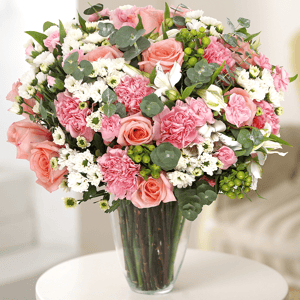
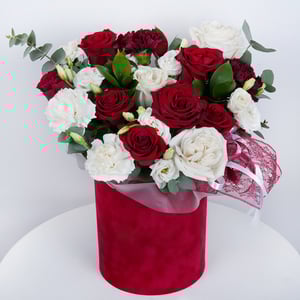
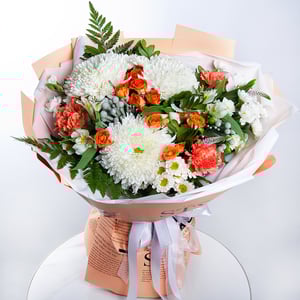
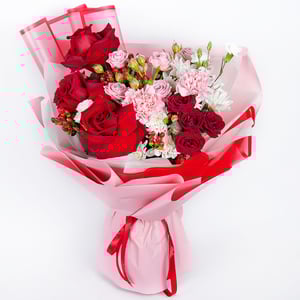
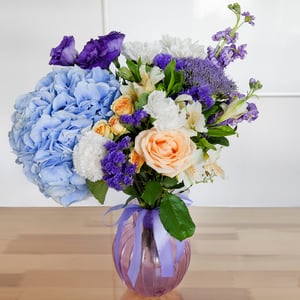
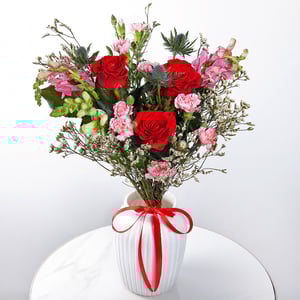
Send strength with a hand-delivered bouquet
A local florist will hand-deliver a fresh arrangement to their door.
Frequently asked questions
Which flower carries the strongest message of strength?▾
Most florists and flower historians point to the gladiolus. Its name comes from the Latin gladius, meaning "sword," and Roman gladiators once carried it as a token of moral integrity and physical power. Another strong contender is the protea — a sculptural, dramatic bloom that represents bold courage and the willingness to transform.
What flower best symbolises resilience — the ability to endure hardship?▾
The lotus is hard to beat in this category. It pushes up through muddy, oxygen-starved water to bloom clean and bright on the surface. That journey from murk to light makes it a universal emblem of resilience. The thistle deserves a mention too — it flourishes in rocky, poor soil where most plants simply give up, which makes it a fitting symbol of stubborn survival.
Is there a flower that combines both strength and healing?▾
Yes — echinacea, or coneflower, does exactly that. Indigenous peoples of North America used it medicinally for centuries long before it became a mainstream remedy, and the plant itself thrives in the harsh conditions of the American plains. Orchids are another good option: they bloom for weeks on end, which makes them a thoughtful companion for someone on a long, slow road to recovery.
Which flowers are most associated with courage?▾
Courage shows up in different forms across several flowers. Protea stands for the bravery it takes to reinvent yourself. Gladiolus honours moral conviction — the courage to stand by your principles. And the cherry blossom, with its brief, brilliant life, celebrates the courage to live fully even when you know time is short.
Can I send a strength-themed bouquet to a hospital in the US?▾
In most cases, yes — hospitals generally accept deliveries between 8 AM and 8 PM. But policies aren't uniform. Intensive care, burn, and oncology wards often have strict restrictions, so it's always wise to call the hospital first. When you do order, choose low-fragrance, compact arrangements and be sure to include the patient's full name and room number.
Do roses carry any meaning related to strength?▾
Roses are primarily about love and passion, not strength. That said, deep red roses can convey admiration and bold determination, while yellow roses speak to resilience through friendship and support. If you want a rose-based bouquet that clearly says "strength," pair them with a gladiolus or a protea — then you get both layers of meaning in one arrangement.