 EUR
EUR
 GBP
GBP
 CAD
CAD
 AUD
AUD

 ✨Boss’s Day✨
 🍭Sweetest Day🍭
 Birthday
 Same Day
 Occasions
 Flowers
 Roses
Roses
 Plants
 Gifts
Gifts
 International Flower Delivery
Minnesota's State Flower: The Pink and White Lady's Slipper
- 🌼 The Minnesota state flower is a wild orchid — and picking it can land you in legal trouble.
- 💡 That's right — Minnesota's official bloom is a native orchid, one of roughly 46 orchid species that grow across the state.
- 🌸 Share your experience — or send a bouquet inspired by Minnesota's wildflower spirit to someone who'd appreciate it.
The Minnesota state flower is a wild orchid — and picking it can land you in legal trouble. That single fact surprises most people, but it barely scratches the surface of what makes this bloom so fascinating. Here at the MyGlobalFlowers blog, we explore the stories behind America's most iconic blooms, and this one deserves the spotlight.
Picture this: a delicate orchid with a pink satin pouch rising from the floor of a misty northern bog. It took up to sixteen years to produce that single flower. No wonder Minnesota decided to protect it by law.
In this article, you'll learn the Minnesota state flower name, the story of how it earned its official title, where it grows, why it's illegal to pick, and how you can actually cultivate one in your own garden. We'll also touch on the Minnesota state bird and flower connection, a handful of fun facts, and a few ways to celebrate the North Star State's wildflower heritage — even from your living room.
What is the Minnesota state flower?
The Minnesota state flower is the Pink and White Lady's Slipper, commonly called the Showy Lady's Slipper. Its scientific name is Cypripedium reginae, and it belongs to the orchid family. That's right — Minnesota's official bloom is a native orchid, one of roughly 46 orchid species that grow across the state.
So what does it actually look like? The Showy Lady's Slipper produces broad white petals that frame a pouchy, balloon-like lip in shades of pink to deep magenta. That pouch is the "slipper," and honestly, it's one of the most striking wildflowers you'll ever see in the Upper Midwest. Mature plants reach 2 to 3 feet tall, with hairy stems and large pleated leaves that look almost tropical for a flower growing in USDA hardiness zones 2 through 5.
Bloom season runs from late May through June, sometimes stretching into early July in the cooler northern counties. Each flower lasts roughly ten days to two weeks, making the window pretty short. Timing a visit just right feels like catching a rare performance.

How the Showy Lady's Slipper became Minnesota's state flower
The Minnesota state flower earned its official status in 1902 when the state legislature formally adopted the lady's slipper. Women's organizations across the state championed the choice, arguing that the orchid represented Minnesota's unique northern landscapes better than any garden hybrid could.
Here's the thing — the original 1902 legislation simply named "the lady's slipper" without specifying which species. Minnesota is home to several lady's slipper varieties, including the yellow and the stemless types. The ambiguity lingered for decades until 1967, when the legislature updated the law and pinpointed Cypripedium reginae — the showy variety — as the one true Minnesota state flower.
Since then, the Showy Lady's Slipper has appeared on state emblems, park signage, nature center displays, and educational materials. It's woven into the state's identity the same way the loon's call echoes across its lakes.
Minnesota state bird and flower — a quick guide to state symbols
People often search for the Minnesota state bird and flower together, so let's cover both. Minnesota's state bird is the Common Loon (Gavia immer), adopted in 1961. The state flower, as you now know, is the Showy Lady's Slipper, adopted in 1902.
I find it fascinating that both symbols thrive in the same kinds of habitats. The loon nests beside quiet northern lakes, and the lady's slipper grows in the boggy, wooded margins surrounding those very waters. Together, the two species paint a perfect portrait of a state that calls itself the "Land of 10,000 Lakes."
A couple more state symbols worth knowing: Minnesota's state tree is the Red Pine (Pinus resinosa), and its state mushroom is the Morel — a favorite of spring foragers. Each symbol reflects the state's deep connection to its forests, wetlands, and wild places.
Where the Showy Lady's Slipper grows in Minnesota
The Minnesota state flower favors boggy areas, wet meadows, calcareous fens, swamp edges, and the margins of moist woodlands. The plant needs consistently damp, alkaline-to-neutral soil and the dappled light that filters through a northern forest canopy.
The species grows across much of the northern and eastern United States and extends into several Canadian provinces, but Minnesota offers especially ideal conditions. The state's abundant wetlands, long winters, and cool spring temperatures create the perfect nursery for these orchids.
Want to see the Minnesota state flower in person? The University of Minnesota Landscape Arboretum near Chaska maintains lady's slipper colonies you can visit during bloom season. Several state parks in northern Minnesota — including Itasca State Park and parks along the North Shore — harbor wild populations. Protected bog areas and scientific and natural areas managed by the Minnesota DNR also support thriving stands. Late May through mid-June offers the best odds of catching them in bloom.
Looking for mixed bouquets?
Browse mixed bouquets from local florists and pick one that suits the moment.
Why you can't pick the Minnesota state flower
Minnesota law makes it illegal to pick, uproot, or transplant wild lady's slippers without a special permit. The Minnesota state flower enjoys this legal protection for a very good reason: survival is already hard enough for this orchid without human interference.
A Showy Lady's Slipper can take anywhere from 4 to 16 years to produce its first bloom from seed. That's not a typo — sixteen years. The process starts with a dust-like seed that contains almost no stored nutrients. To germinate at all, the seed must land near a compatible mycorrhizal fungus in the soil. The fungus feeds the tiny seedling sugars and nutrients for years before the plant develops enough roots and leaves to photosynthesize on its own. Without that specific fungal partner, the seed simply dies.
This mycorrhizal relationship also explains why transplanting wild specimens almost always fails. Dig up a lady's slipper, and you sever the fungal network. The plant loses its underground lifeline and typically withers within a season or two. Nursery-propagated plants stand a far better chance because growers inoculate the soil with the right fungi from the start.
The Showy Lady's Slipper isn't listed as federally endangered, but habitat loss, wetland drainage, and illegal collection continue to shrink wild populations. Leaving these orchids undisturbed is the single most effective thing you can do to help them persist.
How to grow lady's slippers in your garden
Most articles about the Minnesota state flower skip right over cultivation, but growing lady's slippers at home is absolutely possible. The key is mimicking the conditions of a cool, moist woodland floor.
Soil preferences
Lady's slippers prefer slightly acidic to neutral soil — aim for a pH between 6.0 and 7.0. The soil should be humus-rich, loose, and well-drained yet consistently moist. Mix aged leaf compost, peat, and perlite to create a spongy, forest-floor texture. Avoid heavy clay, which traps too much water around the crown.
Sunlight requirements
Give your lady's slipper dappled shade or morning sun with afternoon shade. A spot beneath a deciduous tree works beautifully — the canopy filters harsh midday light while allowing enough brightness for photosynthesis. Full sun scorches the leaves and dries the root zone too quickly.
Watering tips
Keep the root zone evenly moist but never waterlogged. A 2-to-3-inch layer of shredded leaf mulch helps retain moisture and insulates the shallow roots from temperature swings. Water slowly at the base of the plant and avoid splashing the crown — standing moisture there invites rot.
Where to buy lady's slippers legally
Purchase only nursery-propagated plants from reputable native-plant nurseries. Never buy wild-collected specimens, no matter how cheap the price. Several Minnesota-based nurseries offer Cypripedium reginae divisions in mid-to-late May, timed perfectly for spring planting. Look for vendors who can confirm their stock was propagated on-site or sourced from licensed growers.
Common mistakes to avoid
Planting in full sun dries out the roots and burns the foliage within weeks.
Applying fertilizer burns the delicate mycorrhizal root system — skip it entirely.
Transplanting wild plants kills them almost every time because the fungal network gets destroyed.
Overwatering causes crown rot, the number-one killer of cultivated lady's slippers.
Fun facts about the Minnesota state flower
The Minnesota state flower has a few secrets worth sharing. Some are charming, and one might make you think twice before touching.
The "slipper" pouch traps visiting insects temporarily to ensure pollination. Bees crawl in, can't climb back out through the slippery opening, and must squeeze past the pollen structures to escape through a narrow exit. The plant doesn't eat the insects — it just borrows them for a moment.
The fine hairs covering the stems and leaves contain a chemical that triggers a skin rash similar to poison ivy in some people. Admire the flower, but think twice before running your fingers along the stalk.
A single Showy Lady's Slipper can live 50 years or more under ideal conditions. Some documented colonies have persisted for over a century.
The species name reginae means "of the queen" in Latin. There's something magical about a wildflower that carries a royal title — and honestly lives up to it.
Minnesota shares the lady's slipper distinction with only one other state: New Hampshire, which honors a different variety (Cypripedium parviflorum, the Yellow Lady's Slipper) as its state wildflower.

Celebrating Minnesota's wildflowers with fresh bouquets
You can't pick a wild Minnesota state flower — and you wouldn't want to, knowing how long each bloom took to arrive. But you can absolutely celebrate your love of Minnesota's natural beauty by sending fresh flowers to someone you care about.
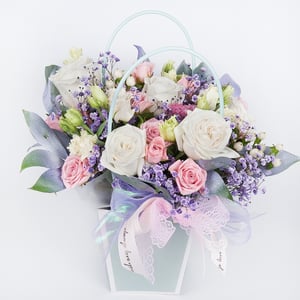
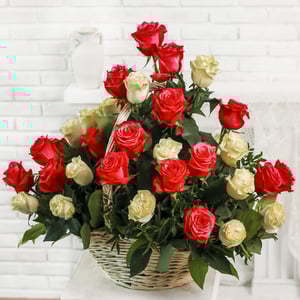
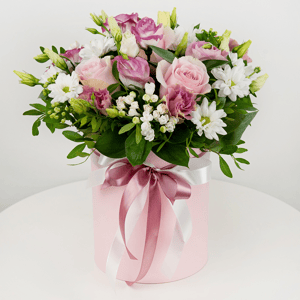
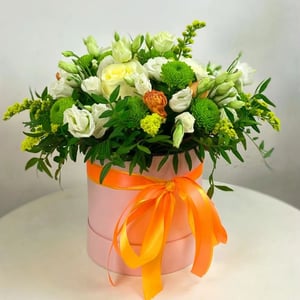
MyGlobalFlowers connects you with local florists in cities across Minnesota — Minneapolis, St. Paul, Duluth, Rochester, and beyond. Each local florist assembles your bouquet by hand using the freshest seasonal blooms available that day. The final arrangement may look slightly different from the website photo because the florist selects the best flowers of the moment — and that's actually a plus. You get a bouquet made from what's at peak freshness, not pulled from a pre-packed box.
The delivery cost calculates individually at checkout based on your recipient's location, so there are no hidden surprises.
Browse seasonal bouquets for flower delivery in Minnesota and surprise someone with a little bit of the North Star State's natural beauty.




Final thoughts
The Showy Lady's Slipper represents patience — years of silent growth underground before a single bloom appears. It represents resilience, surviving Minnesota's sub-zero winters season after season. And it represents a quiet, almost private kind of beauty. This isn't a flower that shouts from a highway median. You have to walk into the bog, time your visit just right, and look carefully among the mosses and ferns.
This season, try to visit a Minnesota bog or arboretum during late May or June. Stand in front of a Showy Lady's Slipper and consider that the plant may have started growing before you graduated high school. That kind of patience deserves a little awe.
Have you ever spotted a showy lady's slipper in the wild? Share your experience — or send a bouquet inspired by Minnesota's wildflower spirit to someone who'd appreciate it.
Send flowers today
Choose a bouquet, add a message, and a local florist hand-delivers it.