 EUR
 GBP
 CAD
 AUD

 Birthday
 Same Day
 Occasions
 Flowers
 Roses
 Plants
 Gifts
 International Flower Delivery
Edelweiss & Alpine Flowers Guide
- 🌼 The edelweiss flower thrives naturally at 5,900–9,800 feet in limestone-rich alpine tundra, but gardeners across USDA zones 4–7 can grow cultivars like 'Matterhorn' and 'Mont Blanc' in well-drained, slightly alkaline soil.
- 🏔️ Dense white hair covers every part of the edelweiss — stems, leaves, and bracts — blocking UV damage and retaining moisture, which makes the flower one of the most cold-adapted alpine plants on the planet.
- 🌱 Start seeds with 3–6 weeks of cold stratification in your refrigerator, plant them no deeper than ⅛ inch, and avoid fertilizer — edelweiss actually performs worse in rich soil.
The edelweiss flower survives wind, UV radiation, and freezing temperatures above 8,000 feet — and you can grow one on your patio in Colorado or Vermont. Leontopodium nivale subsp. alpinum, the botanical name behind the legend, belongs to the daisy family (Asteraceae) and has fascinated mountaineers, botanists, and gardeners since the 19th century. Whether you want to understand alpine plants better, try your hand at growing one, or simply learn why a small woolly bloom became the national symbol of Austria and Switzerland, this guide covers the full picture — from rocky Himalayan origins to USDA hardiness zones in your backyard.
What the edelweiss flower actually looks like
The edelweiss flower surprises most people. It's small. A mature plant reaches only 3–8 inches tall. What most folks mistake for white petals — the star-shaped "flower" — actually consists of 5–15 fuzzy bracts surrounding a cluster of 2–12 tiny yellow flowerheads. Those flowerheads are the real blooms.
Dense trichomes (microscopic woolly hairs) cover every visible surface of the edelweiss. These hairs serve a double purpose: they block harmful ultraviolet radiation at high elevations, and they trap a thin layer of moisture against the leaf surface. Researchers at Vienna University of Technology confirmed in 2005 that the fiber structure of edelweiss hair absorbs UV-A wavelengths almost completely — a discovery that later inspired sunscreen formulations.
Bloom season runs from July through September in its native range. The flowers dry naturally on the stem and hold their shape for months, which explains why pressed edelweiss specimens from the 1860s still survive in European herbarium collections.

Where edelweiss grows: habitat across alpine tundra
Edelweiss is native to the limestone mountains of Europe and Asia. The flower's range stretches from the Pyrenees and Alps through the Carpathians, across the Balkans, and into the Himalayas. Alpine tundra plants like edelweiss colonize rocky ledges, thin grasslands, and gravel slopes where few competitors survive.
Altitude and terrain
Wild edelweiss grows between 5,900 and 9,800 feet (1,800–3,000 meters) above sea level, though scattered populations appear as low as 1,500 feet in certain Balkan gorges. The flower demands:
- Rocky, well-drained substrate with a pH between 6.5 and 8.0
- Full sun exposure for at least 6 hours daily
- Minimal soil organic matter — nutrient-poor conditions force compact growth
- Cold winters with temperatures regularly dropping below 0°F (−18°C)
Distribution beyond Europe
Alpine plants related to edelweiss grow across Central Asia. Leontopodium nivale subspecies appear in the mountains of Tibet, Sichuan Province, and the Japanese Alps. Roughly 30–40 species belong to the Leontopodium genus worldwide. The Himalayan species Leontopodium jacotianum grows above 16,000 feet — one of the highest-altitude flowering plants documented.



Alpine flowers that share the edelweiss habitat
Edelweiss doesn't grow alone. Alpine flowers form communities adapted to thin soil, intense sunlight, and brutal wind. Here are notable companions you might spot alongside edelweiss on a mountain hike — or plant alongside edelweiss in a rock garden:
- Gentiana acaulis (trumpet gentian) — vivid blue flowers, 2–4 inches tall, blooms May to June, thrives in zones 3–7
- Saxifraga oppositifolia (purple saxifrage) — one of the first alpine tundra plants to bloom after snowmelt, tolerates zone 2
- Dryas octopetala (mountain avens) — white 8-petaled flowers, creeping growth, native to both European and North American alpine zones
- Campanula cochleariifolia (fairy's thimble) — delicate bell-shaped lavender blooms, 3–6 inches tall
- Primula auricula (bear's ear primrose) — yellow or purple, 4–8 inches, favors limestone crevices
Rock garden designers in the U.S. often combine these alpine flowers with edelweiss to create naturalistic displays. The American Rock Garden Society, founded in 1934, maintains regional chapters that share cultivation tips for exactly these species.
How to grow edelweiss flower at home in the U.S.
Good news. You don't need an Alpine meadow. Edelweiss cultivars grow well across USDA hardiness zones 4 through 7 — covering much of the northern and mountainous United States. Cities like Denver, Minneapolis, Burlington, and Boise sit squarely in this range.
Step 1: cold stratification
Edelweiss seeds need a cold period to germinate. Place seeds on a damp paper towel inside a sealed plastic bag. Store the bag in your refrigerator (not freezer) at 35–40°F for 3–6 weeks. This mimics winter dormancy in the Alps.
Step 2: sow seeds properly
After stratification, press seeds gently onto the surface of a seed-starting mix. Cover them with no more than ⅛ inch of fine grit or vermiculite. Edelweiss seeds require light to germinate. Keep the tray at 50–65°F. Expect sprouts in 10–21 days.
Step 3: prepare the outdoor site
Choose a spot with full sun — at least 6 hours of direct light. Mix coarse sand or perlite into your garden soil until it drains freely. Add a handful of crushed limestone per square foot to raise the pH toward 7.0–8.0. Skip the compost. Rich soil produces leggy, weak edelweiss plants that lose their characteristic compact shape.
Step 4: transplant
Move seedlings outdoors after the last frost date. Space plants 6–8 inches apart. Water lightly at planting. Edelweiss establishes slowly — expect small rosettes the first season and blooms by the second summer.
Cultivars worth trying
Several named cultivars perform well in American gardens:
- 'Matterhorn' — vigorous, large bracts, 6–8 inches tall
- 'Mont Blanc' — compact habit, heavy blooming, good for containers
- 'Mt. Everest' — taller than average (up to 12 inches), robust
- 'Silver Star' — particularly silvery bract color, strong trichome density
Specialty nurseries like Edelweiss Perennials ship live plants across the continental U.S. Expect to pay $8–$15 per plant depending on cultivar and pot size.
Caring for edelweiss: common mistakes and how to avoid them
Edelweiss dies more often from kindness than neglect. Here are the frequent errors U.S. gardeners make — and the fixes.
Overwatering
The number one killer. Edelweiss roots rot in consistently wet soil. Water only when the top 2 inches of soil feel completely dry. In humid climates (think the Southeast or Pacific Northwest), plant edelweiss in raised beds or containers with extra drainage holes.
Too much fertilizer
Alpine plants evolved in nutrient-poor soil. Feeding edelweiss with standard garden fertilizer pushes soft, floppy growth and reduces the woolly texture that defines the flower. Apply zero fertilizer in most cases. A light dusting of bone meal once per year is the maximum.
Wrong soil pH
Edelweiss thrives in slightly alkaline to neutral soil (pH 6.5–8.0). Acidic garden soil — common in the eastern U.S. — stunts edelweiss growth. Test your soil with a $10–$15 home kit from any garden center. Amend acidic soil with agricultural lime at the rate of 5 pounds per 100 square feet to raise the pH by roughly one point.
Ignoring winter drainage
Edelweiss handles cold beautifully. The plant tolerates −30°F. But winter rain sitting around the crown causes rot. Mulch lightly with gravel — not wood chips — to keep the crown dry during winter thaws.
Planting in shade
Even partial shade weakens edelweiss. The plant needs direct sun to produce dense trichomes. Without full exposure, edelweiss turns green and loses that iconic silvery-white look.
Alpine strawberry plants: a perfect rock garden companion
Planning a rock garden with your edelweiss? Alpine strawberry plants (Fragaria vesca) make a natural partner. These diminutive strawberries grow 6–10 inches tall, produce small, intensely flavored berries from June through October, and tolerate the same well-drained, slightly alkaline soil that edelweiss prefers.
Alpine strawberry plants differ from standard garden strawberries in four key ways:
- Alpine strawberry plants produce no runners — they spread by seed or crown division only
- Alpine strawberry plants fruit continuously rather than in a single June burst
- Alpine strawberry plants tolerate partial shade (2–4 hours of sun), though full sun boosts yield
- Alpine strawberry plants grow well in USDA zones 3–10, making them more versatile than edelweiss
Varieties like 'Mignonette' (red fruit), 'Yellow Wonder' (yellow fruit), and 'Alexandria' (everbearing, no runners) cost $3–$6 per plant at most U.S. nurseries. Tuck alpine strawberry plants into crevices beside edelweiss — the strawberry leaves carpet the ground while edelweiss stands upright above them.
Looking for graduation flowers?
Browse graduation flowers from local florists and pick one that suits the moment.
The cultural story behind the edelweiss flower
Edelweiss carries heavy symbolism across Central Europe. But the flower's fame is surprisingly recent.
19th century: the mountaineering craze
Before the 1850s, few people outside remote Alpine villages knew the edelweiss flower. The rise of recreational mountaineering changed everything. Young men began picking edelweiss from dangerous cliff faces as proof of bravery — and as gifts for romantic interests. The Austrian Alpine Club, founded in 1862, adopted edelweiss as its emblem. By the 1880s, over-collection had already reduced wild populations in accessible areas.
Military and political symbolism
Austrian and German mountain troops wore edelweiss badges starting in the 1900s. The Austrian Gebirgsjäger (mountain infantry) still uses the edelweiss flower as its insignia today. Switzerland printed edelweiss on its 5-franc coin. The flower appears on Austrian euro coins minted since 2002.
Pop culture
The song "Edelweiss" from Rodgers and Hammerstein's 1959 musical The Sound of Music introduced the flower to American audiences. Fun fact: the song never existed as a traditional Austrian folk song. Richard Rodgers composed it specifically for the Broadway production. Many Austrians heard the song for the first time from American tourists who assumed Austrians would know it.
Conservation: protecting wild edelweiss
Wild edelweiss populations declined sharply during the late 19th and early 20th centuries due to over-collection by hikers and commercial harvesting. Most European countries now protect the flower by law.
- Austria — picking wild edelweiss carries fines up to €2,500 in some provinces
- Switzerland — edelweiss holds protected status in multiple cantons
- France — collection bans apply in national parks and nature reserves
- Italy — South Tyrol law prohibits harvesting wild edelweiss since 1935
Conservation efforts have succeeded. Wild edelweiss populations have stabilized or increased in protected Alpine zones over the past 40 years. Commercial cultivation now supplies the skincare and souvenir industries, reducing pressure on wild stands.
Edelweiss in skincare and modern science
The edelweiss flower has entered the beauty industry. Leontopodic acid and chlorogenic acid — two antioxidant compounds found in edelweiss extracts — show strong free-radical scavenging activity in lab studies. Swiss skincare brands began incorporating edelweiss stem cell extracts into anti-aging serums around 2010.
One peer-reviewed study published in the Journal of Ethnopharmacology (2004) measured the antioxidant capacity of edelweiss extracts at roughly 3 times that of vitamin C in standardized assays. These findings drove commercial interest, and cultivated edelweiss farms now operate in the Swiss Alps and Austria specifically for extract production.
Worth noting: the concentration of active compounds varies widely between products. Reading ingredient labels matters more than trusting marketing claims.
Seasonal considerations for U.S. gardeners
Planning around American seasons helps edelweiss thrive.
Spring (March–May): Start seed stratification by late February. Transplant hardened seedlings after your local last-frost date — typically mid-April in zone 6, early May in zone 5, mid-May in zone 4.
Summer (June–August): Edelweiss blooms in its second year, typically July through August. Water sparingly. Watch for aphids — the only common pest — and remove them with a strong water spray.
Fall (September–November): Stop watering in late September. The plant enters dormancy naturally. Apply a 1-inch layer of pea gravel around the crown.
Winter (December–February): Edelweiss needs no protection down to −30°F. Avoid covering with plastic — trapped moisture kills the crown. Snow cover actually insulates effectively.

Gifting mountain flowers: occasions that fit
Mountain flowers carry strong emotional associations. Edelweiss in particular symbolizes courage, devotion, and resilience. Consider these occasions:
- Valentine's Day (February 14) — a potted edelweiss outlasts cut roses by years; attach a note about the flower's romantic history
- Mother's Day (second Sunday in May) — pair edelweiss with alpine strawberry plants in a rustic container
- Anniversaries — edelweiss represents enduring love; a framed pressed specimen makes a memorable keepsake
- Housewarming gifts — a rock garden starter kit with edelweiss, gentian, and saxifrage seedlings costs under $40 total
- Graduation — the symbolism of overcoming difficulty resonates for graduates
Local florists in mountain communities — Aspen, CO; Park City, UT; Lake Placid, NY — sometimes carry fresh or dried edelweiss seasonally. Call ahead. For flower delivery in other U.S. cities, explore curated options through services that coordinate with local florists.


Your turn to grow one
The edelweiss flower earned its legend by thriving where almost nothing else can. Growing one at home doesn't demand an Alpine peak — just sharp drainage, lean soil, and patience through the first year. Start seeds in February, transplant in spring, and expect that first star-shaped bloom by next July. What other plant lets you hold a piece of mountain mythology in a 6-inch pot?
Browse our for more alpine plants worth adding to your garden or gift list.
Send flowers today
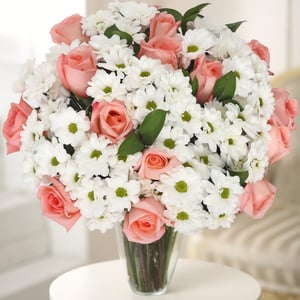
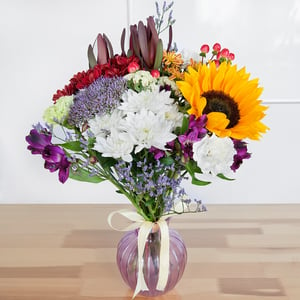
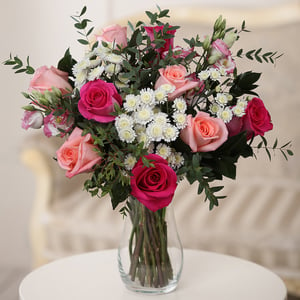
Choose a bouquet, add a message, and a local florist hand-delivers it.