 EUR
EUR
 GBP
GBP
 CAD
CAD
 AUD
AUD

 ✨Boss’s Day✨
 🍭Sweetest Day🍭
 Birthday
 Same Day
 Occasions
 Flowers
 Roses
Roses
 Plants
 Gifts
Gifts
 International Flower Delivery
Oregon's State Flower: Oregon Grape
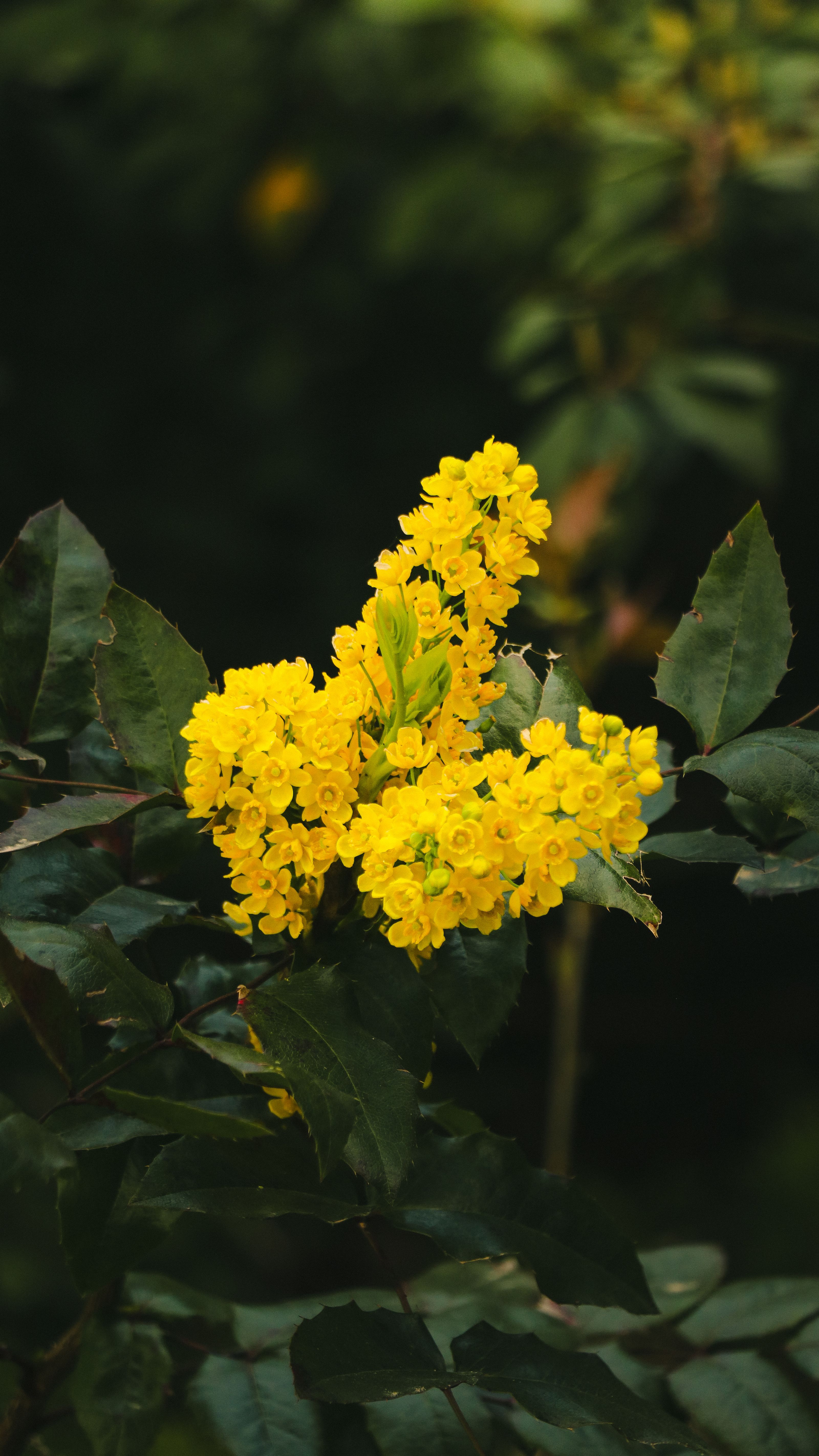
- 🌼 Picture this: you're hiking through a damp Oregon forest in early April, and suddenly you spot clusters of bright yellow blooms glowing against dark, glossy leaves.
- 💡 The "holly" confusion stems from the compound leaves, each featuring 5–9 leaflets with sharp, serrated edges that look a lot like English holly.
- 🌸 Share this article with a fellow Oregon enthusiast, or browse the MyGlobalFlowers catalog to send a gorgeous bouquet to someone special in Oregon.
Picture this: you're hiking through a damp Oregon forest in early April, and suddenly you spot clusters of bright yellow blooms glowing against dark, glossy leaves. That's the Oregon state flower — the Oregon grape — and honestly, few state symbols feel so perfectly matched to their landscape. Here at MyGlobalFlowers, an international flower delivery service, we celebrate iconic blooms from every corner of the world, and the Oregon grape holds a special place in our hearts. In this article, you'll learn the flower's full name and botanical backstory, discover its deep connection to Oregon's identity (including the link between the oregon state bird and flower), pick up practical growing tips, and find out how to celebrate Oregon's floral spirit by sending fresh blooms to someone you love in the Beaver State.
What is the Oregon state flower?
Let's answer the most-searched question right away: what is oregon state flower? The oregon state flower name is the Oregon grape, scientifically known as Mahonia aquifolium (some botanists also classify the plant as Berberis aquifolium). People sometimes call the shrub holly-leaved barberry — and that nickname hints at a common mix-up worth clearing up.
Here's the thing: the Oregon grape is not a true grape, and despite those spiny, shiny leaves, the plant is not a holly either. The "grape" label comes from the clusters of small, dusty blue-purple berries the shrub produces each summer. The "holly" confusion stems from the compound leaves, each featuring 5–9 leaflets with sharp, serrated edges that look a lot like English holly.
So what does the whole plant actually look like? The Oregon grape is an evergreen shrub that typically stands 3–6 feet tall. Dense racemes of small, bright-yellow flowers appear in spring, drawing pollinators when very few other plants bloom. Glossy green leaves darken over summer, then shift to gorgeous reddish-bronze and purplish tones through fall and winter. By late summer, the tart berries ripen to a deep blue-purple dusted with a pale, waxy coating. The overall effect is striking year-round — and that's exactly why Oregonians chose the plant as their floral emblem.
History — how the Oregon grape became the state flower
Oregon designated the Oregon grape blossom as its official state flower in 1899 — making the state one of the first in the nation to formalize a floral symbol. The timing made sense. Oregon had joined the Union as the 33rd state back in 1859, and by the close of the 19th century, a wave of civic pride pushed states across the country to adopt official emblems.
Women's organizations and garden clubs played a major role in championing the Oregon grape. The plant grew abundantly across the Pacific Northwest, from coastal forests to the foothills of the Cascades, so the choice felt democratic — practically every Oregonian had seen the shrub. The Oregon grape wasn't rare, wasn't imported, and wasn't fussy. The plant simply belonged here.
Fun fact: that very abundance creates challenges today. The Oregon grape root contains berberine, a compound valued in herbal medicine, and illegal harvesters sometimes dig up wild plants on public land. The U.S. Army Corps of Engineers has documented the problem and now actively works to restore Oregon grape populations, especially in the Willamette Valley. Protecting a state symbol, it turns out, requires ongoing effort.





Oregon state bird and flower — a natural pairing
Talk about the oregon state bird and flower together, and a beautiful pattern emerges. Oregon designated the Western Meadowlark (Sturnella neglecta) as its state bird in 1927 — nearly three decades after choosing the Oregon grape. The Western Meadowlark is hard to miss: a robin-sized songbird with a bright yellow breast marked by a bold, black V-shaped bib. The bird fills open grasslands and meadows across Oregon with a rich, flute-like melody, especially in spring and early summer.
I always find it fascinating that both the oregon state bird and flower share vivid yellow coloring. Stand in a Willamette Valley meadow in May, and you might see a Western Meadowlark singing from a fence post while Oregon grape blooms glow at the woodland edge nearby. That golden visual signature feels deeply, unmistakably Oregonian.
Oregon claims other state symbols too — the Douglas fir as the state tree, the beaver as the state animal — but the bird-and-flower pairing is by far the most commonly searched and recognized duo.
Oregon grape — botanical profile and growing guide
What the Oregon grape looks like
The Oregon grape state flower deserves a closer look. Each compound leaf carries 5–9 spiny-edged leaflets arranged along a central stem. New spring growth emerges bright green, deepens to a lustrous dark green over summer, then transitions to reddish-bronze in fall and rich purple tones during winter. The spring flowers form dense, upright racemes — clusters of tiny, cup-shaped blossoms in a sunny, buttery yellow. By late August, those flowers give way to bunches of small, round berries coated in a dusty bloom, ripening from green to deep blue-purple.
Where the Oregon grape grows
The Oregon grape's native range stretches along the Pacific coast from British Columbia south to Northern California. The shrub thrives in USDA hardiness zones 5–9, which means gardeners from the Pacific Northwest to the Mid-Atlantic and parts of the Southeast can grow the plant successfully.
In the wild, Oregon grape favors forest understories, woodland edges, and rocky slopes. The shrub tolerates deep shade but also handles sun in cooler climates. Honestly, this surprised me — few evergreen shrubs adapt to such a wide range of light conditions. That flexibility makes the Oregon grape an incredibly versatile landscape plant.
How to grow Oregon grape in your garden
Want to bring a piece of Oregon's floral identity into your own yard? Follow these practical steps:
Choose a spot with well-drained soil and partial shade — morning sun with afternoon shade works best in warmer regions.
Plant in fall or early spring so the roots establish before summer heat arrives.
Water deeply once a week during the first growing season to encourage strong root development.
Apply a 2–3 inch layer of organic mulch around the base to retain moisture and suppress weeds.
Prune old stems right after flowering to encourage dense, bushy growth and fresh new shoots.
Fertilize lightly with an all-purpose organic fertilizer in early spring — the Oregon grape doesn't need heavy feeding.
One more thing worth knowing: the Oregon grape tolerates drought remarkably well once established. That trait makes the plant perfect for water-conscious gardeners throughout the Pacific Northwest and beyond.
Common mistakes when growing Oregon grape (and how to avoid them)
Planting in full blazing sun in hot inland areas — intense afternoon sun scorches the leaves. Provide afternoon shade or plant on the north side of a building.
Overwatering in heavy clay soil — excess moisture causes root rot. Amend clay soil with compost or coarse organic matter to improve drainage before planting.
Ignoring powdery mildew — a white, powdery coating on leaves signals fungal trouble. Treat early with neem oil or improve air circulation by thinning surrounding vegetation.
Confusing Oregon grape with invasive barberry species — Japanese barberry looks similar but spreads aggressively. Always verify the species tag at the nursery before purchasing.
Looking for mixed bouquets?
Browse mixed bouquets from local florists and pick one that suits the moment.
Symbolism and meaning of the Oregon grape
The Oregon grape state flower symbolizes resilience, adaptability, and rugged beauty — qualities Oregonians proudly claim as their own. The evergreen leaves represent endurance through the state's notoriously wet, gray winters. The bright yellow blossoms signal renewal and optimism each spring, arriving when most other plants are still dormant.
Beyond official state documents, the Oregon grape has seeped into Oregon's broader cultural identity. You'll spot the plant on government publications, local art prints, and — I recommend keeping an eye out for this — even craft beer labels from Portland and Bend breweries. The Oregon grape isn't just a botanical symbol. The plant is a cultural touchstone.
Uses of the Oregon grape — from medicine to the kitchen
Traditional and herbal uses
Native peoples of the Pacific Northwest relied on Oregon grape roots and bark for centuries. They extracted bright yellow dye from the roots and brewed medicinal teas to treat various ailments. The root contains berberine, a naturally occurring alkaloid that modern researchers study for its antimicrobial and anti-inflammatory properties.
Today, herbalists use Oregon grape root extract in dietary supplements and topical preparations aimed at skin conditions like eczema and psoriasis. A quick caution: always consult a healthcare provider before using herbal remedies, especially alongside prescription medications.
Culinary uses
The tart berries won't win any raw-eating contests — they pucker the mouth — but cooking transforms them into something special. Home cooks turn Oregon grape berries into jams, jellies, and syrups by adding sugar and simmering the fruit down. Some craft brewers in Oregon toss the berries into sour ales to add a tangy, complex twist. The berries also pack a solid punch of vitamin C, so you get a nutritional bonus alongside the flavor.
Wildlife value
The Oregon grape plays a vital ecological role across its native range:
Oregon grape berries feed birds (including the Western Meadowlark), deer, and black bears.
Dense foliage provides shelter for small mammals and ground-nesting birds.
Early-blooming flowers attract native pollinators — bees and butterflies — during a critical window when few other nectar sources exist.
Celebrating Oregon's state flower with fresh blooms
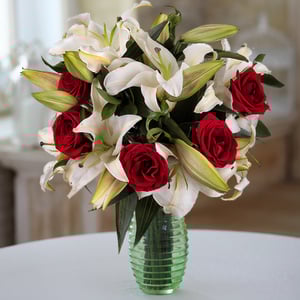
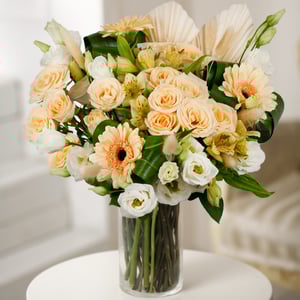
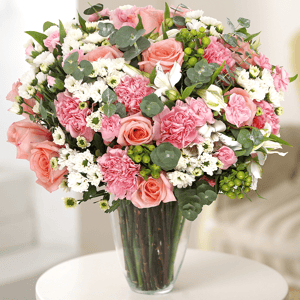
You can't exactly tuck an Oregon grape bush into a vase — but you can absolutely celebrate Oregon's floral spirit by sending beautiful fresh flowers to someone you love in the state. MyGlobalFlowers connects you with local florists across Oregon — in Portland, Eugene, Salem, Bend, and beyond.
Each local florist hand-arranges the bouquet using the freshest seasonal flowers available that day. The final arrangement may vary slightly from the photo on the website, because the florist selects the best blooms on hand — and that's actually a good thing. You get a truly fresh, one-of-a-kind bouquet rather than a cookie-cutter arrangement pulled from a cooler. The service calculates your delivery fee at checkout based on the recipient's location.
Looking for occasion ideas? Here are some great reasons to send flowers to someone in Oregon:
Mother's Day (second Sunday in May) — bright, cheerful bouquets in yellows and greens echo Oregon's spring landscapes.
Valentine's Day — classic red roses or modern mixed arrangements say everything you need to say.
Thanksgiving — warm autumn tones with rustic textures capture the Pacific Northwest harvest mood.
Birthdays, anniversaries, or "just because" — the best reason to send flowers is no reason at all.

Oregon's state flower — fun facts you probably didn't know
Oregon adopted the Oregon grape as its state flower in 1899 — making the designation one of the earliest in the country.
The Oregon grape belongs to the barberry family (Berberidaceae), not the grape family (Vitaceae).
Meriwether Lewis and William Clark collected Oregon grape specimens during their famous expedition and sent samples back east for botanical study.
The U.S. Army Corps of Engineers actively restores Oregon grape populations in the Willamette Valley to combat damage from illegal root harvesting.
Oregon grape leaves change color through the seasons — bright green in summer, bronze-red in fall, and deep purplish tones in winter.
The plant spreads through underground rhizomes, forming beautiful natural ground-cover colonies that stabilize soil on slopes and woodland edges.



Final thoughts
Next time you spot those cheerful yellow blooms on a Pacific Northwest trail — or notice spiny, glossy leaves turning purple against a backdrop of November rain — you'll know exactly what you're looking at and why Oregonians chose this tough, beautiful plant as their own. The Oregon grape doesn't shout for attention. The shrub earns admiration by showing up, season after season, in every kind of weather.
Share this article with a fellow Oregon enthusiast, or browse the MyGlobalFlowers catalog to send a gorgeous bouquet to someone special in Oregon. Whether the occasion calls for celebration, comfort, or a simple "thinking of you," fresh flowers delivered by a local florist carry a warmth that no text message can match.
Happy exploring — and happy blooming. 🌿
Send flowers today
Choose a bouquet, add a message, and a local florist hand-delivers it.