 EUR
EUR
 GBP
GBP
 CAD
CAD
 AUD
AUD

 ✨Boss’s Day✨
 Birthday
 Occasions
 Same Day
 Flowers
 Roses
Roses
 Plants
 Gifts
Gifts
 International Flower Delivery
Violet flower meaning: what this tiny bloom says about love, loss, and loyalty
Violet flower meaning stretches back over 2,500 years — and understanding violet symbolism can transform the way you choose gifts, plant gardens, or even pick a baby name. The genus Viola contains more than 500 species across every continent except Antarctica, yet most people know almost nothing about why these small flowers carry so much weight in mythology, religion, and everyday life. This guide unpacks every layer: color symbolism, spiritual significance, cultural history, the name "Violet," and practical tips for growing and gifting violets across the United States.
Here's what you'll walk away with: a clear picture of what violets truly stand for, which colors match which occasions, and exactly how to keep these blooms thriving in your own backyard — whether you live in Maine or Arizona.
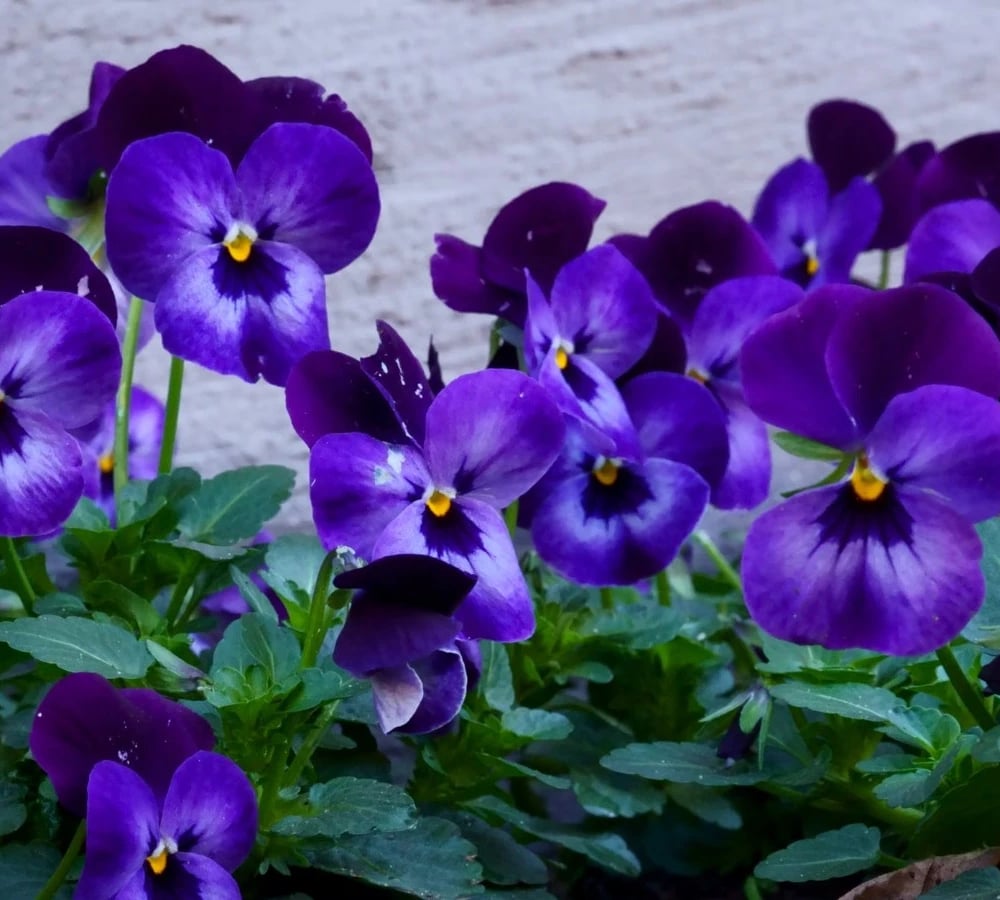
What does the violet flower symbolize?
Violet flower symbolism revolves around a handful of core themes. Each one connects to a different chapter of human history.
Modesty and humility
Violets hug the ground. Most species grow only 4 to 8 inches tall. Ancient observers noticed the blooms hiding beneath heart-shaped leaves, and cultures around the world read that posture as a sign of quiet virtue. Victorians reinforced the link: giving someone a bouquet of wild violets said, "You carry grace without needing attention."
Faithfulness and devotion
Napoleon Bonaparte adopted the violet as his personal emblem after his exile to Elba in 1814. Supporters called him Père la Violette ("Father Violet") and wore the flowers to signal their loyalty. That association between violets and steadfast devotion stuck. Even today, violets meaning often carries that thread of unshakable commitment.
Love — both romantic and Sapphic
Sappho, the Greek poet from Lesbos who wrote around 600 BCE, described placing violet garlands on her beloved's hair. Her poetry turned violets into an enduring symbol of love between women. The University of Washington Botanic Gardens and the Isabella Stewart Gardner Museum in Boston both highlight this sapphic connection in their public programming.
Mourning and remembrance
Shakespeare gave violets a funeral tone. In Hamlet (Act IV), Ophelia says, "I would give you some violets, but they withered all when my father died." Victorian mourners tucked violets into funeral wreaths. So violets symbolism works in two directions — life and loss, joy and grief.
Spiritual wisdom
Christian tradition links the violet to the Virgin Mary. Medieval monks called the flower "Our Lady's Modesty." In certain mystical practices, violet spiritual meaning points toward intuition, inner knowing, and the opening of the third eye chakra.
Violet color meaning: what each shade tells you
The color violet meaning shifts depending on the hue you choose. Think of the color as a second layer of language on top of the flower itself.
Purple violets
Purple violets carry the most traditional meaning: royalty, dignity, and admiration. Tyrian purple dye cost ancient Romans roughly 10,000 to 20,000 denarii per pound, so the color became a marker of wealth. A bouquet in violet tones says respect and deep admiration.
Blue violets
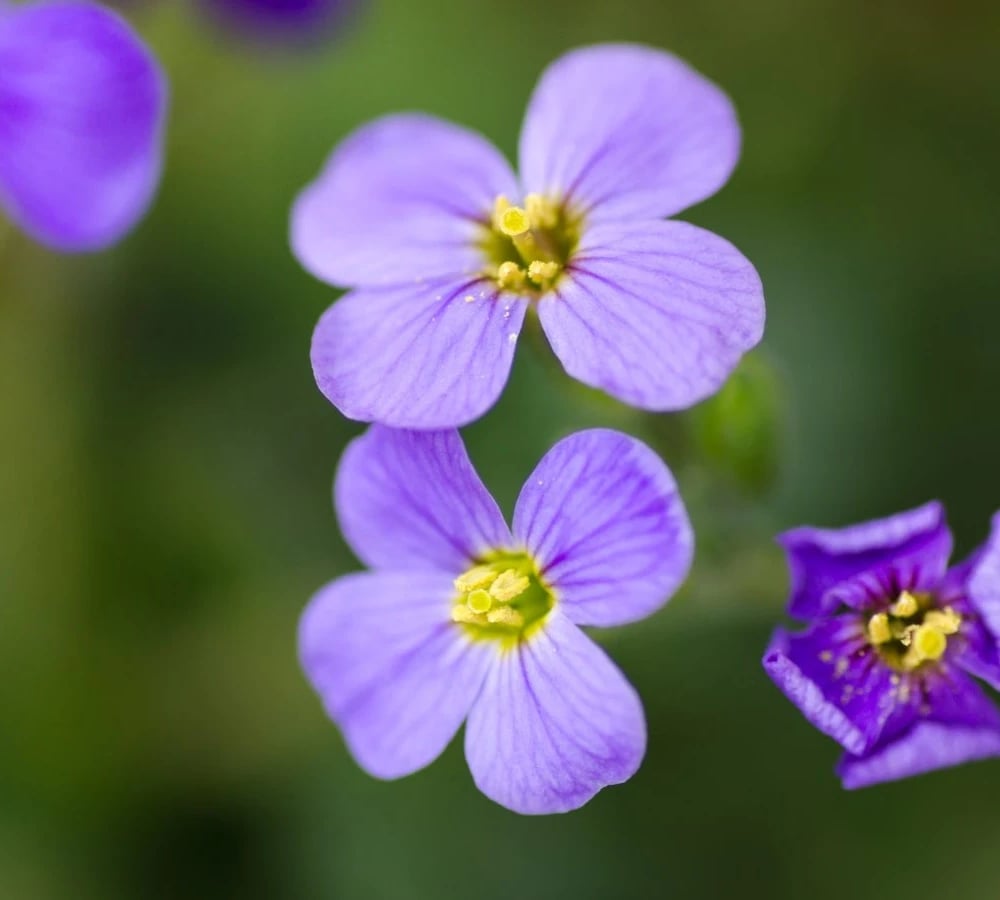
Blue violets — especially Viola sororia, the common blue violet — signal trust and devotion. Viola sororia serves as the state flower for Illinois, New Jersey, Rhode Island, and Wisconsin. Four states share one flower. That fact alone says something about how deeply Americans connect with blue violets.
White violets
White violets mean innocence, purity, and a willingness to take a chance. Brides in early 20th-century America sometimes carried white violet nosegays alongside larger bouquets. Giving white violets to someone says, "I'm open and honest with you."
Yellow violets
Yellow violets point toward happiness and worthiness. You'll find the round-leaf yellow violet (Viola rotundifolia) growing wild across the Appalachian Mountains from Georgia to Quebec. Yellow carries a lighter, more cheerful energy than purple or blue.
Pink and mauve violets
Less common, but worth noting. Pink violets speak to gentle affection. Mauve tones — a blend of purple and pink — land somewhere between romance and spiritual reflection. Victorian color dictionaries treated mauve as a "half-mourning" shade.
Meaning of the name Violet
The meaning of the name Violet comes directly from the Latin viola. The name gained traction in English-speaking countries during the late 1800s, then declined mid-century, and surged again after 2010. The Social Security Administration ranked "Violet" as the 35th most popular baby girl name in the United States in 2023.
Why the comeback? Parents cite the name's balance of vintage charm and botanical grounding. Celebrity parents like Jennifer Garner and Ben Affleck (who named their daughter Violet in 2005) pushed the trend further into mainstream conversation.
Violet name meaning carries all the symbolic weight of the flower: humility, loyalty, creativity, and spiritual depth. Choosing the name says something specific about values — and plenty of parents know that.
Violets in culture and religion around the world
Ancient Greece and Rome
Greeks believed violets sprang from the blood of Attis, a vegetation god linked to Cybele. Athenians crowned literary and athletic champions with violet wreaths during the 5th century BCE. Romans grew violets commercially and used violet wine — vinum violaceum — at feasts.
Medieval and Renaissance Europe
Monks cultivated Viola odorata (sweet violet) in monastery gardens for medicinal syrups and poultices. Hildegard von Bingen, the 12th-century German abbess, recommended violet-based remedies for headaches and melancholy.
Victorian England and America
The Victorian language of flowers (floriography) turned violets into coded messages. A small bunch of violets pinned to a lapel could mean "I'll always be true." Godey's Lady's Book, the most popular American women's magazine of the 1860s, published numerous guides to floral symbolism featuring the violet prominently.
Asia
Japanese culture associates violets with sincerity and spring. The Japanese word sumire (すみれ) refers to violets, and the flower appears frequently in haiku and ink paintings. Chinese herbalists have used Viola yedoensis for centuries to address inflammation and respiratory complaints.
Modern United States
Violets hold a quiet but firm place in American life. Beyond serving as the state flower for four states, violets bloom across most USDA hardiness zones (3 through 9). The National Garden Bureau designated 2024 as the "Year of the Viola," encouraging gardeners to explore the genus.
Violet spiritual meaning and metaphysical associations
Violet spiritual meaning extends beyond any single religious tradition. Here's what different spiritual frameworks say about violets:
- Chakra healing: Practitioners associate the violet color with the crown chakra (Sahasrara), which sits at the top of the head and governs consciousness and spiritual connection.
- Meditation practices: Some meditators visualize violet light to calm the nervous system and deepen awareness.
- Dream interpretation: Violets appearing in dreams often signal a need for humility or a reminder to trust your instincts.
- Celtic folklore: Ancient Celts scattered violets across thresholds to protect homes from malicious spirits.
The color violet sits at the very edge of the visible spectrum, with wavelengths between roughly 380 and 450 nanometers. That physical boundary — between visible light and ultraviolet — reinforces the spiritual metaphor: violets stand at the border between the seen and the unseen.
When to give violets: occasions and U.S. holidays
Violets fit a surprising number of occasions. Matching the right moment to the right bloom amplifies your message.
- February birthdays: Violets serve as the birth flower for February. Anyone born that month receives a personally meaningful gift.
- Valentine's Day (February 14): Purple or blue violets communicate devotion without the cliché of red roses.
- Mother's Day (second Sunday of May): A potted violet plant lasts longer than cut flowers and keeps blooming through summer.
- Memorial Day (last Monday of May): White violets honor those you've lost. The mourning symbolism fits naturally.
- Anniversaries: Violets mark faithfulness. A 10th, 15th, or 25th anniversary bouquet featuring violets says, "Still loyal."
- Sympathy and condolence: Send violets to express sorrow with gentleness rather than heaviness.
Avoid gifting violets for celebrations that call for drama or grandeur. Violets whisper. They don't shout.
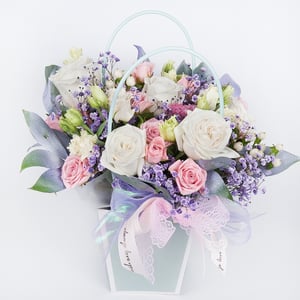
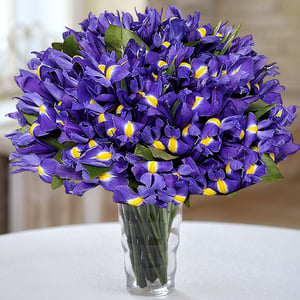
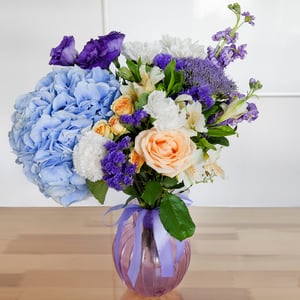
Looking for flowers in violet tones?
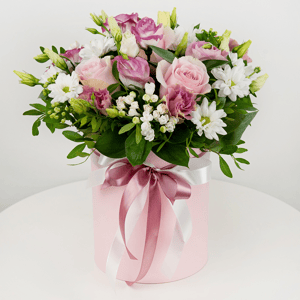
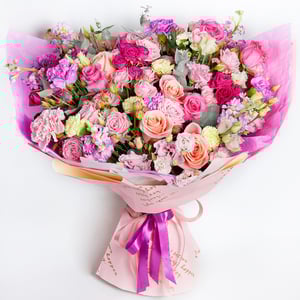
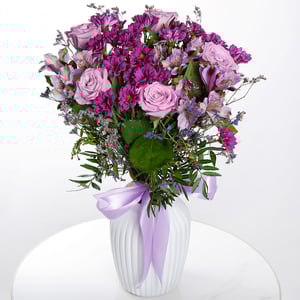
Browse purple arrangements from local florists and choose the shade that matches the message you have in mind.
Growing violets in the United States: practical tips
Choosing the right species
Over 60 Viola species grow natively across North America. The most popular garden choices include:
- Viola sororia (common blue violet): thrives in zones 3–9, tolerates partial shade, spreads freely
- Viola odorata (sweet violet): zones 5–9, fragrant, prefers moist soil
- Viola tricolor (Johnny jump-up): zones 3–9, self-seeds aggressively, blooms in purple, yellow, and white
- Viola pedata (bird's-foot violet): zones 4–8, prefers sandy or rocky soil, drought-tolerant
Planting and soil
Plant violets in early spring or early fall. Choose a spot with partial shade — about 4 to 6 hours of filtered sunlight works well. Violets prefer slightly acidic soil with a pH between 5.5 and 6.5. Mix compost into the top 3 inches of soil before planting.
Space plants 6 to 8 inches apart. Water immediately after planting. Violets need consistent moisture, especially during their first growing season.
Seasonal care by climate
Gardeners across the U.S. face different challenges depending on region:
- Northeast and Midwest (zones 3–6): Mulch violet beds with 2 inches of shredded bark before the first frost. Remove mulch gradually in late March or early April.
- Southeast (zones 7–9): Watch for powdery mildew in humid summers. Water violets at soil level — not overhead — to reduce fungal risk.
- Pacific Northwest (zones 7–8): Violets love this climate. Slugs love violets, though. Set beer traps or copper barriers around beds.
- Southwest (zones 8–10): Violets struggle in intense desert heat. Plant them in deep shade, water daily during summer, and consider container growing with afternoon protection.
Common mistakes gardeners make
- ✗Overwatering in clay soil. Violets need moisture, not swampy conditions. If your soil holds water, raise the bed or amend with perlite.
- ✗Full sun planting. Most violets wilt under 8+ hours of direct sunlight. Dappled light produces stronger, longer-lasting blooms.
- ✗Ignoring self-seeding. Viola tricolor and Viola sororia spread fast. Deadhead spent blooms to control spread, or embrace the wildflower look. Your choice.
- ✗Skipping division. Divide clumps every 3 years to maintain plant vigor. Early fall works best for division.
Violets in art and literature
Shakespeare mentioned violets in at least 6 plays. In Twelfth Night (1602), Duke Orsino compares love to "the sweet sound / That breathes upon a bank of violets." In A Winter's Tale, Perdita lists violets alongside daffodils and primroses as the flowers of early spring.
The French Impressionist Édouard Manet painted Bouquet of Violets in 1872 as a gift for artist Berthe Morisot. That small canvas — just 8.6 by 10.6 inches — now hangs in the Musée d'Orsay in Paris and remains one of the most famous floral still-life paintings ever created.
Elizabeth Barrett Browning, Emily Dickinson, and John Keats all wove violets into their poetry. Keats wrote "Fast fading violets cover'd up in leaves" in his 1819 ode. These poets treated violets as symbols of transience: beauty that arrives early and disappears quickly.
Edible violets: a quick kitchen guide
Both the petals and leaves of Viola odorata and Viola sororia are edible. Here's how American cooks and bakers use violets:
- Candied violets: Brush petals with egg white, dust with superfine sugar, and dry at room temperature for 24 hours. Pastry shops charge $15 to $25 per ounce for candied violets.
- Salad garnish: Toss fresh violet petals into spring salads. The petals taste mildly sweet and slightly grassy.
- Violet syrup: Steep 2 cups of fresh petals in 2 cups of boiling water for 24 hours. Strain, add 2 cups of sugar, and heat until dissolved. The syrup turns a vivid blue-purple and works beautifully in cocktails and lemonade.
- Violet tea: Steep a tablespoon of dried violet flowers in hot water for 5 to 7 minutes. Herbalists use violet tea to soothe coughs and mild headaches.
One warning: buy violets from organic sources or grow your own. Never eat violets from garden centers or florists — nurseries often treat flowers with pesticides not approved for consumption.
African violets: related name, different plant
Quick clarification. African violets (Saintpaulia, now reclassified under Streptocarpus) share the name "violet" but belong to a completely different plant family (Gesneriaceae, not Violaceae). Baron Walter von Saint-Paul-Illaire discovered these plants in 1892 in the Usambara Mountains of present-day Tanzania.
African violets carry their own symbolic meaning: devotion, faithfulness, and commitment. The plants make popular houseplants across the U.S. because they bloom year-round under fluorescent light and need minimal space — most varieties fit comfortably on a 6-inch windowsill.
The violet color in psychology and design
Violet color symbolism extends well beyond flowers. Psychologists associate the color violet with creativity, introspection, and emotional balance. Brands like Cadbury (established 1824) and Hallmark use purple and violet tones to signal luxury and thoughtfulness.
The color violet meaning in interior design suggests calm sophistication. Painting a meditation room or reading nook in soft violet tones can lower perceived stress. Deep violet, by contrast, projects authority and drama — think of a formal dining room or theater lounge.
In color theory, violet sits opposite yellow on the traditional color wheel. That complementary contrast explains why yellow violets against green foliage look so striking in garden beds.
Your next step with violets
Violets carry more meaning per petal than almost any flower you'll find. That meaning shifts with color, context, and culture — and now you know exactly how to read it. Whether you're planting a patch of Viola sororia beside your front porch, choosing a name for a February baby, or selecting a sympathy arrangement, violets give you a language that predates English itself.
So here's a question for you: which violet meaning resonates most with your life right now — faithfulness, spiritual growth, or quiet strength?
Browse seasonal violet arrangements in our catalog and see which color speaks to you.
Send violet-toned flowers today
Pick an arrangement, add your message, and have a local florist hand-deliver it fresh.
Frequently asked questions about violet flower meaning
What do violets symbolize in a funeral arrangement?▾
Violets represent mourning, remembrance, and enduring love. White violets carry the strongest association with loss. Shakespeare cemented this connection through Ophelia's lines in Hamlet, and Victorian mourners adopted the tradition widely.
Are violets the birth flower for February?▾
Yes. Violets serve as the primary birth flower for February. The primrose acts as an alternative. Gifting violets to someone with a February birthday shows personal thought and botanical awareness.
What does the name Violet mean?▾
The name Violet derives from the Latin viola and carries meanings of modesty, faithfulness, and spiritual depth. The Social Security Administration ranked Violet 35th among American baby girl names in 2023.
Can you eat violet flowers?▾
You can eat petals and leaves from Viola odorata and Viola sororia. Cooks use violets in salads, syrups, teas, and candied decorations. Only consume organically grown violets — never those treated with commercial pesticides.
What's the difference between African violets and true violets?▾
African violets belong to the family Gesneriaceae and originated in East Africa. True violets belong to Violaceae and grow natively across North America, Europe, and Asia. The two plants share a name but not a botanical family.
What does violet color mean spiritually?▾
Violet color meaning in spiritual contexts connects to the crown chakra, higher consciousness, and intuitive wisdom. Many meditation traditions use violet visualization to promote calm and self-awareness.