 EUR
EUR
 GBP
GBP
 CAD
CAD
 AUD
AUD

 🎃Halloween🎃
 Birthday
 Occasions
 Same Day
 Flowers
 Roses
Roses
 Plants
 Gifts
Gifts
 International Flower Delivery
Wyoming's State Flower: Indian Paintbrush
- 🌼 The Wyoming state flower tells one of the most colorful stories in American botany — literally.
- 💡 A mature plant stands about 12 to 24 inches tall and tends to grow in loose clusters rather than dense patches.
- 🌸 Browse wildflower-inspired arrangements on MyGlobalFlowers and bring a piece of Wyoming's beauty to someone you love.
The Wyoming state flower tells one of the most colorful stories in American botany — literally. Picture a high prairie slope in June, blazing with streaks of red and orange that look like someone dragged a paintbrush dipped in fire across the landscape. That's the Indian paintbrush, and honestly, no other wildflower captures the rugged spirit of the Cowboy State quite like it. MyGlobalFlowers, an international flower delivery service that works with local florists worldwide, helps people celebrate that spirit by making it easy to send wildflower-inspired arrangements to anyone in Wyoming — no matter where you place your order from across the US.
In this article, you'll learn the Wyoming state flower name, explore the fascinating history behind its adoption, discover its surprising biology, get practical growing tips, and find out how the flower pairs with the state bird to represent Wyoming's wide-open identity. Along the way, I'll share a few facts that genuinely surprised me. Let's get into it.
What is the Wyoming state flower?
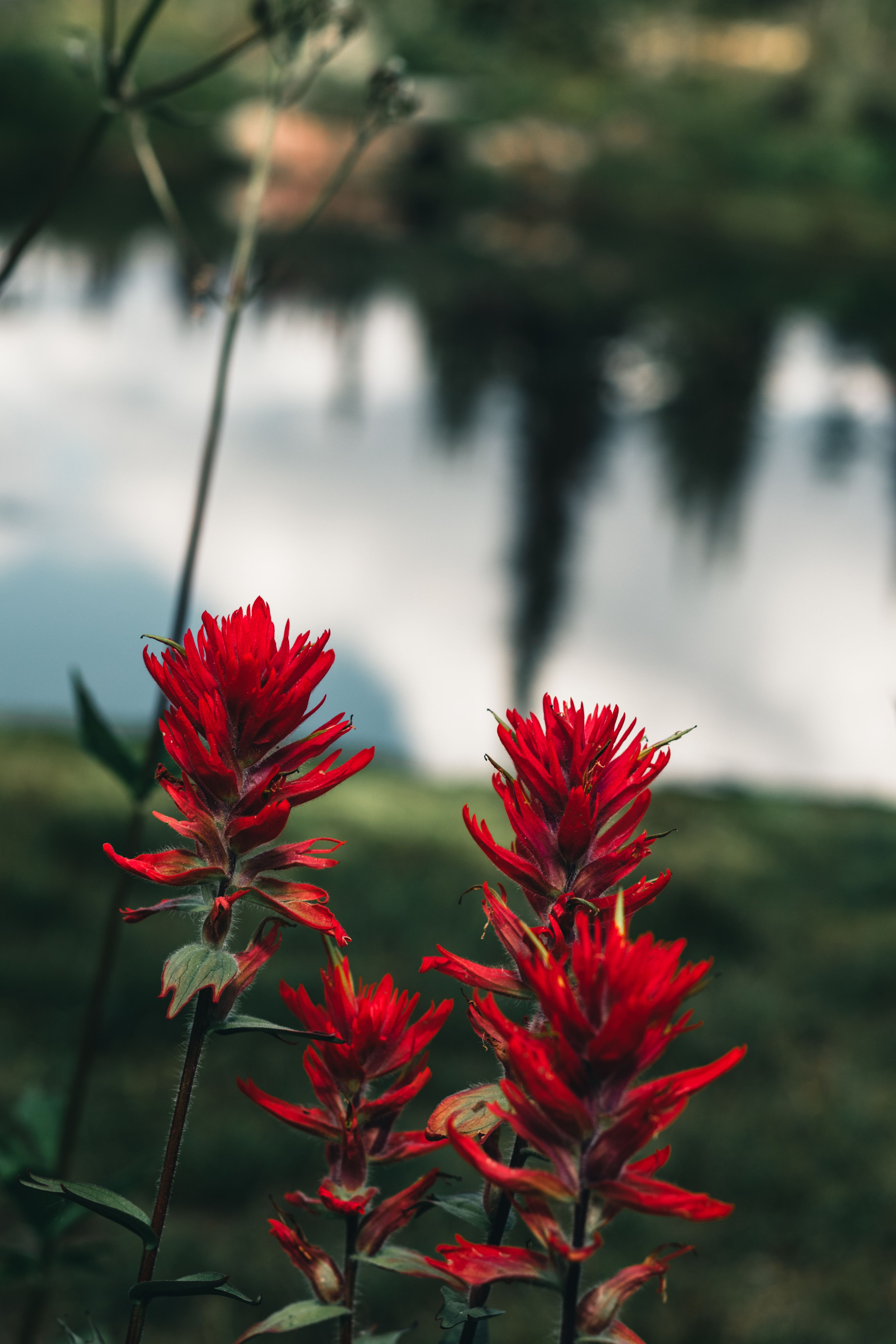
The Wyoming state flower is the Indian paintbrush, known scientifically as Castilleja linariifolia. People also call it "prairie fire," and one look at the plant explains why. Brilliant red, orange, or sometimes yellow bracts — modified leaves that sit just below the tiny, tube-shaped true flowers — fan out like flickering flames above narrow, gray-green foliage. A mature plant stands about 12 to 24 inches tall and tends to grow in loose clusters rather than dense patches.
The Indian paintbrush is native to several western US states, thriving from Wyoming and Montana down through Colorado, Utah, and New Mexico. It favors dry meadows, rocky slopes, and sagebrush flats — exactly the kind of terrain that defines Wyoming's landscape. Here's the thing: what most people think of as the flower's "petals" aren't petals at all. Those vivid bracts steal the show, while the actual flowers hide modestly inside, barely peeking out. I find it fascinating that a plant so visually dramatic is essentially pulling off a botanical magic trick.
History of the Wyoming state flower
The Wyoming state flower didn't earn its title by accident — it took a determined campaign and a bit of artistry. Wyoming adopted the Indian paintbrush on January 31, 1917, after a legislative journey that one remarkable woman largely engineered.
Dr. Grace Raymond Hebard, a professor, historian, and suffragist at the University of Wyoming, championed the Indian paintbrush as the state's floral emblem. She drafted the bill, recruited a legislative sponsor to introduce it, and — in a stroke of creative persuasion — commissioned an artist in New York to paint a detailed illustration of the flower. Why? Many legislators sitting in Cheyenne's capitol building had never paused to examine a paintbrush bloom up close. Hebard wanted every lawmaker to see exactly what they were voting for. She mailed the painting to the capitol, and the visual made an impact.
The Daughters of the American Revolution's Wyoming chapter also rallied behind the effort, lending organized support and public visibility. The campaign faced competition: several other wildflowers were in the running, including the fringed gentian and the wild columbine. Hebard's combination of political strategy, grassroots organizing, and sheer passion tipped the scales. Honestly, this surprised me — the story reads more like a political thriller than a botanical footnote. Wyoming became one of the first western states to formalize a state flower, and the Indian paintbrush has held the title for over a century.

Wyoming state bird and flower — a symbolic pair
The Wyoming state bird and flower form a pairing that captures the essence of the northern Great Plains. The Western Meadowlark, a stocky songbird with a bright yellow breast and a bold black "V" on its chest, became Wyoming's state bird in 1927 — ten years after the Indian paintbrush earned its own designation.
The meadowlark perches on fence posts and sagebrush, filling open prairies with a rich, flute-like song that carries across hundreds of yards. The Indian paintbrush, meanwhile, sets those same prairies ablaze with color from late spring through summer. Together, these two symbols represent Wyoming's vast, wind-swept grasslands and the wild beauty that defines a state where you can drive for miles without seeing a traffic light.
Wyoming's identity runs deeper than just two symbols, though. Here are a few more official emblems that round out the picture:
The Cottonwood serves as Wyoming's state tree, lining creek beds and river valleys across the plains.
Jade holds the title of state gemstone, reflecting Wyoming's rich geological heritage.
The American Bison represents Wyoming as the state mammal, roaming freely in Yellowstone National Park.
The Cutthroat Trout claims state fish status, thriving in cold mountain streams.
Sheridan's Green Hairstreak flies as the state butterfly, adding yet another layer of ecological identity.
Rodeo ranks as the official state sport, honoring Wyoming's deep ranching traditions.
One of my favorite facts about Wyoming is how deliberately the state has curated these symbols. Each one connects to a specific ecosystem, industry, or cultural tradition. The bird and flower, taken together, paint a picture of wildness and resilience that feels genuinely earned.
Fascinating facts about the Indian paintbrush
The Wyoming state flower hides some remarkable biological secrets beneath its fiery appearance. Let's break down the most interesting ones.
The bright colors are modified leaves, not petals
Those stunning reds and oranges come from bracts — specialized leaves that evolved to attract pollinators. The actual flowers are small, green, and tube-shaped, tucked inside the bracts like passengers in a brightly painted bus. Pollinators spot the bracts from a distance and fly in for a closer look, finding nectar hidden in the true flowers. This bract-forward design makes the Indian paintbrush one of the most visually deceptive wildflowers in North America.
Indian paintbrush is a semi-parasitic plant
Here's where things get really interesting. The Indian paintbrush taps into the root systems of neighboring plants — especially sagebrush, blue grama grass, and other native grasses — to steal water and nutrients. Botanists call this hemiparasitism. The paintbrush does photosynthesize on its own, so it isn't fully dependent on its host, but it grows far more vigorously when connected to another plant's roots. Remove the host, and the paintbrush often struggles or dies. This relationship is essential to understand before you try growing one in your garden.
Over 200 species exist across North America
The genus Castilleja includes more than 200 species spread across the continent, from Alaska to Central America. Wyoming's specific species, Castilleja linariifolia, features narrower leaves and a more open growth habit than many of its relatives. Some species display pink, purple, or white bracts. Telling species apart can challenge even experienced botanists, because paintbrush species hybridize freely in the wild.
The plant attracts hummingbirds and butterflies
Indian paintbrush plays a vital ecological role as a nectar source for hummingbirds, especially the Broad-tailed Hummingbird, and for butterflies — including Sheridan's Green Hairstreak, Wyoming's state butterfly. The tubular flowers are perfectly shaped for a hummingbird's long bill, and the red bracts act like a neon sign saying "nectar here." Planting Indian paintbrush in a wildflower garden essentially rolls out a welcome mat for some of the most spectacular pollinators in the West.
Native American and folk uses
Several Native American tribes used Indian paintbrush for medicinal and cosmetic purposes. Some groups made a hair wash from the plant, while others applied it as a folk remedy for rheumatism and skin irritation. By the way, there's an important safety note here: Indian paintbrush can accumulate selenium from the soil. Selenium is a naturally occurring element that, in high concentrations, becomes toxic to humans and livestock. You should never casually ingest any part of the plant. Appreciate it visually, photograph it, grow it — just don't eat it.
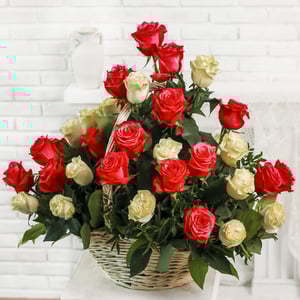
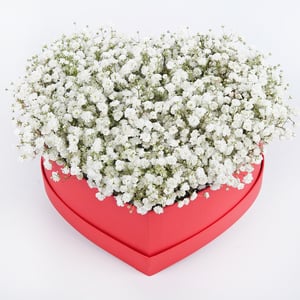
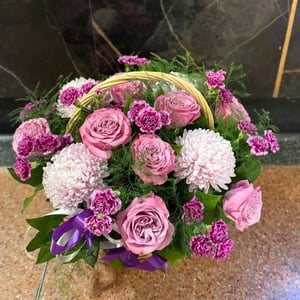
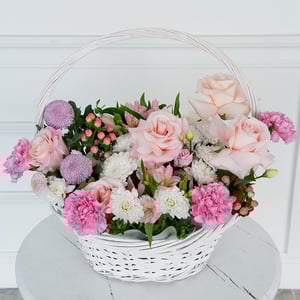
Looking for mixed bouquets?
Browse mixed bouquets from local florists and pick one that suits the moment.
How to grow and care for Indian paintbrush
The Wyoming state flower can thrive in a home garden, but it plays by its own rules. Standard gardening instincts — rich soil, regular watering, transplanting from pots — will likely kill it. Here's what actually works.
Soil and sun requirements
Indian paintbrush demands well-drained, sandy or rocky soil. Heavy clay suffocates the roots and traps moisture the plant doesn't want. Full sun is non-negotiable — aim for at least six hours of direct sunlight daily. The plant tolerates poor, nutrient-lean soil and actually performs better in it. Skip the fertilizer. Lean conditions mimic the natural prairie and mountain slopes where the paintbrush evolved.
Watering and climate
This wildflower needs very little supplemental water once established. Overwatering ranks as the number-one killer of garden paintbrush. The plant thrives in USDA Hardiness Zones 4 through 10 and feels most at home in arid and semi-arid climates. Wyoming gardeners have a natural advantage here — the state's dry air and well-drained soils match the plant's preferences almost perfectly.
Companion planting is essential
Remember the semi-parasitic nature of the Indian paintbrush? You must plant it near a suitable host. Blue grama grass makes an excellent companion because the two species share native range and soil preferences. Sagebrush works well, too. Other native bunchgrasses — Idaho fescue, needle-and-thread grass — can also serve as hosts. Without a host plant growing within a few inches, the paintbrush often germinates, struggles for a season, and then fades away. Plant seeds directly among established host plants for the best results.
Common mistakes to avoid
Overwatering drowns the roots and invites fungal disease.
Transplanting mature plants from the wild almost always fails because severing the parasitic root connections kills the plant.
Planting in heavy clay soil prevents proper drainage and stunts growth.
Forgetting a host plant starves the paintbrush of the nutrients it relies on from neighboring root systems.
Adding rich compost or fertilizer creates conditions too lush for a plant adapted to lean soils.
Starting from seed
Indian paintbrush seeds require cold stratification — a period of cold, moist conditions that mimics winter — for about four to six weeks before germination. The easiest approach? Sow seeds outdoors in fall and let Wyoming's natural winter handle the stratification for you. Press seeds lightly onto the soil surface; they need light to germinate. Scatter them among your chosen host plants. Germination can take several weeks, and seedlings grow slowly at first. Patience is essential. You probably won't see blooms until the second growing season.
When and where to see Indian paintbrush in Wyoming
The Wyoming state flower blooms from late May through August, depending on elevation and local weather patterns. Lower-elevation prairies and foothills color up first, while alpine meadows peak in July and early August.
Some of the best places to experience Indian paintbrush in full glory:
Grand Teton National Park displays sweeping paintbrush meadows against a backdrop of jagged granite peaks, especially along the Cascade Canyon and Paintbrush Canyon trails.
Yellowstone National Park features paintbrush scattered across its vast meadows, often growing alongside lupine and arrowleaf balsamroot.
The Wind River Range offers remote alpine meadows carpeted with paintbrush at elevations above 9,000 feet.
The Bighorn Mountains host dense paintbrush stands along the Cloud Peak Skyway and in meadows near the Tongue River drainage.
A few practical tips: visit during weekdays to avoid peak trail traffic, bring a macro lens or a phone with a good close-up mode, and stay on established trails. Alpine meadows are fragile, and footsteps can crush plants that took years to establish. Wyoming's wildflower season is short and intense — plan your trip for late June through mid-July for the most reliable displays.
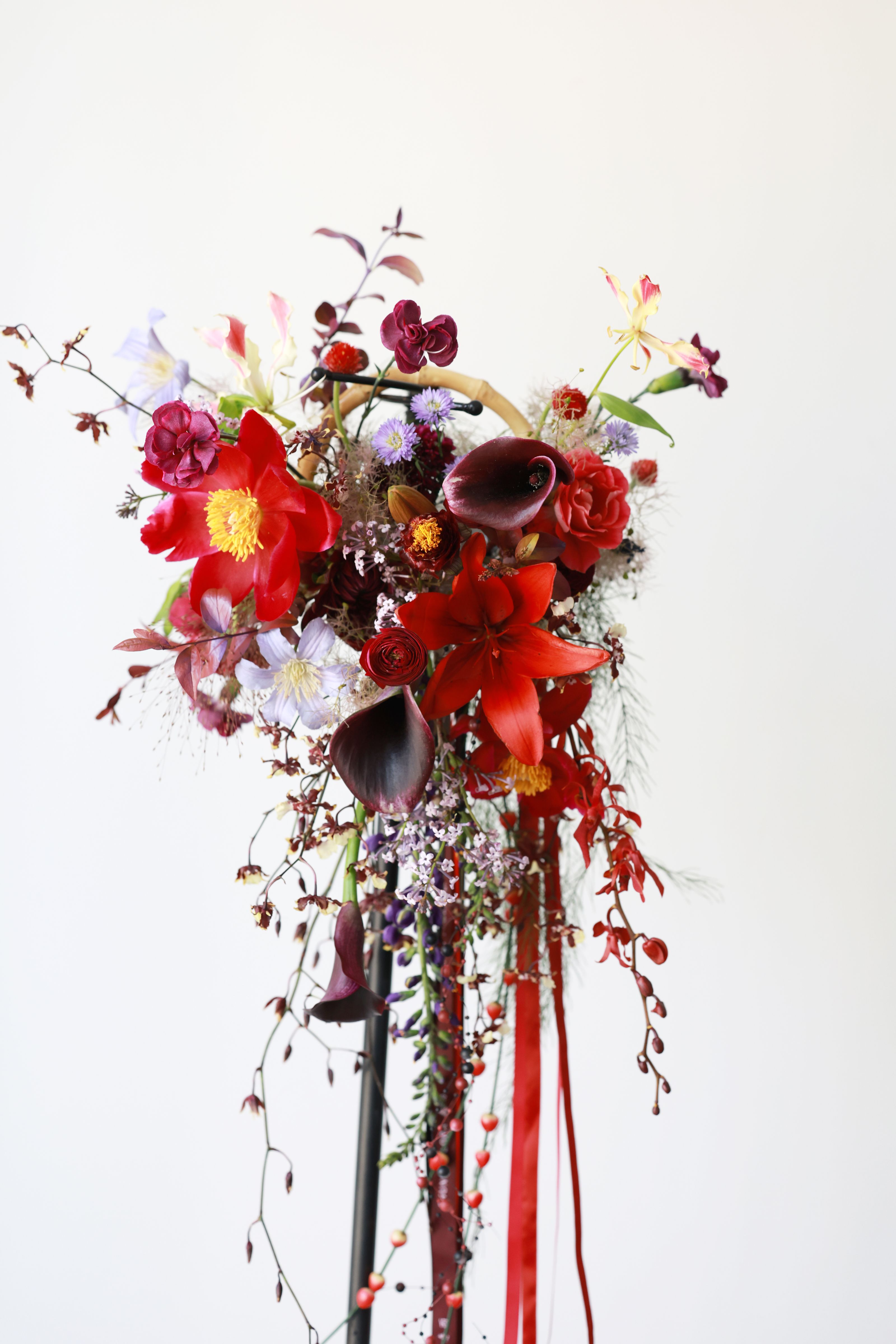
Celebrating Wyoming's state flower with fresh blooms
The Wyoming state flower is a wildflower through and through, and Indian paintbrush rarely works as a cut flower — the stems wilt quickly, and harvesting wild populations is discouraged or prohibited in many areas. That doesn't mean you can't celebrate Wyoming's floral pride with a beautiful arrangement, though.
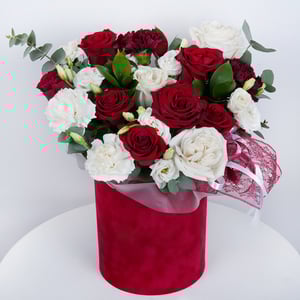
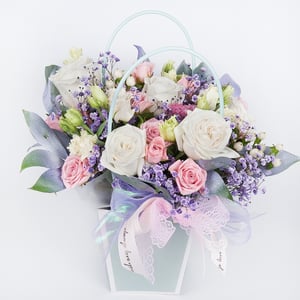
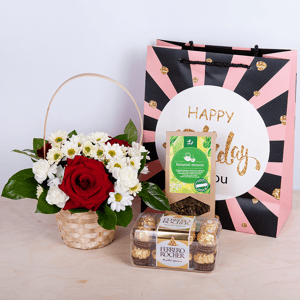
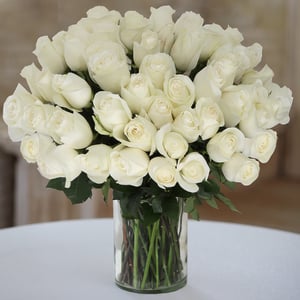
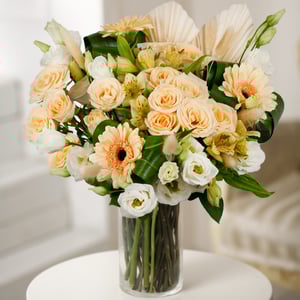
Through MyGlobalFlowers, you can send wildflower-inspired bouquets to anyone in Wyoming. Local florists craft each arrangement by hand, selecting the freshest seasonal blooms available. The exact flowers may vary from what you see on the website — and that's actually a good thing. Each florist chooses equal-value alternatives when a specific stem isn't in season, keeping the overall style and color palette intact. The result? Every bouquet feels unique and genuinely fresh.
You can order from anywhere in the US and have flowers hand-delivered to Cheyenne, Casper, Laramie, Jackson, or any other Wyoming town. The delivery cost calculates individually at checkout based on location and arrangement size.
Looking for an occasion? Consider these:
Wyoming Day on December 10 celebrates the anniversary of statehood — a perfect excuse to send flowers to a proud Wyomingite.
Mother's Day in May coincides beautifully with the start of wildflower season.
Graduation season in late spring pairs well with bright, celebratory arrangements.
Thanksgiving, July 4, and Memorial Day all offer great reasons to surprise someone you care about.
A "just because" delivery on any ordinary Tuesday might be the most meaningful gesture of all.

A wildflower worth knowing
There's something deeply appealing about a state flower that refuses to be tamed. The Indian paintbrush won't grow in a fancy garden bed. It won't sit pretty in a vase on your kitchen table. It needs wild soil, a host plant to lean on, and wide-open sky. That stubbornness, honestly, feels very Wyoming.
Whether you're planning a summer hike through Grand Teton's paintbrush-filled meadows or you just want to bring a little Wyoming warmth to someone's day, the spirit of this flower is worth sharing. Browse wildflower-inspired arrangements on MyGlobalFlowers and bring a piece of Wyoming's beauty to someone you love.
Send flowers today
Choose a bouquet, add a message, and a local florist hand-delivers it.