 EUR
EUR
 GBP
GBP
 CAD
CAD
 AUD
AUD

 🎃Halloween🎃
 Birthday
 Occasions
 Same Day
 Flowers
 Roses
Roses
 Plants
 Gifts
Gifts
 International Flower Delivery
How to Grow Basil Indoors & Outdoors
- 🌱 Basil thrives in warm soil (above 50 °F at night), 6–8 hours of direct sun, and consistently moist but well-drained soil with a pH near 6.0–7.0.
- ✂️ Pinch stems back to the first set of leaves every 7–10 days to double branching and delay flowering.
- 🪴 A 10–12-inch pot with drainage holes supports one healthy basil plant indoors or on a patio through the full growing season.
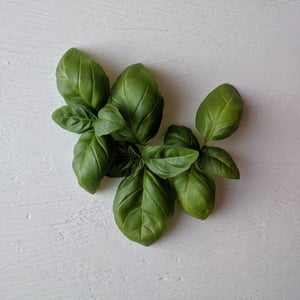
Basil (Ocimum basilicum) ranks among the five most-grown herbs in American home gardens — and for good reason. Learning how to grow basil gives you a steady supply of fragrant leaves for pesto, Caprese salad, Thai stir-fries, and dozens of other dishes from late spring through early fall. A single healthy basil plant produces roughly 1/2 cup of leaves per week once established, which means two to three plants can keep most kitchens stocked all season. Below you'll find everything you need — from seed to harvest — broken down by indoor and outdoor growing, pot selection, timing, troubleshooting, and more.
When to plant basil
Timing matters more than almost any other variable when growing basil. Basil dies at 32 °F and sulks below 50 °F, so planting too early wastes seeds and transplants.
Best time to plant basil outdoors
The best time to plant basil outside depends on your USDA Hardiness Zone. Here's a quick reference:
| USDA Zone | Last frost (approx.) | Earliest outdoor planting |
|---|---|---|
| 3–4 | Late May | Early June |
| 5–6 | Mid-April to mid-May | Late May |
| 7–8 | Late March to mid-April | Late April |
| 9–10 | February or earlier | March |
Wait at least two weeks after your last frost date. Nighttime air temperatures should stay above 50 °F consistently. Soil temperature at a four-inch depth should read 60 °F or warmer — a $10 soil thermometer from any garden center confirms this in seconds.
Starting seeds indoors
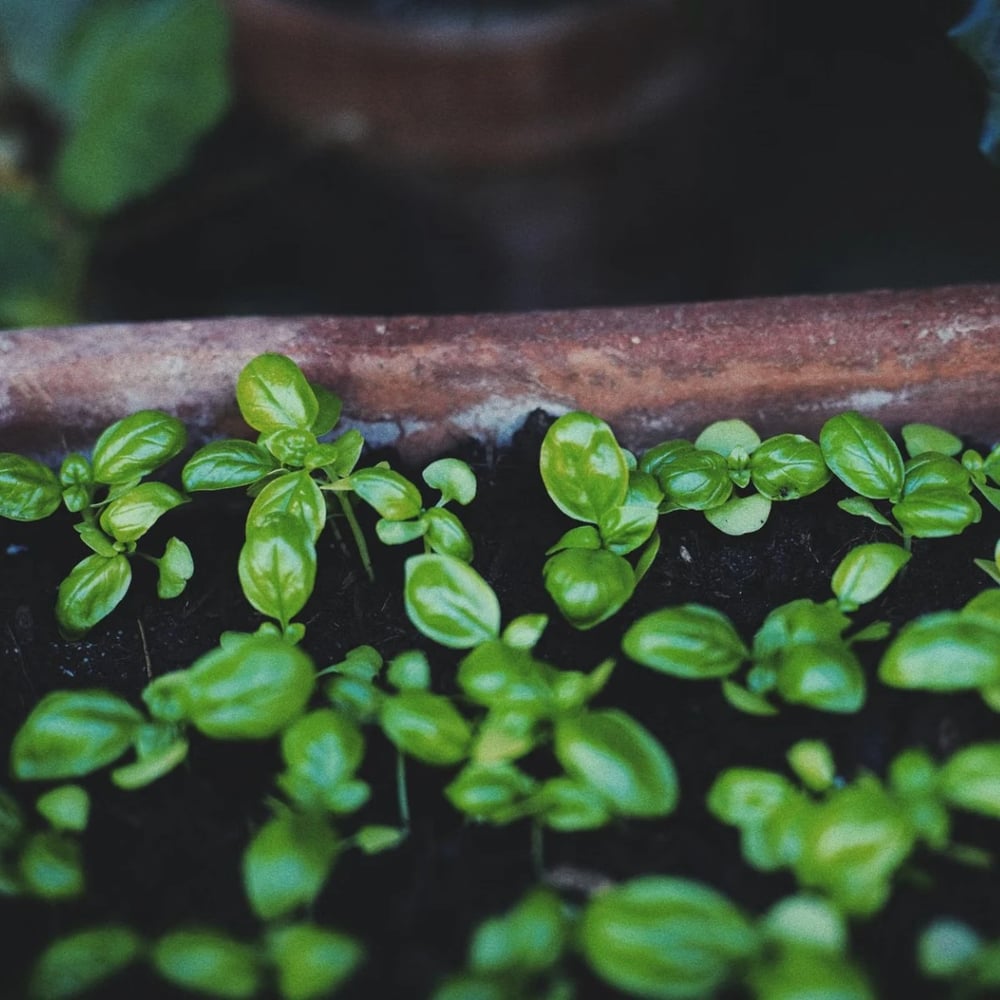
Start basil seeds indoors 6–8 weeks before you plan to transplant outside. In Zone 6 (think central Ohio, central Pennsylvania), that means sowing seeds around mid-March. Press seeds 1/4 inch deep into moist seed-starting mix. Basil seeds germinate in 5–10 days when the soil stays near 70 °F. A seedling heat mat speeds germination by about three days compared to a cool windowsill.
Where to plant basil
Basil growing conditions center on two things: sunlight and drainage.
Sunlight needs
Basil needs 6–8 hours of direct sun daily. South-facing garden beds work best across most of the continental U.S. In zones 9–10 (parts of Texas, Arizona, Florida), afternoon shade actually helps. Temperatures above 90 °F for extended stretches can stress even heat-loving basil, causing leaf curl and bitter flavor.
Soil requirements
Basil prefers loamy, well-drained soil with a pH between 6.0 and 7.0. Amend heavy clay with 2–3 inches of compost worked into the top six inches. Sandy soil benefits from the same compost treatment — compost improves water retention without creating soggy roots. A basic soil test kit costs about $15 at most hardware stores and takes 10 minutes.
Spacing
Space basil plants 12–18 inches apart in garden beds. Crowded plants invite fungal problems, especially basil downy mildew (Peronospora belbahrii), which devastated crops across the Eastern U.S. starting around 2009 and remains a persistent threat.

How to plant basil
Planting basil takes less than five minutes per plant once the bed or container is ready.
Transplanting seedlings or nursery starts
- Dig a hole slightly wider than the root ball.
- Set the seedling at the same depth it sat in the nursery pot — burying the stem deeper invites rot.
- Firm soil gently around the base.
- Water thoroughly until moisture drains from the bottom of the hole.
- Mulch with 1–2 inches of straw or fine bark to retain moisture.
Direct sowing outdoors
Scatter seeds thinly over prepared soil. Cover with 1/4 inch of fine soil or vermiculite. Keep the bed evenly moist — a light misting twice daily works well. Thin seedlings to 12 inches apart once they develop two sets of true leaves (usually 3–4 weeks after sowing).
Growing basil in pots
A potted basil plant gives you flexibility. Move the pot to follow the sun, bring it indoors before a cold snap, or keep it on a balcony all summer.
Choosing the right container
Pick a pot at least 10–12 inches in diameter with at least one drainage hole. Terra cotta pots breathe well but dry out fast in hot weather — plan on daily watering during July and August. Plastic or glazed ceramic pots hold moisture longer. Avoid saucers that trap standing water; soggy roots trigger root rot within days.
Potting mix
Use a premium potting mix (not garden soil). Garden soil compacts in containers and suffocates roots. A good potting mix contains peat or coir, perlite, and composted bark. Some growers add a handful of perlite (about 20% by volume) for extra drainage.
Feeding a potted basil plant
Container plants burn through nutrients faster than garden plants. Apply a balanced liquid fertilizer (10-10-10) diluted to half strength every 2–3 weeks. Over-fertilizing forces rapid, leggy growth with less flavor. Organic options like fish emulsion (5-1-1) work well — apply every two weeks after the plant reaches six inches tall.
How to grow basil indoors
Growing basil indoors lets you harvest year-round, even through a Minnesota winter. Here's what an indoor basil plant actually needs.
Light
An indoor basil plant demands at least six hours of bright, direct light. Most south-facing windows in the U.S. deliver this from April through September but fall short during winter. A small LED grow light running 12–14 hours daily at about six inches above the plant fills the gap. Budget options start around $20 on Amazon and use roughly 20 watts.
Temperature and humidity
Keep indoor temperatures between 65 °F and 80 °F. Basil hates cold drafts, so avoid placing pots near exterior doors or single-pane windows. The herb also suffers in dry air below 40% relative humidity. A pebble tray filled with water under the pot raises local humidity by 5–10%.
Watering indoors
Check the soil daily. Stick your finger one inch into the mix. Dry at that depth? Water until liquid drains freely from the bottom. Overwatering causes yellowing lower leaves and a mushy stem — the number-one killer of indoor basil.
Common mistakes when growing basil indoors
- Placing the pot too far from the window (even three feet back cuts light intensity by 50%)
- Using a pot with no drainage hole
- Misting leaves instead of watering the soil (wet foliage invites fungal disease)
- Forgetting to harvest regularly (unharvested plants bolt faster)
Growing basil outdoors: care and maintenance
Basil care outdoors mostly revolves around water, food, and regular harvesting.
Watering
Water basil at the base, not overhead. Wet leaves encourage downy mildew and gray mold. Garden basil typically needs about one inch of water per week. During heat waves above 95 °F, increase to 1.5 inches. Morning watering gives foliage time to dry before nightfall.
Fertilizing
Side-dress outdoor basil with a thin band of compost once a month. Alternatively, drench the root zone with diluted liquid fertilizer (half strength, 10-10-10) every three weeks. Excess nitrogen pushes leaf production but reduces essential oil concentration — and that means less aroma.
Mulching
Spread two inches of organic mulch (straw, shredded leaves, or untreated wood chips) around plants. Mulch keeps soil moisture steady, suppresses weeds, and moderates soil temperature during hot spells.
Love filling your home with something fresh and alive?
Beyond the kitchen, fresh-cut arrangements keep any space feeling vibrant.
Basil growing stages
Understanding basil growing stages helps you time care tasks correctly.
Stage 1: germination (days 1–10)
Seeds absorb water and crack open. Tiny white radicles emerge first, followed by a pair of smooth, rounded seed leaves (cotyledons). Keep soil consistently moist and warm (70 °F).
Stage 2: seedling (weeks 2–4)
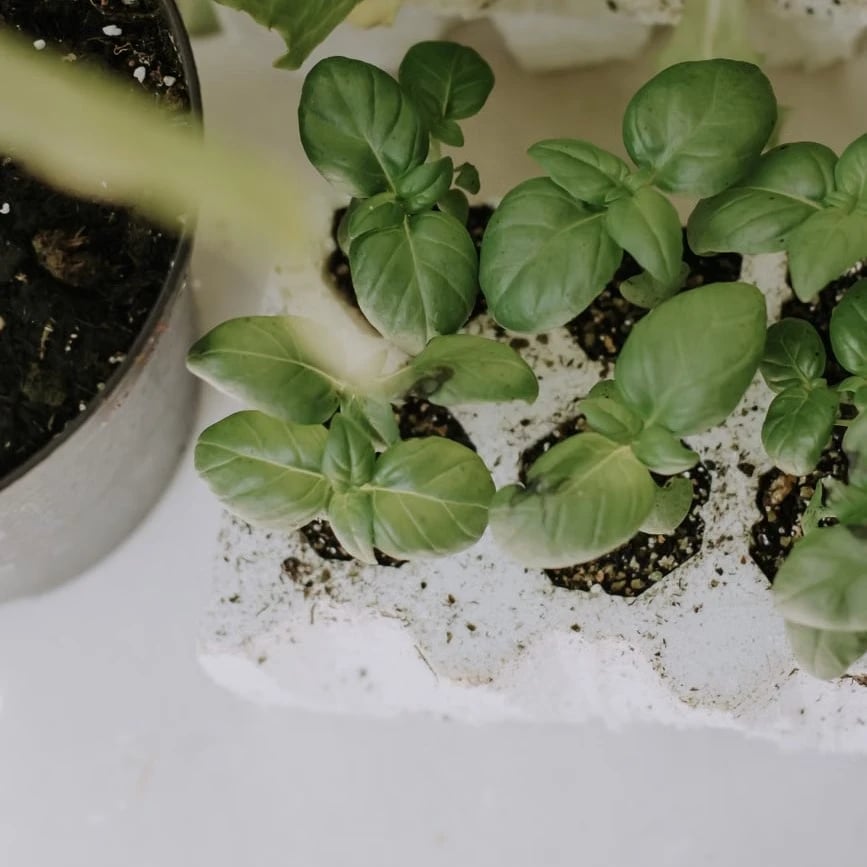
True leaves — the first ones that look like actual basil — appear above the cotyledons. Seedlings at this stage need strong light and gentle airflow. A small fan on the lowest setting for two hours a day strengthens stems.
Stage 3: vegetative growth (weeks 4–8)
Stems thicken, lateral branches form, and leaf production accelerates. Begin regular harvesting once the plant reaches six inches tall with at least three sets of leaves. Pinch right above a leaf node. Two new branches grow from every pinch point.
Stage 4: flowering and seed production (weeks 8–12+)
Flower spikes appear at branch tips. Flowers signal the plant to slow leaf production and shift energy toward seeds. Pinch off flower buds the moment you spot them — this alone extends your harvest by 4–6 weeks. Want to collect seeds? Let a few flower spikes mature on the strongest plant. Seeds ripen roughly four weeks after pollination.
Basil plant care: pruning and harvesting
Regular pruning and harvesting are the single best thing you can do for a healthy basil plant. Most beginners skip pruning out of fear of harming the plant. The opposite happens.
How to prune
Pinch or cut the main stem just above the second set of leaves when the plant reaches about six inches tall. Each cut produces two new branches. Repeat every 7–10 days. After three rounds of pinching, one stem becomes eight — creating a bushy, productive plant instead of a tall, leggy one.
Harvesting tips
- Harvest in the morning after dew dries but before midday heat (essential oil content peaks during this window).
- Cut no more than 1/3 of the plant at one time.
- Use sharp scissors or garden snips — tearing bruises stems and invites infection.
- Store fresh leaves in a glass of water on the counter (not in the refrigerator — cold turns basil leaves black).
Basil varieties worth growing
The genus Ocimum includes over 60 species. Here are five popular varieties for U.S. gardens:
| Variety | Flavor profile | Mature height | Best use |
|---|---|---|---|
| Genovese | Classic sweet, peppery | 24–30 inches | Pesto, Caprese |
| Thai Basil | Anise, licorice | 12–18 inches | Stir-fries, pho |
| Purple Ruffles | Mild, slightly clove-like | 18–24 inches | Salads, garnish |
| Lemon Basil | Citrusy, bright | 12–20 inches | Seafood, tea |
| Spicy Globe | Compact, spicy | 8–12 inches | Containers, borders |
Spicy Globe and Genovese handle container growing especially well. Thai Basil resists heat better than most sweet basil varieties.
Companion planting for basil in the garden
A basil plant in the garden benefits neighboring crops — and vice versa.
Tomatoes and basil make classic companions. Some gardeners swear basil improves tomato flavor, though scientific evidence remains thin. What does hold up: basil repels certain pests, including aphids and tomato hornworms, thanks to its essential oils.
Pair basil with peppers, oregano, or marigolds. Avoid planting basil near sage or rue — these herbs release compounds that stunt basil growth. Space companion plants at least 12 inches apart to maintain good airflow.
Common pests and diseases
Even a healthy basil plant faces a few threats. Catching problems early keeps the damage manageable.
Pests
- Aphids cluster on new growth and suck sap. Blast them off with a strong water spray or apply insecticidal soap.
- Japanese beetles chew ragged holes in leaves, especially in July in the Midwest and Northeast. Hand-pick beetles in the morning when they move slowly.
- Slugs target young seedlings at night. A ring of crushed eggshell or a shallow dish of beer near the base traps slugs effectively.
- Spider mites thrive in hot, dry conditions (common indoors during winter). Mist the undersides of leaves or introduce predatory mites.
Diseases
- Basil downy mildew causes yellowing on leaf tops and gray-purple fuzz underneath. Remove affected leaves immediately. Resistant varieties like 'Devotion' and 'Thunderstruck' offer genetic protection.
- Fusarium wilt (Fusarium oxysporum) browns stems and wilts the plant from the base up. No cure exists — pull and discard infected plants, and avoid planting basil in the same spot for three years.
- Gray mold (Botrytis cinerea) appears in cool, humid weather. Improve spacing and water only at soil level to reduce risk.
Seasonal tips for U.S. growers
Spring (March–May)
Start seeds indoors 6–8 weeks before your last frost. Harden off seedlings for 7–10 days before transplanting: set them outside for one hour the first day, then increase exposure by one hour each day.
Summer (June–August)
Peak basil season. Harvest every week. Watch for bolting during the longest days in late June and July. Succession-plant a new batch of seeds every three weeks for continuous supply.
Fall (September–November)
Bring potted basil indoors before nighttime temps dip below 50 °F. Make one large final harvest of outdoor plants before the first frost. Freeze extra leaves in olive oil using ice cube trays — each cube holds about one tablespoon of chopped basil.
Winter (December–February)
Grow basil under an LED grow light indoors. Reduce watering slightly — plants grow slower with less natural light. Feed once a month instead of every 2–3 weeks.
Want to send a little freshness to someone?
A hand-delivered bouquet is a thoughtful surprise — often the same day.