EUR
 GBP
 CAD
 AUD

 ✨Boss’s Day✨
 🍭Sweetest Day🍭
 Birthday
 Same Day
 Occasions
 Flowers
 Roses
 Plants
 Gifts
 International Flower Delivery
Ponytail Palm Care & Growing Guide
- 🌱 The ponytail palm stores water in its swollen trunk base (called a caudex), so you water only every 1–2 weeks indoors and repot every 2–3 years at most.
- 🐱 The ASPCA lists Beaucarnea recurvata as non-toxic to cats and dogs, making the ponytail palm one of the safest large houseplants for pet owners.
- 📏 Indoor ponytail palms typically reach 3–4 feet over a decade, while outdoor specimens in USDA Zones 9–11 can grow 15–20 feet tall given enough time.
The ponytail palm (Beaucarnea recurvata) can live for over 350 years in its native habitat of eastern Mexico. That fact alone makes this plant worth understanding — especially since even a small, $15 baby ponytail palm from your local nursery carries the same drought-tough DNA. Whether you grow yours as an indoor ponytail palm houseplant or dream about a full grown ponytail palm tree in your yard, this guide covers every practical detail you need: watering, light, soil, propagation, pet safety, and the common problems that trip people up.
What exactly is a ponytail palm plant?
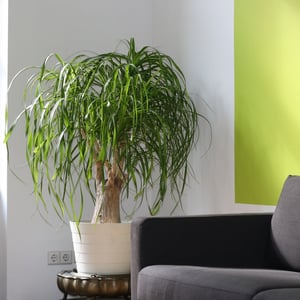
A ponytail palm plant looks like a palm. It behaves like a succulent. Botanists classify Beaucarnea recurvata in the Asparagaceae family — right alongside agaves and asparagus. The ponytail palm scientific name, Beaucarnea recurvata, translates roughly to "recurved" — a nod to the arching, ribbon-like leaves that cascade from the crown.
Quick identity card
- Common names: ponytail palm, elephant foot tree, bottle palm
- Family: Asparagaceae (formerly placed in Nolinaceae)
- Native range: dry forests of Tamaulipas, Veracruz, and San Luis Potosí in eastern Mexico
- Conservation status: threatened in the wild (IUCN Red List)
- USDA hardiness: Zones 9–11 (minimum 15 °F / −9 °C for brief periods)
That bulbous base — the caudex — stores water for months. Wild ponytail palm trees survive seasonal droughts this way. Your indoor ponytail palm uses the same trick: neglect it a little, and the caudex keeps leaves green.

Ponytail palm care indoors: the essentials
Ponytail palm care indoors boils down to five factors. Nail these, and the plant practically takes care of itself.
Ponytail palm light requirements
Your ponytail palm wants bright, indirect sunlight for at least 6 hours a day. A south-facing or west-facing window works well in most U.S. homes. The plant tolerates lower light, but growth slows noticeably, and the trunk stays narrow.
Move the pot outdoors in summer — patios and balconies suit the ponytail palm well from May through September across most of the continental U.S. Introduce direct sun gradually over 7–10 days to prevent leaf scorch.
Ponytail palm watering
Overwatering kills more ponytail palms than anything else. Let the top 2–3 inches of soil dry completely before you water again. In summer, that means roughly every 10–14 days. In winter, stretch the interval to 3–4 weeks.
A simple test: push your finger 2 inches into the soil. Dry? Water thoroughly until it drains from the bottom holes. Still damp? Wait a few more days.
Self-watering pots: A self-watering ponytail palm setup sounds convenient, but constant moisture around the roots invites rot. Skip self-watering containers for this species. Choose a standard terracotta pot with drainage holes instead.
Ponytail palm soil mix
Ponytail palm soil needs to drain fast. Mix 2 parts cactus/succulent potting mix with 1 part perlite. Some growers add 1 part coarse sand or pumice for extra drainage.
Avoid standard potting soil by itself — standard mixes hold too much moisture and compact over time. That trapped water leads directly to root rot.
Ponytail palm fertilizer
Feed your ponytail palm once in spring and once in midsummer with a balanced liquid fertilizer (10-10-10) diluted to half strength. No fertilizer in fall or winter — the plant rests during shorter days.
Over-fertilizing causes brown leaf tips and salt buildup in the soil. Less really means more here.








Ponytail palm size, growth rate, and what "full grown" looks like
Ponytail palm growth rate depends heavily on whether the plant lives indoors or outdoors.
Indoor size
- After 5 years: 2–3 feet tall
- After 10 years: 3–4 feet tall
- Maximum indoor height: roughly 6–8 feet (takes decades)
Indoor growth moves slowly — maybe 2–4 inches per year once the plant matures. A baby ponytail palm sold in a 4-inch pot at a garden center might sit on your desk for 3 years before outgrowing that spot.
Full grown ponytail palm tree outdoors
A mature ponytail palm growing outdoors in southern Texas, Florida, or coastal California can reach 15–20 feet. Some specimens in Veracruz, Mexico, tower over 30 feet with trunk diameters exceeding 12 inches. A large ponytail palm at the San Diego Zoo stands as living proof of the species' impressive outdoor potential.
The trunk widens noticeably outdoors, sometimes reaching 4–6 feet in circumference at the base in very old trees.
Ponytail palm bonsai
A ponytail palm bonsai capitalizes on the plant's naturally slow indoor growth. Growers keep the trunk in a shallow dish, restrict root space, and trim leaves to maintain a miniature silhouette. Even a 10-year-old bonsai specimen rarely exceeds 12 inches. The bulbous caudex makes the bonsai look ancient even when the plant itself is still young.
Repotting a ponytail palm
Repotting a ponytail palm happens infrequently. Every 2–3 years works for most plants. Some mature specimens go 4–5 years between repots.
When to repot a ponytail palm
- Roots circle the bottom of the pot or poke through drainage holes.
- Water runs straight through the soil without absorbing.
- The caudex pushes against the rim of the container.
How to repot
- Choose a new pot only 1–2 inches wider in diameter than the current container. A too-large ponytail palm pot size holds excess moisture.
- Remove the plant and shake off old soil from the roots.
- Inspect roots for soft, brown, or mushy sections — trim any damaged roots with clean shears.
- Fill the new pot with your cactus/perlite mix.
- Set the caudex at the same depth as before — never bury the swollen trunk.
- Wait 5–7 days before the first watering so trimmed roots can callus over.
Spring (March through May) gives the plant a full growing season to recover after repotting.
Ponytail palm propagation
Ponytail palm propagation relies almost entirely on pups — small offsets that sprout from the base of the caudex. Seed propagation exists, but seeds rarely appear in cultivation because only mature outdoor trees flower.
How to propagate ponytail palm from pups
Ponytail palm pups emerge near the soil line on established plants, often after the mother plant reaches 4–5 years of age.
- Wait until a pup grows at least 4 inches tall with its own small root nubs.
- Unpot the mother plant.
- Cut the pup from the caudex with a clean, sharp knife.
- Let the cut surface dry for 2–3 days in a shaded spot.
- Plant the pup in a small pot (3–4 inches) filled with cactus mix and perlite.
- Mist the soil lightly — don't soak.
- Place the pot in bright, indirect light.
Rooting takes 4–8 weeks. You'll know the pup has rooted when new leaf growth appears at the center of the crown.
Not every ponytail palm produces pups. Stress (like drought or slight root binding) sometimes triggers pup formation, but the process isn't guaranteed.
Ponytail palm problems and how to fix them
Ponytail palm problems usually trace back to watering or light mistakes. Here's what to watch for.
Ponytail palm brown tips
Ponytail palm brown tips are the single most common complaint. Causes include:
- Low humidity: Indoor winter air in heated U.S. homes often drops below 30% relative humidity. Mist the leaves weekly or place a pebble tray nearby.
- Over-fertilizing: Salt buildup scorches leaf tips. Flush the soil with distilled water every 3–4 months.
- Underwatering in summer: The caudex stores water, but prolonged drought still stresses the leaves.
Trim brown tips with clean scissors at a slight angle. The cut won't harm the plant.
Ponytail palm leaves turning brown
When entire ponytail palm leaves turn brown (not just the tips), suspect overwatering or root rot. Pull the plant from the pot, inspect the roots, and trim any soft or black sections. Repot in fresh, dry mix. Let the soil stay dry for 10 days before watering again.
Overwatered ponytail palm
An overwatered ponytail palm shows soft, mushy caudex tissue, yellow lower leaves, and a sour smell from the soil. Act fast:
- Remove the plant from the pot immediately.
- Cut away all rotten roots and any soft caudex material.
- Dust the cuts with cinnamon or sulfur powder (both act as mild fungicides).
- Dry the root ball in open air for 24–48 hours.
- Repot into completely dry cactus mix.
Severe rot can kill the plant. Catching the problem within the first 2 weeks gives the best chance of recovery.
Ponytail palm brown leaves from cold exposure
Ponytail palm cold tolerance has firm limits. Temperatures below 50 °F damage leaves, and a hard freeze (below 25 °F) can kill the plant outright. In USDA Zones 8 and below, always grow the ponytail palm indoors or bring potted outdoor specimens inside before the first frost.
Pest issues
Mealybugs and spider mites occasionally target indoor ponytail palms. Wipe leaves with a cotton ball dipped in 70% rubbing alcohol. For heavier infestations, spray neem oil (mix 2 teaspoons per quart of water) every 7 days until pests disappear.
Looking for mixed bouquets?
Browse mixed bouquets from local florists and pick one that suits the moment.
Ponytail palm and pets: is it safe?
Good news. The ASPCA classifies Beaucarnea recurvata as non-toxic to both cats and dogs. A ponytail palm is cat safe, dog safe, and one of the few large houseplants that won't send you rushing to the vet if your pet chews a leaf.
Cats especially love batting at the long, dangling leaves. The plant tolerates minor nibbling without harm to the cat or serious damage to the foliage. That said, heavy chewing shreds the leaf tips. Place the pot on a plant stand out of easy reach to keep both the cat and the plant looking their best.
Quick pet safety summary:
- Ponytail palm toxic to cats? No — ASPCA-confirmed non-toxic.
- Ponytail palm toxic to dogs? No — same ASPCA listing.
- Ponytail palm pet safe for birds and rabbits? No documented toxicity, but always consult your vet for exotic pets.
Growing a ponytail palm outdoors
Ponytail palm outdoors thrives in USDA Zones 9–11, stretching across much of Florida, southern Texas, coastal California, and parts of Arizona. Outdoor plants grow faster, produce a wider caudex, and eventually flower — something indoor specimens almost never do.
Ponytail palm flower and bloom
A ponytail palm flower appears only on mature outdoor trees, usually after the plant reaches 15+ years of age. The bloom stalk rises from the crown and carries clusters of tiny cream or yellowish flowers. Male and female flowers grow on separate trees (the species is dioecious). A ponytail palm bloom can last several weeks and attract pollinators, but the event is rare in cultivation.
Outdoor planting tips
- Pick a spot with full sun and well-drained soil. Sandy or rocky ground mimics the plant's native habitat.
- Avoid low-lying areas that collect rainwater.
- Water established plants once a month during summer, less in winter.
- Apply a 2-inch mulch ring around the base, keeping mulch 3–4 inches away from the caudex to prevent rot.
Ponytail palm benefits
Ponytail palm benefits go beyond good looks.
- Air quality: NASA's Clean Air Study and subsequent research showed Beaucarnea recurvata removes trace amounts of formaldehyde and benzene from indoor air.
- Low maintenance: The plant demands less attention than nearly any other houseplant of comparable size.
- Longevity: Indoor specimens commonly live 20–40 years with basic care. Some houseplant growers report passing ponytail palms down through 2–3 generations.
- Pet compatibility: Non-toxic to cats and dogs (ASPCA-listed).
- Drought resilience: Forgotten during a 2-week vacation? The caudex keeps the plant alive.
Plants similar to ponytail palm
Looking for something with a similar vibe? Consider these alternatives:
- Dragon tree (Dracaena marginata): Thin, arching leaves on a slender trunk. Grows to 6 feet indoors. Mildly toxic to pets — check ASPCA listings.
- Yucca (Yucca elephantipes): Thick trunk, sword-shaped leaves, tolerates low water. Can reach 8 feet indoors.
- Madagascar palm (Pachypodium lamerei): Spiny caudex, succulent leaves. Striking but toxic to pets and slower-growing than the ponytail palm.
- Snake plant (Dracaena trifasciata): Upright leaves, nearly indestructible, similar neglect tolerance. Mildly toxic to cats and dogs.
None of these match the ponytail palm's combination of pet safety, longevity, and quirky appearance — but each shares at least one or two traits.

Seasonal care calendar for U.S. growers
| Season | Watering | Fertilizer | Notes |
|---|---|---|---|
| Spring (Mar–May) | Every 10–14 days | One application, half-strength 10-10-10 | Best time for repotting and pup removal |
| Summer (Jun–Aug) | Every 7–10 days | One application, half-strength 10-10-10 | Move outdoors gradually; watch for sunburn |
| Fall (Sep–Nov) | Every 14–21 days | None | Bring outdoor plants inside before first frost |
| Winter (Dec–Feb) | Every 21–28 days | None | Keep away from cold drafts; reduced light is fine |








Your ponytail palm — 30 years from now
Here's what strikes me about this plant: it rewards patience more than skill. You don't need a green thumb. You need self-restraint with the watering can and a bright window. That's genuinely the whole recipe. The ponytail palm grows so slowly that every inch of trunk width feels earned — and the caudex you see today tells the story of years of stored water and quiet resilience.
Grab a small one. Put it by your sunniest window. Water it less than you think you should. Ten years from now, you might have a 4-foot conversation piece that outlives your couch, your car, and maybe even your mortgage.
What does your ponytail palm look like right now? Share a photo in the comments — especially if you've got a mature ponytail palm with a story behind it.
Send flowers today
Choose a bouquet, add a message, and a local florist hand-delivers it.