EUR
 GBP
 CAD
 AUD

 ✨Boss’s Day✨
 🍭Sweetest Day🍭
 Birthday
 Same Day
 Occasions
 Flowers
 Roses
 Plants
 Gifts
 International Flower Delivery
Amaryllis Flower Meaning & Symbolism
- 🌺 Amaryllis meaning centers on pride, strength, and hard-won love — drawn from a Greek myth where a maiden pierced her heart for 30 nights to create a crimson flower.
- 📖 The name "Amaryllis" comes from the Greek word amarysso ("to sparkle"), and the poet Virgil first used the name in his Eclogues around 38 BCE.
- 🎄 Red amaryllis blooms dominate American holiday gifting from November through January, but each color — white, pink, orange, purple — carries a distinct message worth matching to your occasion.
Amaryllis meaning traces back over 2,000 years to ancient Greek poetry — and the story behind the name involves heartbreak, determination, and a flower born from blood. Whether you just received an amaryllis bulb as a holiday gift or you're choosing one for someone special, knowing the deeper significance changes how you see those trumpet-shaped blooms. This guide unpacks the amaryllis name meaning, the symbolism behind each color, and the cultural roots that made this flower a winter staple across the United States.
Where the amaryllis name meaning comes from

Amaryllis name meaning starts with ancient Greece. The word derives from the Greek verb amarysso, meaning "to sparkle" or "to shine." Virgil, the Roman poet, gave the name to a shepherdess character in his pastoral poems, the Eclogues, written around 38 BCE. That shepherdess became one of literature's most enduring figures.
Here's the myth in short. A maiden named Amaryllis fell deeply in love with Alteo, a shepherd who cared only for flowers. The Oracle of Delphi told Amaryllis to stand at Alteo's door and pierce her heart with a golden arrow for 30 consecutive nights. On the 30th night, a striking crimson flower sprang from the drops of her blood. Alteo finally noticed her.
That origin story explains why amaryllis symbolism leans so heavily toward devotion, determination, and passionate love. The flower literally came from sacrifice.
Botanists formalized the genus name Amaryllis in 1753 when Carl Linnaeus classified the South African species Amaryllis belladonna. Fun fact: the popular holiday amaryllis you find at stores like Home Depot or Trader Joe's actually belongs to a different genus — Hippeastrum — with about 90 species native to Central and South America. Taxonomists separated the two genera in 1987, but the common name "amaryllis" stuck for both.
Amaryllis flower meaning across colors
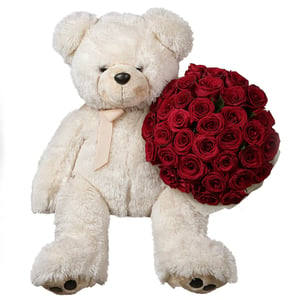
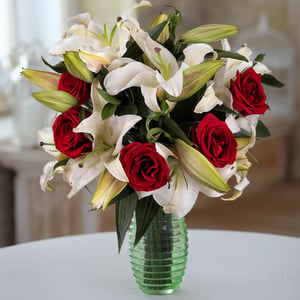
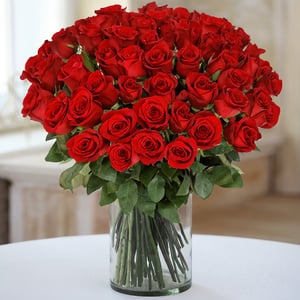
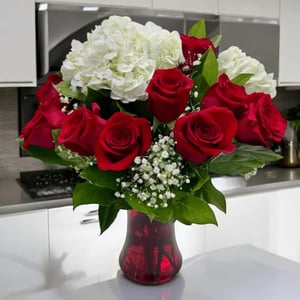
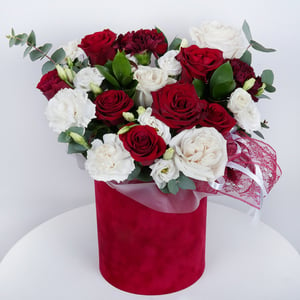
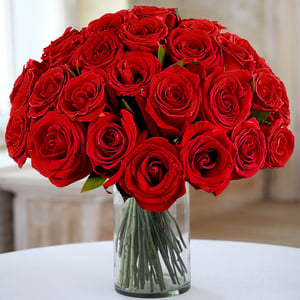


Amaryllis flower meaning shifts depending on the petal color. Florists across the U.S. stock at least five distinct color families, and each one sends a different message. Pay attention — the wrong color can say something you didn't intend.
Red amaryllis
Red carries the strongest tie to the original myth. Red amaryllis blooms signal deep romantic love, desire, and admiration. You'll see these everywhere from Thanksgiving through Valentine's Day. A single red amaryllis stalk can produce two to four blooms, each measuring six to ten inches across.
White amaryllis
White amaryllis communicates purity, innocence, and remembrance. Wedding planners in the U.S. favor white amaryllis for winter ceremonies, especially from December through February. The variety 'Christmas Gift' — a pure white cultivar — ranks among the top five sellers at Dutch bulb exporters.
Pink amaryllis
Pink tones soften the message toward friendship, affection, and gentle caring. The popular 'Apple Blossom' variety features pale pink petals with white streaks. Pink amaryllis works well for Mother's Day (second Sunday of May) or baby showers.
Orange amaryllis
Orange signals energy, warmth, and enthusiasm. The 'Naranja' cultivar stands about 18 to 24 inches tall and blooms roughly six to eight weeks after planting. Orange amaryllis fits Thanksgiving centerpieces and housewarming gifts.
Purple amaryllis
Purple carries notes of royalty, ambition, and spiritual depth. The 'Nightstar' variety shows deep burgundy-purple petals. Purple amaryllis makes a bold statement for congratulations on promotions or graduations.
Amaryllis symbolism in culture and history
Amaryllis symbolism extends far beyond Greek mythology. Different cultures read different messages into those dramatic trumpet blooms.
Victorian floriography
During the 1800s, Victorians built an entire "language of flowers" called floriography. The amaryllis stood for pride, splendid beauty, and — interestingly — a warning of "worth beyond beauty." Lady Mary Wortley Montagu helped popularize floriography in England after her travels to Constantinople in 1716, and American high society adopted the practice by the 1830s.
Chinese New Year traditions
In Chinese culture, amaryllis blooms during the Lunar New Year period symbolize good fortune and prosperity. The flower's upward growth pattern mirrors the concept of ascending luck. Families in Southern China traditionally force amaryllis bulbs to bloom right around the festival, which falls between January 21 and February 20.
Contemporary American culture
Americans buy an estimated 10 million amaryllis bulbs each holiday season. The flower ranks among the top three potted-plant gifts alongside poinsettias and Christmas cactus. Amaryllis symbolism here leans toward celebration, warmth during dark months, and fresh starts — fitting for both Christmas and New Year's.
Kitschy? Maybe. But those dramatic blooms (some double-flower varieties produce 12+ petals per bloom) genuinely lift a room in mid-January when everything outside looks gray.
What amaryllis means for specific occasions

Picking the right flower for the right moment matters. Here's how amaryllis fits major U.S. holidays and life events:
- Christmas and Hanukkah (December): Red or white amaryllis bulb kits make excellent host gifts; the recipient watches the stalk grow over four to six weeks.
- Valentine's Day (February 14): A red amaryllis arrangement signals deep love without defaulting to roses.
- Mother's Day (second Sunday of May): Pink amaryllis paired with lilies works for mothers who appreciate something unexpected.
- Housewarming gifts (any season): Orange or striped varieties like 'Clown' bring warmth and energy to a new space.
- Sympathy and memorial (any season): White amaryllis communicates remembrance and quiet respect.
One common mistake: giving amaryllis for casual acquaintance-level relationships. The flower's meaning runs deep — love, devotion, hard-won admiration. Save the amaryllis for people who matter to you personally.
Amaryllis vs. Hippeastrum: a distinction worth knowing
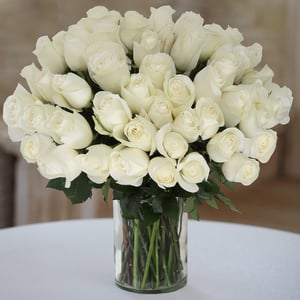
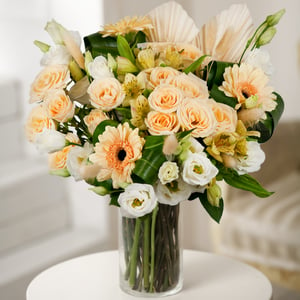
Bring the bold beauty of amaryllis into the holidays
Choose a seasonal floral gift with the same dramatic presence and warm holiday feeling.
Most garden centers label holiday bulbs as "amaryllis." Technically, those bulbs belong to the genus Hippeastrum. True Amaryllis contains only two confirmed species: A. belladonna (native to South Africa's Western Cape) and A. paradisicola (native to the rocky Richtersveld region in Northern Cape Province).
Why does the distinction matter? Practically, it doesn't change much for gift-givers. But if you're searching online for care tips, knowing the correct genus helps. Hippeastrum bulbs need a dormancy period of at least eight weeks in cool, dark conditions (50–55°F) to rebloom. True Amaryllis belladonna grows outdoors year-round in USDA Zones 7 through 10 and blooms in late summer — not winter.
The confusion dates to 1987 when the 14th International Botanical Congress officially separated the genera. Before that ruling, everyone called everything "amaryllis." Old habits die hard.
Practical tips for keeping cut amaryllis fresh
Cut amaryllis stems last 7 to 14 days in a vase — longer than most people expect. A few easy steps extend the display:
- Trim one inch off the hollow stem at a 45° angle every two to three days.
- Fill the stem's hollow center with water after cutting, then plug the bottom with a small piece of cotton.
- Change the vase water daily and add one drop of bleach per quart to prevent bacterial growth.
- Keep the vase away from heating vents and direct sunlight; room temperature around 65–70°F works best.
- Remove individual blooms as they wilt so the remaining buds get more energy.
A sturdy stalk supports heavy blooms. If a stem starts leaning, insert a thin wooden dowel or chopstick inside the hollow center. Florists use this trick constantly.
Common mistakes when giving or growing amaryllis
Even seasoned gardeners slip up with amaryllis. Watch for these errors:
Overwatering the bulb. A newly potted bulb needs only a small amount of moisture — about ¼ cup — until the first green shoot appears. Overwatering causes root rot. Water moderately once you see active growth.
Tossing the bulb after blooming. An amaryllis bulb can rebloom for 20+ years with proper care. After the flowers fade, cut the flower stalk down to two inches above the bulb but leave the foliage intact. The leaves photosynthesize energy back into the bulb for the next cycle.
Skipping the dormancy period. Without 8 to 10 weeks of rest in a cool (50–55°F), dark location, the bulb won't produce new flower stalks. A basement, unheated garage, or back corner of a closet works. Stop watering during dormancy.
Choosing the wrong pot size. Amaryllis bulbs bloom best when slightly root-bound. Pick a pot only one to two inches wider in diameter than the bulb. Too much soil holds excess moisture and discourages flowering.
Amaryllis in art, literature, and beyond
Amaryllis shows up in more cultural corners than you'd guess.
John Milton referenced the name in his 1637 elegy Lycidas: "To sport with Amaryllis in the shade." Pastoral poets from the 16th through 18th centuries used "Amaryllis" as shorthand for a beautiful, idealized country maiden. The name appeared in poems by Edmund Spenser, Alexander Pope, and Andrew Marvell.
In visual art, 17th-century Dutch still-life painters occasionally featured amaryllis-like flowers in their bouquet compositions, though many of those depicted blooms closer to Hippeastrum species brought from the Americas. The Dutch East India Company helped spread the bulbs through European trade networks starting in the early 1600s.
Today, the amaryllis appears on U.S. postage stamps — the USPS released a two-stamp set featuring Hippeastrum blooms in 2023 as part of the Winter Blooms series (value: $0.66 each at release).
Your personal connection to amaryllis meaning
Make the holiday gesture feel unforgettable
Send a rich, festive arrangement to someone who deserves a little extra brightness.
Here's a thought worth sitting with. The amaryllis myth tells a story about showing up — night after night, despite pain, despite uncertainty. That persistence created something beautiful. You don't need to believe in Greek myths to appreciate the metaphor. The next time you give or receive an amaryllis, you're holding a reminder that genuine admiration takes effort, patience, and a little bit of courage.
Got a favorite amaryllis color or a story about one that bloomed against the odds? Share it. These flowers have a way of becoming personal.