 EUR
 GBP
 CAD
 AUD

 🍂Thanksgiving Day🍂
 Birthday
 Occasions
 Flowers
 Roses
 Plants
 Gifts
 International Flower Delivery
Lily of the valley: meaning, symbolism, colors, and poison facts
- 🌸 Lily of the valley (Convallaria majalis) stands for the return of happiness and is a classic May birth flower. Every part of the plant is poisonous, but a few simple safety habits let you enjoy the bloom.
- ☠️ The plant contains about 38 cardiac glycosides, including convallatoxin. The leaves, flowers, red berries, and even the vase water can harm children, dogs, and cats.
- ✅ Keep the vase out of reach, wash your hands after handling the stems, and call Poison Control at 1-800-222-1222 the moment someone swallows any part of the plant.
Lily of the valley pairs a sweet scent and a royal wedding pedigree with enough heart toxins to send a curious dog to the emergency vet. You probably want to know the meaning before you give the flower and the safety facts before you set a vase near kids or pets. This guide covers both. Kate Middleton carried lily of the valley at Westminster Abbey on April 29, 2011, yet the ASPCA (American Society for the Prevention of Cruelty to Animals) lists the same plant as toxic to dogs, cats, and horses. Below, you'll learn what the flower means, which colors exist, why May claims the bloom, and how to care for the stems in an American home.
What is lily of the valley? A quick botanical profile
Lily of the valley belongs to the genus Convallaria, and botanists place Convallaria majalis in the asparagus family, Asparagaceae. Despite its name, the plant has no close tie to true lilies (Lilium). Creeping underground stems, or rhizomes, send up upright buds that gardeners call "pips." Each pip produces two or three broad leaves about 4 to 8 inches long.
A mature clump stands just 6 to 12 inches tall. The plant grows best in USDA (United States Department of Agriculture) Hardiness Zones 2 through 7. Why the limit? The pips need a cold winter to set flowers.
The species comes from cool regions of Europe and Asia, but North America has a native cousin, too. Convallaria majuscula, the American lily of the valley, grows wild in the Appalachian Mountains, roughly from Virginia south to Georgia.
Other names for lily of the valley
Over more than five centuries of folklore, lily of the valley has picked up plenty of nicknames:
- May bells — an English name tied to the bloom month
- Our Lady's tears — a name from Christian legend
- Muguet — the French name, central to May 1 celebrations
- Ladder-to-heaven — a folk name inspired by the stepped row of bells
- Convallaria — the Latin genus name, from convallis, meaning "valley"

Lily of the valley flower: how the blooms look and when they appear
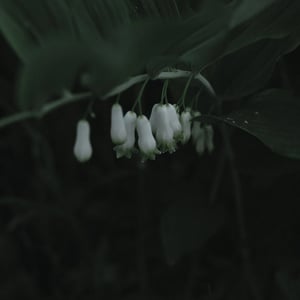
A single lily of the valley flower measures only about 1/4 to 3/8 inch across. One arching stem carries 5 to 15 of these nodding bells. Six fused petals curl outward at the tips, like a tiny scalloped skirt.
In most US states, bloom time runs from late April through May, and a garden patch usually stays in flower for about three weeks. Southern gardens in Zone 7 bloom earlier, while gardens in Minnesota or Maine bloom later.
By late summer, pollinated flowers turn into round orange-red berries. To a toddler, those berries look like candy. Keep that picture in mind.
The scent explains the flower's fame. Perfumers can't extract usable oil from the blossoms, so fragrance houses rebuild the smell with synthetic molecules such as hydroxycitronellal.

Lily of the valley colors and popular cultivars
Lily of the valley colors range from pure white to soft pink, and several cultivars change the leaf color instead of the bloom. Here's a quick comparison:
| Cultivar | Flower color | Standout feature |
|---|---|---|
| Convallaria majalis (species) | White | Classic scent, 6–9 inches tall |
| 'Rosea' (var. rosea) | Pale mauve-pink | Slightly smaller bells |
| 'Bordeaux' | White | Larger bells on stems up to 12 inches |
| 'Flore Pleno' | White, double | Extra petals in each bell |
| 'Albostriata' | White | Cream-striped leaves |
| 'Hardwick Hall' | White | Leaves with yellow-green edges |
| 'Fernwood's Golden Slippers' | White | Gold-yellow spring foliage |
Honestly, you won't find a natural blue, red, or yellow lily of the valley. Online sellers who show blue or yellow bells are usually posting dyed or edited photos. Pink 'Rosea' remains the only true color break, and even that pink looks soft rather than bold.
Lily of the valley meaning and symbolism
The meaning of lily of the valley centers on one phrase from the Victorian language of flowers: "return of happiness." Victorian gift-givers in the 1800s used the bloom to say that brighter days had arrived. Over time, the flower's meaning grew wider:
- Happiness — the classic Victorian message of joy coming back
- Humility — a link to the low, bowed bells
- Purity — a meaning drawn from the white petals and church legend
- Motherhood — a connection to the Virgin Mary and to Mother's Day in May
- Luck — a French belief tied to May 1 gifts
So, what does lily of the valley symbolize in one sentence? It says "your good days are coming back," in a gentle, humble tone.
Christian legends behind the bloom
One legend says lily of the valley sprang from the tears Mary shed at the Crucifixion, which gave the plant its nickname "Our Lady's tears." An English legend from Sussex adds a twist: Saint Leonard fought a dragon in St. Leonard's Forest, and lily of the valley grew wherever his blood fell.
La Fête du Muguet in France
King Charles IX of France received a sprig of lily of the valley as a lucky charm in 1560. On May 1, 1561, he began giving sprigs to the ladies of his court. France still celebrates La Fête du Muguet every May 1. Street sellers offer small bunches for luck, and French custom allows private citizens to sell the sprigs without a permit on that day.
Finland's national flower
Finland chose lily of the valley as its national flower in 1967. Finns call the bloom kielo, and it appears on stamps and in Finnish poetry.
Royal weddings and lily of the valley
Brides love lily of the valley for its "happiness returns" message. Grace Kelly carried a small bouquet of the flower when she married Prince Rainier III of Monaco in 1956. Princess Diana included lily of the valley in her 1981 bouquet, and Kate Middleton and Meghan Markle added sprigs to theirs in 2011 and 2018, respectively.
Lily of the valley in perfume
Christian Dior called lily of the valley his favorite flower and reportedly sewed sprigs into the hems of his gowns for luck. Perfumer Edmond Roudnitska created Diorissimo for the house of Dior in 1956, and it still serves as the reference scent for muguet perfumes.
Lily of the valley birth flower: the May birth month connection
In most US flower guides, lily of the valley shares May birth flower status with hawthorn. The timing makes sense: the bells open in late April and peak through May. Emerald is May's birthstone, and the flower's green leaves echo that gem nicely.
The lily of the valley birth month also overlaps with Mother's Day. US families celebrate Mother's Day on the second Sunday of May, which falls on May 10 in 2026. A small posy for a May-born mom covers both occasions at once.
Gift ideas for the May birthday crowd:
- A mixed bouquet with lily of the valley and white ranunculus
- A potted plant for a gardener in Zones 2–7
- A bottle of Diorissimo for a perfume lover
- A pressed-flower frame for a keepsake that lasts for years
- A lily of the valley pendant to match an emerald birthstone
Looking for mothers day?
Browse mothers day from local florists — hand-arranged and delivered fresh near your recipient.
Is lily of the valley poisonous?
Yes, lily of the valley is poisonous to people, dogs, cats, and horses, and the ASPCA includes it in its toxic plant database. People who ask "Are lily of the valley poisonous?" usually mean the cut stems on the kitchen table. The answer stays the same: every part of the plant carries toxins.
How lily of the valley poison works
Lily of the valley poison comes from about 38 cardiac glycosides, and convallatoxin is the strongest of them. Cardiac glycosides slow the heart and disrupt its rhythm, much like digoxin from foxglove. The plant also contains saponins, which irritate the stomach.
Here's what matters: the leaves, flowers, berries, roots, and vase water all hold toxins. A dog that drinks from the vase faces real risk. Serious human cases remain rare, partly because vomiting often clears the plant early. Still, doctors treat every ingestion seriously.
Symptoms in people and pets
Symptoms of lily of the valley poisoning often start within a few hours:
- Nausea and vomiting — the most common early sign
- Stomach pain and diarrhea — the work of the saponins
- Dizziness or confusion — a sign the heart rhythm may be changing
- Blurred vision — a known effect of cardiac glycosides
- Slow or irregular heartbeat — the most dangerous sign
- Drooling and weakness — typical signs in dogs and cats
What to do after exposure
Act fast and stay calm:
- Remove any plant pieces from the person's or pet's mouth.
- Call Poison Control at 1-800-222-1222, a free line open 24/7 across the US.
- For a pet, call the ASPCA Animal Poison Control Center at (888) 426-4435.
- Bring a stem or a clear photo to the ER or vet clinic.
- Call 911 right away for chest pain, fainting, or seizures.
Skip home remedies, and let the Poison Control specialist decide whether inducing vomiting will help.
Look-alikes that fool foragers
Lily of the valley leaves look a lot like ramps (Allium tricoccum), the wild leeks that foragers hunt in Eastern US forests each April. In Europe, foragers confuse the plant with wild garlic, or ramsons. Try the crush test: ramps smell strongly of onion and garlic, while lily of the valley leaves smell of almost nothing.
Check the stems, too. Ramps grow single leaves on reddish stalks, whereas lily of the valley wraps two or three leaves around one shared green stem.
Lily of the valley for US occasions
Lily of the valley suits spring occasions best, since its natural bloom peaks in May. Here's a quick guide:
| Occasion | 2026 date | Why lily of the valley fits | Good pairing |
|---|---|---|---|
| May Day | May 1 | French luck tradition | A single sprig with ribbon |
| Mother's Day | May 10 | Motherhood and Marian legend | Pink garden roses |
| May birthdays | May 1–31 | Official birth flower | White ranunculus |
| Memorial Day | May 25 | Humility and renewed hope | White tulips |
| Weddings | Peak season May–June | Royal bridal tradition | Gardenias and stephanotis |
| New baby | Any spring date | Purity and fresh starts | Sweet peas |
One caveat: don't give lily of the valley to a household with a toddler or a puppy. Choose white tulips or roses for that family instead.

How to choose and order a lily of the valley bouquet
In the US, lily of the valley sells as a premium cut flower. Many florists charge roughly $6 to $15 per stem in spring, and prices climb in fall and winter. To supply stems beyond May, growers force chilled pips in greenhouses, which explains the higher off-season price.
Use these tips to choose well:
- Look for stems with about half the bells open and the rest still closed.
- Check the leaves for a crisp green color with no yellow spots.
- Ask the florist about availability 3–5 days before your date.
- Order a mixed bouquet when budget matters, since 5 stems go further among roses.
- Choose potted pips in winter, because forced pips bloom indoors in about 3–4 weeks.
How ordering works through local florists
MyGlobalFlowers works with local florists, so a florist in your recipient's city arranges the bouquet and a courier delivers it by hand. You can order from anywhere in the US, and the flowers never travel across the country.
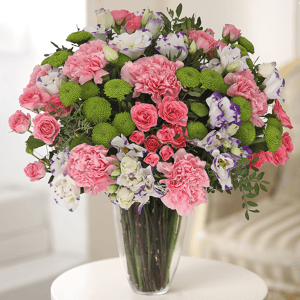
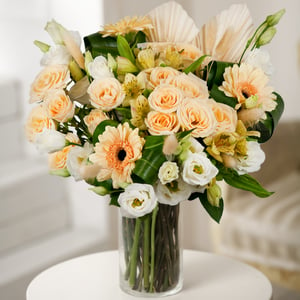
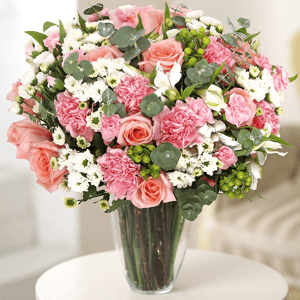
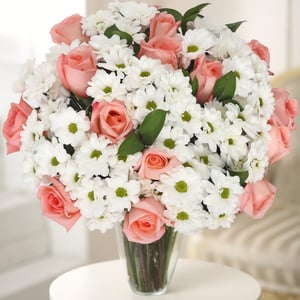
- Pick a spring bouquet that includes lily of the valley.
- Enter your recipient's address and the delivery date.
- Check the same-day cutoff in your recipient's time zone, such as EST (Eastern Standard Time), CST (Central), MST (Mountain), or PST (Pacific).
- Write a card message and add any gifts.
- Approve a similar white bloom as a backup, since lily of the valley supply drops outside May.
How to care for lily of the valley cut flowers
Lily of the valley lasts about 3 to 5 days in a vase, and sometimes a full week with good care. Follow these steps as soon as the flowers arrive:
- Recut each stem about 1/2 inch at an angle under running water.
- Fill a clean vase with cool water, around 60°F.
- Change the water every day and pour the old water down the drain.
- Place the vase in a room at around 65–72°F, away from sunny windows and heaters.
- Keep the vase away from fruit bowls, since ripening fruit releases ethylene gas.
- Wash your hands after touching the stems or the water.
Adjusting care for your US climate
Climate changes the routine. In Phoenix, Houston, or Miami, summer heat shortens vase life quickly. Move the vase to the fridge overnight at about 36–40°F, away from fruit, to gain a day or two. In dry Denver or Salt Lake City, mist the bells lightly each morning.
Watch the air conditioning, too. A cold, dry draft from an AC vent wilts the small bells quickly, so set the vase at least 3 feet away from the vent.
Common mistakes with lily of the valley
Lily of the valley rewards careful owners and punishes a few common slips. Avoid these:
- Placing the vase on a coffee table at dog or cat height
- Leaving vase water where a pet can drink it, even for 10 minutes
- Reusing the vase without scrubbing it with hot, soapy water
- Planting pips next to a vegetable bed or a kids' play area
- Picking wild "ramps" without doing the garlic crush test
- Expecting garden blooms in October without forced pips
Gardeners often make one more mistake. Lily of the valley spreads by rhizomes and can take over a shady bed within 3–4 years. To contain it, bury a root barrier 10–12 inches deep around the planting.

Growing lily of the valley at home
Lily of the valley grows easily in partial to full shade across Zones 2–7. Plant the pips about 1 inch deep and 4 inches apart in late fall or early spring. Choose moist, rich soil, and water during dry spells in June and July.
Thanks to their bitter toxins, the plants are usually left alone by deer and rabbits. That same trait, however, makes them risky in a yard with a dog that likes to dig.
Extras that make a lily of the valley gift personal
Lily of the valley carries a clear message, so a short card does a lot of work. Try one of these lines:
- "Happiness always finds its way back to you."
- "Happy May birthday from your favorite fan."
- "Thank you for every spring you made brighter, Mom."
- "Wishing you luck on this May Day."
Gift add-ons work well, too. Pair the bouquet with a lily of the valley candle, a box of chocolates for a pet-free home, or a framed print of Finland's kielo. Ask your florist for a delivery photo: it shows you the exact bouquet your recipient received, which is especially helpful when you send flowers from across the country.
My take on lily of the valley
Lily of the valley gets my vote as the most honest flower in the spring lineup: sweet, small, and serious about safety. I'd give it to any May-born friend without hesitation, and I'd hand over the vase with one sentence about pets and kids. That sentence takes five seconds and can prevent a bad night.
So, who in your life needs a "your happiness is coming back" message this May? Browse spring bouquets, add a short card, and let a local florist handle the rest.
Send fresh flowers today
Pick a bouquet and a local florist hand-delivers it fresh to the door.