 EUR
 GBP
 CAD
 AUD

 🍂Thanksgiving Day🍂
 Birthday
 Occasions
 Flowers
 Roses
 Plants
 Gifts
 International Flower Delivery
Skeleton flower: meaning, Japanese roots, and care for Diphylleia grayi
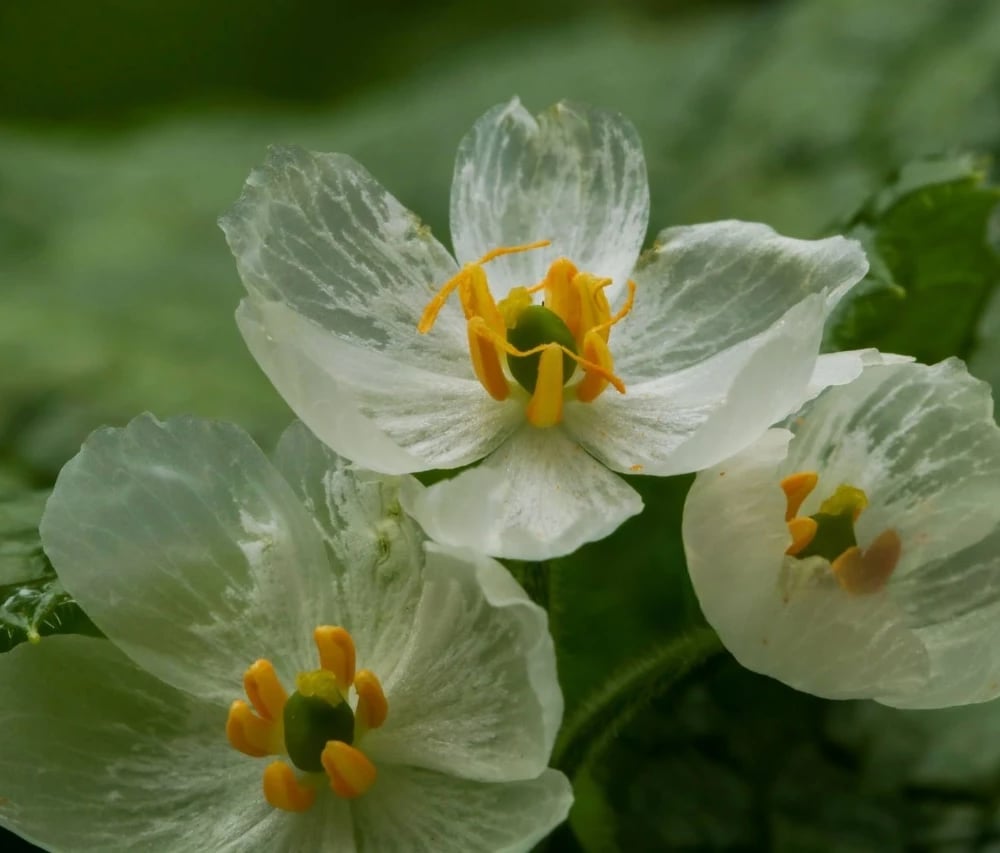
- 🌧️ The skeleton flower (Diphylleia grayi) is a shade-loving perennial from Japan whose white petals turn see-through in rain and go white again once dry.
- 🌲 It thrives in USDA zones 4–7 with part to full shade, moist acidic soil, and cool summer nights, and it usually struggles in hot Southern gardens.
- 💧 A nursery-grown plant costs about $25–$45 USD and blooms within a year, while seeds need roughly 90 days of cold and several years to flower.
The skeleton flower turns its white petals as clear as glass after a single rain shower, and you can grow one in a shady corner of your own backyard. Learn what Diphylleia grayi symbolizes and how it behaves in U.S. Department of Agriculture (USDA) hardiness zones 4–7, and you'll buy the right plant and keep it alive past its first July. Japanese hikers know the plant by another name: sankayou. Every June, they climb into the mountain forests of Honshu and Hokkaido just to catch the blooms wet. Below, you'll find the botany, the meaning, a buying guide, and care steps built for American gardens.
What is the skeleton flower (Diphylleia grayi)?
The skeleton flower, or Diphylleia grayi, belongs to the barberry family, Berberidaceae. It grows wild in cool mountain forests across Japan and on Russia's Sakhalin Island. The plant reaches 12 to 18 inches tall. Each flowering stem carries two broad, lobed leaves up to 12 inches across, topped by a small cluster of white blooms about 3/4 inch wide.
In most US gardens, the blooms open between late April and June. By August, the plant trades its flowers for deep blue berries. The foliage then yellows and disappears by October.
The name tells a story, too. The genus name comes from Greek: di means "two," and phyllon means "leaf." The species name honors Asa Gray (1810–1888), the Harvard botanist who documented how many plants Japan shares with eastern North America.
Why the petals turn clear in rain
Skeleton flower petals hold almost no pigment. Each petal contains loose cells with tiny air pockets between them. Air scatters light, so your eye reads the petal as white.
Rain changes everything. Water fills those air pockets. Water has a refractive index of about 1.33, fairly close to that of plant cell walls at roughly 1.4 to 1.5. Light now passes straight through the petal instead of bouncing around, and the petal looks like glass.
Here's the fun part: once the sun dries the petals, the white color comes back. You can repeat the trick with a $5 spray bottle on a dry afternoon.
Diphylleia species in Japan, China, and Appalachia
Botanists recognize three species in the genus Diphylleia. Some sellers mix them up, so check the table before you buy.
| Species | Common name | Native range | Typical height |
|---|---|---|---|
| Diphylleia grayi | Skeleton flower, sankayou | Japan (Hokkaido, Honshu), Sakhalin | 12–18 inches |
| Diphylleia cymosa | Umbrella leaf | Southern Appalachians, Virginia to Georgia | Up to 3 feet |
| Diphylleia sinensis | Chinese umbrella leaf | Central and western China | 16–30 inches |
French botanist André Michaux named the genus in 1803 after studying Diphylleia cymosa in the Appalachian Mountains. That American cousin still grows wild in the Great Smoky Mountains. The glassy-petal photos you see online almost always show Diphylleia grayi, the Japanese species.
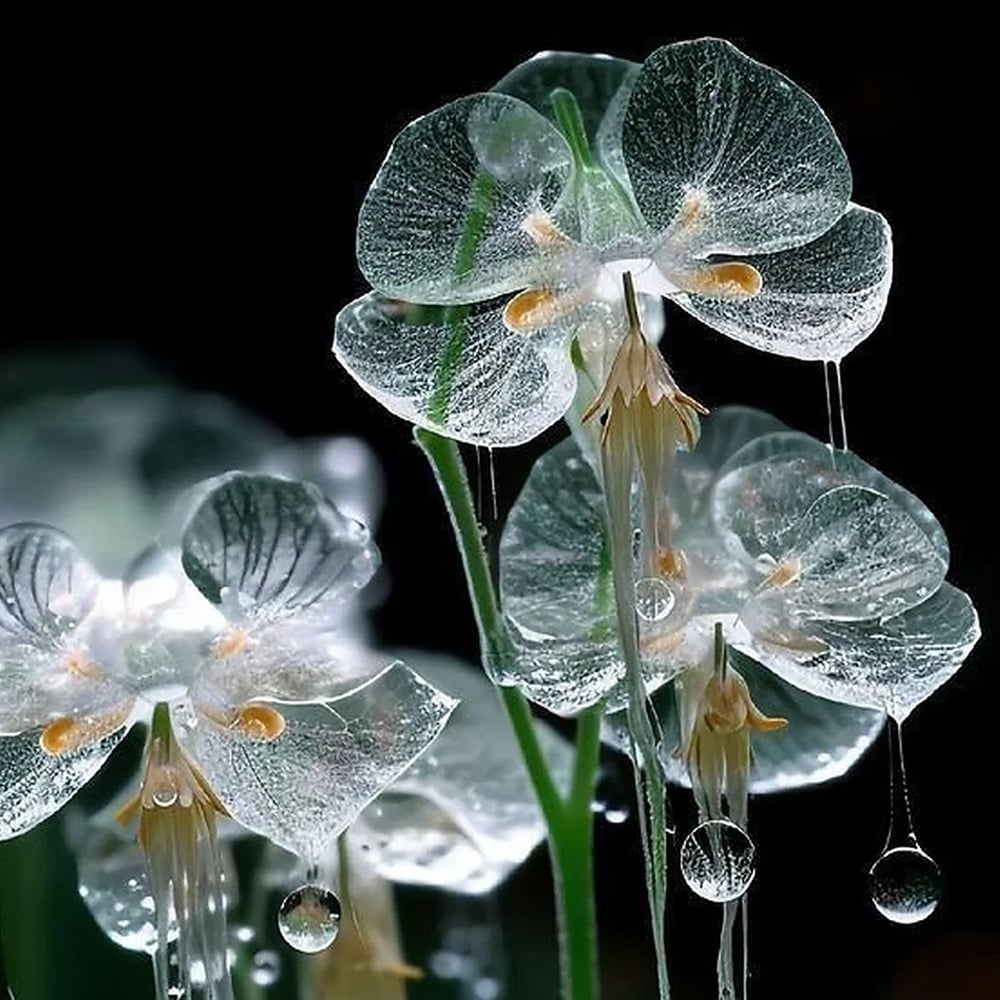
Skeleton flower in Japan: sankayou
In Japan, the skeleton flower goes by sankayou (山荷葉), roughly "mountain lotus leaf." The name points to the wide leaves, which remind people of lotus pads. Japanese hikers find the blooms in subalpine forests from late May to early July, mostly between about 3,000 and 7,000 feet.
Popular viewing areas include:
- Oze National Park, which spans Gunma, Fukushima, Niigata, and Tochigi prefectures, with blooms along the wetland boardwalks in late May and June.
- Tsugaike Nature Park in Otari, Nagano, where sankayou usually peaks in June.
- Mount Hakkoda in Aomori Prefecture, with blooms in June beneath beech forests.
- Daisetsuzan National Park in Hokkaido, where cooler weather pushes blooms into late June and July.
Quick tip: Japanese nature photographers often head out right after a rain shower. The wet petals stay clear only until the sun and breeze dry them.





Skeleton flower meaning and symbolism
In English-speaking culture, the skeleton flower's meaning centers on honesty and vulnerability. In Japan, many hanakotoba (language of flowers) guides list sankayou with the meaning "affection" or "feelings of closeness." The two traditions don't conflict: both describe something gentle that shows its true self.
Here are the meanings people attach to the plant most often:
- Transparency: The petals reveal their inner structure the moment rain hits, a common metaphor for honesty.
- Transformation: The flower switches between white and clear within minutes, which symbolizes change and growth.
- Resilience: The rhizome survives winters down to -30°F in zone 4 and sends up new leaves every April.
- Impermanence: The bloom season lasts only about 2–3 weeks, echoing the Japanese idea of mono no aware, an awareness of passing beauty.
- Affection: Japanese hanakotoba links sankayou to warm, close feelings between people.
Skeleton flower symbolism in tattoos and gifts
Fine-line tattoo designs often show the skeleton flower half-white and half-clear. That split image marks a turning point: recovery, a breakup, a new chapter. A real bloom spans about 3/4 inch, so tattoo artists usually scale the design up to 2 or 3 inches.
By the way, the "skeleton" name has nothing to do with death. It describes the see-through petal, like an X-ray of a flower. That makes the plant a thoughtful sympathy gift, too, because it returns every spring.
How to buy a skeleton flower in the US
You'll rarely find the skeleton flower in florist coolers. The petals drop fast after cutting, so most growers sell live potted plants instead of stems. Plan ahead, because specialty nurseries often sell out by May.
Follow this process:
- Search specialty perennial nurseries in January and February, when spring catalogs go live. Plant Delights Nursery in Raleigh, North Carolina, for example, carries Diphylleia when stock allows.
- Check the botanical name on the listing and look for "Diphylleia grayi," not just "umbrella leaf."
- Choose a 1-quart or 1-gallon pot, which typically costs $25–$45 USD.
- Pick a delivery window in March through May or in September and October, the two planting seasons.
- Plant the skeleton flower within 7 days of arrival.
Seeds cost about $8–$15 per packet, but they test your patience. Skeleton flower seeds need roughly 90 days of cold, moist stratification in your fridge, and seedlings then take several years to bloom.
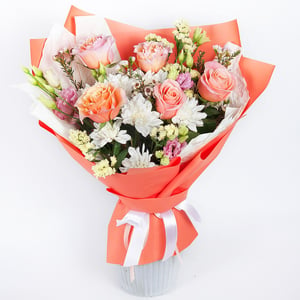
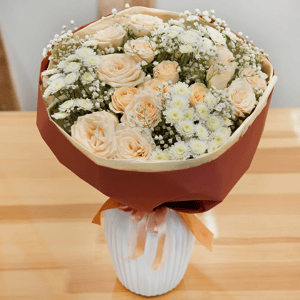
Want the look in a vase this week? Local florists can build an all-white bouquet with anemones, hellebores, lisianthus, and sweet peas. They arrange it and hand-deliver it in your recipient's city, often the same day you order.
Looking for mothers day?
Browse mothers day from local florists — hand-arranged and delivered fresh near your recipient.
Skeleton flower gifts for US holidays and occasions
A skeleton flower makes a thoughtful gift on dates that line up with the planting season. Match the gift format to the calendar:
| Occasion | Date | Gift format | Why it fits |
|---|---|---|---|
| Earth Day | April 22 | Potted plant | Celebrates a woodland species with an Appalachian cousin |
| Mother's Day | Second Sunday in May (May 10, 2026) | Potted plant in bud | Blooms often open that same week |
| Teacher Appreciation Week | First full week of May | Seed packet with a card | Reflects patience and growth |
| Graduation season | May–June | Potted plant with a note | Symbolizes transformation |
| Halloween | October 31 | Dormant plant or seeds | Fits the spooky name and the fall planting window |
| Día de los Muertos | November 1–2 | White bouquet from local florists | Honors loved ones with pale, gentle blooms |
| Sympathy | Any time | Potted plant | Returns every April as a living reminder |
Honestly, Mother's Day wins this list. A potted skeleton flower in bud usually opens within 1–2 weeks of May 10, so your mom gets a show right after the holiday.
How to choose a healthy skeleton flower plant
A healthy plant saves you a full season of guesswork. Inspect it the day the box arrives:
- Leaves: Green, flat foliage with brown edges no wider than 1/4 inch.
- Roots: White or tan roots that fill the pot but don't circle the bottom.
- Pot size: A container of at least 1 quart, since smaller plugs often skip blooming the first year.
- Label: The full name "Diphylleia grayi," printed on the tag or invoice.
- Crown: A firm, plump crown at soil level with no mushy spots.
Here's what surprises new growers: a skeleton flower with no leaves in October isn't dead. Diphylleia grayi goes dormant every fall and sends up fresh shoots in April.
Skeleton flower care after your plant arrives
Your skeleton flower needs shade and steady moisture from day one. Follow these steps:
- Open the box the same day and water the pot with room-temperature water.
- Keep the pot in bright shade for 7–10 days so the plant adjusts to your climate.
- Dig a hole twice as wide as the pot in part to full shade.
- Mix 2–3 inches of compost into the soil and aim for a pH of 5.5 to 6.5.
- Set the crown level with the soil surface, never deeper.
- Water about 1 inch per week, and double that during heat above 85°F.
- Spread 2–3 inches of shredded leaf mulch around the stems.
- Feed the plant once in early spring with a slow-release fertilizer at half strength.
- Cut yellow foliage to the ground in October.
Skeleton flower care by US region
Your zip code shapes your care routine more than any single tip. Use this table:
| Region | Main challenge | What to do |
|---|---|---|
| Pacific Northwest (Seattle, Portland) | Soggy winters | Plant in a raised bed with gritty compost |
| New England and Upper Midwest | Winter lows near -30°F | Add 3 inches of mulch in November |
| Mid-Atlantic and Appalachian highlands | July heat spells | Choose deep shade and water twice a week |
| Southeast and Texas (zones 8+) | Summer nights above 70°F | Grow the plant in a pot on the north side of the house |
| Inland California and the Southwest | Dry air and alkaline water | Use rainwater and a 12-inch-deep glazed pot |
Container growers, take note: a 12-inch-wide pot with drainage holes gives the rhizome enough room for 2–3 years. Move the pot into an unheated garage from December to February so the plant gets its winter chill.




Common skeleton flower mistakes
Most skeleton flower losses trace back to a few avoidable slips. Watch for these:
- Planting in afternoon sun: Leaves scorch within days once temperatures pass 80°F.
- Letting the soil dry out: Two dry weeks in July can push the plant into early dormancy.
- Buying unlabeled plants: Sellers sometimes swap in Diphylleia cymosa, which grows up to 3 feet tall.
- Digging up a "dead" plant in fall: Dormancy starts as early as September, and the rhizome stays alive underground.
- Ignoring slugs: Slugs chew holes in new leaves in April and May, so put down iron phosphate bait early.
- Expecting blooms from seed in year one: Seed-grown plants need several seasons before the first flower.
Extra ways to make a skeleton flower gift special
A skeleton flower gift lands better with a few thoughtful extras. Try these add-ons:
- Greeting card: A short note that explains the rain trick, such as "Mist the petals and watch them turn clear."
- Spray bottle: A $5 mister so your recipient can see the glass effect on day one.
- Companion plants: Hostas, ferns, and Japanese forest grass (Hakonechloa), which share the same shade needs.
- Delivery photo: A picture from the florist at the doorstep, which many local florists send on request.
- Ceramic pot: A 10–12 inch glazed pot that keeps roots cool on a shaded patio.
Gifting someone across the country? Order a white bouquet from anywhere in the US, and local florists will deliver it in your recipient's city. Pair the bouquet with a seed packet for a gift that keeps going into next spring.
My take on the skeleton flower
The skeleton flower rewards patient gardeners more than almost any shade plant I know. The glass-petal moment lasts only minutes, and that's exactly why people love it. My advice: start with one nursery-grown plant this April, give it deep shade, and wait for the first May rain.
So, where would you plant yours: under a maple, or in a pot by the back door? Share this guide with the friend who collects rare plants. And for something white and fresh in a vase this week, browse bouquets that local florists deliver straight to your recipient.
Send fresh flowers today
Pick a bouquet and a local florist hand-delivers it fresh to the door.