 EUR
EUR
 GBP
GBP
 CAD
CAD
 AUD
AUD

 ✨Boss’s Day✨
 Birthday
 Occasions
 Same Day
 Flowers
 Roses
Roses
 Plants
 Gifts
Gifts
 International Flower Delivery
Cherry blossom meaning: symbolism, culture, and spiritual significance
Cherry blossom meaning connects directly to how you experience beauty, loss, and renewal in everyday life.
Ever noticed how quickly cherry blossom petals fall? A week, maybe two — and it's over. That brief explosion of pink gives you just enough time to be amazed, and then it's gone. That's exactly why sakura means so much — not just in Japan, but anywhere someone's stopped to watch. Because it's not really about the tree. It's about how we handle beauty, how we cope with loss, and how we somehow find the nerve to start over. In this piece, I'll skip the textbook stuff and get straight to what sakura actually stands for, where the symbolism came from, and how to pick the right blooms if you're thinking of giving them as a gift.
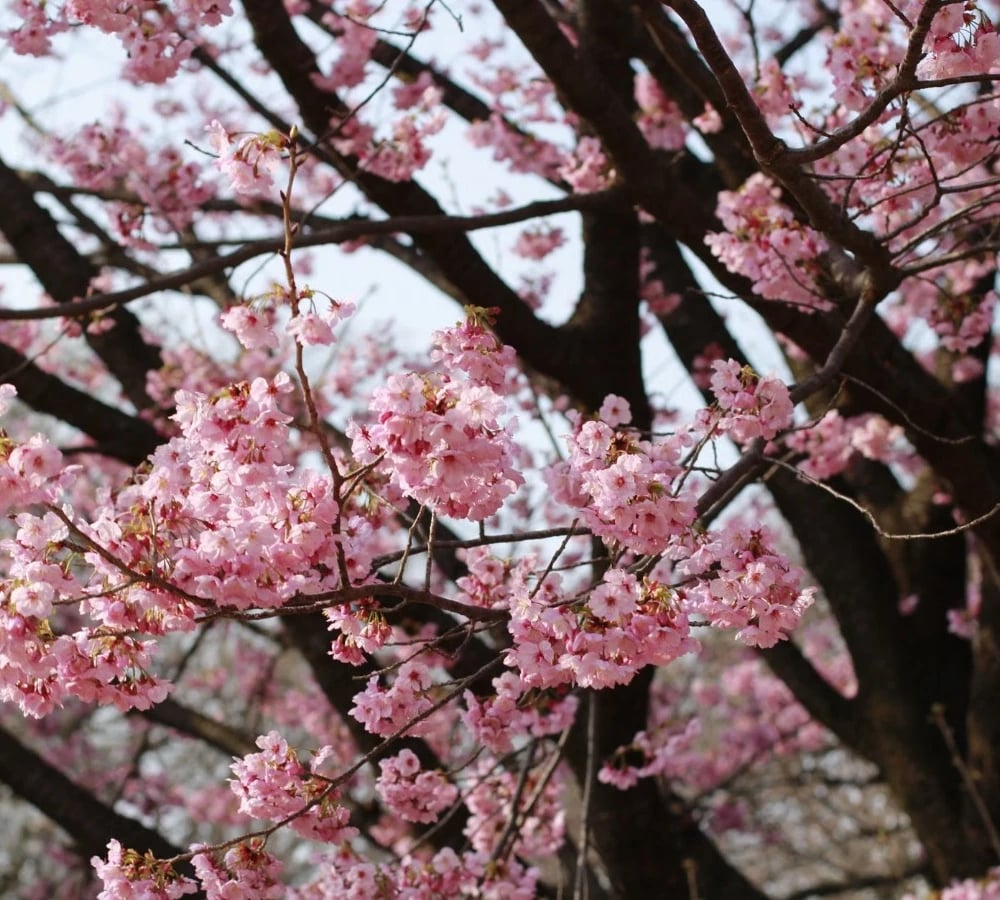
What do cherry blossoms symbolize?
So, what do cherry blossoms symbolize at their core? The answer comes down to one idea: impermanence. The Japanese concept of mono no aware — roughly, "the pathos of things" — captures that bittersweet awareness that nothing lasts forever. A single tree can produce thousands of petals, but the entire display fades within about two weeks.
That fleeting nature gives cherry blossoms several layers of meaning. They mark renewal, since they bloom with the start of spring and even coincide with Japan's fiscal year on April 1. They also speak to mortality — petals fall at their most beautiful, reminding us to value the present. At the same time, they carry hope, because new blooms return reliably every year, and they represent love, as couples in East Asia sometimes exchange branches as tokens of devotion. During the Edo period (1603–1868), the samurai class adopted the cherry blossom as a personal emblem, seeing their own lives reflected in its short, vivid peak.
Is cherry blossom a flower?
Yes, they are flowers. Cherry blossoms grow on trees in the genus Prunus, which includes over 400 cultivated varieties worldwide. Each blossom typically has five petals, though ornamental "double" varieties like Prunus serrulata 'Kanzan' can produce anywhere from 20 to 50 petals per flower. Colours range from white to deep pink, and most blooms measure about one to one and a half inches across.
A common misconception confuses ornamental cherry trees with fruit-bearing ones. The trees famous for their springtime displays produce little to no fruit. In contrast, fruit-bearing varieties like Prunus avium put their energy into cherries rather than showy petals. So when you're admiring a cherry blossom flower, you're looking at a bloom designed purely for spectacle, not for harvest.
Cherry blossom tree meaning across cultures
Cherry blossom tree meaning shifts depending on where you stand in the world. Each culture reads different messages into the same delicate petals.
Japanese cherry blossom meaning
Japanese cherry blossom meaning centers on hanami, the centuries-old practice of gathering beneath blooming trees. Emperor Saga hosted the first recorded hanami at Kyoto's Imperial Court in 812 AD. Today, the Japan Meteorological Corporation tracks a "cherry blossom front" (sakura zensen) that moves northward from Okinawa in January to Hokkaido by May. Over 63 million people participate in hanami each spring.
Beyond celebration, sakura carries a solemn note. During World War II, the Japanese military painted cherry blossoms on kamikaze aircraft. The flower embodied a willingness to fall at the peak of youth. Modern Japan has largely reclaimed the blossom as a symbol of peaceful renewal.
Cherry blossom meaning in China
Chinese culture ties cherry blossoms to feminine beauty and authority. The Tang Dynasty (618–907 AD) featured cherry blossoms in court poetry, linking the flower to romantic love. Wuhan's East Lake Cherry Blossom Garden now hosts over 10,000 cherry trees, drawing roughly 5 million visitors each March.
Cherry blossom meaning in the United States
Washington, D.C., received 3,020 cherry trees from Tokyo's mayor Yukio Ozaki in 1912. First Lady Helen Taft and Viscountess Chinda planted the first two trees on the northern bank of the Tidal Basin on March 27, 1912. The National Cherry Blossom Festival now spans four weeks every spring, attracting about 1.5 million visitors annually. Americans associate the blossom with friendship between nations and the arrival of warmer weather.
Cherry blossom spiritual meaning
Cherry blossom spiritual meaning resonates across multiple traditions. Buddhist monks meditate under cherry trees to contemplate the nature of attachment and release. The falling petals mirror the Buddhist teaching that clinging to any experience causes suffering.
In Shinto practice, cherry blossoms signal the arrival of kami (spirits) from the mountains to the rice paddies. Farmers historically used the first bloom as a cue to begin planting. That agricultural root still echoes in modern Shinto shrine festivals.
For personal reflection, you can draw on cherry blossom imagery during moments of transition — a career change, a move across the country, or a shift in relationships. The flower reminds you that endings carry beauty, not just loss.
Cherry blossom flower meaning by color
Cherry blossom flower meaning depends partly on petal color. Use the table below to choose the right variety for any occasion.
| Petal color | Meaning | Popular variety | Best occasion |
|---|---|---|---|
| Pale pink | Gentleness, new love | Yoshino (Prunus × yedoensis) | Romantic gesture, spring celebration |
| Deep pink | Passion, devotion | Kanzan (Prunus serrulata) | Anniversary, Valentine's Day |
| White | Purity, spiritual clarity | Oshima (Prunus speciosa) | Memorial tribute, sympathy |
| Yellow-green | Rarity, uniqueness | Ukon (Prunus serrulata 'Ukon') | Congratulations, milestone event |
Yoshino cherry trees line the Tidal Basin in Washington, D.C. — the pale pink variety you see most often in American photography.
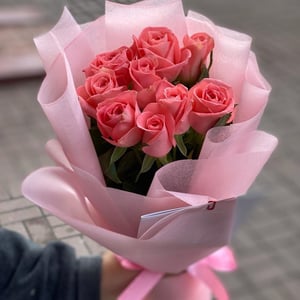
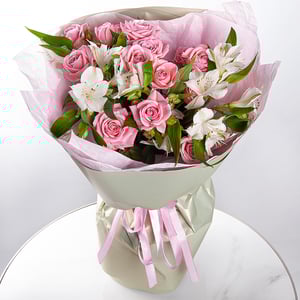
Looking for the sakura mood at home?
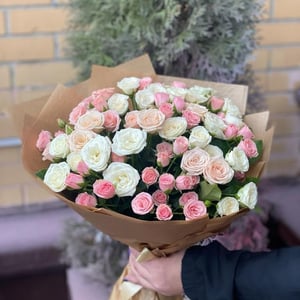
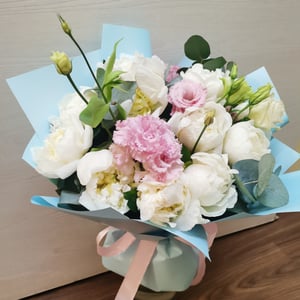
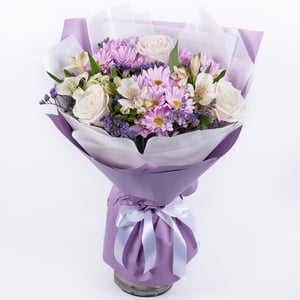
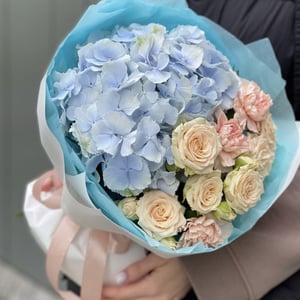
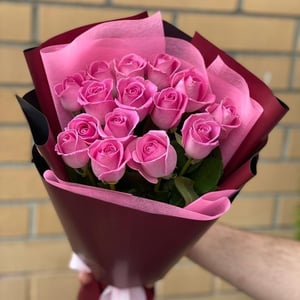
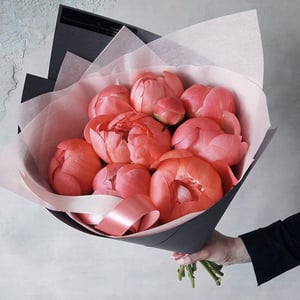
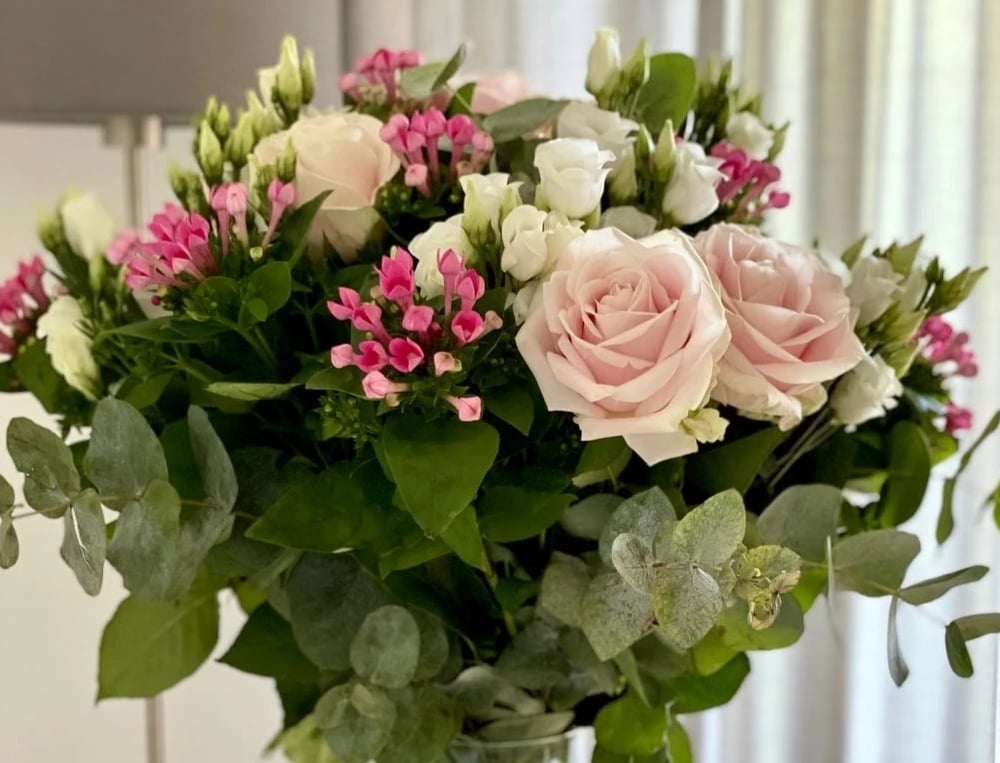
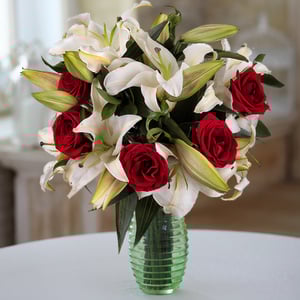
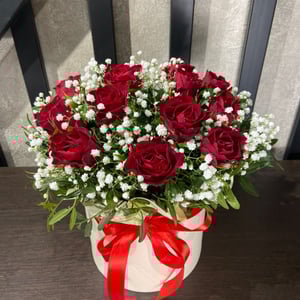
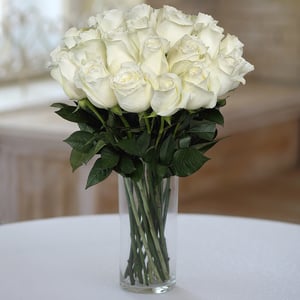
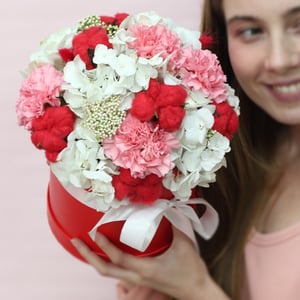
Browse pink and white arrangements that capture the cherry blossom palette without needing a tree.
How to celebrate cherry blossom season
Cherry blossom season gives you a natural reason to slow down. Here's how to make the most of it.
- Visit a local festival — cities like D.C., San Francisco, and Brooklyn host cherry blossom events between late March and mid-April
- Host a backyard hanami — spread a blanket under any flowering tree and share food with friends
- Send cherry blossom–inspired flowers — pink and white arrangements capture the sakura mood without needing a tree
- Plant a cherry tree — dwarf Yoshino varieties grow well in USDA zones 5 through 8 and reach about 15 feet tall
- Photograph the bloom — morning light between 6:00 AM and 8:00 AM produces the softest petal tones
Peak bloom in D.C. typically falls between March 20 and April 17, though climate shifts have pushed some years earlier. The National Park Service updates forecasts weekly starting in February.
Common mistakes when interpreting cherry blossom meaning
People often flatten cherry blossom meaning into a single word — "beauty" — and miss the complexity. Avoid these missteps:
- ✗Ignoring cultural context. A white cherry blossom at a Japanese funeral carries deep respect. The same blossom at an American wedding reads as fresh and romantic. Context shapes meaning entirely.
- ✗Confusing sakura with plum blossoms. Plum blossoms (ume) bloom earlier — usually in February — and carry a different meaning in East Asia: perseverance through hardship. Sakura petals have a small notch at the tip. Plum petals appear fully rounded.
- ✗Treating cherry blossoms as only decorative. Salted cherry blossoms (sakura-zuke) flavor tea and rice in Japanese cuisine. The flower serves practical and cultural roles beyond ornament.
Caring for cut cherry blossom branches
Cherry blossom branches bring the outdoors into your home. Keep them vibrant with these steps:
- Cut stems at a 45-degree angle and split the bottom 2 inches with a sharp knife
- Place branches in room-temperature water — cold water slows opening
- Change the water every 2 days and trim 1 inch off each stem
- Keep the arrangement away from direct heat and afternoon sunlight
- Expect blooms to last 5 to 7 days indoors under good conditions
Florists in the U.S. typically stock cherry blossom branches from late February through April. Ordering early in the season gives you the widest selection.

Who should receive cherry blossom–themed flowers?
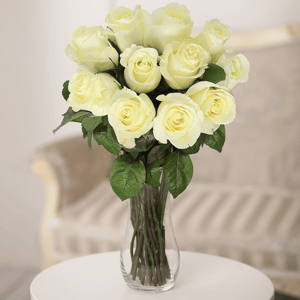
Cherry blossom arrangements suit a wide range of recipients and moments.
- A friend starting over. The blossom's link to renewal makes it a thoughtful gesture after a big life change — a new job, a move, or a fresh chapter.
- Someone grieving. White cherry blossoms acknowledge both beauty and loss without forcing cheerfulness. Many people find comfort in a flower that openly represents impermanence.
- A partner you want to impress. Deep pink varieties carry romantic energy. Pair cherry blossoms with ranunculus or garden roses for a lush spring bouquet.
- Yourself. Seriously. A single branch in a clear vase on your desk costs around $8 to $15 and shifts the entire mood of a room.
Final thought
Cherry blossom meaning stays relevant because it tells a truth you already sense: the most moving moments in life don't last. That awareness doesn't sadden — it sharpens attention. Next spring, stand under a blooming tree for five quiet minutes. You'll understand what poets and monks have known for over a thousand years. And if you want to carry that feeling into your home or share the moment with someone who matters, a well-chosen arrangement of pink and white blossoms speaks louder than any card.
Send spring-inspired flowers today
Choose a pink or white arrangement, add your message, and let a local florist hand-deliver it fresh.
Frequently asked questions
What do cherry blossoms symbolize in everyday life?▾
Cherry blossoms symbolize the beauty of temporary experiences. You can use the flower to mark any transition — graduation, retirement, a birthday, or the start of a new relationship. The blossom reminds you to appreciate what you have right now.
Do cherry blossoms have a spiritual meaning?▾
Cherry blossom spiritual meaning draws from Buddhism and Shinto. Buddhists connect the falling petals to non-attachment. Shinto tradition ties the bloom to seasonal spirits and agricultural cycles. You don't need to follow either tradition to find personal meaning in the flower's brief life.
When do cherry blossoms bloom in the United States?▾
Most cherry trees in the U.S. bloom between late March and mid-April, depending on USDA zone and local weather. Washington, D.C.'s peak bloom averages around April 4, while San Francisco's Golden Gate Park trees often peak in late March.
Can I grow a cherry blossom tree in my yard?▾
Yoshino and Kwanzan varieties thrive in USDA zones 5 through 8. A dwarf Yoshino reaches about 15 feet and needs full sun with well-drained soil. Most nurseries sell bare-root trees in late winter for $25 to $60.
What's the difference between cherry blossoms and plum blossoms?▾
Cherry blossoms (sakura) have petals with a small notch and bloom on long stems away from the branch. Plum blossoms (ume) feature rounded petals that sit close to the branch. Plum trees bloom 4 to 6 weeks earlier than cherry trees in most climates.