EUR
 GBP
 CAD
 AUD

 Birthday
 Same Day
 Occasions
 Flowers
 Roses
 Plants
 Gifts
 International Flower Delivery
Cornucopia Meaning & Symbolism
- 🌾 The cornucopia — literally "horn of plenty" in Latin — traces back to the Greek myth of Zeus and the goat Amalthea around the 5th century BCE, and today serves as America's most recognized harvest symbol.
- 📖 The cornucopia definition covers both the physical horn-shaped vessel overflowing with fruit and the figurative sense of any generous, abundant supply.
- 🍂 American Thanksgiving adopted the cornucopia symbol in the 19th century, but you can use the motif year-round to celebrate gratitude, prosperity, and seasonal bounty.
The cornucopia carries over 2,500 years of mythology, art, and harvest tradition inside a single curved horn. You've seen one at every Thanksgiving table, on state seals, and even stamped on old coins — but the story behind the horn of plenty meaning runs far deeper than a wicker basket stuffed with gourds. Understanding the cornucopia meaning connects you to Greek myth, Roman religion, and a living American tradition that transforms how you see the November centerpiece.
What does cornucopia mean? A clear definition

The cornucopia definition starts with two Latin words: cornu (horn) and copia (plenty). Merriam-Webster defines cornucopia as "a curved, hollow goat's horn or similarly shaped receptacle that overflows especially with fruit and vegetables." Put simply, the meaning of cornucopia points to abundance — the idea that nature gives more than enough.
The word entered English in the early 16th century. By 1508, writers already used "cornucopia" in printed texts. Today, dictionaries list two main senses:
- Literal: A horn-shaped container filled with produce, flowers, or grain
- Figurative: Any overflowing supply or seemingly endless collection
So when someone says "a cornucopia of options," that person means a rich, generous variety. No actual horn needed.
The origin of the cornucopia in Greek myth







The cornucopia origin lives inside one of Greek mythology's most dramatic nursery stories. Zeus — king of the gods — spent his infancy hiding from his father Kronos, who swallowed his own children. A goat named Amalthea nursed the baby Zeus on the island of Crete.
Here's where the horn enters the story.
Zeus and Amalthea's horn
Ancient sources disagree on the exact details. The poet Ovid (43 BCE–17 CE) wrote that young Zeus accidentally broke off one of Amalthea's horns while playing. The nymphs filled the broken horn with fresh fruit and flowers, then offered the horn to Zeus. Zeus blessed the horn so it would never run empty.
Another version credits Heracles (Hercules in Roman myth). During a wrestling match with the river god Achelous, Heracles ripped off Achelous's horn. Naiads — freshwater nymphs — packed the horn with fragrant fruit and sacred flowers. That version appears in Ovid's Metamorphoses, Book 9. Both stories land on the same point: a broken horn becomes an endless source of nourishment.
Why the horn shape matters
Animal horns already symbolized strength and fertility across ancient Mediterranean cultures. Horns curved inward, creating a natural vessel. Farmers and herders stored grain, oil, and seeds inside hollowed horns long before the Greek myths took written form. The cornucopia symbol simply fused everyday agriculture with divine generosity.
The cornucopia symbol across ancient civilizations
The cornucopia didn't stay Greek for long. The symbol spread through the Roman Empire, appeared on coins, and decorated temples from Spain to Syria.
Rome's favorite motif
Roman artists carved cornucopias into altars, temple facades, and sarcophagi. The goddess Fortuna — Rome's goddess of fortune and fate — almost always held a cornucopia in her left hand. Sculptures from the 1st century BCE show Fortuna standing with a rudder in one hand and a cornucopia in the other. The pairing told viewers that fortune steers your life, and abundance follows.
Other Roman deities linked to the symbol:
- Ceres (goddess of agriculture) carried the horn to bless harvests
- Pax (goddess of peace) held the horn because peace brings prosperity
- Abundantia (personification of abundance) clasped the horn as her primary attribute
- Plutus (god of wealth) sometimes appeared as a child sitting inside a cornucopia
Coins tell the story
Roman mints stamped cornucopias on bronze and silver coins from the 2nd century BCE onward. Emperor Augustus (ruled 27 BCE–14 CE) featured double cornucopias — two horns crossed — on his Egyptian coinage. The double horn symbolized the extraordinary fertility of the Nile Delta's farmland. Collectors today can buy these ancient coins for anywhere between $50 and $2,000, depending on condition.
The cornucopia in biblical and Christian context

Some scholars connect the cornucopia symbol to biblical themes of divine provision. The horn appears throughout the Old Testament as a metaphor for strength and blessing. Psalm 132:17, for instance, speaks of making "a horn to sprout for David." While the Bible never mentions the word "cornucopia" directly, early Christian artists borrowed the Greco-Roman motif.
Medieval European painters occasionally placed horn-shaped vessels in Nativity scenes and harvest festival illustrations. By the Renaissance, artists like Sandro Botticelli (1445–1510) painted classical figures holding cornucopias in works that blended pagan and Christian imagery.
How the cornucopia became a Thanksgiving tradition




Here's where the horn of plenty meaning meets American culture.
The Pilgrim connection — or lack of one
Contrary to popular belief, the Pilgrims at Plymouth in 1621 almost certainly never used a cornucopia at their harvest celebration. No written account from William Bradford or Edward Winslow mentions the horn. The 1621 feast featured venison, wild fowl, and corn — served on plates and in bowls, not in decorative horns.
19th-century reinvention
The cornucopia entered American Thanksgiving imagery during the 1800s. Magazine illustrators and greeting card designers — especially those working for companies like Louis Prang & Co. in Boston — drew overflowing horns alongside turkeys, pumpkins, and harvest scenes. Abraham Lincoln declared Thanksgiving a national holiday on October 3, 1863. After that proclamation, the cornucopia symbol gained momentum as publishers produced thousands of Thanksgiving-themed postcards and prints.
By 1900, the wicker cornucopia basket had become standard at American harvest displays. Families placed gourds, apples, dried corn, and chrysanthemums inside horn-shaped baskets as table centerpieces.
The cornucopia symbol on American seals and emblems
Turn the spirit of abundance into a thank-you
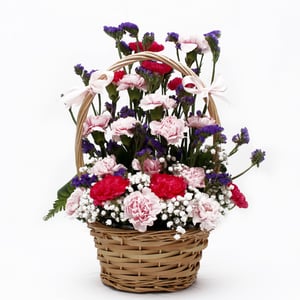
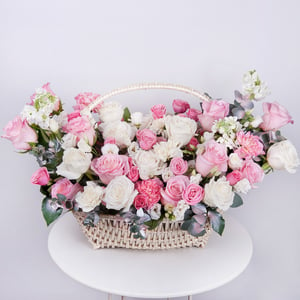
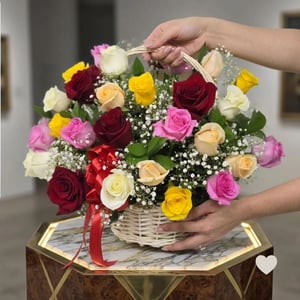
A thoughtful bouquet can carry the same feeling of gratitude and generosity behind the cornucopia.
The cornucopia traveled beyond the dinner table. Several U.S. states and institutions adopted the horn as an official emblem.
- Idaho's state seal (adopted 1891) features a woman holding a cornucopia, symbolizing the state's agricultural wealth
- North Carolina's state seal (adopted 1871) places a cornucopia at the feet of the figure representing Plenty
- Oregon's state flag (adopted 1925) once included a plow and sheaves near a cornucopia-like cluster representing abundance
- The Federal Reserve Bank used cornucopia imagery on U.S. currency designs through the 19th century
- Peru's coat of arms — relevant to many Americans of Peruvian descent — prominently displays a cornucopia filled with gold coins
How to create your own cornucopia centerpiece
Building a cornucopia centerpiece takes about 30 minutes and adds seasonal warmth to any table. Here's a practical walkthrough for Thanksgiving or any fall gathering.
Choosing your horn
Wicker cornucopia baskets come in sizes ranging from 10 inches (good for a small side table) to 24 inches (a dining room statement piece). You can find wicker horns at craft stores like Michaels or Hobby Lobby for $8 to $25. Grapevine versions run slightly higher — around $15 to $35.
Filling the horn right
Professional florists and event designers follow a layering approach:
- Place the largest items first — small pumpkins, butternut squash, or ornamental gourds anchor the arrangement
- Tuck medium fruits next — apples, pears, and pomegranates fill gaps between the big pieces
- Add texture with smaller elements — dried corn, walnuts in shells, cinnamon sticks, and wheat sheaves
- Finish with greenery — eucalyptus sprigs, fall leaves, or short-stemmed chrysanthemums soften the edges
Common mistakes to avoid
Overstuffing. A cornucopia should look like abundance is spilling outward — not like a bag of groceries. Let 2 or 3 items rest outside the horn's mouth on the tablecloth.
Using only fake produce. Mixing real and artificial items creates an odd visual clash. Commit to one approach. Real produce lasts about 5 to 7 days if you keep the arrangement away from direct sunlight and heating vents — both common issues in American homes during November.
Forgetting scale. A 10-inch horn looks lost on a 96-inch farmhouse table. Match the cornucopia size to your table length. A good rule: the centerpiece should occupy no more than one-third of the table's length.
Ignoring scent. Real apples and cinnamon sticks add a subtle fragrance that artificial arrangements can't match. Drop 2 to 3 drops of clove essential oil on a cotton ball and tuck the cotton ball behind a gourd for extra warmth.
Cornucopia beyond Thanksgiving: year-round uses
Most Americans associate the cornucopia with November. But the symbol works in other contexts too.
Weddings and bridal showers
Event planners in states like California and Texas report a growing trend: couples incorporate small cornucopia arrangements into fall wedding tablescapes. A 12-inch horn filled with white roses, champagne grapes, and gold-sprayed pears creates an elegant, season-specific look.
Classroom projects
Elementary school teachers across the U.S. use cornucopia crafts during the first week of November. Children trace horn shapes on brown paper, cut them out, and glue colorful fruit cutouts inside. The activity teaches myth, gratitude, and fine motor skills at the same time.
Harvest festivals and farmers' markets
Farmers' markets in the Midwest — especially in Iowa, Illinois, and Wisconsin — display large cornucopias filled with local produce during October. These displays serve as advertising: visitors see the abundance and buy more.
The figurative cornucopia: how English speakers use the word today
Beyond the physical object, English speakers use "cornucopia" as a metaphor roughly 3 times more often than as a literal noun, according to corpus data from the Corpus of Contemporary American English (COCA). Some examples you'll encounter:
- "The streaming platform offers a cornucopia of documentaries."
- "Her garden produces a cornucopia of herbs every summer."
- "The conference featured a cornucopia of expert speakers."
Each usage echoes the original meaning of cornucopia — generous, overflowing plenty. The word carries a warm, positive tone. Nobody uses "cornucopia" for negative abundance ("a cornucopia of problems" sounds strange and rarely appears in published writing).
Fresh flowers and the cornucopia tradition
Flowers have always belonged inside the cornucopia. Greek myths describe nymphs filling Amalthea's horn with blossoms alongside fruits. Modern Thanksgiving cornucopias look richer when fresh blooms spill from the horn.
Popular fall flowers for cornucopia arrangements include sunflowers, orange roses, burgundy dahlias, and russet-colored chrysanthemums. Local florists can put together seasonal bouquets that fit perfectly inside a horn basket. You order the flowers, trim the stems at a 45-degree angle, and arrange the blooms so they cascade naturally from the opening.
Quick care tip for November arrangements: indoor heating dries out cut flowers faster. Change the water in any hidden vase or floral foam block every 2 days. Keep the arrangement at least 3 feet from radiators and fireplaces.
What the cornucopia teaches about gratitude
Celebrate the season with something beautiful
Choose a warm arrangement for the people who make your year feel fuller.
Strip away the mythology, the coins, the seals, and the Thanksgiving postcards. What remains? A simple idea. Nature gives generously — and recognizing that generosity changes your perspective.
The cornucopia doesn't celebrate hoarding. The horn overflows. The fruits tumble outward, toward others. That detail matters. Ancient artists made sure the bounty spilled out of the horn, not stayed locked inside.
What fills your horn of plenty this year? Think about the question next time you set the table in November — or any time abundance crosses your path.