EUR
 GBP
 CAD
 AUD

 ✨Boss’s Day✨
 🍭Sweetest Day🍭
 Birthday
 Same Day
 Occasions
 Flowers
 Roses
 Plants
 Gifts
 International Flower Delivery
Datura Flower Meaning & Plant Guide
- 🌙 The datura flower belongs to a genus of 9 species in the nightshade family, all containing toxic tropane alkaloids like scopolamine and atropine—never ingest any part of this plant.
- 🔮 Datura meaning spans centuries: Native American tribes used sacred datura (Datura wrightii) in vision quests, Victorian-era flower dictionaries linked the bloom to disguise and caution, and Hindu traditions tie it to the god Shiva.
- 🌿 The white datura flower, often called "moonflower datura," opens at dusk, attracts hawk moths for pollination, and grows easily in USDA zones 5–10 as an annual—but every part demands careful handling around children and pets.
The datura flower carries over 2,000 years of human history in its trumpet-shaped petals. Knowing this plant—its symbolism, its dangers, its beauty—helps you appreciate one of the most misunderstood blooms growing wild across every U.S. state. The genus Datura includes 9 recognized species, and gardeners from Arizona to Georgia encounter datura flowers along roadsides, in desert washes, and sometimes right in their own backyards. You'll walk away from this guide understanding exactly what a datura plant is, why cultures revere the bloom, and how to handle it safely.
What is the datura plant?
The datura plant belongs to the Solanaceae family—the same family that includes tomatoes, peppers, and tobacco. Botanists recognize 9 species within the genus Datura. Each species produces large, funnel-shaped datura flowers that open in the evening or at night. The name "datura" likely derives from the Hindi word dhatura, tracing back to the Sanskrit dhattūra.
Here's the quick breakdown of the genus:
- Datura stramonium (jimsonweed or thorn apple) — the most widespread species, naturalized across all 48 contiguous states
- Datura wrightii (sacred datura) — native to the American Southwest, common in Arizona, New Mexico, and southern California
- Datura innoxia (pricklyburr) — found across Mexico and the southern U.S., with soft, velvety leaves
- Datura metel — widely cultivated in South and Southeast Asia, featuring purple, white, and yellow varieties
- Datura discolor (desert thorn apple) — limited mostly to the Sonoran Desert region
All 9 species share a critical trait. Every part of the datura plant—roots, stems, leaves, seeds, and flowers—contains tropane alkaloids. Scopolamine, atropine, and hyoscyamine concentrate especially in the seeds, which a single pod can hold in numbers exceeding 500.
Datura vs. Brugmansia: a common mix-up
People often confuse datura with Brugmansia. The distinction matters. Datura flowers point upward toward the sky. Brugmansia flowers hang downward like pendants. Datura plants grow as herbaceous annuals or short-lived perennials, reaching 3 to 5 feet tall. Brugmansia grows into small trees, sometimes reaching 15 to 20 feet. Taxonomists split these two genera in 1805, but nurseries and garden blogs still mislabel them.

The white datura flower and the moonflower connection
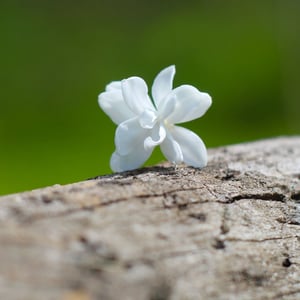
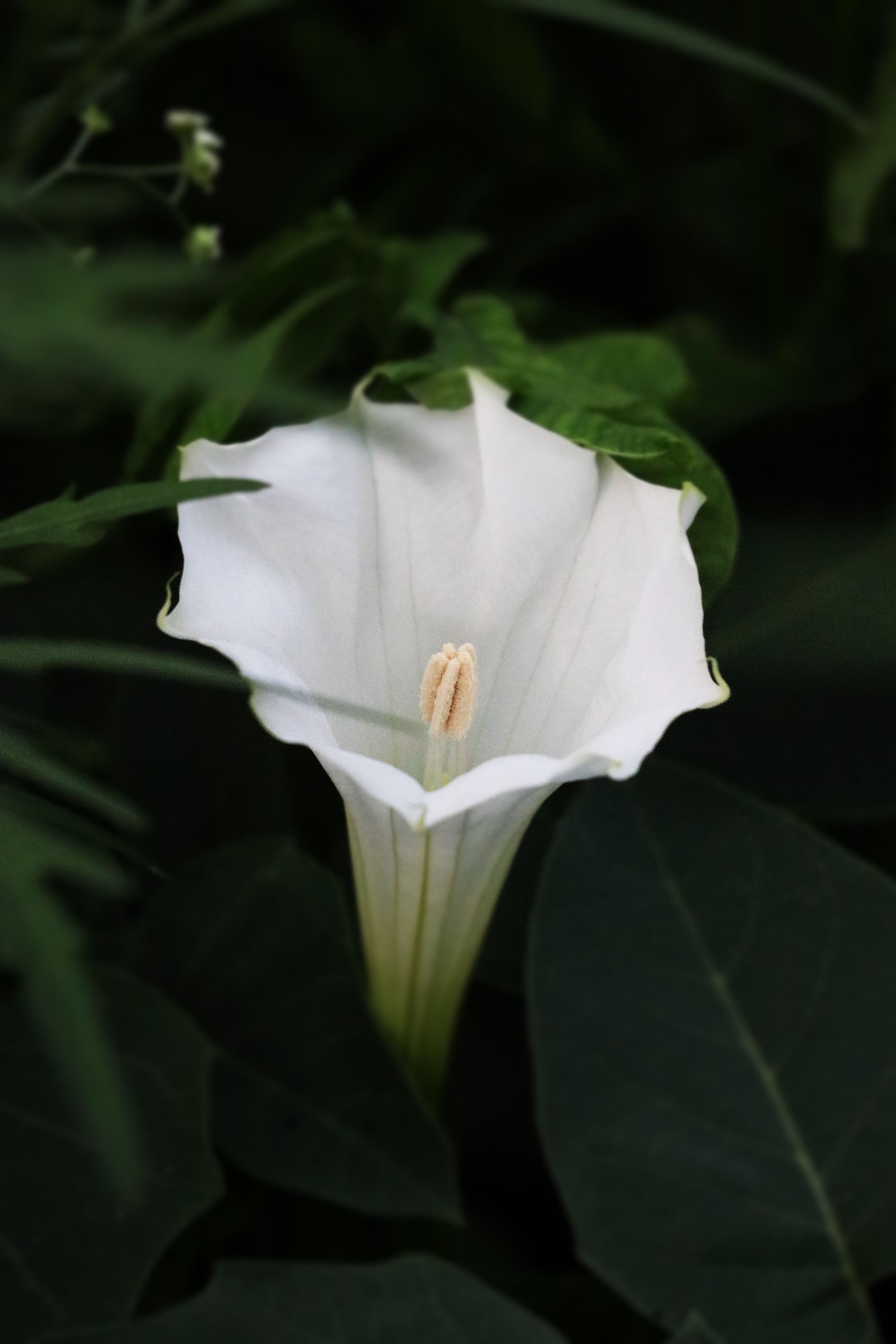
The white datura flower, particularly Datura wrightii and Datura innoxia, earns the nickname "moonflower datura" for a straightforward reason. The blooms unfurl at dusk. By full moonlight, white datura flowers stretch 6 to 8 inches across, emitting a sweet, heady fragrance that attracts nocturnal pollinators—especially hawk moths (family Sphingidae). The Manduca sexta moth, also known as the tobacco hornworm moth, ranks among the primary pollinators.
Each datura moonflower blossom lasts just a single night. By midmorning, the petals wilt and close. A healthy plant produces new blooms nightly throughout its flowering season, roughly June through October in most U.S. regions.
Worth noting: the name "moonflower" also applies to Ipomoea alba, a completely different vine in the morning glory family. When you search for "moon flower datura," make sure you're looking at the right plant. Ipomoea alba has heart-shaped leaves and twining vines. Datura plants have coarse, lobed leaves and grow as freestanding bushes. Big difference.


Datura flower meaning across cultures
Datura flower meaning shifts dramatically depending on the culture, the era, and the specific tradition. No single symbol captures the bloom.
Native American traditions
The Chumash people of coastal California used Datura wrightii in a puberty rite called momoy. Young initiates consumed a preparation of the plant's roots to induce visions as a passage into adulthood. The Zuni people of New Mexico applied datura as a ceremonial anesthetic and rain-making element. Archaeologists at sites across the American Southwest have found datura seeds alongside ritual objects dating back at least 1,000 years.
Hindu and South Asian associations
In Hindu practice, Datura metel holds a direct connection to Shiva. Devotees offer datura flowers at Shiva temples, especially during the festival of Maha Shivaratri. The Vamana Purana, a Sanskrit text, describes datura growing from Shiva's chest. This association links the datura meaning to transcendence, destruction, and renewal.
Victorian flower language
The Victorians cataloged flower meanings in "floriography" dictionaries during the 1800s. Datura typically appeared with meanings like "disguise," "deceitful charms," or "I dream of thee." A suitor sending datura flowers communicated an ambiguous message—attraction tinged with danger. Not exactly a bouquet you'd bring to a first date.
European witchcraft and folk medicine
During the Middle Ages, European herbalists and accused witches used Datura stramonium in salves and preparations. The common name "witch's weed" persists today. English settlers at Jamestown, Virginia, reportedly consumed datura greens in 1676, leading to 11 days of hallucinations among soldiers. That incident gave the Datura stramonium plant its lasting American nickname: jimsonweed (a corruption of "Jamestown weed").
Datura stramonium: the most widespread species
The datura stramonium plant grows aggressively across the continental United States. USDA records document the datura stramonium flower in every state except Alaska. You'll find jimsonweed along highways, in disturbed soils, near construction sites, and at the edges of agricultural fields.
Identifying the datura stramonium flower
Recognizing datura stramonium takes just a few features:
- Flowers: White or pale lavender, 2 to 4 inches long, trumpet-shaped, opening in the evening
- Leaves: Dark green, coarse, irregularly toothed, 3 to 8 inches long, with a strong unpleasant smell when crushed
- Fruit: A spiny, egg-shaped capsule roughly 2 inches in diameter, splitting into 4 sections when ripe
- Seeds: Kidney-shaped, black or dark brown, numbering 500 to 800 per pod
- Height: Typically 2 to 4 feet, occasionally reaching 5 feet in rich soils
The datura stramonium plant completes its life cycle in a single growing season. Seeds germinate in late spring, the plant flowers through summer, and seed pods mature by fall.
Toxicity — no exceptions
Every datura species carries tropane alkaloids. Scopolamine and atropine affect the nervous system by blocking acetylcholine receptors. Even handling the leaves with bare hands can cause skin irritation in sensitive individuals.
Accidental poisonings spike in summer months. The American Association of Poison Control Centers receives hundreds of datura-related calls annually. Children face the greatest risk because the spiny seed pods look intriguing. Symptoms of datura poisoning include dilated pupils, rapid heartbeat, dry mouth, confusion, hallucinations, and hyperthermia. Severe cases require emergency treatment with physostigmine administered by medical professionals.
Never grow datura plants where children or pets play unsupervised. This isn't an exaggeration—it's basic safety.
Looking for mixed bouquets?
Browse mixed bouquets from local florists and pick one that suits the moment.
Growing datura flowers in your garden
Datura plants grow fast and demand little attention, making the genus tempting for gardeners who want dramatic evening blooms. USDA hardiness zones 5 through 10 support datura as an annual. In zones 9 and 10, some species persist as perennials.
Planting basics
- Soil: Datura thrives in well-drained, sandy or loamy soil with a pH between 6.0 and 7.5
- Sunlight: Full sun produces the most flowers — aim for 6+ hours of direct light daily
- Spacing: Give each datura plant 3 to 5 feet of room in every direction because the bushy growth habit needs air circulation
- Watering: Deep watering once or twice a week during hot weather suits most U.S. climates — datura tolerates drought but blooms more generously with consistent moisture
- Germination: Seeds sprout in 10 to 21 days at soil temperatures around 60–65°F
Tips to avoid common mistakes
Start seeds indoors 6 to 8 weeks before your last frost date. Nick or soak the seeds overnight to speed germination—datura seed coats are notoriously tough. Transplant seedlings outdoors only after nighttime temperatures stay above 50°F.
Overwatering causes root rot. Datura roots dislike soggy conditions more than dry ones. If your garden soil drains poorly, plant datura in raised beds or large containers with drainage holes.
Skip the heavy fertilizer. Nitrogen-rich soil produces leafy growth at the expense of flowers. A single application of balanced 10-10-10 fertilizer at planting time handles the entire season.
One mistake catches gardeners off guard: self-seeding. A single datura plant can scatter hundreds of seeds. Deadhead spent blooms before seed pods mature, or you'll find datura seedlings popping up across your yard for the next 2 to 3 years.
When datura fits a garden design
Datura plants create a striking backdrop for evening gardens. Pair white datura flowers with night-blooming jasmine (Cestrum nocturnum) and pale petunias for a moon garden that comes alive after sunset. The fragrance draws hawk moths and other pollinators, turning a quiet patio into a miniature wildlife spectacle. If you garden in Phoenix, Tucson, or Las Vegas, sacred datura (D. wrightii) performs especially well in xeriscaped landscapes because the plant requires minimal supplemental water once established.
Datura flower meaning in modern contexts
So what does the datura flower mean today? The datura meaning has evolved beyond ritual and folklore. Tattoo artists, painters, and photographers gravitate toward datura imagery because the bloom carries layered symbolism. A quick summary of modern associations:
- Mystery and hidden knowledge — the flower opens at night, concealing its beauty from daytime observers
- Danger balanced with allure — beauty and toxicity coexist in the same bloom
- Transformation and altered states — historical psychoactive use reinforces this association
- Protection — some folk traditions in the American Southwest place datura near doorways to ward off negative energy
- Caution in relationships — the Victorian "deceitful charm" meaning endures in floriography circles
The datura flower doesn't belong in a conventional romantic bouquet. But as a symbol? Few blooms pack as much narrative weight. Georgia O'Keeffe painted Jimson Weed/White Flower No. 1 in 1932. That painting sold at Sotheby's in November 2014 for $44.4 million, setting a record for any female artist at auction at the time. O'Keeffe encountered datura flowers during her years in New Mexico, and the plant's presence in her work cemented datura's place in American art history.
How to handle datura flowers safely
Growing or admiring datura flowers calls for common sense and a few precautions. Here's a practical checklist:
- Wear gloves when pruning, transplanting, or deadheading datura plants
- Wash your hands thoroughly with soap and water after touching any part of the plant
- Keep datura plantings at least 15 to 20 feet from play areas, vegetable gardens, and pet runs
- Teach children to recognize and avoid the spiny seed pods
- Store harvested seeds (for replanting) in labeled containers locked away from children and pets
- Contact Poison Control (1-800-222-1222) immediately if anyone ingests datura plant material
Photographing datura flowers? You're fine—just don't rub your eyes after touching the leaves. A surprising number of photographers report irritation after handling datura blooms without gloves, especially on hot days when the plant's oils sit on leaf surfaces.


Datura flowers for holidays and special occasions in the U.S.
You won't find datura flowers in standard florist arrangements. Local florists rarely stock the blooms for bouquets, and the toxicity makes cut datura impractical as a gift flower. Still, datura plants connect to a few seasonal moments:
- Halloween (October 31): The eerie, night-blooming nature and "witch's weed" reputation make datura a popular decorative garden element for fall
- Dia de los Muertos (November 1–2): In some Mexican-American communities across Texas, Arizona, and California, datura carries associations with the spirit world — though marigolds (cempasúchil) remain the primary bloom
- Summer solstice (around June 21): Gardeners who curate moon gardens often time datura plantings to peak around the longest day of the year
- Mother's Day (second Sunday in May): Not a typical gift — a potted datura might appeal to an adventurous gardener who loves unusual plants, but always include a clear note about toxicity
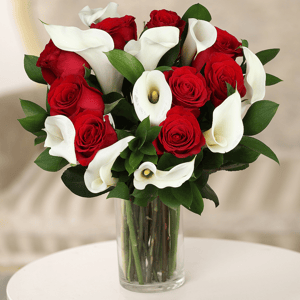
If you want to celebrate someone who loves dark or gothic florals, consider pairing datura imagery — a photo print, an illustration, or a botanical art card — with safer companion blooms like dark-hued calla lilies or black dahlias delivered by a local florist.
Send flowers today
Choose a bouquet, add a message, and a local florist hand-delivers it.