EUR
 GBP
 CAD
 AUD

 ✨Boss’s Day✨
 🍭Sweetest Day🍭
 Birthday
 Same Day
 Occasions
 Flowers
 Roses
 Plants
 Gifts
 International Flower Delivery
Parts of a Flower: Anatomy & Structure
- 🌸 Every flower contains up to 4 organ groups — sepals, petals, stamens, and pistil — and each group handles a specific job from protection to reproduction.
- 🔬 The stamen (male) produces pollen, while the pistil (female) houses ovules; pollination connects the two and triggers seed formation.
- 🌱 Learning to label all parts of a flower takes about 10 minutes and pays off in gardening, biology classes, and everyday plant care.
A typical flower holds 4 distinct organ systems, and each one plays a specific role in keeping flowering plants alive. Understanding the parts of a flower helps you identify species in your garden, ace a biology quiz, or simply appreciate the bouquet on your kitchen table. Roughly 300,000 flowering plant species exist on Earth today — about 90% of all land plants. That staggering number depends on the same basic flower anatomy you'll explore below. By the end of this guide, you'll know every structure by name, grasp how male and female flower parts work together, and even learn how to read a flower anatomy diagram with confidence.
Flower anatomy: a quick overview

Flower anatomy breaks down into vegetative parts and reproductive parts. Vegetative parts — petals and sepals — protect the flower and attract pollinators. Reproductive parts — stamens and pistils — handle pollen production and seed development. Botanists call a flower "complete" when all 4 groups sit on one bloom. A flower missing even 1 group earns the label "incomplete."
Most diagrams you'll find online organize these structures in concentric rings called whorls. The outermost whorl holds the sepals. Petals sit just inside. Stamens come next. The pistil occupies the center. Picture a target with 4 rings.
The receptacle — the thickened base at the top of the stem — anchors every whorl. A short stalk called the pedicel connects the receptacle to the main stem. These 2 supporting structures rarely get attention, yet no flower stays upright without the receptacle and pedicel working together.
Non-reproductive flower parts



Sepals and the calyx
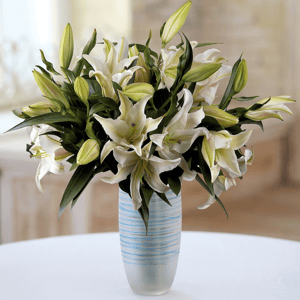
Sepals form the outermost ring of a flower. A rose bud, for example, shows 5 green sepals curving over the petals before the bloom opens. Together, all sepals form a structure called the calyx. The calyx shields developing petals, stamens, and pistils from rain, insects, and temperature swings.
Some sepals stay green their entire life. Others change color as the flower matures. In flowers like the hydrangea, sepals take on blue, pink, or purple hues — the showy "petals" you admire are actually modified sepals. The soil pH determines the color: a pH below 6.0 turns hydrangea sepals blue, while a pH above 7.0 pushes them toward pink.
Petals and the corolla
Petals sit inside the ring of sepals. Together, all petals form the corolla. Petals serve 2 major purposes: they attract pollinators and they help regulate temperature around the reproductive organs.
Color matters a lot here. Bees see ultraviolet wavelengths, so many petals carry UV patterns invisible to the human eye. Hummingbirds gravitate toward red and orange petals. Moths prefer white or pale blooms that stand out at dusk. A sunflower head, for instance, reflects UV light in a bullseye pattern that guides bees straight to the nectar.
Petal count varies wildly. A buttercup shows 5 petals. A magnolia can display more than 12. Grasses and sedges have no petals at all — wind handles pollination for those species, so flashy colors serve no purpose.
Receptacle and pedicel
The receptacle sits right where the stem meets the flower. Think of the receptacle as a small platform. Every floral whorl attaches to this platform. In strawberries, the receptacle swells into the red, fleshy part you eat — each tiny "seed" on the surface is actually the real fruit.
The pedicel is simply the short stalk below the receptacle. Cut flowers lose freshness faster when the pedicel gets crushed during handling. That's one reason florists recommend a clean 45-degree cut with sharp shears: a clean cut keeps vascular tissue open, so water flows freely up into the flower structure.
Male parts of a flower: the stamen
The stamen is the male reproductive organ. Each stamen consists of 2 components: the filament and the anther.
Filament
The filament is a thin, thread-like stalk. It elevates the anther above the petals, placing pollen where wind or visiting animals can reach the anther easily. A lily filament can stretch more than 2 inches long, making lilies a popular choice for studying flower structure labeled diagrams in biology classrooms across the United States.
Anther
The anther sits on top of the filament. Inside, 4 pollen sacs (called microsporangia) produce pollen grains. A single corn tassel releases roughly 2 to 5 million pollen grains. When the pollen sacs mature, the anther splits open through a process called dehiscence, releasing pollen into the air or onto a visiting pollinator.
Pollen grains carry the male genetic material. Each grain has a tough outer wall called the exine, which protects the DNA inside during transit. Some pollen grains travel inches. Others travel miles — ragweed pollen can ride wind currents for 400 miles or more.
How many stamens?
Stamen count varies by species:
- Lilies carry 6 stamens arranged in a circle around the pistil.
- Roses can hold 30 or more stamens.
- Wheat flowers produce only 3 stamens.
- Mustard plants bear 6 stamens — 4 tall and 2 short, a pattern botanists call "tetradynamous."
Female parts of a flower: the pistil
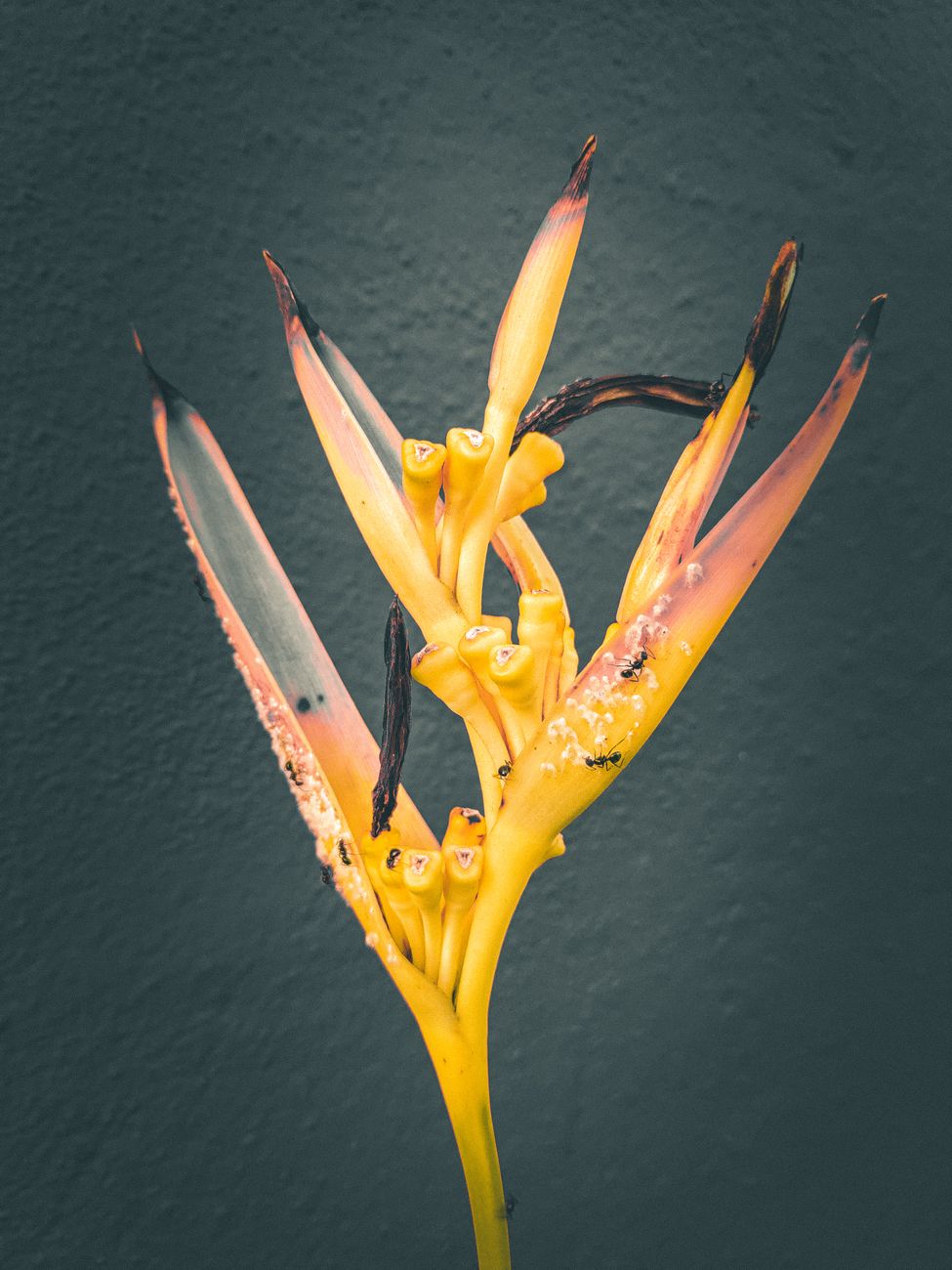
The pistil occupies the center of the flower. Some textbooks call the pistil the "carpel" when discussing a single unit. A pistil made of fused carpels goes by the name "compound pistil." The pistil breaks down into 3 sections: stigma, style, and ovary.
Stigma
The stigma sits at the very top of the pistil. It has a sticky or feathery surface designed to catch pollen. In corn, the long silk threads poking out of an ear are actually stigmas — each thread connects to a single potential kernel.
Style
The style is the narrow tube connecting the stigma to the ovary below. After a pollen grain lands on the stigma, the grain sprouts a pollen tube. The pollen tube grows downward through the style — sometimes over 10 inches in corn — until it reaches the ovary.
Ovary
The ovary rests at the base of the pistil. Inside the ovary, small structures called ovules wait for fertilization. Each ovule contains an egg cell. After a pollen tube delivers sperm to the egg, the fertilized ovule develops into a seed, and the ovary wall thickens into a fruit. An apple, a tomato, a peach — each one started as an ovary.
Ovary position helps botanists classify flowers:
- Superior ovary — the ovary sits above the point where sepals and petals attach (example: tomato).
- Inferior ovary — the ovary sits below the attachment point (example: apple).
- Half-inferior ovary — the ovary sits partly embedded in the receptacle (example: peach).
Reproductive parts of a flower: how pollination works





Reproductive parts of a flower work together in a precise sequence. Here's how the pollination process unfolds step by step.
- An anther releases mature pollen grains.
- Wind, water, or an animal carries pollen to a stigma on the same or another flower.
- The pollen grain germinates and sends a pollen tube down through the style.
- Sperm cells travel through the pollen tube and reach the ovule.
- One sperm fuses with the egg cell, forming a zygote (future embryo).
- A second sperm fuses with 2 polar nuclei, forming endosperm — the food supply for the developing seed.
Botanists call step 6 "double fertilization." Only flowering plants (angiosperms) perform double fertilization. Gymnosperms — conifers, for instance — skip step 6 entirely.
Self-pollination vs. cross-pollination
Some flowers pollinate themselves. Peanut flowers, for example, close and push pollen directly onto their own stigma. Self-pollination guarantees reproduction even when pollinators are scarce.
Cross-pollination transfers pollen between two separate plants. Cross-pollination generates more genetic diversity. Many flowers use physical barriers — different maturation times for anthers and stigmas, or physical distance between male and female parts — to promote cross-pollination and discourage self-pollination.
Parts of a flower diagram: how to read one
A flower parts diagram typically uses a cross-section view. The diagram slices the flower in half from top to bottom, revealing the internal structure of a flower. Here's how to label parts of a flower on a standard diagram:
- Find the outermost structures first — those are sepals.
- Identify petals just inside the sepals — petals are usually larger and more colorful.
- Locate thin stalks topped by bulbous tips inside the petals — those are stamens (filament + anther).
- Spot the central column — that's the pistil (stigma on top, style in the middle, ovary at the base).
- Check the very bottom for the receptacle where all parts connect.
A good flower anatomy diagram labels at least 7 structures: sepal, petal, anther, filament, stigma, style, and ovary. Advanced diagrams also label ovules, the nectary, and pollen grains. Teachers in U.S. middle schools (grades 6–8) often use a parts of a flower worksheet featuring a lily because the lily's 6 large stamens and prominent pistil make identification straightforward.
Lily flower anatomy: a closer look
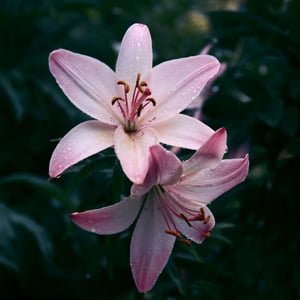
Lily flower anatomy makes an excellent case study. The Asiatic lily (Lilium asiatica) blooms between June and July across USDA hardiness zones 3 through 9 — covering most of the continental United States.
Key features of a lily
- Tepals: Lilies have 6 tepals (3 petals + 3 sepals that look alike). Botanists use "tepal" when petals and sepals share the same shape and color.
- Stamens: 6 stamens produce bright orange or brown pollen. Florists often remove lily anthers before placing stems in arrangements — the pollen stains fabric permanently.
- Pistil: 1 compound pistil stands in the center, with a sticky 3-lobed stigma.
- Ovary: The superior ovary contains 3 chambers. Each chamber holds multiple ovules arranged in 2 rows.
- Nectaries: Deep grooves near the base of each tepal secrete nectar, attracting butterflies and large bees.
Lily flower parts appear oversized compared to most garden flowers. That size makes lilies the go-to specimen for high school and college biology labs. A single Stargazer lily bloom can reach 6 to 8 inches across, giving students plenty of room to label parts of a flower accurately.
Flower types: complete, incomplete, perfect, and imperfect
Ready to look at flowers a little differently?
Explore real arrangements and see how color, form, and structure come together outside the textbook.
Not every blossom holds all 4 organ groups. Botanical terminology sorts flowers into 4 categories:
| Term | Meaning | Example |
|---|---|---|
| Complete | Contains sepals, petals, stamens, and pistil | Rose, lily, tulip |
| Incomplete | Missing at least 1 of the 4 parts | Grass flowers (no petals) |
| Perfect | Contains both stamens and pistil (bisexual) | Tomato, petunia |
| Imperfect | Contains only stamens OR only pistil (unisexual) | Corn, squash, holly |
Corn shows both imperfect flower types on the same plant. The tassel at the top produces male flowers (staminate). The ear shoots produce female flowers (pistillate). Botanists call a plant with separate male and female flowers on the same individual "monoecious." Holly keeps male and female flowers on entirely separate plants — that arrangement earns the label "dioecious."
Flower parts and functions: quick reference
Here's a compact table covering all parts of a flower and their primary jobs.
| Part | Category | Primary function |
|---|---|---|
| Sepal | Vegetative | Protects the bud before opening |
| Petal | Vegetative | Attracts pollinators through color and scent |
| Stamen (filament + anther) | Male reproductive | Produces and releases pollen |
| Pistil (stigma + style + ovary) | Female reproductive | Receives pollen, houses ovules, develops fruit |
| Receptacle | Structural | Anchors all floral parts |
| Pedicel | Structural | Connects the flower to the stem |
| Nectary | Accessory | Secretes nectar to lure pollinators |
| Ovule | Female reproductive | Contains the egg cell; becomes the seed |
Common mistakes when identifying flower parts
Even experienced gardeners mix things up. Watch out for these frequent errors.
Confusing sepals with petals
Dogwood "petals" are actually bracts — modified leaves. The real flowers sit in a small cluster at the center. Always check the position: true sepals form the outermost ring, and true petals sit just inside.
Ignoring fused structures
Snapdragons fuse petals into a tube. Beginners count "1 petal," but a snapdragon corolla actually consists of 5 fused petals. Gently pull the tube apart, and you'll see the 5 lobes.
Labeling the whole pistil as "ovary"
The ovary is only the base of the pistil. The stigma and style sit above the ovary. A flower anatomy diagram that labels the entire central column as "ovary" has a clear error.
Assuming all flowers have petals
About 20% of flowering plant families include species with no petals at all. Grasses, sedges, and many wind-pollinated trees skip petals entirely.
Practical tips: studying flower structure at home
You don't need a lab to explore flower structure. Grab a fresh bloom from your yard or a grocery store bouquet and try these steps.
- Pick up a lily, tulip, or rose — large, simple flowers make the best specimens.
- Use tweezers and a razor blade to separate each whorl carefully, starting from the outside.
- Lay each part on a sheet of white paper and label the parts with a pen.
- Slice the ovary in half with the razor blade to see ovules inside.
- Compare your labeled layout against a flower structure diagram online.
A magnifying glass (10× power works well) reveals pollen grains on the anther and the sticky surface of the stigma. This hands-on approach turns a 10-minute exercise into a lasting biology lesson for kids and adults alike.
Male and female flower parts: side-by-side comparison
| Feature | Male (stamen) | Female (pistil) |
|---|---|---|
| Location | Surrounding the pistil | Center of the flower |
| Main subparts | Filament, anther | Stigma, style, ovary |
| Gamete produced | Pollen (contains sperm) | Ovules (contain eggs) |
| Mature product | Pollen grains released | Fruit and seeds formed |
| Count per flower | Often multiple (6 in lilies, 30+ in roses) | Usually 1 (sometimes compound) |
This side-by-side view appears in many parts of a flower labeled worksheets used in U.S. public schools, especially in 7th-grade life science curricula.
Why flower anatomy matters beyond the classroom
Knowing flower anatomy gives you practical advantages.
Gardeners who understand pollination grow bigger harvests. Squash, for instance, needs bees to carry pollen from staminate flowers to pistillate flowers. No pollinator visits? You can hand-pollinate by brushing a cotton swab across the anther of a male squash flower and then touching the stigma of a female squash flower. Yield can jump by 30% or more with consistent hand-pollination.
Florists remove anthers from lilies before arranging the stems because lily pollen stains clothing and tablecloths. That quick fix — which takes about 5 seconds per stem — saves customers headaches and prevents permanent orange marks on white fabric.
Allergy sufferers benefit from recognizing which flowers rely on wind pollination (heavy pollen producers) and which rely on insect pollination (lower airborne pollen). Ragweed, a wind-pollinated plant, releases about 1 billion pollen grains per plant per season. Roses, pollinated by insects, release far less airborne pollen.
Your turn
Turn your appreciation of flowers into a gift
Choose an arrangement and give someone a beautiful example of the structures you just learned about.
Next time you pass a flower bed, stop for 10 seconds. See how many parts you can identify before walking on. Sepals? Check. Petals? Easy. Stamens and pistil? Look closely — once you've seen the anatomy once, you can't unsee the structure of a flower. Try sketching your own flower anatomy diagram and labeling every part. Share your sketch with a friend or post it online to test your accuracy. Botany gets a lot more interesting when you stop, look, and actually name what you see.