EUR
 GBP
 CAD
 AUD

 ✨Boss’s Day✨
 🍭Sweetest Day🍭
 Birthday
 Same Day
 Occasions
 Flowers
 Roses
 Plants
 Gifts
 International Flower Delivery
Freesia Flowers: Meaning & Growing Guide
- 🌸 Freesia flowers carry meanings of trust, innocence, and lasting friendship, with each color adding its own layer — white for purity, red for passion, yellow for joy.
- 🌱 Plant freesia bulbs 2 inches deep in well-drained soil after the last frost (spring in zones 3–8, fall in zones 9–11), and expect blooms in 10 to 12 weeks.
- ✂️ Cut freesia stems at a 45-degree angle, change the vase water every 2 days, and keep the arrangement away from direct sunlight to extend vase life up to 10 days.
Freesia flowers rank among the top 5 most fragrant blooms on the planet, and a single stem can produce up to 12 trumpet-shaped blossoms along one graceful, arching spike. Whether you want to understand freesia meaning before gifting a bouquet, learn how to plant freesia bulbs in your backyard, or simply pick the right freesia colors for a wedding centerpiece, this guide hands you every detail you need. German botanist Friedrich Freese gave the genus its name in the 1800s — and the flower's popularity has only climbed since.
What does the freesia flower mean?

Freesia meaning centers on three core ideas: trust, friendship, and innocence. The flower earned these associations in Victorian England, where bouquet recipients decoded hidden messages through the specific blooms they received. A freesia flower tucked into a posy told the receiver, "I trust you completely."
Today, freesia symbolism stretches a bit wider. Many people link the bloom to thoughtfulness and appreciation. Freesia flowers meaning can also shift depending on context — a bridal bouquet signals purity, while a "just because" arrangement whispers gratitude. Here's a breakdown by occasion:
- Weddings — convey purity and the start of a new bond
- Anniversaries — honor lasting trust between partners
- Mother's Day (second Sunday of May) — express heartfelt appreciation
- Sympathy gestures — communicate gentle comfort
- Graduations — celebrate a fresh chapter ahead
The freesias meaning you choose depends on the relationship and the moment. That flexibility makes freesia one of the most versatile gift flowers around.
Freesia symbolism across cultures
South Africa — the flower's homeland — treats freesia as a symbol of resilience. The plant grows wild in the Cape Province, thriving in rocky, sandy soil where other species struggle. In Japan, freesia popularity surged during the Meiji era (1868–1912), and the Japanese floral calendar assigns freesia to early spring. French perfumers prize the bloom's scent, and the fragrance industry processes roughly 1,000 metric tons of freesia-derived compounds each year.
Freesia symbolism also surfaces in the 7th wedding anniversary tradition. Gifting freesia on that date reinforces the message: "Our bond has depth."
Freesia colors and their individual meanings


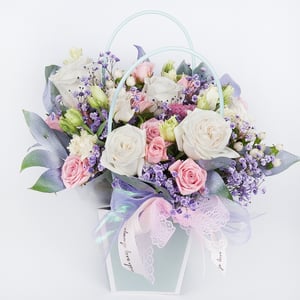
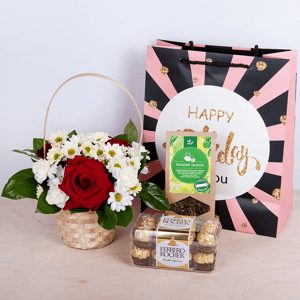
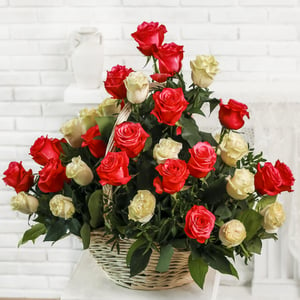
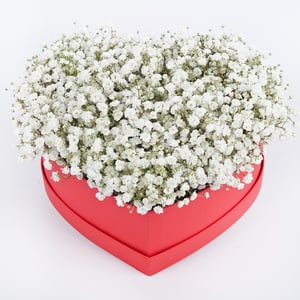
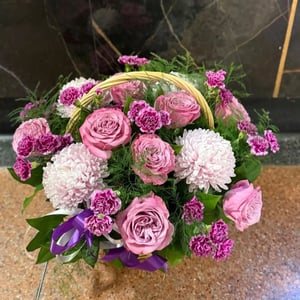
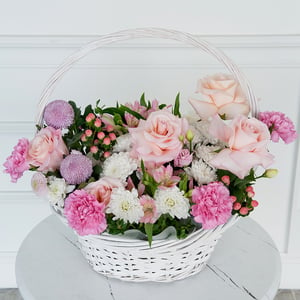
Freesia colors span nearly the full spectrum. Breeders have developed over 20 named cultivars since the mid-20th century. Each shade sends a distinct emotional signal.
White freesia flower
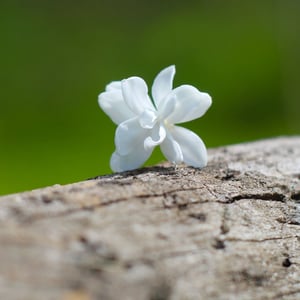
A white freesia flower stands for purity, innocence, and spiritual clarity. Brides across the United States favor white freesia in hand-tied bouquets and boutonnieres. The bloom pairs beautifully with ranunculus and peonies.
Yellow freesia
Yellow freesia radiates joy, optimism, and friendship. Send yellow freesia to a friend recovering from surgery or to celebrate a promotion. Yellow varieties like 'Golden Flame' produce 8 to 10 blooms per stem.
Red and pink freesia
Red freesia speaks of passion and romantic desire. Pink freesia softens that message into affection and tenderness — great for Valentine's Day (February 14) or a first-date gesture. 'Red Passion' and 'Pink Fountain' are two popular cultivars.
Purple and blue freesia
Purple freesia hints at royalty and admiration. Blue freesia — technically a deep lavender — carries a calming, reflective energy. 'Blue Moon' and 'Royal Blue' cultivars bloom in USDA zones 9 through 11 year-round.
Orange and bicolor freesia
Orange freesia sparks enthusiasm and creative energy. Bicolor varieties — like 'Picotee' with white petals edged in violet — add visual drama to mixed bouquets. A single bicolor stem can hold 6 to 8 distinct florets.
How to plant freesia bulbs: step-by-step
Planting freesia bulbs rewards you with fragrant blooms roughly 10 to 12 weeks after you put the corms in the ground. Timing matters a lot, though.
When to plant freesia bulbs
Your USDA hardiness zone dictates the schedule:
- Zones 9–11 — plant freesia bulbs in fall (October through November) for winter and early spring blooms
- Zones 3–8 — plant freesia bulbs in spring, after the last frost date passes (typically late March through May, depending on your state)
Gardeners in Southern California, coastal Texas, and central Florida can treat freesia as a perennial. Everyone else should plan for seasonal growing or container gardening.
How to plant freesia bulbs (detailed steps)
- Choose a spot that gets full sun to partial shade — at least 6 hours of direct light daily
- Prepare well-drained soil with a pH between 6.0 and 7.0 (test your soil with a $10–$15 home kit from any garden center)
- Dig holes 2 inches deep and space each corm 3 inches apart, pointed end facing up
- Water thoroughly right after planting — soak the top 4 inches of soil
- Apply a thin layer of mulch (about 1 inch) to retain moisture without trapping excess heat
- Stake taller varieties once stems reach 8 inches, because the arching stems can topple in wind
Pro tip: soak the corms in lukewarm water for 30 minutes before planting. Soaking jump-starts root development and can shave 5 to 7 days off the bloom timeline.
Freesia plant care after blooming

Freesia plant care doesn't end when the last petal falls. Proper aftercare determines whether your corms survive for next season.
Watering and feeding your freesia plant
- Water freesia plants every 3 to 4 days during active growth, keeping soil moist but never soggy
- Feed with a balanced liquid fertilizer (10-10-10) every 2 weeks from the moment green shoots appear until the buds open
- Stop fertilizing once blooms fade — the corm needs to redirect energy into storage
- Reduce watering gradually after the foliage yellows naturally
Temperature and climate considerations
Freesia plants prefer daytime temperatures between 60 °F and 70 °F. Night temperatures below 55 °F actually help the buds set. Extreme heat — above 85 °F — forces the plant into premature dormancy. Gardeners in Phoenix, Dallas, or Atlanta should plant freesia in a spot that receives afternoon shade during late spring.
Common pests and diseases
Aphids love young freesia shoots. A strong blast from a garden hose knocks aphids off without chemicals. Fusarium wilt — a fungal infection — attacks corms stored in humid conditions. Dry your corms in open air for 7 to 10 days before storing them in a mesh bag at 77 °F until the next planting season.
Spider mites show up in hot, dry climates. Mist the foliage every other morning to deter spider mites naturally.
Caring for cut freesia flowers in a vase
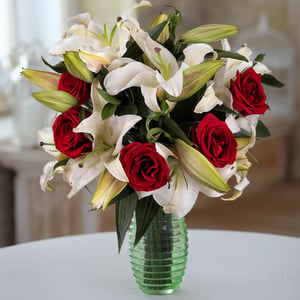
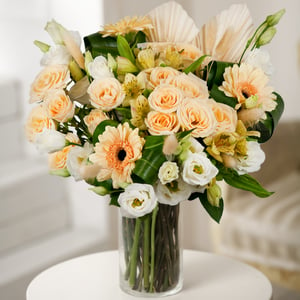
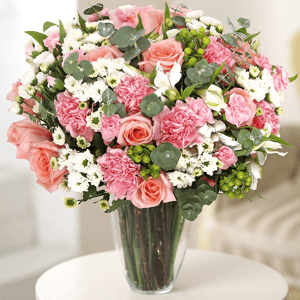
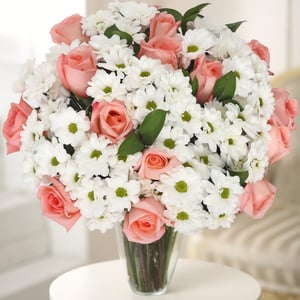
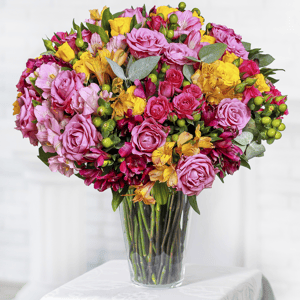
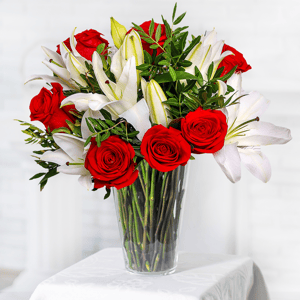
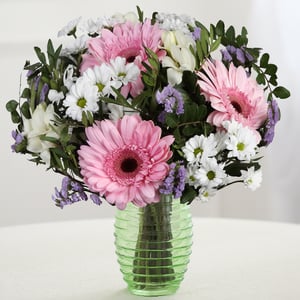
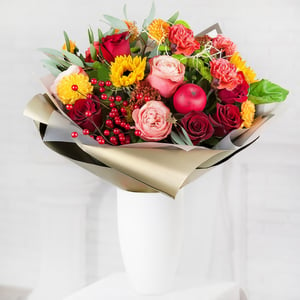
Love flowers with a memorable fragrance?
Freesia is prized for its scent, delicate form, and messages of trust and friendship — all qualities that make a thoughtful gift.
You bought (or received) a gorgeous bunch of cut freesia flowers. Now what?
Keep cut freesia fresh for up to 10 days
- Trim each stem at a 45-degree angle using sharp scissors or a floral knife
- Remove any leaves that sit below the waterline — submerged foliage breeds bacteria fast
- Fill the vase with cool, clean water and add the floral preservative packet (most florists include one)
- Place the arrangement in a cool room, away from heating vents and direct sunlight
- Change the water every 2 days and re-trim the stems by half an inch each time
What not to do
- Don't place freesia near fruit bowls. Ripening bananas and apples release ethylene gas. Ethylene gas speeds up wilting dramatically.
- Don't use hot water. Lukewarm or cool water keeps the stems hydrated without shocking the cells.
- Don't skip the re-trim. Stem ends seal over within 48 hours, blocking water uptake.
Following these steps, your freesia flowers can last 7 to 10 days — sometimes even longer during cooler months like November through February.
Common mistakes when growing or gifting freesia
Even experienced gardeners slip up. Here are the top pitfalls:
Growing mistakes
- Planting corms upside down — the pointed tip faces up, always
- Overwatering in heavy clay soil — freesia corms rot quickly in standing water; mix perlite into clay soil at a 1:3 ratio
- Ignoring support — freesia stems grow 12 to 18 inches tall and lean under their own weight without stakes or a grow-through grid
- Skipping the chilling period in warm zones — gardeners in zones 9–11 should refrigerate corms at 40 °F for 6 weeks before fall planting to trigger dormancy
Gifting mistakes
- Choosing only buds — pick stems with 1 to 2 open florets and several tight buds; the buds open sequentially and extend the display
- Wrapping in plastic too tightly — freesia bruises easily; loose kraft paper or tissue works better
- Forgetting the scent factor — freesia fragrance can overpower small, enclosed rooms; consider placing just 5 to 7 stems in a bedroom instead of 20
Best occasions to give freesia flowers in the US
Freesia flowers fit almost any calendar event. Here's a quick-reference list matched to American holidays and milestones:
| Occasion | Best freesia color | Why it works |
|---|---|---|
| Valentine's Day (Feb 14) | Red or pink | Romantic passion and tender affection |
| Mother's Day (2nd Sunday in May) | White or yellow | Gratitude and joyful appreciation |
| Easter (spring) | Pastel mix | Rebirth and springtime freshness |
| 7th wedding anniversary | Any color | Traditional freesia anniversary flower |
| Thanksgiving (4th Thursday in Nov) | Orange or bicolor | Warmth and celebration of abundance |
| Sympathy | White | Comfort and spiritual peace |
| Graduation | Yellow or purple | Optimism and admiration |
Freesia also makes a lovely "just because" flower. Its sweet, citrusy scent — often compared to a blend of jasmine and ripe strawberry — surprises people who expect something ordinary.
Growing freesia indoors: a container guide
No yard? No problem. Freesia bulbs grow happily in containers on a sunny windowsill or apartment balcony.
Container setup
- Pick a pot at least 6 inches deep with drainage holes at the bottom
- Fill the pot with a mix of potting soil and perlite (2:1 ratio)
- Plant 5 to 7 corms per 8-inch pot, spacing them 2 inches apart
- Water lightly until green shoots emerge (usually within 2 to 3 weeks)
- Move the pot to the brightest window you have — south-facing windows in the US deliver the best light
Indoor temperature tips
Keep the room between 60 °F and 70 °F during the day. Drop the temperature to 50 °F–55 °F at night by cracking a window or moving the pot to a cooler room. That temperature swing mimics the freesia's native South African climate and encourages stronger blooms.
A single indoor pot produces 15 to 25 individual florets over 3 to 4 weeks. The fragrance fills a standard-size living room easily.