EUR
 GBP
 CAD
 AUD

 Birthday
 Same Day
 Occasions
 Flowers
 Roses
 Plants
 Gifts
 International Flower Delivery
Bird of Paradise Plant Care & Types
- 🌿 The bird of paradise plant thrives in USDA zones 9–12 outdoors and adapts well indoors with 6+ hours of bright light, well-draining soil, and watering when the top 2 inches dry out.
- 🪴 Strelitzia nicolai (white bird of paradise) reaches 20–30 feet outside but stays around 6–8 feet as an indoor plant — expect leaves to split naturally from wind or low humidity.
- 🌺 Most indoor bird of paradise plants take 4–6 years to bloom; outdoor plants in full sun bloom sooner and more reliably.
The bird of paradise plant belongs to the genus Strelitzia, which holds 5 recognized species — all native to South Africa. You want this guide because Strelitzia grows differently indoors than outdoors, and the wrong care kills even healthy specimens fast. Whether you're eyeing the classic orange Strelitzia reginae or the towering white bird of paradise (Strelitzia nicolai), you'll find everything here: varieties, indoor and outdoor care, common problems, propagation, symbolism, and seasonal tips tuned to U.S. climates. The genus name honors Charlotte of Mecklenburg-Strelitz, Queen consort to Britain's King George III.
Bird of paradise plant varieties worth knowing

Bird of paradise plant varieties divide neatly into two camps: compact bloomers and towering foliage giants. Picking the right species saves you years of frustration.
Orange bird of paradise (Strelitzia reginae)
The orange bird of paradise plant stands 3–5 feet tall. Gardeners prize S. reginae for its vivid orange-and-blue flowers, which emerge from a boat-shaped bract called a spathe. This species grows in USDA hardiness zones 10–12 and tolerates brief dips to 24 °F. A mature clump produces 25–30 flower spikes per year outdoors in Southern California or South Florida. Indoors, blooms appear less frequently — sometimes never — unless the plant gets at least 6 hours of direct sun.
White bird of paradise (Strelitzia nicolai)
The white bird of paradise plant dwarfs its orange cousin. Outdoors in zones 9b–11, Strelitzia nicolai routinely hits 20–30 feet tall with leaves stretching 5–6 feet long. The giant white bird of paradise produces dramatic white-and-purple flowers, though indoor specimens rarely bloom. Why do people still buy the white bird of paradise for indoor use? Those massive, banana-like leaves create an instant tropical look in any room. A 10-inch nursery pot of Strelitzia nicolai typically starts at $40–$80, depending on the grower.
Red bird of paradise (Caesalpinia pulcherrima)
Here's a common mixup. The red bird of paradise plant actually belongs to a completely different family — Fabaceae, not Strelitziaceae. Caesalpinia pulcherrima grows as a shrub or small tree reaching 10–15 feet. You'll see red bird of paradise thriving in Arizona, Texas, and other USDA zone 9–11 landscapes. The red-and-yellow blooms attract hummingbirds. Care differs dramatically from Strelitzia, so don't follow Strelitzia advice for this species.
Small bird of paradise options
Looking for a small bird of paradise plant? Consider Strelitzia reginae 'Mandela's Gold,' a cultivar topping out around 3 feet. Another compact option: Strelitzia juncea, which drops the broad leaf blade entirely and grows narrow, reed-like foliage. Both fit on a patio table or a bright windowsill. S. juncea tolerates drought better than other Strelitzia species.
Bird of paradise plant care: indoor essentials


Bird of paradise plant care starts with matching conditions to what Strelitzia experiences in its native coastal South Africa — bright light, moderate humidity, and free-draining soil.
Light for your indoor bird of paradise
An indoor bird of paradise plant needs 6+ hours of bright, indirect-to-direct light daily. South-facing or west-facing windows work best in most U.S. homes. A Strelitzia nicolai indoor plant tolerates slightly lower light than S. reginae, but both grow leggy and pale without adequate sun. Pull the pot 1–2 feet from the glass during peak summer if leaf edges scorch.
Got a north-facing apartment? Honestly, skip Strelitzia. A grow light running 10–12 hours daily at 2,000+ foot-candles can compensate, but that setup costs $50–$150 annually in electricity.
Watering your bird of paradise house plant
Overwatering kills more indoor bird of paradise plants than anything else. Follow this rhythm:
- Check the top 2 inches of soil with your finger before watering.
- Water thoroughly until liquid drains from the bottom holes.
- Empty the saucer within 30 minutes to prevent root rot.
- Reduce watering frequency by about half from November through February.
A 10-inch potted Strelitzia nicolai in a heated U.S. apartment typically needs water every 7–10 days in summer and every 14–18 days in winter. Tap water works fine in most U.S. cities, but let it sit overnight if your municipality adds heavy chloramine.
Humidity and temperature
Bird of paradise care indoors means keeping temperatures between 65–85 °F. Strelitzia dislikes anything below 50 °F. Keep the pot away from heating vents, which dry the air fast.
Aim for 40–60% relative humidity. A humidifier running near the plant helps, especially during dry winter months in the Midwest and Northeast. Misting does very little — water evaporates off the leaves in minutes.
Soil and repotting
Use a well-draining potting mix. Blend standard potting soil with perlite and orchid bark in roughly equal parts. This mix prevents waterlogging while holding enough moisture.
Repot a bird of paradise indoor plant every 2–3 years or when roots circle the bottom of the pot. Go up one pot size only — typically 2 inches wider. A root-bound Strelitzia actually blooms more readily, so don't rush to upsize. Spring (March–May) gives the best repotting window in U.S. climates.
Fertilizing
Feed your bird of paradise house plant during the growing season (April through September). Use a balanced liquid fertilizer — 10-10-10 or similar — diluted to half strength every 2 weeks. Stop fertilizing in fall and winter. Over-fertilizing causes salt buildup, which browns leaf tips.
Bird of paradise care for outdoor growing
Bird of paradise care outdoors differs substantially from indoor routines. Outdoor plants grow faster, bloom sooner, and face different threats.
Where to plant outside
Choose a spot with full sun to partial shade. Strelitzia reginae performs best with 6–8 hours of direct sunlight. Strelitzia nicolai handles partial shade better, thanks to those enormous leaves that capture light efficiently.
In Southern California, South Florida, and coastal Texas, you can plant bird of paradise directly in the ground. Gardeners in zones 8b sometimes succeed by planting against a south-facing wall and mulching heavily before frost.
Plant a large bird of paradise plant (S. nicolai) at least 6 feet from structures. The root system spreads aggressively and can crack sidewalks over 10–15 years.
Outdoor watering and feeding
Outdoor bird of paradise plants need deep watering once a week during hot months. Sandy Florida soil drains fast, so water twice weekly during drought. Clay-heavy soils in parts of Texas hold moisture longer — check before watering.
Apply a slow-release granular fertilizer (like 8-2-12 with micronutrients) three times a year: early spring, midsummer, and early fall. The University of Florida's IFAS Extension recommends this schedule for established landscape Strelitzia in Florida.
White bird of paradise outdoor performance
White bird of paradise outdoor plants grow explosively. A Strelitzia nicolai planted in South Florida can reach 15 feet within 5 years. The giant bird of paradise plant forms thick, multi-stemmed clumps. You'll need to prune dead leaves and spent flower stalks regularly.
Here's a fact many growers miss: white bird of paradise flower production peaks on plants 5–8 years old. Younger plants put energy into foliage growth first.
Bird of paradise leaves: curling, splitting, and yellowing

Bird of paradise leaves tell you exactly what's wrong — you just need to read the signals. Let's break down the three most common leaf problems.
Bird of paradise leaves curling
Bird of paradise curling leaves almost always signal a water issue. Underwatering causes leaves to curl inward, protecting moisture. Overwatering triggers root damage, and the plant responds the same way — with curling.
How to tell the difference? Check the soil. Bone dry? Water deeply. Soggy? Stop watering, check for root rot, and repot in fresh, dry mix. Low humidity ranks as the second most common cause of curling. Indoor air in Phoenix or Denver often drops below 20% relative humidity in winter. That's too dry for Strelitzia.
Quick fix: group your indoor bird of paradise with other plants, run a humidifier, or place the pot on a pebble tray filled with water.
Bird of paradise leaves splitting
Bird of paradise leaves splitting worries new owners, but splits happen naturally. In the wild, wind shreds the large leaves along their lateral veins. This actually helps the plant — intact leaves catch too much wind and snap at the petiole.
Indoors, splits result from foot traffic, pets brushing past, or low humidity making leaves brittle. You can't repair a split leaf. The plant redirects energy to new growth instead. Simply snip severely damaged leaves at the base.
Bird of paradise yellow leaves
Bird of paradise yellow leaves point to several causes:
- Overwatering rots roots, cutting off nutrient flow to leaves.
- Underwatering starves leaves of moisture, turning them yellow before brown.
- Nitrogen deficiency causes older, lower leaves to yellow first.
- Cold drafts (below 50 °F) shock the plant, yellowing leaves within days.
- Normal aging yellows the oldest 1–2 leaves per season — nothing to worry about.
Count how many leaves turn yellow. One or two older ones? Normal. Multiple new leaves yellowing at once? Investigate root health immediately.
Bird of paradise plant problems beyond leaves

Bird of paradise plant problems extend beyond foliage. Here are issues competitors rarely cover in depth.
Pests
Spider mites, mealybugs, scale, and aphids target indoor Strelitzia. Spider mites love dry, warm air — exactly the conditions in a heated U.S. home. Check leaf undersides weekly. Wipe mealybugs off with a cotton swab dipped in 70% isopropyl alcohol. For spider mites, spray neem oil diluted to 2% concentration every 5–7 days for three applications.
Root rot
Heavy, poorly drained soil plus overwatering creates root rot fast. Healthy Strelitzia roots look white or light tan. Brown, mushy roots mean rot has started. Trim all rotten roots with sterilized shears, dust cut surfaces with cinnamon (a natural fungicide), and repot in dry, well-draining mix. Skip watering for 5–7 days after repotting.
Failure to bloom indoors
Most indoor bird of paradise plants never flower. That frustrates owners, but the reason is straightforward: insufficient light. A Strelitzia needs 4–6 years of maturity plus intense, direct light to produce blooms indoors. Even then, results vary. The orange S. reginae has the best chance of flowering inside a bright U.S. home. The Strelitzia nicolai indoor plant almost never blooms indoors.
White bird of paradise and cats
White bird of paradise cat owners take note: the ASPCA lists Strelitzia species as toxic to cats and dogs. Ingesting leaves or flowers causes mild to moderate gastrointestinal upset — nausea, vomiting, drowsiness. The plant won't kill a healthy adult cat, but kittens face higher risk. Keep your white bird of paradise on a high shelf or behind a plant barrier. Better yet, choose a pet-safe alternative like a Parlor Palm or Calathea for rooms your cat frequents.
Bird of paradise propagation: division and seeds
Bird of paradise propagation works best through division. Seed germination takes 1–3 months and requires patience you might not have.
Division (faster method)
Divide a mature bird of paradise plant in early spring. Here's the process step by step:
- Remove the plant from its pot or dig it from the ground.
- Shake off excess soil to expose the root structure.
- Identify natural divisions — look for separate fans with their own roots.
- Cut between divisions with a sharp, sterilized knife.
- Let cut surfaces dry for 24 hours before replanting.
- Plant each division in fresh, well-draining mix and water lightly.
Each division needs at least 3 fans (leaf clusters) to recover quickly. Smaller divisions survive but grow slowly for 1–2 years.
Seeds (slower method)
Fresh seeds germinate best. Soak seeds in room-temperature water for 24–48 hours. Nick the hard outer seed coat with a nail file — this step improves germination rates from roughly 20% to 80%. Plant seeds ½ inch deep in moist seed-starting mix and keep them at 75–85 °F. Germination takes 4–12 weeks. Seedlings won't reach flowering maturity for 5–7 years.
Bird of paradise flower meaning and symbolism
Love the tropical look?
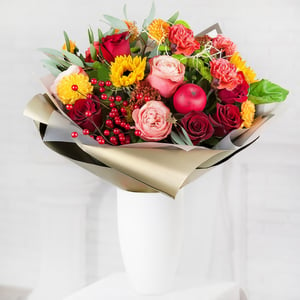
Bring that same exotic feeling into a memorable floral gift when a houseplant is not quite what you need.
Bird of paradise symbolism runs deep. The flower represents freedom, joy, and paradise itself — hence the name. In South Africa, the flower carries the Zulu name ikrasi, and communities associate Strelitzia with faithfulness.
Bird of paradise flower meaning shifts by context in U.S. culture:
- Celebrations: Strelitzia represents accomplishment and new beginnings, making the flower popular at graduations and promotions.
- Romance: A bird of paradise bouquet signals devotion and excitement — bolder than roses, less conventional.
- Sympathy: Less common for funerals in the U.S., though tropical arrangements sometimes include Strelitzia at memorial services in Hawaii and Southern California.
- Corporate gifts: The striking silhouette communicates ambition and vision, fitting for business milestones.
Los Angeles adopted Strelitzia reginae as the official flower of the city in 1952. You'll spot the bird of paradise across L.A. — in public parks, commercial landscaping, and residential gardens throughout USDA zone 10b neighborhoods.
Bird of paradise plant benefits you might not expect
Bird of paradise plant benefits go beyond aesthetics.
- Air quality: NASA's 1989 Clean Air Study did not test Strelitzia specifically, but large-leafed tropical plants contribute to indoor humidity through transpiration. A mature Strelitzia nicolai with 8–10 leaves noticeably humidifies a dry room.
- Mental health: A 2022 study published in the Journal of Physiological Anthropology found that caring for indoor plants reduces cortisol levels. Bird of paradise, with its dramatic growth rate, gives visible feedback fast — new leaves unfurl in 2–3 weeks.
- Home value: Real estate staging professionals frequently use large bird of paradise plants in listing photos. A 6-foot Strelitzia nicolai in a modern pot adds a tropical focal point that photographs well.
- Longevity: Outdoor Strelitzia clumps live 25+ years with minimal care. Some established plantings in San Diego date back over 50 years.
Strelitzia nicolai care: a dedicated deep dive
Strelitzia nicolai care deserves its own section because this species dominates the U.S. houseplant market right now. Nurseries sell more S. nicolai than S. reginae for indoor use, yet the two species need different approaches.
Size management indoors
A Strelitzia nicolai plant grows to 6–8 feet tall indoors within 4–5 years. That's manageable. But the leaves span 3–4 feet wide, demanding floor space. Place your indoor white bird of paradise away from tight corners where leaves bend and crease.
You can't prune Strelitzia to make it shorter — the plant grows from a central growing point. Cutting the main stalk kills that fan. Instead, control size by keeping the plant slightly root-bound and limiting fertilizer.
Light and watering for Nicolai
Strelitzia nicolai indoor plant care mirrors general bird of paradise indoor care, with one difference: S. nicolai tolerates lower light better. A bright room with 4–5 hours of indirect light keeps Nicolai alive, though growth slows significantly. Direct morning sun through an east-facing window works well.
Water when the top 2 inches of soil dry out. Nicolai in a 12-inch pot during summer typically needs water every 8–12 days. Winter stretches that interval to 14–21 days.
White bird of paradise bloom expectations
White bird of paradise bloom timing disappoints most indoor growers. Here's the reality: Strelitzia nicolai almost never flowers indoors. The plant needs sustained full sun, outdoor root space, and maturity (5–8 years minimum). Outdoors in USDA zones 9b–11, Nicolai produces striking white-and-blue flowers from fall through spring.
The white bird of paradise reaches 20–30 feet outdoors, and the plant needs that scale to flower reliably. Don't buy Nicolai expecting indoor blooms. Buy Nicolai for the foliage — those leaves deliver.
Common mistakes to avoid with your bird of paradise
Even experienced plant parents trip up with Strelitzia. Avoid these pitfalls:
- Placing the plant in a dark corner — Strelitzia needs light like a succulent needs drainage. No exceptions.
- Watering on a fixed schedule — Check the soil every time. Seasons, humidity, and pot size change watering needs constantly.
- Using a pot without drainage holes — Decorative cache pots look great, but standing water rots roots within weeks.
- Panicking over split leaves — Splits happen naturally. Focus on preventing damage rather than mourning existing tears.
- Repotting into a much larger container — Jump one size only. Excess soil holds excess water. Excess water invites rot.
- Ignoring pest checks — Inspect leaf undersides monthly. Catching spider mites early takes 5 minutes. Treating an infestation later takes weeks.
Seasonal bird of paradise care calendar for the U.S.
| Season | Indoor care | Outdoor care (zones 9–12) |
|---|---|---|
| Spring (March–May) | Resume fertilizing. Repot now. Move to a brighter spot. | Plant new divisions. Start fertilizer schedule. |
| Summer (June–August) | Water every 7–10 days. Watch for spider mites. | Water deeply once a week. Mulch to retain moisture. |
| Fall (September–November) | Reduce watering. Stop fertilizer by October. | Apply final fertilizer in September. Clean dead leaves. |
| Winter (December–February) | Water every 14–21 days. Keep away from cold windows. | Protect root zone with 3–4 inches of mulch if frost threatens. |
Gardeners in zones 8b and below should bring potted bird of paradise plants indoors before nighttime temperatures hit 40 °F consistently — typically by late October in the Southeast and mid-October in the Mid-Atlantic.
Which bird of paradise should you choose?
The best bird of paradise depends on your space and goals. Here's a quick comparison:
| Species | Mature height | Best use | Bloom indoors? | Hardiness zone |
|---|---|---|---|---|
| S. reginae (Orange) | 3–5 ft | Patio pot, landscape accent | Rarely | 10–12 |
| S. nicolai (White) | 20–30 ft outdoors, 6–8 ft indoors | Indoor statement plant, landscape tree | Almost never | 9b–11 |
| S. juncea (Narrow-leaf) | 4–6 ft | Drought-tolerant landscape | Rarely | 10–12 |
| C. pulcherrima (Red) | 10–15 ft | Landscape shrub, hummingbird garden | N/A (outdoor only) | 9–11 |
For most U.S. apartment dwellers, the white bird of paradise indoor plant (S. nicolai) delivers the biggest visual impact per dollar. For outdoor gardeners in warm zones, S. reginae blooms more reliably and stays a manageable size.
Your next move
Ready to send something with real presence?
Choose a statement arrangement for a milestone or someone with bold taste.
Strelitzia rewards patience. The bird of paradise plant grows slowly indoors — expect about 1 new leaf per month during summer — but each unfurling leaf feels like an event. Get the light right, respect the watering rhythm, and stop stressing about blooms. Foliage alone justifies the effort.
Which variety catches your eye? Grab a Strelitzia nicolai for that bold, architectural look, or start a Strelitzia reginae and chase those orange-and-blue flowers. Either way, you're adding a plant with real personality to your home.
Explore the for gift ideas and cultural context — especially if you're considering bird of paradise as a gift for a graduation, promotion, or housewarming.