 EUR
EUR
 GBP
GBP
 CAD
CAD
 AUD
AUD

 ✨Boss’s Day✨
 Birthday
 Occasions
 Same Day
 Flowers
 Roses
Roses
 Plants
 Gifts
Gifts
 International Flower Delivery
Best Office Plants for Workspaces
- 🌿 The best office plants — snake plants, ZZ plants, pothos, and peace lilies — survive low light, irregular watering, and temperature swings common in American workplaces.
- 🪴 Pick a plant based on your exact conditions: desks under 14 inches wide need compact species like peperomia, while windowless rooms demand fluorescent-tolerant varieties such as Chinese evergreens.
- 💡 Water most office plants every 10–14 days, keep the thermostat between 65 °F and 75 °F, and rotate pots a quarter turn weekly to prevent lopsided growth.
The best office plants cut stress by up to 37%, according to a 2022 study from the University of Exeter. That single number should grab your attention — especially when you spend 8+ hours a day staring at screens under fluorescent lights. This guide walks you through the top picks for every workspace scenario: bright corner offices, cramped cubicles, and yes, even rooms with zero natural light. You'll learn which plants thrive on neglect, which ones fit on a 12-inch desk, and how to keep them alive without a green thumb.
Why the best plants for an office actually matter
Best plants for an office do more than fill empty corners. A 2014 study by the University of Queensland found that employees in green offices reported a 15% boost in productivity. Plants also absorb volatile organic compounds (VOCs) — formaldehyde from carpet glue, benzene from printer ink, trichloroethylene from adhesives. NASA's Clean Air Study tested 12 species and confirmed measurable VOC reduction within 24 hours.
Beyond air quality, greenery lowers blood pressure. The American Society for Horticultural Science published data showing that indoor plants reduce systolic blood pressure by 2–4 points during stressful tasks. So a $15 pothos on your desk might do what a fancy standing-desk converter can't.
There's a mental health angle, too. A 2020 survey by the National Initiative for Consumer Horticulture reported that 74% of respondents felt calmer around indoor plants. Offices across the U.S. — from tech campuses in Austin to law firms in Manhattan — have adopted biophilic design as part of employee wellness programs.
Short version? Plants earn their spot.
Best indoor office plants for bright to medium light
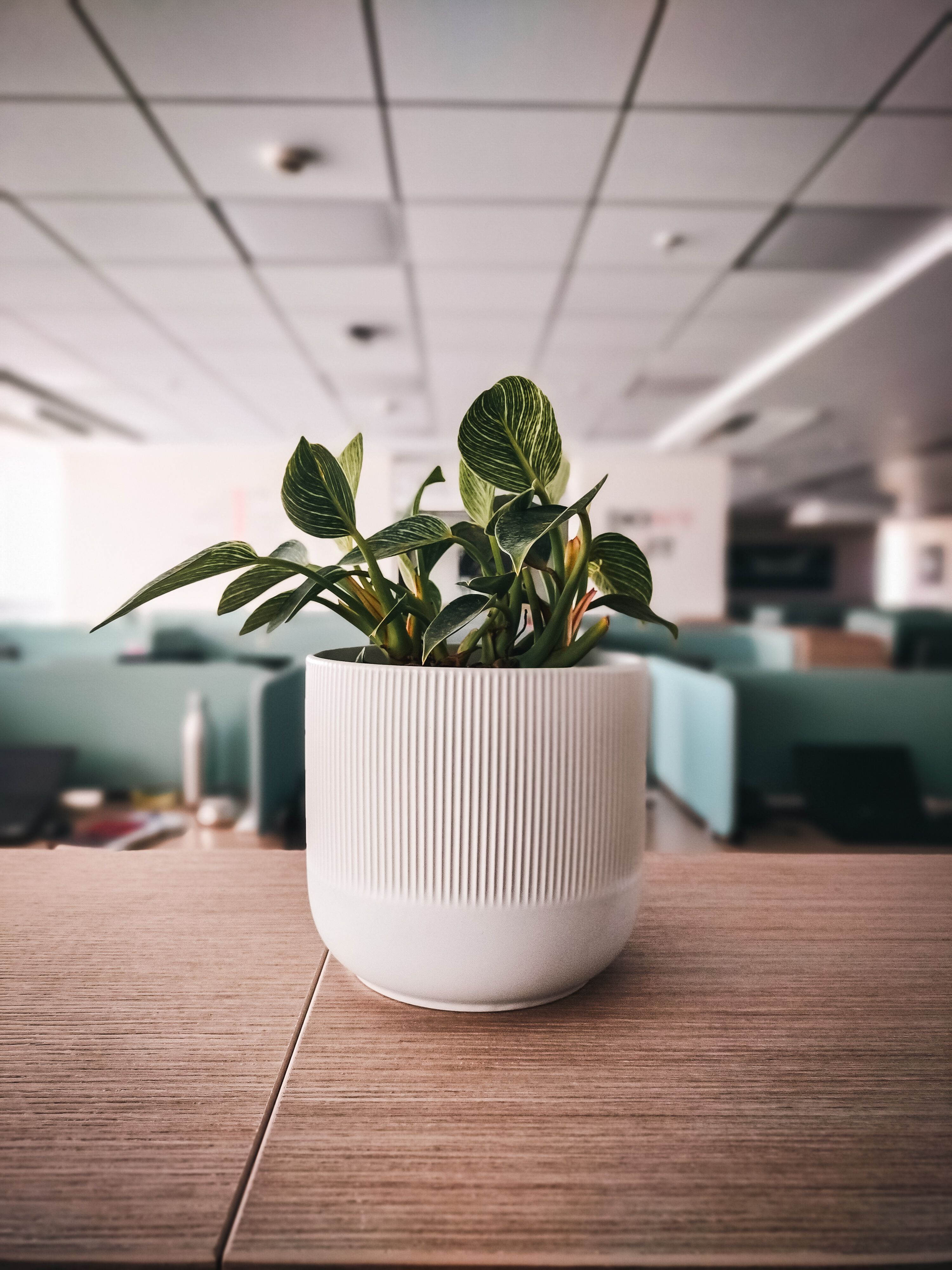
Best indoor office plants that receive 4–6 hours of indirect sunlight include some of the hardiest species on the planet. Place these near east- or north-facing windows, or within 5 feet of a south-facing window with a sheer curtain.
Pothos (Epipremnum aureum)
Pothos ranks as the single most forgiving plant you can buy. Golden pothos, marble queen, and neon pothos all tolerate light levels as low as 50 foot-candles — roughly the brightness 8 feet from a standard office window. Water pothos when the top inch of soil feels dry, typically every 10–12 days in air-conditioned offices. Vines grow 6–10 feet indoors, and you can trim them any time they get unruly.
One thing to know: pothos contains calcium oxalate crystals. Keep the plant away from pets and small children. The ASPCA lists pothos as toxic to cats and dogs.
Rubber plant (Ficus elastica)
Rubber plants grow 6–10 inches per year indoors and reach 6–10 feet in a large pot. Glossy, dark-green leaves make a strong visual statement on a credenza or floor stand. Water every 7–10 days during spring and summer. Cut back to every 14 days in winter.
Rubber plants tolerate occasional drafts from HVAC vents, but direct cold air below 55 °F causes leaf drop. Keep the pot at least 3 feet from a heating register.
Spider plant (Chlorophytum comosum)
Spider plants produce "pups" — small offshoots that dangle from the mother plant on arching stems. Each pup roots easily in water within 7–10 days, giving you free plants for coworkers. Spider plants handle temperatures between 55 °F and 80 °F, which covers almost every office thermostat setting in the U.S.
Bonus: NASA's study ranked spider plants among the top 3 species for removing formaldehyde from indoor air.
Best office plants for low light
Best office plants for low light thrive at 25–75 foot-candles — the kind of dim you find in interior cubicles, hallways, and conference rooms with recessed lighting. These species evolved under dense tropical canopies, so they actually prefer shade.
ZZ plant (Zamioculcas zamiifolia)
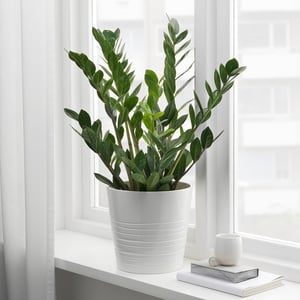
The ZZ plant survives conditions that kill most houseplants. It stores water in thick, potato-like rhizomes underground, so you only need to water every 2–3 weeks. ZZ plants tolerate fluorescent light exclusively — no sunlight required. A mature ZZ reaches 2–3 feet tall and 2 feet wide. Growth is slow, about 6 inches per year, meaning you won't need to repot more than once every 18–24 months.
Honestly, the ZZ plant is the closest thing to an indestructible desk companion.
Cast iron plant (Aspidistra elatior)
The name says everything. Cast iron plants handle low light, cold drafts, irregular watering, and even dust buildup on leaves. Victorian-era British households grew aspidistra in gas-lit parlors — that's how shade-tolerant this species is. Water every 10–14 days. Wipe leaves with a damp cloth once a month to keep pores open.
Chinese evergreen (Aglaonema)
Chinese evergreens come in over 100 cultivated varieties, from deep green 'Maria' to pink-splashed 'Siam Aurora.' All varieties handle low to medium light. Water Chinese evergreens when the top 2 inches of soil dry out — roughly every 10 days in a standard 72 °F office. The plant grows 1–3 feet tall and wide, fitting neatly on a filing cabinet or bookshelf.
Avoid placing aglaonema near exterior doors during winter. Sudden temperature drops below 60 °F cause brown leaf edges.
Best plants for an office with no windows
Best plants for an office with no windows rely entirely on overhead fluorescent or LED panels for photosynthesis. Not every plant can do this. Here are the tested survivors.
Snake plant (Dracaena trifasciata)
Snake plants convert CO₂ to oxygen at night — unusual among houseplants — making them useful for enclosed spaces. They grow in light as dim as 10 foot-candles. Water a snake plant once every 3–4 weeks in a windowless room, because low light slows transpiration drastically. Overwatering kills more snake plants than anything else.
A 4-inch snake plant costs $8–$15 at most U.S. garden centers, including Home Depot and Lowe's. It grows slowly — about 2–4 inches per year indoors — so even a small desk can host one for years.
Peace lily (Spathiphyllum)
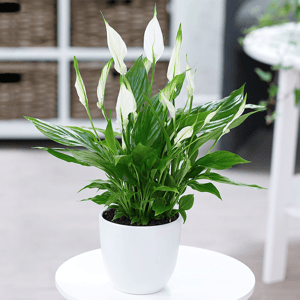
Peace lilies produce white blooms even under fluorescent lights. Few low-light plants flower indoors. The peace lily's white spathes last 4–6 weeks per bloom cycle, and a healthy plant blooms 2–3 times per year. Water peace lilies every 7–10 days. The leaves droop visibly when thirsty — a built-in watering reminder you can't miss.
Fair warning: peace lilies prefer humidity above 40%. Most heated offices in the Midwest and Northeast dip below 30% in winter. Run a small desktop humidifier nearby, or group several plants together to create a microclimate.
Lucky bamboo (Dracaena sanderiana)
Lucky bamboo grows in plain water — no soil needed. Place 3–5 stalks in a glass vase with 2 inches of water and a few pebbles for stability. Change the water every 7–10 days to prevent bacterial growth. Lucky bamboo tolerates very dim conditions, though stems stretch toward any available light source. Rotate the vase a quarter turn every week to keep growth straight.
Looking for something for a new office instead?
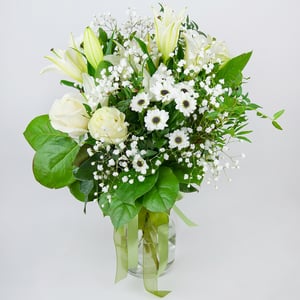
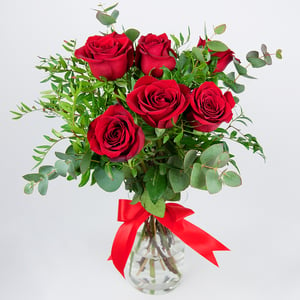
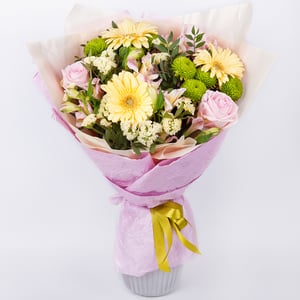
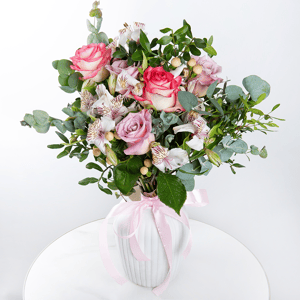
Browse arrangements from local florists and pick one that suits the occasion.
Best desk plants that fit small spaces
Best desk plants need to stay compact — under 12 inches tall — and look good in a 4- to 6-inch pot next to your monitor.
Haworthia (Haworthia fasciata)
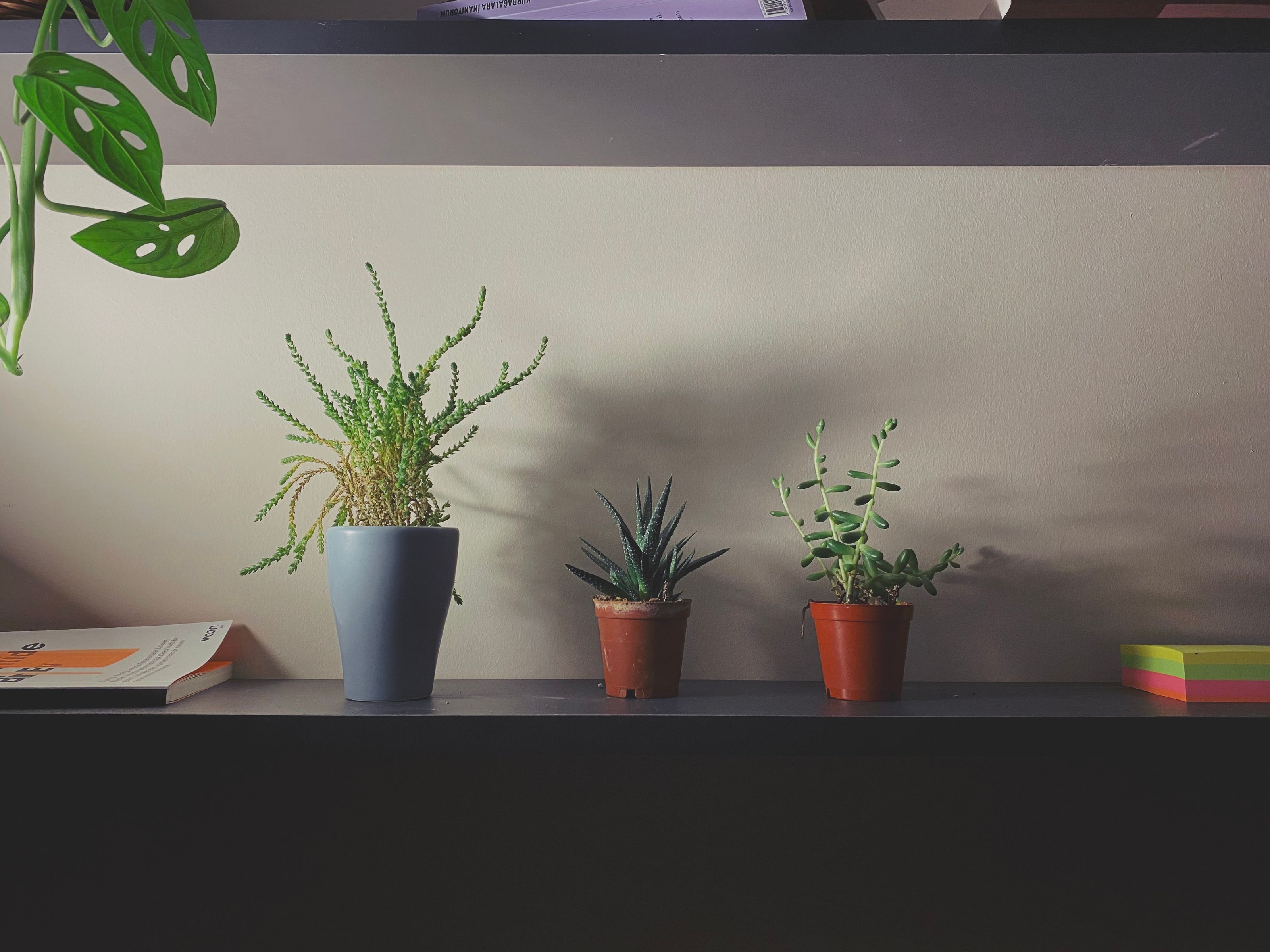
Haworthia resembles a miniature aloe but stays under 5 inches tall. This succulent needs only 2–3 tablespoons of water every 2 weeks. Haworthia tolerates low light far better than most succulents, which typically demand full sun. Place one in a 3-inch ceramic pot on your desk, and forget about it for days.
Peperomia (Peperomia obtusifolia)
Peperomia grows 8–12 inches tall with thick, glossy leaves in a tidy rosette shape. Water peperomia every 10 days. The plant handles standard office fluorescent lights without stretching or losing color. Peperomia is nontoxic to cats and dogs, according to the ASPCA — a bonus for pet owners who might take the plant home occasionally.
Air plants (Tillandsia)
Air plants skip soil altogether. Mist them 2–3 times per week, or dunk the whole plant in room-temperature water for 20 minutes once a week. They weigh almost nothing. Mount one on a magnetic holder and stick it to a metal filing cabinet. Air plants range from 2 to 5 inches, depending on the variety.
Here's a heads up: air plants need air circulation. Avoid sealing them inside glass terrariums without ventilation holes.
How to choose the right plant for your workspace
Picking a plant sounds simple. It isn't always. Match your choice to 4 specific factors:
- Light level: Hold your hand 12 inches above your desk at noon. Sharp shadow = bright indirect light. Faint shadow = medium. No shadow = low light. No window = fluorescent only.
- Temperature range: Most U.S. offices sit between 68 °F and 74 °F during business hours, then drop to 60 °F overnight and on weekends. Choose plants rated for 55–80 °F to cover both extremes.
- Desk size: Measure the clear space next to your keyboard. A 4-inch pot needs at least 6 inches of surface area to avoid brushing against it constantly.
- Maintenance commitment: Be honest. Watering once a month suits a ZZ plant or snake plant. Weekly watering fits a peace lily or fern. Don't buy a fern and expect it to survive neglect.
Seasonal care tips for office plants in the U.S.
Office plants face different stresses depending on the season. American offices cycle between bone-dry heated air in winter and cold blasts of AC in summer.
Winter (December–February)
Heating systems drop indoor humidity below 25% in many offices across the Northeast, Midwest, and Mountain West. Leaves develop brown, crispy tips when humidity stays this low for weeks. Mist foliage plants every 2–3 days, or set pots on trays filled with pebbles and water. The evaporation creates a humid pocket around the plant.
Cut watering frequency by 25–30% during winter. Shorter days and less light mean slower growth and less water uptake. A pothos that needs water every 10 days in July probably needs water every 14 days in January.
Summer (June–August)
Air conditioning creates cool drafts. Keep tropical plants at least 4 feet from ceiling vents. AC also removes moisture, so humidity stays moderate — around 35–45% — rather than summer-high. Water on your normal schedule, but check soil moisture every 5–7 days. Growth accelerates during long summer days, even in offices with minimal sunlight, because ambient light levels rise.
Feed plants once a month from April through September with a balanced liquid fertilizer (10-10-10 NPK). Skip fertilizer entirely from October through March.
Common mistakes that kill office plants
Mistakes happen. These 5 errors account for most office plant deaths across the U.S.:
- Overwatering on a fixed schedule — always check soil moisture first. Stick your finger 1 inch into the soil. Dry? Water. Damp? Wait.
- Placing tropical plants near exterior doors in winter — a blast of sub-40 °F air damages leaves in seconds.
- Forgetting plants over long holiday weekends — Memorial Day, Thanksgiving, and Christmas break create 4–9 day gaps without water. Soak the soil thoroughly before you leave.
- Using decorative pots without drainage holes — water pools at the bottom, roots rot within 2–3 weeks. Use a nursery pot with holes inside the decorative cover.
- Cleaning leaves with commercial shine sprays — these clog stomata (leaf pores) and block gas exchange. Use plain water and a soft cloth.
Gifting office plants: occasions and ideas
Plants make great gifts for coworkers — more personal than a gift card, longer-lasting than flowers. Here are situations where an office plant fits perfectly:
- New job or promotion — a 6-inch pothos in a ceramic planter costs $20–$30 and says "congrats" without being over the top.
- Boss's Day (October 16) — a small succulent arrangement from a local nursery runs $15–$25.
- Administrative Professionals' Day (last Wednesday in April) — a peace lily or orchid works well as a thank-you gesture.
- Secret Santa or holiday gift exchange — a 4-inch ZZ plant or haworthia fits most $10–$15 budgets.
- Get-well or sympathy — a calming green plant communicates care without the pressure of cut flowers that wilt within a week.
Local florists in most U.S. cities offer potted plants alongside bouquets. MyGlobalFlowers connects you with local florists who hand-deliver potted plants and arrangements directly to office addresses.
Start with one plant. Just one. Put it on your desk tomorrow and see how your 3 PM energy feels by Friday. You might surprise yourself — and your desk will thank you for the company.
Send a plant today
Choose your bouquet, add a message, and let a local florist hand-deliver it.