EUR
 GBP
 CAD
 AUD

 🎃Halloween🎃
 Birthday
 Occasions
 Same Day
 Flowers
 Roses
 Plants
 Gifts
 International Flower Delivery
Birth flowers by month: complete guide to meanings, symbolism & gifting ideas
- 🌸 Every month has 1–2 official birth flowers, each rooted in Victorian-era symbolism and carrying a distinct meaning — from January's carnation (devotion) to December's narcissus (hope).
- 📅 The dual-flower system exists because the Society of American Florists popularized primary and secondary blooms to give people seasonal alternatives throughout the year.
- 💐 Choosing a birth flower bouquet adds personal meaning to birthdays, Mother's Day, Valentine's Day, and other celebrations — and local florists across the U.S. can build custom arrangements around any birth month bloom.
Birth flowers connect your birthday to a specific bloom — much like birthstones link your birth month to a gem. Each of the 12 months carries at least one official flower, and most months actually carry two. Knowing your birth flower (or the birth flower of someone you care about) turns an ordinary bouquet into a deeply personal gift. You'll walk away from this guide with every official birth month flower memorized, plus the symbolism, history, and practical tips that make this tradition worth keeping alive.
What are birth flowers and why do they matter?
Birth flowers trace their roots to the Victorian era, when people used blooms to communicate feelings they couldn't say out loud. The Victorians created "floriography" — a coded language of flowers — during the early 1800s. By the mid-19th century, specific flowers had earned associations with calendar months. The tradition stuck.
Today, the Society of American Florists (SAF) maintains the most widely referenced list of official birth flowers by month. That list assigns a primary and secondary flower to nearly every month. Think of birth month flowers the same way you think about zodiac signs or birthstones: a fun, symbolic layer of personal identity.
Here's why this matters to you. A generic rose bouquet says "happy birthday." A bouquet built around someone's actual birth flower says "I know you." The difference? Huge.

Birth flowers by month: the official list with meanings
Below you'll find every official birth flower for each month, listed with both the primary and secondary bloom. Birth flower meanings vary slightly across sources, but the SAF designations below reflect the most commonly accepted American tradition.
January birth flower: carnation and snowdrop
Carnation ranks among the world's oldest cultivated flowers — records date carnation cultivation back over 2,000 years to ancient Greece. Red carnations signal deep love. Pink carnations honor gratitude (a Mother's Day staple since Anna Jarvis chose pink carnations for the first official Mother's Day in 1908). White carnations represent purity.
Snowdrop pushes through frozen soil as early as late January. The snowdrop symbolizes hope and consolation. Gardeners in USDA hardiness zones 3–7 grow snowdrops successfully outdoors.
February birth flower: violet and primrose
Violet carries a meaning of loyalty and faithfulness. Ancient Greeks associated violets with Aphrodite. Napoleon Bonaparte famously adopted the violet as his personal emblem during exile. Wild violets grow natively across most of the eastern United States.
Primrose signals young love. The primrose blooms in early spring, sometimes as early as late February in warmer U.S. states like Georgia and South Carolina.
March birth flower: daffodil and jonquil
Daffodil — technically Narcissus pseudonarcissus — signals rebirth and new beginnings. The American Daffodil Society recognizes over 32,000 registered daffodil cultivars. Daffodils naturalize easily across zones 3–8 and bloom reliably every spring without replanting.
Jonquil belongs to the same Narcissus genus but features smaller, intensely fragrant clusters. Jonquils thrive in warmer zones (7–10) and appear frequently in Southern gardens.
Fun fact: Wales designates the daffodil as its national flower. March 1 (St. David's Day) celebrates Welsh heritage with daffodils pinned to lapels.
April birth flower: daisy and sweet pea
Daisy traces its English name to "day's eye" — the flower opens at sunrise and closes at dusk. Daisies mean innocence and purity. The Shasta daisy, developed by horticulturist Luther Burbank around 1901 in California, remains one of the most popular garden varieties in the U.S.
Sweet pea represents blissful pleasure and goodbye. Sweet peas climb 6–8 feet tall and prefer cool weather, making them a spring favorite in the Pacific Northwest and northern states.
May birth flower: lily of the valley and hawthorn
Lily of the valley symbolizes sweetness and the return of happiness. This tiny bell-shaped bloom carries intense fragrance. A word of caution: every part of the lily of the valley plant contains cardiac glycosides and poses a risk to pets and children. Keep arrangements out of reach.
Hawthorn appears on hedgerows across the rural Midwest and Northeast. Hawthorn flowers symbolize hope and supreme happiness. The hawthorn's berries ripen in fall and attract songbirds — a bonus for backyard gardeners.
May's birth flowers align perfectly with Mother's Day (second Sunday of May), making lily of the valley a meaningful choice for moms born in May.
June birth flower: rose and honeysuckle
Rose needs little introduction. The United States named the rose its national flower in 1986 when President Ronald Reagan signed the resolution. American growers produce roughly 1.2 billion rose stems annually. Red roses say "I love you." Yellow roses signal friendship. Coral roses express desire.
Honeysuckle carries meanings of devoted affection and sweet bonds. Japanese honeysuckle (Lonicera japonica) grows aggressively across the southeastern U.S. — so aggressively, in fact, that several states classify the plant as invasive.
June birth flowers arrive just in time for Father's Day (third Sunday of June), graduations, and wedding season.
July birth flower: larkspur and water lily
Larkspur (annual delphinium) grows 1–4 feet tall and blooms in vivid shades of blue, purple, pink, and white. Blue larkspur represents dignity. Pink larkspur means fickleness. The plant contains alkaloids toxic to cattle, so ranchers keep larkspur out of pastures.
Water lily stands for purity of heart. Claude Monet painted over 250 water lily canvases at his garden in Giverny, France, between 1895 and 1926 — arguably the most famous flower series in art history. Hardy water lilies grow well in USDA zones 4–10.
August birth flower: gladiolus and poppy
Gladiolus takes its name from the Latin gladius (sword), referencing the blade-shaped leaves. Gladioli symbolize strength and integrity. A single gladiolus spike can hold 20+ individual florets. Cut gladioli make dramatic vertical focal points in arrangements.
Poppy represents imagination and eternal sleep. California claims the golden poppy (Eschscholzia californica) as its state flower — blooming spectacularly across hillsides in the Antelope Valley each spring. Red poppies honor fallen soldiers in the U.S. on Memorial Day (last Monday of May).
September birth flower: aster and morning glory
Aster comes from the Greek word for "star." Asters symbolize wisdom and valor. New England aster (Symphyotrichum novae-angliae) blooms wild along roadsides from Maine to Minnesota in September and October.
Morning glory opens at dawn and closes by midday. The flower represents affection and mortality — a nod to the brief daily bloom cycle. Morning glories climb 10–15 feet in a single growing season, making them a fast-growing option for trellises and fences.
October birth flower: marigold and cosmos
Marigold signals warmth and creativity. Marigolds play a central role during Día de los Muertos (November 1–2), a holiday increasingly celebrated across the U.S., especially in communities with Mexican heritage. Gardeners treasure marigolds for natural pest deterrence — companion planting marigolds near tomatoes repels aphids and nematodes.
Cosmos means order and harmony. The name itself comes from the Greek word kosmos, meaning "ordered universe." Cosmos grow to 3–6 feet tall and thrive in poor soil with minimal water.
November birth flower: chrysanthemum
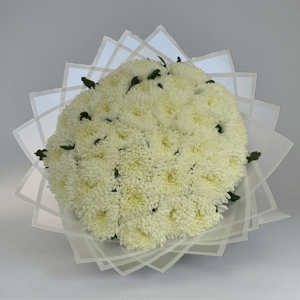
Chrysanthemum — "mum" for short — stands for loyalty, love, and longevity. November's birth month features only one primary flower (most sources omit a secondary bloom, though some list peony). American football fans recognize the "homecoming mum" tradition popular in Texas, where massive chrysanthemum corsages celebrate school spirit each fall.
Chrysanthemums rank as one of the most versatile flowers worldwide. Over 20,000 cultivated varieties exist. Mums survive light frosts, which makes them reliable bloomers into late November across much of the U.S.
One cultural note: in many European and Asian countries, chrysanthemums carry funerary associations. In the U.S., mums signal cheerfulness and autumn warmth — a very different vibe.
December birth flower: narcissus and holly
Narcissus (particularly paperwhites) symbolizes respect, faithfulness, and hope during the darkest month of the year. Paperwhites bloom indoors without chilling, making them a popular holiday decoration. You can force paperwhite bulbs to bloom in just 4–6 weeks using only water and stones.
Holly carries meanings of domestic happiness and protection. Holly's bright red berries and glossy green leaves dominate Christmas décor. American holly (Ilex opaca) grows natively from Massachusetts to Florida.
Quick reference: all birth flowers at a glance
| Month | Primary flower | Secondary flower | Core meaning |
|---|---|---|---|
| January | Carnation | Snowdrop | Devotion, hope |
| February | Violet | Primrose | Loyalty, young love |
| March | Daffodil | Jonquil | Rebirth, affection |
| April | Daisy | Sweet Pea | Innocence, pleasure |
| May | Lily of the Valley | Hawthorn | Happiness, hope |
| June | Rose | Honeysuckle | Love, devotion |
| July | Larkspur | Water Lily | Dignity, purity |
| August | Gladiolus | Poppy | Strength, imagination |
| September | Aster | Morning Glory | Wisdom, affection |
| October | Marigold | Cosmos | Warmth, harmony |
| November | Chrysanthemum | — | Loyalty, longevity |
| December | Narcissus | Holly | Hope, protection |
Why do most months have two birth flowers?
Good question. The dual-flower system exists for practical reasons — not mystical ones.
The SAF and various floral industry organizations recognized that not every flower blooms year-round. A January birthday in Minnesota calls for flowers that florists can actually source in winter. The secondary birth flower gives florists (and you) a seasonal backup.
Carnations, for example, grow commercially year-round. Snowdrops do not. Having both options means a January birthday celebrant always has a birth flower available, regardless of the season or the local climate.
Some sources list different secondary flowers. February's alternate appears as "iris" on certain lists and "primrose" on others. The Almanac, the SAF, and Elle Décor each show slight variations. Don't stress about "the right answer." The tradition itself carries more weight than any single list.
How to choose the right birth flower bouquet
Birth flowers add personal meaning to bouquets. But you still need to think about a few practical things before you order.
Match the flower to the occasion
- Birthday: Build the bouquet around the recipient's birth month flower. Pair carnations with baby's breath for January. Mix daisies with ranunculus for April.
- Mother's Day: May's lily of the valley works beautifully, but pink carnations carry their own Mother's Day heritage dating back to 1908.
- Valentine's Day: June's rose dominates this holiday regardless of the recipient's birth month — and that's perfectly fine.
- Thanksgiving: November's chrysanthemum matches fall colors naturally. Add sunflowers or wheat stalks for a seasonal touch.
- Sympathy: White versions of almost any birth flower — white roses, white chrysanthemums, white carnations — convey respect without overstepping.
Consider color preferences
Most birth flowers come in multiple colors. Red carnations say "deep love." Light pink carnations whisper "gratitude." Yellow carnations? Those actually signal rejection in some floriographic traditions. Know your colors before you commit.
Think about allergies
Lilies (especially Stargazer lilies) produce heavy pollen that triggers allergies. Lily of the valley carries strong fragrance. Morning glories work only as garden plants — not cut flowers. Verify that your recipient can actually enjoy the bloom you send.
Check seasonal availability
Local florists source flowers based on the season. A florist in Chicago can get roses any month. Poppies in January? Much harder. Ask your florist about substitutes that stay true to the birth flower's color palette and symbolism.
Looking for a birth flower bouquet?
Browse arrangements from local florists and pick one that suits the occasion.
Birth flower meanings: a deeper look at symbolism
Birth flower meanings draw from centuries of folklore, religious symbolism, and literary tradition. Here's what the symbolism looks like beneath the surface.
Carnation (January) — Zeus's flower. Greek myth says carnations sprang from the tears of the goddess Diana. Christian tradition connects carnations to the tears of the Virgin Mary. Today, carnations also serve as the official flower for the first wedding anniversary.
- Violet (February) — Sappho, the ancient Greek poet, referenced violets in her love poetry around 600 BCE. Violets also appear in Shakespeare's Hamlet, where Ophelia distributes violets to symbolize faithfulness.
- Rose (June) — Cleopatra supposedly filled an entire room 18 inches deep with rose petals to welcome Mark Antony. Whether that detail is fact or legend, the gesture captures the rose's association with grand romance.
- Aster (September) — According to Greek mythology, the goddess Astraea wept when she saw too few stars on Earth. Her tears hit the ground and asters grew. The flower's star-shaped petals echo the name's Greek root.
Narcissus (December) — The name comes directly from the Greek myth of Narcissus, the hunter who fell in love with his own reflection. Narcissus flowers typically hang their heads downward, as though gazing into water. Despite the myth's vanity theme, the flower itself carries positive meanings — good wishes for the new year.
How to keep birth flower bouquets fresh longer
- You (or your recipient) spend good money on flowers. Make them last. Here are concrete steps — especially relevant for U.S. households where indoor heating and air conditioning affect bloom longevity.
- Trim stems at a 45-degree angle immediately after receiving the bouquet. Use sharp shears, not scissors. A clean cut increases water absorption.
- Remove all leaves below the waterline. Submerged leaves breed bacteria within 24 hours.
- Fill the vase with room-temperature water and mix in the flower food packet. One packet treats roughly 1 quart of water.
- Change the water every 2 days. In warm climates — Arizona, Texas, Florida — change the water daily.
- Keep flowers away from direct sunlight, heating vents, and fruit bowls. Ripening fruit releases ethylene gas, which accelerates wilting. A countertop 4+ feet from the fruit bowl works well.
- Move flowers to a cool room (60–65°F) overnight. This trick can extend vase life by 2–3 extra days.
- Gladioli benefit from a special tip: remove the top 2–3 unopened buds on the spike. The remaining florets open more fully and last longer.
Chrysanthemums have impressive staying power — 2 to 3 weeks in a vase with proper care. Daffodils, on the other hand, release a slimy sap that harms other flowers. Place daffodils in a separate vase for 12 hours before mixing them with other blooms.

Common mistakes when ordering birthday flowers
- Avoid these pitfalls. They're surprisingly common.
- Ordering too late for same-day delivery. Most local florists set a cutoff between 12:00 PM and 2:00 PM local time for same-day delivery. Order by 11:00 AM to stay safe.
- Ignoring the recipient's actual preferences. Birth flowers add a thoughtful touch, but a tulip lover still wants tulips. Use birth flowers as inspiration, not a rigid rule.
- Skipping a card message. A birth flower bouquet without a note about why you chose that specific flower misses the whole point. Even a one-line message — "Daffodils for a March baby" — makes the gift click.
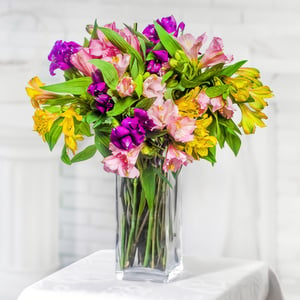
Sending lilies to a cat owner. True lilies (Lilium species) cause fatal kidney failure in cats. The ASPCA warns that even tiny amounts of pollen or leaf material can poison a cat within hours. Substitute with alstroemeria (Peruvian lily), which looks similar but poses no danger to cats.
Assuming all flowers survive long-distance delivery the same way. Delicate blooms like sweet peas bruise easily. Sturdy blooms like carnations and chrysanthemums travel well. Talk to the florist about bloom durability when sending flowers across state lines.

Birth flowers for U.S. holidays and celebrations
Birth flowers by month pair naturally with America's holiday calendar. Here's a quick match-up.
| Holiday | Date | Best birth flower match |
|---|---|---|
| Valentine's Day | February 14 | Rose (June) or Violet (February) |
| Mother's Day | 2nd Sunday of May | Lily of the Valley (May) or Carnation (January) |
| Memorial Day | Last Monday of May | Red Poppy (August) — honorary use |
| Father's Day | 3rd Sunday of June | Rose (June) — white rose honors deceased fathers |
| Independence Day | July 4 | Larkspur (July) in red, white, and blue |
| Thanksgiving | 4th Thursday of November | Chrysanthemum (November) or Marigold (October) |
| Christmas | December 25 | Holly and Narcissus (December) |
How to use birth flowers beyond bouquets
- Birth flowers show up in more places than vases these days.
- Tattoos rank as the most popular non-floral use. Birth flower tattoos surged in Google search volume by over 300% between 2019 and 2023.
- Jewelry featuring engraved or embossed birth flowers sells widely on platforms like Etsy, where over 150,000 listings feature "birth flower" jewelry as of 2024.
- Candles and soaps crafted with birth flower scents (rose for June, lavender as a companion for violet in February) make thoughtful add-ons.
- Garden planning around family birth flowers creates a sentimental backyard. Plant your kids' birth flowers along a walkway — daffodils for a March child, asters for a September child.
- Wedding décor incorporating the couple's birth flowers adds personal symbolism without extra cost. A June bride already has the rose covered.
Your birth flower, your story
Pick any month. Look up the flower. You'll find mythology, history, and genuine human emotion woven into petals. That's the beauty of birth flowers — they carry meaning without needing an explanation.
Here's a thought: the next time you send flowers for a birthday, skip the generic mixed bouquet. Ask the florist to build something around the recipient's birth flower instead. You'll spend roughly the same amount. The emotional impact? Completely different.
What's your birth flower? More importantly — does it actually match your personality? That question alone makes for a great conversation starter.
Send birth flowers
Choose your bouquet, add a message, and let a local florist hand-deliver it.
Frequently asked questions about birth flowers
Who decides the official birth flowers by month?▾
The Society of American Florists (SAF) maintains the most widely cited list in the United States. Several other organizations — including The Old Farmer's Almanac — publish their own versions with minor variations.
Can I mix birth flowers from different months in one bouquet?▾
Absolutely. Combining your birth flower with your partner's creates a meaningful arrangement. A florist can balance the colors and textures so the bouquet looks cohesive rather than random.
Do birth flowers have any connection to zodiac signs?▾
Not officially. Zodiac signs and birth flowers follow the calendar independently. Some overlap exists — Aries (March 21–April 19) shares space with the daffodil (March) and daisy (April) — but astrologers and florists developed their systems separately.
Are birth flowers the same in every country?▾
No. The U.S. list differs from the British list, the Japanese list (hanakotoba), and the Korean list. For example, some British sources assign the snowdrop to January alone, while the American tradition pairs the snowdrop with the carnation.
What birth flower works best as a gift for someone I don't know well?▾
Chrysanthemums (November), daisies (April), and sunflowers (not a traditional birth flower but universally liked) all feel cheerful and safe. Avoid heavily scented flowers like lily of the valley and jasmine — fragrance preferences vary widely.
How much does a birth flower bouquet typically cost in the U.S.?▾
Prices range from $35 to $85 for a standard arranged bouquet from a local florist. Premium blooms like garden roses or peonies push the price above $100. Single-stem gladioli or carnations start around $3–$5 per stem for a more budget-friendly option.