EUR
 GBP
 CAD
 AUD

 🎃Halloween🎃
 Birthday
 Occasions
 Same Day
 Flowers
 Roses
 Plants
 Gifts
 International Flower Delivery
Types of flowers: your complete guide to popular flower varieties
- 🌸 Botanists classify flowers into annuals, perennials, and biennials — and knowing which category a flower falls into determines how you plant, care for, and budget for it.
- 📋 The 30 most common flowers in the U.S. (roses, sunflowers, tulips, dahlias, and others on this list) cover nearly every occasion from Valentine's Day to Thanksgiving centerpieces.
- 🌱 Match your flower choice to your USDA zone, the season, and the occasion — a $15 bunch of carnations can outshine a $60 peony arrangement when timed right.
Flowers belong to over 400,000 known species across the planet, yet most Americans regularly encounter fewer than 50 of them. This guide helps you identify different types of flowers by name, understand how botanists group them, and pick the right bloom for your garden, your table, or someone you care about. You'll walk away knowing which flowers thrive in your USDA hardiness zone, which ones last longest in a vase, and which ones carry specific meanings worth knowing before you gift them.
Main types of flowers by life cycle
Every flower type falls into one of three life-cycle categories. This classification shapes how you grow, buy, and enjoy flowers throughout the year.
Annual flowers
Annual flowers complete their full life cycle — germination, bloom, seed production, death — within a single growing season. Gardeners in USDA zones 3–10 replant annuals every spring. Common annuals include zinnias, marigolds, petunias, sunflowers, and cosmos. A pack of 6 petunia starts costs around $3–$5 at most U.S. nurseries, making annuals a budget-friendly way to fill beds fast.
Annuals bloom hard. They pour all their energy into flowers rather than roots or woody stems. That urgency gives you nonstop color from May through October in most regions. Deadhead spent blooms regularly — this tells the plant to keep producing.
Perennial flowers
Perennial flowers return year after year from the same root system. Roses, lavender, peonies, daylilies, hostas, and black-eyed Susans all fall into this category. Most perennials take 2–3 years to reach full maturity, but once established, they demand far less work than annuals.
Here's the trade-off: perennials typically bloom for only 2–6 weeks per season. Gardeners stagger different perennial species to maintain continuous color. A mature peony bush, for example, blooms for roughly 10 days in late May but can live 100+ years in zones 3–8.
Biennial flowers
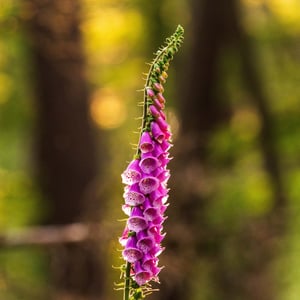
Biennial flowers need two years to complete their cycle. During year one, the plant grows foliage. During year two, the plant flowers, sets seed, and dies. Foxglove, hollyhock, sweet William, and Canterbury bells are classic biennials. Many gardeners plant biennials two years in a row to guarantee blooms every season.
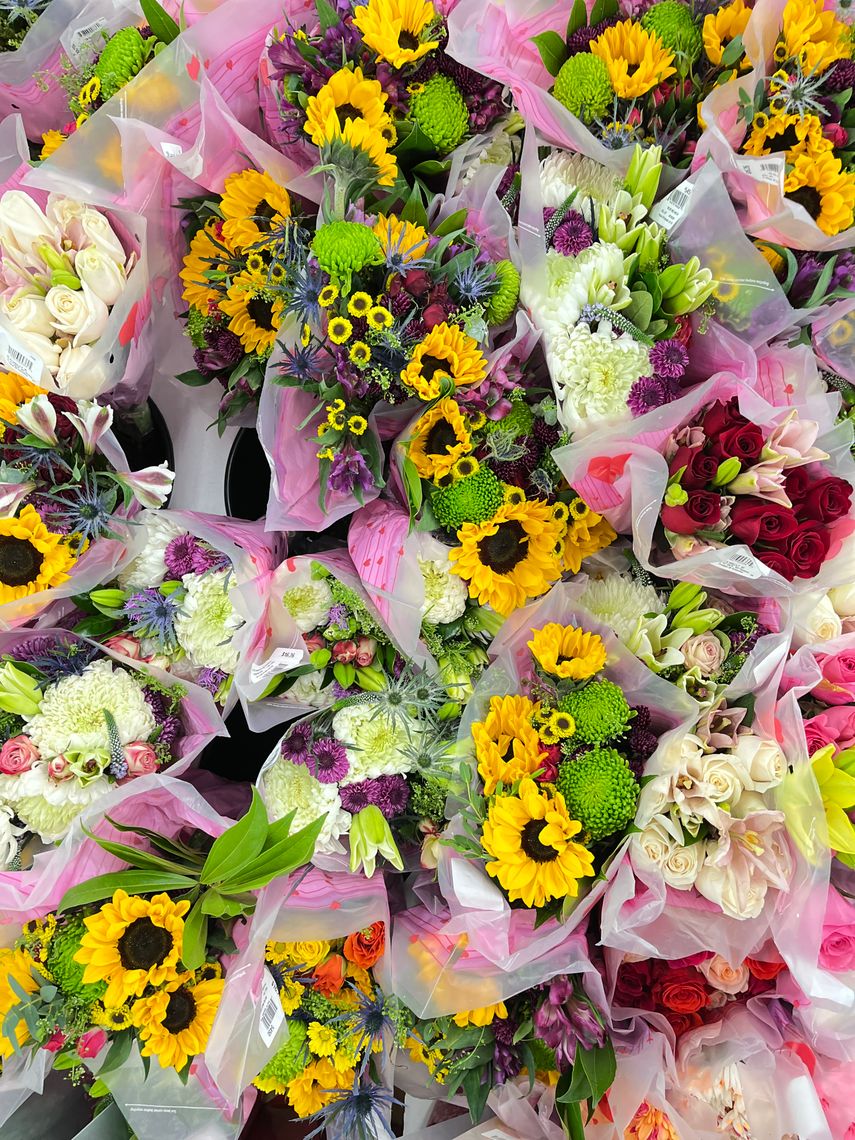
30 common flowers: names, traits, and best uses
This flower list covers the most popular species you'll find at U.S. florists, garden centers, and farmers' markets. Each entry includes the flower's botanical family, typical color range, and practical use.
Rose (Rosa)
Roses dominate the U.S. cut-flower market. American growers and importers sell roughly 1.2 billion rose stems per year. Hybrid tea roses produce single blooms on long stems — perfect for bouquets. Garden roses (David Austin types) offer fuller, more fragrant petals. Roses grow best in zones 4–9, need at least 6 hours of direct sun daily, and prefer well-drained soil with a pH between 6.0 and 6.5.
Color meanings run deep. Red signals romance. Yellow signals friendship. White signals sympathy or new beginnings. Pink signals gratitude.
Sunflower (Helianthus annuus)
Sunflowers originated in North America. Native American communities cultivated sunflowers as early as 3000 BCE. Modern varieties range from 12-inch dwarf cultivars ('Sunspot') to 12-foot giants ('Mammoth Russian'). Sunflowers track the sun during early growth — a behavior called heliotropism — but face east once mature.
Plant sunflower seeds directly outdoors after the last frost date. Seeds germinate in 7–10 days. You'll see blooms in about 60–90 days depending on the variety.
Tulip (Tulipa)
Tulips belong to the lily family and grow from bulbs. The Netherlands exports roughly 2 billion tulip bulbs annually, and many of those land in American gardens. Plant tulip bulbs 6–8 inches deep in fall, at least 6 weeks before the ground freezes. Tulips need a cold period (chilling hours below 40°F) to bloom, so they perform best in zones 3–7.
Over 3,000 registered tulip varieties exist. Popular divisions include single early, triumph, Darwin hybrid, parrot, and fringed tulips.
Hydrangea (Hydrangea macrophylla)
Hydrangeas produce large flower clusters that can measure 6–12 inches across. Bigleaf hydrangeas change color based on soil pH: acidic soil (below 6.0) produces blue flowers, and alkaline soil (above 7.0) produces pink flowers. Gardeners add aluminum sulfate to soil to push blooms toward blue.
Hydrangeas thrive in partial shade across zones 5–9. Water deeply 2–3 times per week during summer heat. Cut stems for arrangements in the morning, place them in lukewarm water immediately, and expect a vase life of 7–14 days.
Lavender (Lavandula)
Lavender offers fragrance, pollinator support, and drought resistance. English lavender (Lavandula angustifolia) handles cold down to zone 5. French lavender (Lavandula dentata) prefers zones 8–11. Harvest lavender when about half the buds on each spike have opened — this timing gives the strongest scent.
U.S. lavender farms have grown rapidly: over 200 commercial lavender farms now operate across states like Oregon, Washington, Michigan, and Texas.
Peony (Paeonia)
Peonies bloom for roughly 7–10 days in late spring. Worth the wait. A single peony bush produces 30–50 blossoms and can thrive for decades without dividing. Herbaceous peonies grow in zones 3–8 and need 500+ chill hours below 40°F.
Plant peony roots ("eyes") no deeper than 2 inches below the soil surface. Planting too deep prevents blooming — the number-one mistake new peony growers make. Ants crawling on peony buds eat nectar, not petals, and do no harm.
Daisy (Bellis perennis and Leucanthemum)
Daisies belong to the Asteraceae family — the second-largest plant family on Earth with over 32,000 species. Shasta daisies (Leucanthemum × superbum) grow 2–3 feet tall and bloom from June through September. Gerbera daisies (Gerbera jamesonii) rank as the 5th most popular cut flower worldwide and come in over 600 cultivated varieties.
Orchid (Orchidaceae)
The orchid family contains around 28,000 species — more than any other flowering plant family. Phalaenopsis (moth orchids) dominate U.S. houseplant sales because they tolerate indoor conditions well. Water moth orchids with 3 ice cubes once a week or soak roots for 15 minutes every 7–10 days. Keep orchids near east- or south-facing windows.
Lily (Lilium)
True lilies grow from bulbs and belong to the genus Lilium. Oriental lilies ('Stargazer') produce intensely fragrant blooms up to 8 inches across. Asiatic lilies bloom earlier (June) and come in nearly every color except blue. Note: calla lilies and daylilies aren't true lilies despite their names.
Keep lily pollen away from fabric and pets. Lily pollen stains clothing permanently, and all parts of true lilies are toxic to cats.
Chrysanthemum (Chrysanthemum)
Chrysanthemums — "mums" — rank as the top-selling potted plant in America every fall. Growers produce an estimated 70+ million mum pots annually in the U.S. Pinch mum stems back by one-third in early July to encourage bushy, compact growth. Mums bloom when daylight hours drop below 12 hours, which makes them natural fall performers.
Dahlia (Dahlia)
Dahlias produce flowers ranging from 2-inch pompons to 12-inch "dinner plate" varieties. Over 57,000 dahlia cultivars exist in the worldwide registry. Plant dahlia tubers after the last frost date, 4–6 inches deep, in full sun. Dig up tubers before the first hard freeze in zones colder than 8, then store them in peat moss at 40–50°F through winter.
Daffodil (Narcissus)
Daffodils signal spring. Most varieties bloom in March and April across zones 3–8. Plant bulbs 6 inches deep in fall. Daffodils naturalize well — they spread on their own, and deer and rabbits avoid them because the bulbs contain lycorine, a toxic alkaloid.
Carnation (Dianthus caryophyllus)
Carnations last 2–3 weeks in a vase, longer than almost any other cut flower. They cost roughly $1–$2 per stem at most U.S. florists. Standard carnations produce one large bloom per stem. Spray carnations produce 4–6 smaller blooms per stem. Red carnations serve as the official flower for Mother's Day, thanks to Anna Jarvis, who championed the holiday in 1908.
Iris (Iris)
Bearded irises grow from rhizomes and bloom in late spring across zones 3–9. Plant rhizomes at soil level — burying them causes rot. The iris got its name from the Greek goddess of the rainbow, reflecting the flower's spectrum of colors: purple, blue, yellow, white, orange, and nearly black.
Ranunculus (Ranunculus asiaticus)
Ranunculus flowers feature tightly layered petals that resemble tissue paper. Each bulb (corm) produces 8–12 stems over a 6-week bloom period. Soak corms for 3–4 hours before planting. Ranunculus grows best in cool weather (zones 8–10 outdoors or as a spring annual elsewhere).
Additional common flowers at a glance
| Flower | Type | Bloom season | Zones | Typical vase life |
|---|---|---|---|---|
| Zinnia | Annual | Summer–fall | 2–11 | 7–12 days |
| Snapdragon | Annual | Spring–fall | 7–10 | 7–10 days |
| Gladiolus | Annual (corm) | Summer | 7–10 | 7–10 days |
| Anemone | Perennial | Spring | 5–9 | 5–8 days |
| Aster | Perennial | Late summer–fall | 3–8 | 5–10 days |
| Larkspur | Annual | Late spring–summer | 2–10 | 6–8 days |
| Freesia | Perennial (corm) | Spring–summer | 9–10 | 5–7 days |
| Alstroemeria | Perennial | Summer | 7–10 | 14+ days |
| Calla lily | Perennial (rhizome) | Summer | 8–10 | 7–10 days |
| Lisianthus | Annual | Summer | 8–10 | 10–14 days |
| Petunia | Annual | Spring–frost | 10–11 | N/A (garden) |
| Marigold | Annual | Summer–frost | 2–11 | 7–10 days |
| Geranium | Annual/perennial | Spring–frost | 10–11 | N/A (garden) |
| Begonia | Annual/perennial | Summer–frost | 9–11 | N/A (garden) |
| Black-eyed Susan | Perennial | Summer–fall | 3–9 | 6–8 days |
Flower categories beyond life cycle
Different flower types also group by botanical structure, growth habit, and practical use. Knowing these categories helps you shop smarter and garden better.
By botanical structure
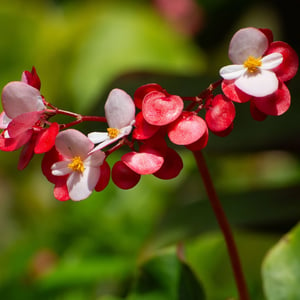
Complete flowers contain all four parts: sepals, petals, stamens, and pistils. Roses, lilies, and tulips are complete flowers. Incomplete flowers lack one or more parts. Begonias, for example, produce separate male and female flowers on the same plant.
Monocots have flower parts in multiples of 3 — think lilies, orchids, tulips, and irises. Dicots have flower parts in multiples of 4 or 5 — think roses, sunflowers, and daisies.
By use
- Cut flowers grow specifically for arrangements: roses, lisianthus, stock, and ranunculus
- Bedding flowers fill garden beds and containers: petunias, impatiens, marigolds, and begonias
- Wildflowers grow with minimal intervention: black-eyed Susans, coneflowers, bluebonnets, and cosmos
- Houseplant flowers bloom indoors: orchids, African violets, peace lilies, and Christmas cactus
By season
- Spring bloomers: tulips, daffodils, hyacinths, peonies, and irises
- Summer bloomers: dahlias, zinnias, sunflowers, gladiolus, and lavender
- Fall bloomers: chrysanthemums, asters, celosia, and goldenrod
- Winter bloomers: hellebores, camellias, paperwhites, and poinsettias
Different flower types for every occasion
Matching the right flower to the right moment matters. Here's a practical breakdown by occasion, aligned with major U.S. holidays and milestones.
Valentine's Day (February 14)
Red roses remain the classic choice. The Society of American Florists reports that consumers spend roughly $2.3 billion on flowers for Valentine's Day each year. Alternatives to red roses include tulips (declaration of love), ranunculus (charm), and anemones (anticipation). Order Valentine's Day flowers at least 5 days early — florist prices spike 25–40% during the final 48 hours.
Mother's Day (second Sunday in May)
Mother's Day generates the highest flower sales of any U.S. holiday. Pink carnations, peonies (often at peak bloom in May), and hydrangeas make popular gifts. A mixed arrangement with 3–4 flower varieties tends to feel more personal than a single-species bouquet.
Thanksgiving (fourth Thursday in November)
Fall-toned flowers complement Thanksgiving tables: chrysanthemums in rust and gold, celosia, hypericum berries, and sunflowers. Keep centerpiece arrangements under 14 inches tall so guests can see each other across the table.
Sympathy and funerals
White flowers — lilies, roses, chrysanthemums, and gladiolus — are standard for sympathy in the U.S. Avoid bright, cheerful colors unless you know the family prefers a "celebration of life" tone. Peace lilies (potted) give the recipient a living plant that lasts months.
Birthdays
- Birth month flowers add a personal touch:
- January: carnation
- February: violet
- March: daffodil
- April: daisy
- May: lily of the valley
- June: rose
- July: larkspur
- August: gladiolus
- September: aster
- October: marigold
- November: chrysanthemum
- December: poinsettia
Looking for a particular bloom?
Browse arrangements from local florists and pick one that suits the occasion.
How to choose the right flowers: practical tips
Picking flowers — for a garden or a gift — comes down to a few clear decisions.
For your garden
- Check your USDA hardiness zone at planthardiness.ars.usda.gov before buying anything.
- Test your soil pH with a $10–$15 home kit from any garden center.
- Map your sun exposure: track how many hours of direct sunlight each bed receives on a midsummer day.
- Start with 5–7 proven performers for your zone rather than 20 experiments.
- Mix annuals and perennials so your garden has instant color (annuals) and long-term structure (perennials).
For a bouquet or gift
- Ask the florist what arrived fresh that morning — those stems will outlast everything else in the cooler.
- Mention the recipient's favorite color if you don't know their favorite flower.
- Specify the occasion. Florists design sympathy arrangements differently from birthday bouquets.
- Set a budget. A well-designed $35 arrangement from a skilled florist beats a random $75 grab.
- Add context to your card — a specific memory or inside joke means more than a generic "thinking of you."
Caring for cut flowers: step by step
- Fresh flowers last significantly longer when you handle the basics right. Follow these steps the moment flowers arrive at your door.
- Trim stems at a 45-degree angle — use sharp scissors or a knife, never dull shears. Cut about 1 inch off the bottom.
- Remove any leaves below the waterline. Submerged leaves breed bacteria within 24 hours.
- Fill the vase with room-temperature water and add the packet of flower food. One packet treats about 1 quart.
- Change the water every 2 days. Re-trim stems by half an inch each time.
- Keep flowers away from direct sunlight, heating vents, and fruit bowls. Ripening fruit emits ethylene gas, which accelerates wilting.
- Move arrangements to a cool room overnight — temperatures between 60–65°F extend vase life by 2–3 days.
- In summer, especially across the South and Southwest (zones 8–10), add 2–3 ice cubes to the vase each morning. The cooler water slows bacterial growth.

Common mistakes with flowers (and how to avoid them)
Mistake 1: planting perennials too deep
Burying peony eyes, iris rhizomes, or lavender crowns too deep prevents blooming and causes root rot. Follow the depth listed on each plant's tag — literally.
Mistake 2: overwatering
More houseplants and garden flowers die from overwatering than underwatering. Orchids, lavender, and geraniums all prefer drying out slightly between waterings. Stick your finger 1 inch into the soil. Dry? Water. Damp? Wait.
Mistake 3: ignoring vase hygiene
Dirty vases harbor bacteria that clog stems. Wash vases with hot soapy water and a splash of bleach (1 teaspoon per quart) before reuse.
Mistake 4: choosing flowers based on looks alone
A gorgeous dahlia won't survive in zone 4 outdoors over winter. A tulip won't bloom without cold dormancy in zone 9. Research your zone and conditions first, pick flowers second.
Mistake 5: forgetting about fragrance
Some flowers — gardenias, hyacinths, stargazer lilies — produce intense scents. In a small room or hospital setting, strong fragrance overwhelms. Choose lighter-scented flowers (tulips, ranunculus, hydrangeas) for enclosed spaces.
Rare and unusual flower species
Beyond common flowers, some species fascinate collectors and gardening enthusiasts.
Corpse flower (Amorphophallus titanum) blooms only once every 7–10 years. The flower reaches up to 10 feet tall and smells like rotting meat to attract pollinators. The U.S. Botanic Garden in Washington, D.C. has displayed multiple corpse flower blooms since 2003.
- Ghost orchid (Dendrophylax lindenii) grows in South Florida's swamps and has no leaves. Roughly 2,000 ghost orchids survive in the wild, primarily in the Fakahatchee Strand Preserve.
- Middlemist's Red (Middlemist camellia) holds the title of rarest flower on Earth. Only two known plants exist: one in a New Zealand garden, one in a London greenhouse.
- Chocolate cosmos (Cosmos atrosanguineus) produces dark maroon petals that smell like chocolate. The species went extinct in the wild in the early 1900s but survives through vegetative propagation.
Flowers that serve purposes beyond beauty
Pollinator support
Native wildflowers — coneflowers, milkweed, goldenrod, and bee balm — feed bees, butterflies, and hummingbirds. The Xerces Society reports that planting even a 4×4-foot patch of native wildflowers supports local pollinators measurably.
Edible flowers
Nasturtiums add a peppery bite to salads. Violets, pansies, and calendula petals work as cake decorations. Lavender buds flavor baked goods and teas. Always confirm the flower came from an unsprayed source before eating.
Medicinal and aromatic uses
Chamomile flowers steep into tea that promotes sleep. Calendula salve soothes minor skin irritation. Lavender essential oil, distilled from flower spikes, generates over $1 billion in annual global sales.
So — what's your next flower? Browse a local nursery this weekend, even without a plan. Handle the petals. Smell the blooms. The best way to learn different types of flowers is to stand in front of them, not just read about them. And when you find one that stops you mid-step, that's the one to bring home.
Send flowers today
Choose your bouquet, add a message, and let a local florist hand-deliver it.
FAQ
What are the main types of flowers?▾
Botanists divide flowers into three main types by life cycle: annuals (one season), perennials (return yearly), and biennials (two-year cycle). Structural categories include monocots (flower parts in 3s) and dicots (flower parts in 4s or 5s).
What is the most popular flower in the United States?▾
Roses hold the top spot by sales volume. U.S. consumers purchase roughly 1.2 billion rose stems per year, with red roses leading during Valentine's Day and mixed-color roses popular year-round.
Which flowers last the longest in a vase?▾
Carnations last 2–3 weeks. Alstroemeria lasts about 14 days. Chrysanthemums and lisianthus hold up for 10–14 days. Change the water every 2 days and re-trim stems to maximize vase life for any species.
What flowers grow well in hot climates (zones 9–10)?▾
Zinnias, lantana, bougainvillea, plumeria, hibiscus, and pentas thrive in heat. Avoid tulips, peonies, and other cold-requiring species unless you pre-chill bulbs in the refrigerator for 12–16 weeks.
Are any common flowers toxic to pets?▾
True lilies (Lilium species) cause kidney failure in cats — even small exposures require emergency veterinary care. Tulip and daffodil bulbs are toxic to dogs. The ASPCA maintains a searchable database of 1,000+ toxic and non-toxic plants at aspca.org.
When should I order flowers for a holiday?▾
Place Valentine's Day orders 5–7 days early. Order Mother's Day flowers by the Wednesday before. For Thanksgiving, order by the Monday of that week. Early orders guarantee selection, avoid rush fees, and give local florists time to source the freshest stems.