 EUR
EUR
 GBP
GBP
 CAD
CAD
 AUD
AUD

 ✨Boss’s Day✨
 Birthday
 Occasions
 Same Day
 Flowers
 Roses
Roses
 Plants
 Gifts
Gifts
 International Flower Delivery
How to Dry Flowers: A Complete Guide
- 🌸 Air-drying flowers upside down in a dark room for 2 to 3 weeks gives the most reliable results for beginners — no special supplies needed.
- ⏱️ Silica gel and microwave methods cut drying time from weeks down to 2 to 5 minutes per bloom, but each flower needs individual attention.
- 🛡️ Dried flowers last 1 to 3 years when you store them away from direct sunlight, humidity above 60%, and heavy dust accumulation.
A single rose from your Valentine's Day bouquet can last 1 to 3 years on a shelf — you just need to dry flowers the right way. Learning how to dry flowers saves you money on décor, preserves sentimental blooms from weddings or anniversaries, and gives you raw material for dozens of craft projects. This guide walks you through every major drying method, from the simplest air-dry technique to the fastest microwave shortcut, plus smart ways to preserve flowers in resin, frames, and jars. You'll find exact timelines, step-by-step instructions, and honest advice about what works (and what doesn't) for each approach.
Best flowers for drying
- Not every flower dries well. Your best results come from blooms with low moisture content and sturdy petals. Here's what works and what doesn't.
- Top performers for drying flowers:
- Roses — hold shape and color well, especially when picked just before full bloom
- Lavender — dries in about 1 week and keeps its scent for 6+ months
- Hydrangeas — harvest in late summer (August or September) when petals feel slightly papery
- Statice — one of the easiest flowers to air-dry, retains vivid purple and white tones
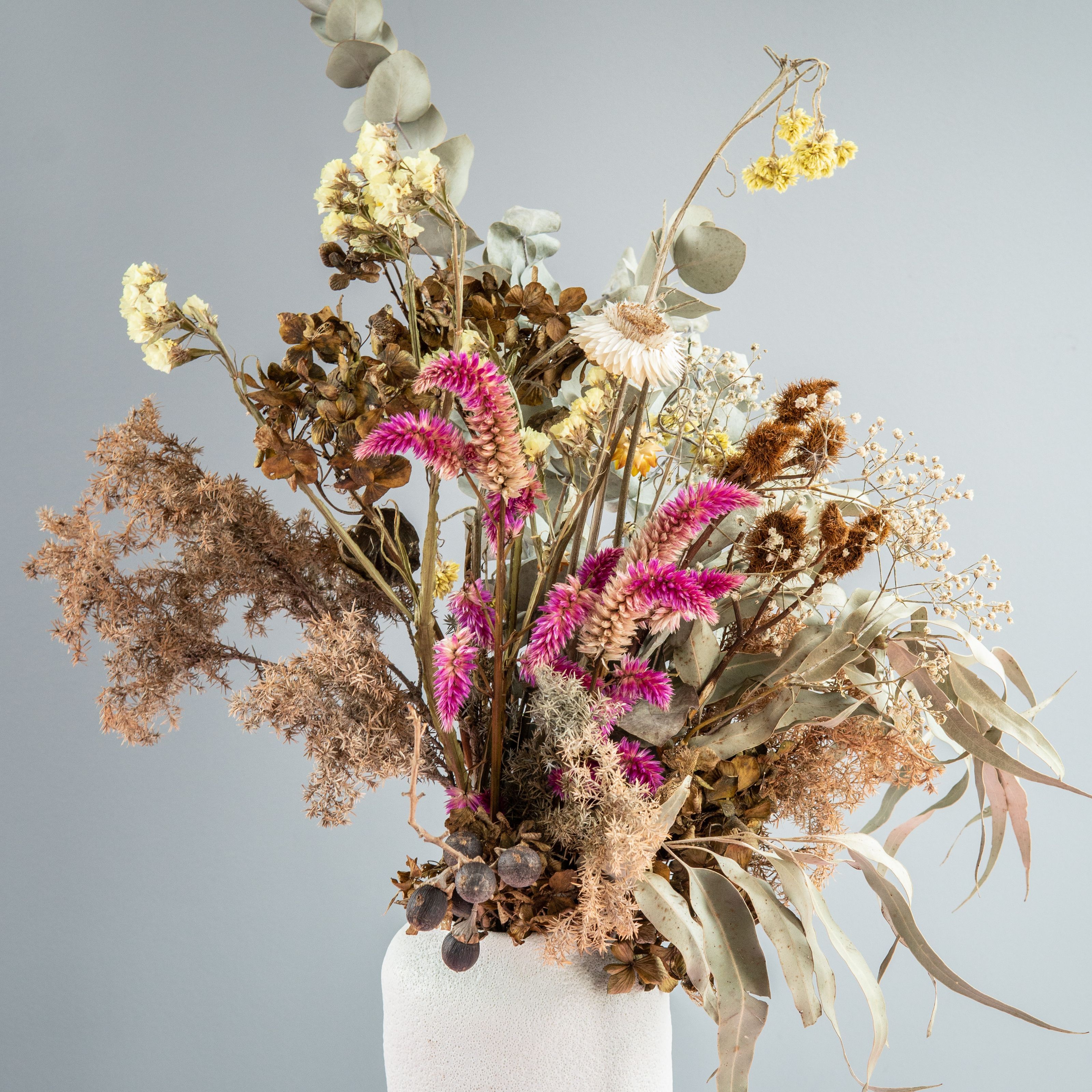
- Baby's breath — dries in 5 to 10 days and works as filler in a dried flowers bouquet
- Strawflowers (Helichrysum) — nature's dried flower; petals already feel stiff on the plant
- Celosia — both crested and plumed types dry beautifully in about 2 weeks
- Flowers that struggle:
- Impatiens and begonias contain too much water and collapse during drying
- Gardenias turn brown within days
- Lilies lose petals before fully drying
- Succulents rot rather than dehydrate
- The Chicago Botanic Garden recommends harvesting flowers in the morning, right after the dew evaporates but before the afternoon heat stresses the petals. Cut stems at least 6 inches long — you can always trim later.
How to prepare flowers before drying
- Preparation makes or breaks your results. Skip this step and you'll end up with moldy, misshapen blooms.
- Step-by-step prep:
- Strip all leaves from the lower two-thirds of each stem.
- Trim stems to your desired length with sharp garden shears (a clean cut prevents bacterial growth).
- Check every bloom for insects — aphids love to hide between petals.
- Group flowers into small bundles of 3 to 5 stems maximum.
- Wrap each bundle's base with a rubber band, not string (rubber bands tighten as stems shrink).
- One important detail: pick flowers that haven't fully opened yet. Blooms continue to open slightly during drying. A rose at 75% bloom looks perfect once dried. A fully open rose drops petals everywhere.
How to hang flowers to dry (air-drying method)
- Drying flowers upside down is the oldest and most popular method. Zero cost. Minimal effort.
- What you need:
- A dark, dry room with good airflow (a closet, attic, or unused bedroom works)
- Rubber bands
- String, twine, or a flower drying rack
- Hooks or a hanger rod
- Process:
- Bundle 3 to 5 stems together and secure the base with a rubber band.
- Tie a length of string around the rubber band.
- Hang each bundle upside down from a hook, nail, or rod — leave at least 4 inches between bundles for airflow.
- Keep the room temperature between 60°F and 75°F.
- Wait 2 to 3 weeks.
- That's it. Seriously. The key factors are darkness (light fades colors) and low humidity (aim for under 50%). A bathroom fails for this reason. A garage in Phoenix works perfectly in October but poorly during monsoon season.
- Check your flowers after 10 days. Petals should feel crisp and papery. Stems should snap — not bend. Bending means moisture remains inside.
Drying flowers with silica gel
- Silica gel for drying flowers preserves color and shape far better than air-drying. You've seen those little "Do Not Eat" packets in shoe boxes — silica gel flower drying uses the same material, just in larger quantities.
- What you need:
- 4 to 5 pounds of silica gel crystals (available at craft stores like Michaels for about $10 to $20 per container)
- An airtight plastic container
- A soft brush
- Step-by-step process:
- Pour a 1-inch layer of silica gel into the bottom of your container.
- Place a single flower face-up on the gel.
- Gently spoon more silica gel around and between every petal — take your time here.
- Cover the flower completely with another half-inch of gel.
- Seal the container and wait 3 to 7 days (roses need about 4 days; daisies take closer to 3).
- Remove the flower carefully and brush off residual gel with a soft paintbrush.
- You can reuse silica gel indefinitely. When the crystals turn pink (indicating moisture saturation), spread them on a baking sheet and dry them in the oven at 250°F for about 2 hours. The crystals turn blue again once they're ready.
How to dry flowers in the microwave
- Need dried flowers for crafts by tomorrow? The microwave method delivers results in minutes.
- Silica gel + microwave combo:
- Place a microwave-safe container with 1 inch of silica gel inside.
- Set one flower face-up on the gel.
- Spoon more gel over the flower until fully covered.
- Microwave on medium power (50%) for 2 minutes.
- Let the container sit for 30 minutes with the door closed — the residual heat finishes the job.
- Remove the flower and brush off the gel.
- Different flowers require different timing. A daisy needs about 2 minutes. A thick rose may need 3 minutes. Start with less time and add 30-second intervals — overheating turns petals brown and brittle.
- Pressing flowers in the microwave (no silica gel):
- Place a flower between two sheets of parchment paper.
- Sandwich the parchment between two microwave-safe ceramic tiles.
- Microwave for 30 seconds, check, repeat in 15-second bursts.
- Total time: about 1 to 2 minutes for most blooms.
- This method works best for flat flowers like pansies, violets, and cosmos.
How to dry flowers in the oven
- Oven drying sits between air-drying and microwaving on the speed scale. The process takes 1 to 3 hours depending on flower thickness.
- Instructions:
- Preheat your oven to its lowest setting — typically 170°F to 200°F.
- Line a baking sheet with parchment paper.
- Arrange flowers in a single layer, face-up, leaving 1 inch between blooms.
- Prop the oven door open about 2 inches (a wooden spoon works as a doorstop).
- Check every 30 minutes and rotate the tray.
- The open door lets moisture escape. Without ventilation, flowers steam rather than dry. Keep a close watch — the margin between "perfectly dried" and "burnt crisp" shrinks fast at oven temperatures.
- Best candidates for oven drying: roses, zinnias, and sunflowers. Skip delicate blooms like baby's breath — the heat destroys thin petals.
How to dry and press flowers
- Dried pressed flowers look stunning in frames, journals, and greeting cards. You need zero equipment beyond heavy books.
- Book-press method:
- Place flowers between two sheets of parchment paper or wax paper.
- Slide the parchment inside a heavy book (phone books still exist for this exact purpose).
- Stack 2 to 3 more heavy books on top.
- Wait 2 to 4 weeks.
- Peel flowers off the paper gently.
- Flower press method (dedicated tool):
- A wooden flower press costs $15 to $30 at craft stores. The press applies more even pressure than books and includes built-in cardboard layers for airflow. Results come in about 10 to 14 days.
- Pressed flowers lose their three-dimensional shape — that's the trade-off. You get flat, almost translucent petals that work brilliantly in 2D projects. Ferns, daisies, pansies, and Queen Anne's lace all press beautifully.
- How to preserve pressed flowers after pressing:
- Spray each pressed flower with a light coat of clear acrylic sealant. One pass from about 10 inches away seals the surface without saturating the petals. The sealant extends the lifespan from about 5 years to roughly 8 to 10 years.
How to preserve flowers in resin
- Resin preservation captures flowers in a crystal-clear block that lasts decades. Wedding bouquet keepsakes, paperweights, and jewelry all start here.
- Materials:
- Two-part epoxy resin (brands like ArtResin sell 8 oz kits for about $22)
- Silicone molds in your chosen shape
- Fully dried flowers (fresh flowers leak moisture and create bubbles)
- A stirring stick and disposable cups
- Nitrile gloves and a well-ventilated workspace
- Process:
- Dry your flowers completely first — use silica gel for 5 to 7 days.
- Mix resin and hardener at the exact ratio specified by the manufacturer (usually 1:1 by volume).
- Stir slowly for 3 to 5 minutes to minimize bubbles.
- Pour a thin base layer (about ¼ inch) into the mold.
- Wait 4 to 6 hours until the base layer reaches a tacky, gel-like state.
- Place your dried flowers face-down on the tacky layer.
- Pour the remaining resin over the flowers slowly.
- Pop any surface bubbles with a heat gun or lighter held 6 inches away.
- Cover the mold with a box to block dust and let it cure for 24 to 72 hours.
- The biggest mistake people make with resin: using flowers that still contain moisture. Even slightly damp petals create cloudy spots and air pockets. Dry your blooms for a full week in silica gel before you even open the resin kit.
- Resin releases fumes, so work near an open window or in a garage. Temperature matters too — keep the room between 70°F and 80°F for the smoothest cure.
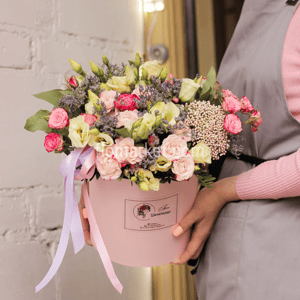
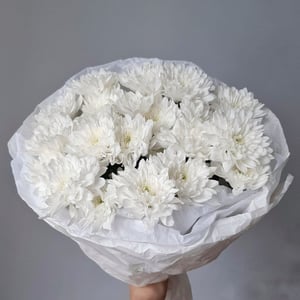
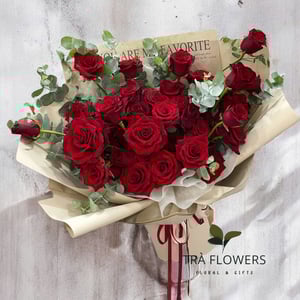
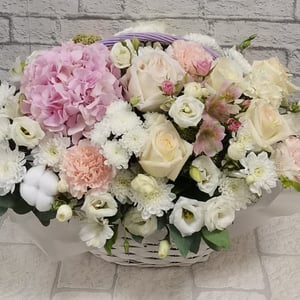
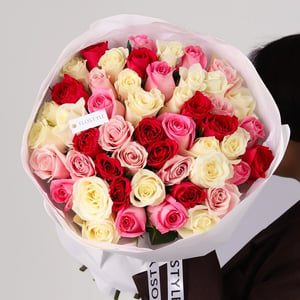
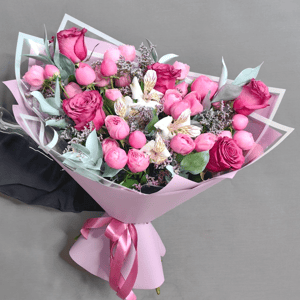
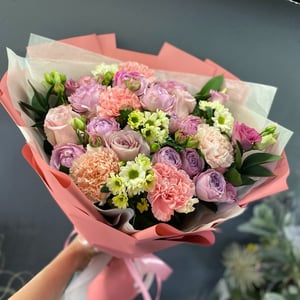
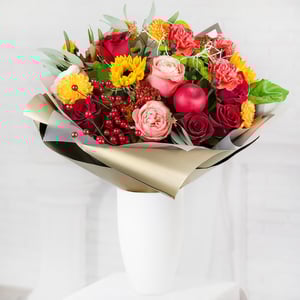
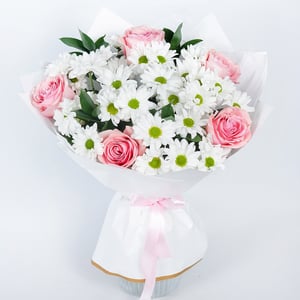
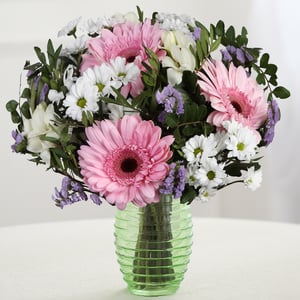
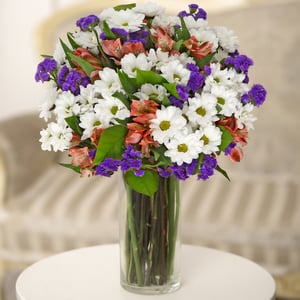
Looking for fresh flowers to dry yourself?
Browse arrangements from local florists and pick one that suits the occasion.
How to preserve flowers in a frame
- Framing dried flowers turns ordinary blooms into wall art. Two main approaches work here.
- Floating frame method:
- Press flowers for 2 to 4 weeks using the book or press method.
- Buy a glass floating frame (two panes of glass with no mat). Sizes range from 5×7 inches to 11×14 inches.
- Arrange pressed flowers between the two glass panes.
- Seal the frame and hang away from direct sunlight.
- Shadow box method (for 3D dried flowers):
- Air-dry flowers for 2 to 3 weeks.
- Purchase a shadow box frame — typically 2 to 3 inches deep.
- Attach flowers to the backing with hot glue or clear adhesive dots.
- Close the shadow box.
- Shadow boxes work for roses, peonies, and other blooms that lose their appeal when flattened. Floating frames suit wildflowers, ferns, and dainty blossoms.
- Place frames on north-facing walls or interior hallways. Direct afternoon sun fades dried flowers within 6 months. Indirect light keeps colors vibrant for 2+ years.
How to preserve fresh flowers permanently
- Freeze drying produces the most lifelike results of any preservation method. Freeze-dried flowers retain 97% of their original shape and color.
- The catch? Home freeze dryers cost $2,000 to $5,000. Most people send blooms to a professional service instead. Companies like Forever Flowers and Suspended in Time charge $150 to $400+ per bridal bouquet.
- Timeline: a professional freeze-drying service typically needs 4 to 6 weeks to process a wedding bouquet. Ship or drop off your fresh flowers within 3 to 5 days of the event — the sooner, the better.
- Other permanent preservation methods ranked by lifespan:
- Freeze drying — 10 to 25+ years
- Resin encapsulation — 20+ years with UV-stable resin
- Silica gel drying — 1 to 3 years
- Air drying — 1 to 3 years
- Pressing — 5 to 10 years (with sealant)
- For preserving wedding flowers specifically, many brides combine methods. Press a few blooms for a frame, freeze-dry the main bouquet, and embed a single rose in resin for a desk keepsake.
How to preserve flowers in a jar
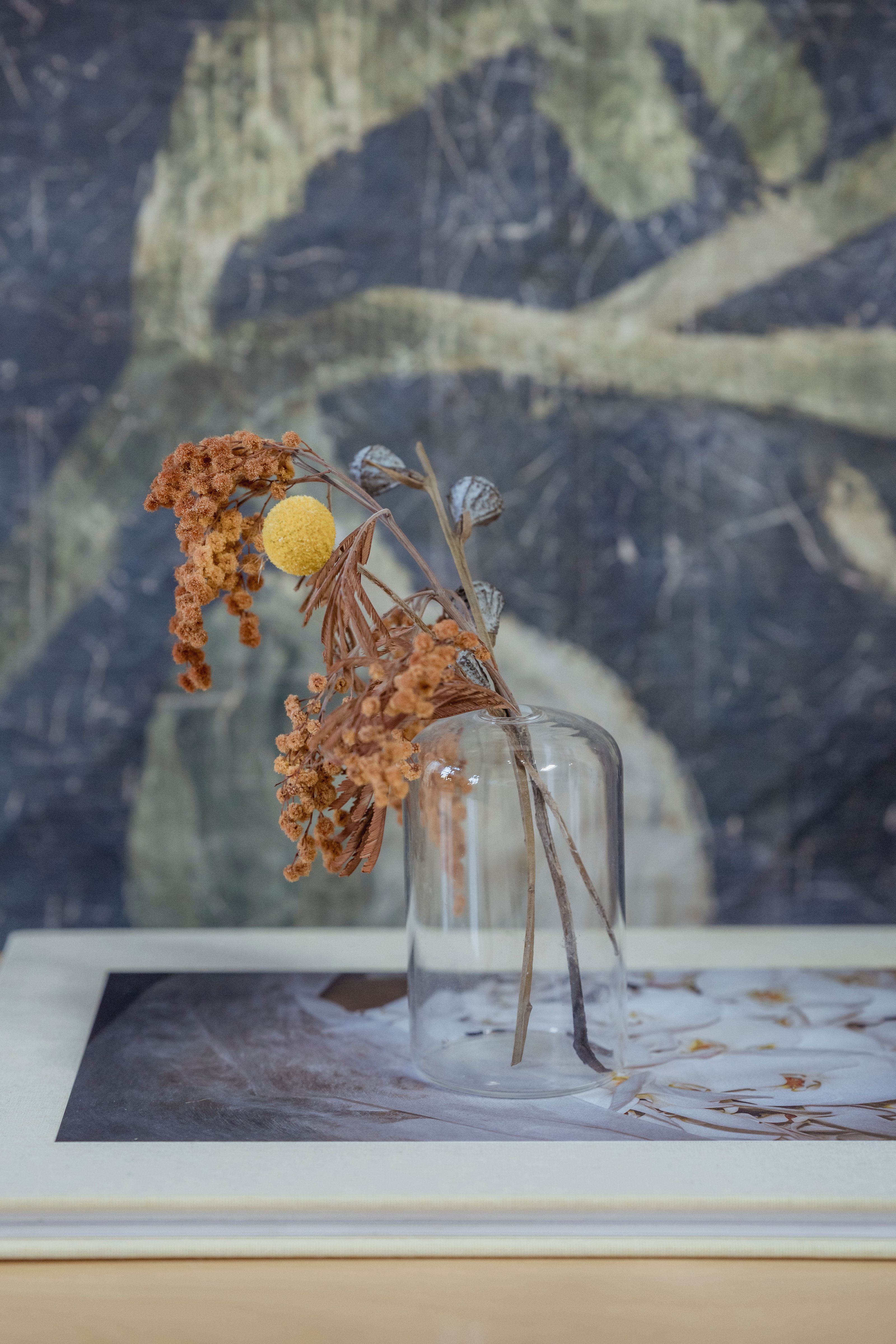
- Glass jars make simple, charming displays for dried flowers. Mason jars, apothecary jars, and bell jars all work.
- Open jar display:
- Dry flowers completely using any method.
- Stand the stems in a clean, dry jar.
- Place the jar in a low-humidity room away from direct sun.
- Sealed jar with glycerin (semi-preservation):
- Mix 1 part glycerin with 2 parts hot water.
- Pour the mixture into a jar.
- Place fresh-cut flowers in the jar with stems submerged.
- Wait 2 to 6 weeks — the glycerin gradually replaces the water in the petals.
- Remove the flowers and let them air-dry for 48 hours.
- Glycerin-preserved flowers feel supple rather than brittle. Eucalyptus and ivy respond especially well to glycerin treatment. The downside: colors often darken or shift toward brown tones.
How long do dried flowers last?
- Dried flowers last 1 to 3 years under normal household conditions. Here's what shortens — and extends — that window.
- Factors that reduce lifespan:
- Direct sunlight (fades colors within 3 to 6 months)
- Humidity above 60% (encourages mold growth)
- Dust accumulation (dulls petals and attracts moisture)
- Physical handling (dried petals crumble easily)
- Factors that extend lifespan:
- Spraying with unscented hairspray or clear acrylic sealant every 6 months
- Displaying in a sealed frame or shadow box
- Keeping room humidity between 30% and 50%
- Placing flowers away from windows, heaters, and air vents
A quick fact: dried lavender retains its fragrance for 6 to 12 months. After that, the visual appeal remains, but the scent fades. Crush a few buds between your fingers — they release one last burst of fragrance as a refill for sachets.
How to store dried flowers
- Between seasonal displays or craft sessions, store dried flowers properly to prevent damage.
- Storage steps:
- Wrap each bundle loosely in acid-free tissue paper.
- Place wrapped bundles in a cardboard box (not plastic — plastic traps moisture).
- Add 1 to 2 silica gel packets to the box.
- Store the box in a cool, dry location — a bedroom closet works better than a garage or basement.
- Keep the box flat. Never stack heavy items on top.
- Label each box with the flower type and drying date. Dried flowers deteriorate slowly, and you'll want to rotate older stock before starting new batches.
What to do with dried flowers
- Dried flowers fuel an enormous range of projects. Here are concrete ideas organized by effort level.
- Low effort (under 30 minutes):
- Arrange a dried flowers bouquet in a ceramic vase for a mantel display
- Fill small glass ornaments with dried petals for Christmas tree decorations
- Scatter dried rose petals in a decorative bowl as a natural potpourri
- Medium effort (1 to 2 hours):
- Create greeting cards by gluing pressed flowers onto cardstock
- Make bookmarks with dried pressed flowers laminated between clear contact paper
- Assemble a wreath using a grapevine base, hot glue, and mixed dried blooms
- High effort (half-day project):
- Cast flowers in epoxy resin to make coasters, trays, or jewelry
- Build a framed pressed flower display with a labeled botanical theme
- Design a dried floral crown for a bridal shower, music festival, or photo shoot
- For holiday-specific ideas: dried orange slices combined with cinnamon sticks and dried red roses make a Thanksgiving centerpiece that smells incredible and costs under $15 in materials.
Common mistakes when drying flowers
- Five errors ruin more dried flowers than anything else.
- Mistake #1: Starting with flowers past their prime. Wilted or browning blooms only look worse after drying. Pick flowers at peak freshness — or just before peak.
- Mistake #2: Bundling too many stems together. Large bundles trap moisture in the center. Stick to 3 to 5 stems per bundle. Thick flowers like peonies do best alone.
- Mistake #3: Drying in a bright room. Light bleaches pigments during the drying process. A dark closet outperforms a sunny windowsill every time.
- Mistake #4: Skipping the leaf removal. Leaves retain more moisture than petals and can grow mold, which then spreads to the flowers.
- Mistake #5: Rushing the timeline. Opening a silica gel container after 2 days instead of 5 gives you a half-dried flower that wilts within a week. Patience pays off.
How to display dried flowers at home
- Dried flowers earn compliments when you place them thoughtfully. Here's where and how to display them.
- Best locations in an American home:
- Entryway console tables (guests see them immediately)
- Bookshelves between volumes and photo frames
- Bathroom counters — but only in low-humidity bathrooms with good ventilation
- Kitchen windowsills — only on north-facing windows away from steam
- Bedroom nightstands inside small bell jars
- Display tools that help:
- A flower drying rack doubles as a wall-mounted display piece — some artisan versions retail for $25 to $50 on Etsy
- Clear glass cloches (bell jars) protect delicate blooms from dust and pets
- Wicker baskets add a cottagecore aesthetic to bundles of dried lavender or eucalyptus
- Rotate your displays seasonally. Swap dried sunflowers and wheat stalks in fall for dried holly berries and cedar in winter. This keeps your décor fresh and gives each set a rest in dark storage, extending its life.
Drying flowers turns a fleeting gift into something you can keep for years. Try starting with a small bunch of grocery-store roses and the air-dry method — zero investment, zero risk, and the result will surprise you. Which flowers are you thinking about drying first?
Send flowers today
Choose your bouquet, add a message, and let a local florist hand-deliver it.