 EUR
EUR
 GBP
GBP
 CAD
CAD
 AUD
AUD

 ✨Boss’s Day✨
 Birthday
 Occasions
 Same Day
 Flowers
 Roses
Roses
 Plants
 Gifts
Gifts
 International Flower Delivery
Kalanchoe Care: How to Grow and Maintain Your Plant
- 🌿 Kalanchoe thrives in bright indirect light, needs water only when the top 2 inches of soil dry out, and tolerates indoor temperatures between 60°F and 85°F — making the plant forgiving for beginners and busy plant owners.
- ✂️ Propagate kalanchoe from stem cuttings or leaf cuttings in spring, let cut ends callous for 2–3 days, then root the cuttings in well-draining cactus mix.
- ⚠️ Every part of the kalanchoe plant contains bufadienolide toxins, so keep all varieties away from cats, dogs, and small children.
Kalanchoe plants belong to a genus of over 125 species native to Madagascar and tropical Africa — and about 5 of those species dominate American garden centers and windowsills. You'll want this guide because a thriving kalanchoe rewards you with clusters of blooms that last up to 8 weeks, yet a neglected one turns mushy and dies within a month. Whether you just grabbed a $5 pot from Trader Joe's or you've grown kalanchoe for years, the practical details below will help you keep every variety alive, blooming, and multiplying.
What exactly is a kalanchoe plant?
Kalanchoe (pronounced "kal-uhn-KOH-ee") belongs to the Crassulaceae family — the same family that includes jade plants and sedums. Botanists recognize roughly 125 accepted species within the genus. Most of these species evolved in Madagascar, with smaller populations scattered across eastern Africa, India, and Southeast Asia.
The kalanchoe plant stores water in its thick, fleshy leaves. This succulent structure lets the plant survive dry spells that kill thinner-leaved houseplants. Mature plants typically reach 6 to 18 inches tall indoors, depending on the species.
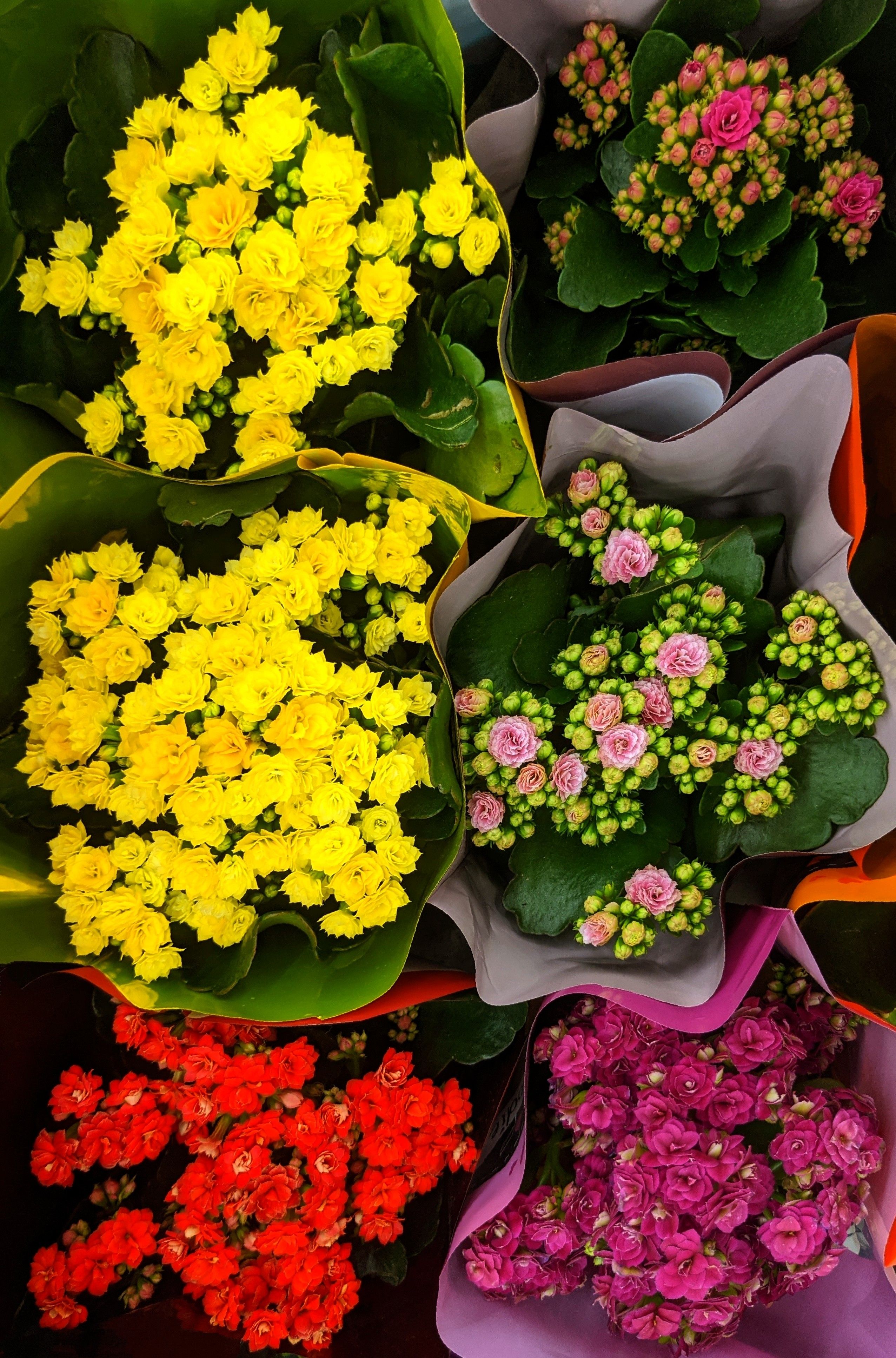
Here's what makes kalanchoe special for American growers: the genus splits into two informal groups — flowering types sold as "florist kalanchoe" and foliage types grown for texture and form. The flowering group, led by Kalanchoe blossfeldiana, produces dense clusters of tiny blooms in red, pink, orange, yellow, salmon, and white. The foliage group — including the fuzzy Panda Plant and the paddle-shaped Flapjack — earns attention through leaf shape, color, and fuzz rather than flowers.
Popular kalanchoe plant types
Kalanchoe plant types range from compact bloomers to tall, architectural succulents. Here are six species you'll find most often in the US.
Kalanchoe blossfeldiana (Florist Kalanchoe / Flaming Katy)
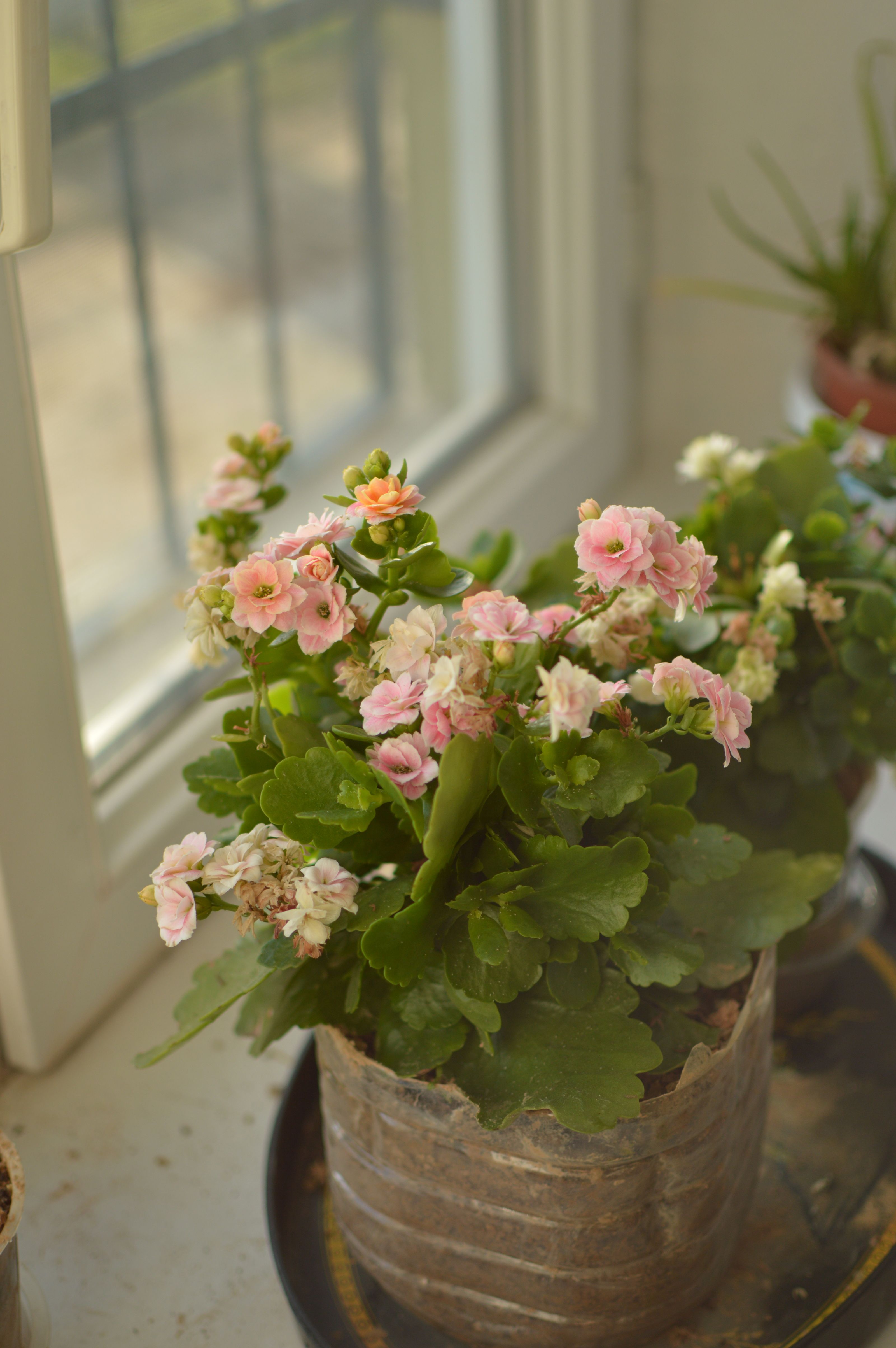
Kalanchoe blossfeldiana dominates the houseplant market. Grocery stores, hardware chains, and florists sell millions of pots annually in the US alone. Each plant grows 8 to 12 inches tall and spreads 4 to 8 inches wide. Bloom clusters last 6 to 8 weeks. Colors include red, pink, magenta, orange, yellow, white, and bicolor combinations. Double-flowered cultivars like the "Calandiva" series look almost like miniature roses.
Kalanchoe tomentosa (Panda Plant)
Kalanchoe tomentosa care appeals to succulent collectors who love texture. Soft, silvery hairs cover the oval leaves, and chocolate-brown spots edge each leaf tip. Panda plants grow slowly, reaching about 18 inches tall over several years. The plant rarely blooms indoors — and growers love it anyway.
Kalanchoe luciae (Flapjack / Paddle Plant)
Kalanchoe luciae produces large, flat, rounded leaves that stack in a rosette. Leaf edges blush bright red in full sun. Mature plants can reach 24 inches tall. Flapjack plants thrive outdoors year-round in USDA Zones 10–12.
Kalanchoe daigremontiana (Mother of Thousands)
Kalanchoe daigremontiana grows tiny plantlets along its leaf margins. Each leaf can produce dozens of baby plants. The species stands 18 to 36 inches tall. Note: several US states, including Florida, classify this kalanchoe as invasive.
Kalanchoe delagoensis (Mother of Millions / Chandelier Plant)
Kalanchoe delagoensis forms narrow, tubular leaves with plantlets clustered at each tip. The plant drops plantlets freely, and each one roots on contact with soil. Gardeners in warm climates should contain this species in pots.
Kalanchoe orgyalis (Copper Spoons)
Kalanchoe orgyalis displays spoon-shaped leaves coated in rusty-bronze felt on top and silver underneath. Mature specimens reach 3 to 6 feet in frost-free gardens. Copper Spoons grows well as an indoor kalanchoe plant near a south-facing window.
How to care for a kalanchoe plant indoors
Kalanchoe care indoors revolves around five factors: light, water, soil, temperature, and fertilizer. Get these right, and your indoor kalanchoe plant will outlive most houseplants on your shelf.
Light requirements
Kalanchoe plant care starts with bright, indirect light. Place your pot near a south- or west-facing window. The plant needs about 6 hours of bright light daily. Direct afternoon sun in July and August can scorch the leaves — especially in southern states like Texas or Arizona. A sheer curtain filters that intense light just enough.
Too little light causes leggy growth. Stems stretch toward the nearest window, leaves spread out, and flowering stops. Move a leggy kalanchoe closer to the light source, or add a grow light set to run 10–12 hours daily.
Kalanchoe watering
Kalanchoe watering follows one simple rule: soak the soil, then let the top 2 inches dry completely before watering again. Stick your finger into the potting mix. Dry? Water thoroughly until liquid flows from the drainage holes. Damp? Wait 2–3 more days.
- Overwatering kills more kalanchoe plants than any disease or pest. Soggy soil suffocates roots, invites fungal rot, and turns leaves yellow and mushy.
- Follow this seasonal schedule:
- Water every 7–10 days during spring and summer
- Water every 10–14 days during fall and winter
- Reduce watering frequency during cloudy stretches
- Empty saucers 15 minutes after watering
- Use room-temperature water. Cold tap water shocks the roots.
Soil and potting
- Kalanchoe succulent care demands fast-draining soil. A pre-mixed cactus and succulent blend works well. You can also combine 60% standard potting mix with 40% perlite.
- Choose a pot with at least one drainage hole. Terra cotta pots wick moisture away from roots faster than plastic or glazed ceramic. A 4- to 6-inch pot suits most kalanchoe plants.
- Repot every 2 years — or when roots circle the bottom of the pot. Spring offers the best timing. Move up only one pot size at a time (for example, from a 4-inch pot to a 6-inch pot).
Temperature and humidity
Kalanchoe plants prefer temperatures between 60°F and 85°F. That range matches most American homes year-round. Keep the plant away from cold drafts, heating vents, and single-pane windows during winter. Temperatures below 50°F damage leaves. Frost kills the plant outright.
Kalanchoe tolerates average household humidity (30–50%). The plant does not need misting. Misting actually increases the risk of powdery mildew on the leaves.
Fertilizing
Feed your kalanchoe once a month during spring and summer with a balanced liquid fertilizer (20-20-20) diluted to half strength. Stop feeding entirely from November through February. During that dormant period, the plant rests and prepares for its next bloom cycle.
Kalanchoe blossfeldiana care: getting reblooms
Kalanchoe blossfeldiana care challenges growers in one specific area — reblooming. Most people toss the plant after the first flush of flowers fades. That's a waste. Your florist kalanchoe can bloom again — and again — with one environmental trick.
- Kalanchoe blossfeldiana responds to photoperiod. Short days (long nights) trigger flower bud formation. Here's a step-by-step rebloom method:
- Deadhead all spent flower stems after the first bloom fades
- Place the plant in complete darkness for 14 hours each night (a closet or cardboard box works)
- Give the plant 10 hours of bright light during the day
- Continue this cycle for 6 weeks straight, starting around early October
- Return the plant to its normal spot after buds form
- Expect fresh blooms within 6–8 weeks after buds appear
This dark-period treatment mimics the short days of late autumn. Growers who start the process in early October typically see blooms by December or January — right around the holidays. Consistency matters. Even a few minutes of artificial light during the dark period can reset the cycle.
Kalanchoe tomentosa care
Kalanchoe tomentosa care differs from florist kalanchoe care in a few key ways. Panda plants grow slowly and rarely bloom indoors. Watering needs drop even lower — every 14–21 days in winter. The fuzzy leaf hairs trap moisture, so avoid getting water on the foliage. Water at the base of the plant only.
Panda plants do best near a south-facing window with at least 4–6 hours of bright light. The plant tolerates lower light better than K. blossfeldiana, but growth slows noticeably in dark corners.
Prune leggy stems in early spring. Cut just above a leaf node, and the plant branches outward. You can root those cuttings — more on that below.
Is kalanchoe an indoor or outdoor plant?
Kalanchoe works as both an indoor and outdoor plant, depending on your USDA hardiness zone. Here's the breakdown:
Indoor growing suits almost every US climate. Place the pot near a bright window, control the temperature, and the plant thrives from Maine to Hawaii.
Outdoor growing works year-round only in USDA Zones 10–12 (southern Florida, coastal California, Hawaii, parts of southern Texas). Kalanchoe handles outdoor conditions beautifully in these frost-free regions. Plant kalanchoe in a raised bed or container with fast-draining soil. Partial shade protects the leaves from sunburn.
Seasonal outdoor growing works for gardeners in Zones 4–9. Move your potted kalanchoe outdoors from late May through September. Bring the pot indoors before nighttime temperatures drop below 50°F. A covered porch or patio with dappled sunlight gives the best results during summer.
Can you plant kalanchoe outside permanently in Zone 9? Some gardeners in Zone 9b succeed, but a single hard freeze can kill unprotected plants. Container growing offers an easy escape route — just carry the pot inside when frost threatens.
Kalanchoe plant care outdoors
- Kalanchoe plant care outdoors requires a few adjustments beyond the indoor routine:
- Water deeply but less frequently — rain handles much of the job
- Shield the plant from afternoon sun in the Deep South and Southwest
- Watch for mealybugs, aphids, and slugs (outdoor pests appear more often)
- Apply a slow-release granular fertilizer in March and again in June
- Mulch lightly around the base to stabilize soil temperature
Looking for a low-maintenance plant gift?
Browse arrangements from local florists and pick one that suits the occasion.
Kalanchoe propagation: three reliable methods
Kalanchoe propagation gives you free plants from the one you already own. Honestly, kalanchoe ranks among the easiest succulents to propagate. Try any of these three methods.
Stem cuttings (best for florist kalanchoe)
- Florist kalanchoe propagation works fastest with stem cuttings. Here's how:
- Cut a 3- to 4-inch stem tip with a clean blade
- Remove the lower 2–3 leaves
- Set the cutting on a paper towel for 2–3 days until the cut end callouses
- Insert the calloused end about 1 inch deep into moist cactus mix
- Place the pot in bright indirect light
- Mist the soil surface lightly every 3–4 days
- Roots develop within 2–3 weeks
- Avoid submerging stem cuttings in water. Kalanchoe cuttings root more reliably in soil than in water.
Leaf cuttings
Kalanchoe plant propagation also works from individual leaves. Gently twist a healthy leaf from the stem — don't cut it. Let the leaf end callous for 2 days. Lay the leaf on moist cactus mix. Small roots and a tiny rosette emerge from the base within 3–4 weeks. Leaf propagation takes longer than stem cutting propagation, but each plant donates plenty of leaves without noticeable damage.
Plantlets (Mother of Thousands and Mother of Millions)
Kalanchoe daigremontiana and K. delagoensis propagate themselves. Tiny plantlets grow along leaf edges, fall off, and root wherever they land. To propagate intentionally, gently pluck mature plantlets (roughly 1/2 inch tall) from the mother plant. Press each plantlet onto the surface of moist soil. Roots anchor within 5–7 days. These species are prolific — one leaf can produce 50+ plantlets.
Kalanchoe plant benefits: more than just good looks
Kalanchoe plant benefits go beyond shelf appeal. Here's what you actually get from growing one.
Air-purifying ability. Kalanchoe performs CAM (Crassulacean Acid Metabolism) photosynthesis. Unlike most houseplants, a kalanchoe plant absorbs carbon dioxide at night and releases oxygen. Place one in a bedroom and it quietly cleans the air while you sleep.
Low-maintenance value. Kalanchoe forgives missed watering sessions, tolerates average humidity, and doesn't demand daily attention. New plant owners gain confidence with a kalanchoe before tackling fussier species like fiddle leaf figs or calatheas.
Long bloom season. A single bloom cycle on K. blossfeldiana lasts 6 to 8 weeks — far longer than cut flowers. At $4 to $12 per pot, that's an exceptional cost-to-beauty ratio.
Kalanchoe plant health benefits
Kalanchoe plant health benefits appear in traditional medicine across Africa, Asia, and Latin America. Practitioners in Brazil and Trinidad use juice from Kalanchoe pinnata leaves as a folk remedy for inflammation, wounds, and respiratory complaints. Published studies in the Journal of Ethnopharmacology (2009, 2012) confirm that certain kalanchoe leaf extracts contain flavonoids and bufadienolides with anti-inflammatory properties in laboratory settings.
A word of caution: the FDA does not approve kalanchoe as a dietary supplement or medicine. Do not eat or apply raw kalanchoe leaf juice without consulting a healthcare professional. Bufadienolide compounds — the same compounds linked to anti-inflammatory effects — are toxic in higher doses.
Is kalanchoe plant toxic to cats?
Kalanchoe plant toxic to cats? Yes. Every kalanchoe species contains cardiac glycosides (specifically bufadienolides) in all plant parts — leaves, stems, and flowers. The ASPCA classifies kalanchoe as toxic to cats, dogs, and other pets.
- Symptoms of kalanchoe ingestion in cats include:
- Vomiting and diarrhea
- Drooling and lethargy
- Abnormal heart rhythm (in severe cases)
- Loss of appetite
- A cat that chews or eats kalanchoe leaves needs veterinary attention immediately. Call the ASPCA Animal Poison Control Center at (888) 426-4435 or your local emergency vet.
Is kalanchoe plant safe for cats if placed on a high shelf? Not reliably. Cats climb. A determined cat reaches most shelves. Cat owners who love succulents should consider pet-safe alternatives like Haworthia, Echeveria, or spider plants. Keep kalanchoe in a room that cats cannot access — a closed home office or a bathroom with a locking door.
Common mistakes in kalanchoe care (and how to fix them)
Overwatering
The number-one killer. Soggy roots turn brown and mushy within days. Fix: water only when the top 2 inches of soil feel dry. Use pots with drainage holes. Never let the plant sit in standing water.
Insufficient light
Symptoms: leggy stems, pale leaves, no flowers. Fix: move the pot to a brighter spot. South-facing windows deliver the most light in the Northern Hemisphere. Supplement with a full-spectrum LED grow light during short winter days.
Skipping the dark period for reblooms
Growers who want repeat blooms on K. blossfeldiana often forget the 14-hour dark treatment. Without that trigger, the plant grows healthy foliage but produces zero buds. Fix: start the dark-period cycle 6 weeks before your desired bloom date.
Using heavy potting soil
Standard garden soil or moisture-retaining potting mix holds too much water for kalanchoe roots. Fix: switch to a cactus-and-succulent mix, or blend standard potting soil with 40% perlite.
Ignoring pests
Mealybugs, aphids, and spider mites target kalanchoe leaves. White cottony clumps signal mealybugs. Fine webbing on leaf undersides points to spider mites. Fix: wipe affected areas with a cotton swab dipped in 70% isopropyl alcohol. For heavier infestations, spray the plant with insecticidal soap every 5–7 days until pests disappear.

Kalanchoe care through the seasons
- Kalanchoe care instructions change slightly with the calendar. Matching your routine to the season keeps the plant at its best all year.
- Spring (March–May): Resume monthly fertilizing. Repot root-bound plants. Take stem cuttings for propagation. Move outdoor containers to a patio after the last frost date in your area.
- Summer (June–August): Water every 7–10 days indoors, less often outdoors if rain falls regularly. Shield the plant from harsh afternoon sun. Watch for pests — warm weather boosts insect activity.
- Fall (September–November): Begin the dark-period treatment in early October for holiday blooms. Reduce watering to every 10–14 days. Bring outdoor pots inside before temperatures dip below 50°F.
- Winter (December–February): Stop fertilizing. Water sparingly — the plant rests during these months. Enjoy the blooms on rebloomed K. blossfeldiana. Keep the plant away from cold window glass and heating vents.
Gifting kalanchoe: a practical alternative to cut flowers
- Kalanchoe plants make standout gifts for American holidays and occasions. A blooming K. blossfeldiana in a decorative pot costs $8 to $20 at most US retailers. The blooms last weeks — unlike a cut bouquet that wilts within 7–10 days.
- Great gifting occasions for kalanchoe:
- Mother's Day (second Sunday in May)
- Valentine's Day — red and pink kalanchoe varieties suit the theme
- Housewarming gifts — the plant needs minimal space and effort
- Teacher Appreciation Week (first full week of May)
- Holiday gifts (November–December) — time your rebloom treatment to deliver flowers in season
- Wrap the pot in burlap or kraft paper and tie it with twine. Tuck a short care card inside. That personal touch outshines a generic gift tag.
Your next step with kalanchoe
Kalanchoe rewards you disproportionately for the effort you invest. A $5 grocery store pot, a bright window, and a "water when dry" habit — that's genuinely all you need to keep this succulent alive and blooming. The plant multiplies easily, blooms repeatedly with a simple dark-period trick, and brightens a desk or kitchen counter for years.
Start with one K. blossfeldiana if you want flowers. Grab a K. tomentosa if you want texture. Try both — your windowsill has room. What kalanchoe species catches your eye?
Send a plant today
Choose your bouquet, add a message, and let a local florist hand-deliver it.