EUR
 GBP
 CAD
 AUD

 🎃Halloween🎃
 Birthday
 Occasions
 Same Day
 Flowers
 Roses
 Plants
 Gifts
 International Flower Delivery
Purple flowers: your complete guide to types, meanings, and choosing the perfect bloom
- 💜 Purple flowers span more than 50 species — from common lavender and lilac to rare passion flowers and monkshood — and most thrive across USDA zones 3–11 with basic sun and watering routines.
- 🌿 Every shade carries a different meaning: deep purple signals royalty and admiration, light purple conveys first love and grace, and violet tones represent spiritual depth.
- ✂️ Cut purple stems at a 45-degree angle, change the vase water every 2 days, and keep arrangements away from direct sunlight to extend bloom life by up to a week.
Purple flowers bring something electric to a garden. Over 50 species produce purple blooms across the United States, spanning every USDA hardiness zone from 3 through 11. Whether you want to fill a backyard border in Georgia, line a walkway in Oregon, or brighten a balcony container in Chicago, this guide walks you through the best purple flower names, their symbolism, shade-by-shade breakdowns, and hands-on care advice you can actually use.
What are purple flowers and why do they matter?
Purple flowers get their color from pigments called anthocyanins. Plants produce anthocyanins in response to soil pH, sunlight, and genetics. The result is a staggering range — from the near-black of 'Queen of Night' tulips to the faintest lilac wash on a sweet pea petal.
Gardeners across the U.S. prize purple blooms for a practical reason, too. Bees, butterflies, and hummingbirds locate purple wavelengths more easily than many other colors. A 2019 study from the University of Sussex found that lavender alone attracted 7 times more bumblebees per plant than other garden flowers tested in the same trial. So planting purple pulls double duty: beauty for you, food for pollinators.
What do purple flowers symbolize?
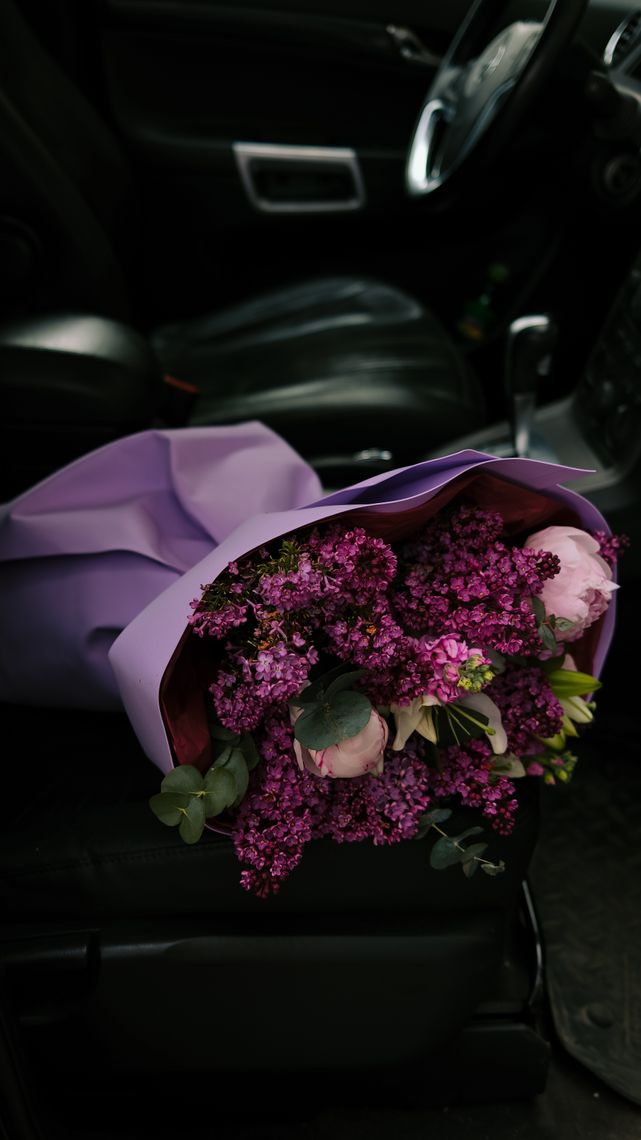
Purple flower meaning traces back thousands of years. Ancient Phoenician traders extracted Tyrian purple dye from sea snails around 1500 BCE, and a single ounce cost the equivalent of roughly $6,000 in today's USD. Only royalty could afford purple garments — and that association stuck.
- Here's what different purple flower shades symbolize today:
- Deep purple communicates royalty, dignity, and deep admiration
- Light purple expresses grace, femininity, and early romantic feelings
- Violet carries spiritual awareness, creativity, and mystery
- Lavender (pale bluish-purple) signals calm, serenity, and devotion
- Mauve suggests sentimentality and nostalgia
Purple flowers represent different things for different occasions in the U.S. A bouquet of dark purple calla lilies suits a corporate promotion. Pale purple hydrangeas fit a baby shower. And a handful of violet asters says "I'm thinking of you" without needing a special reason at all.
Common purple flowers: names and descriptions
These purple flower types show up in gardens and florist shops across the country. You'll find most at any Home Depot, Lowe's, or local nursery between March and June.
Lavender (Lavandula angustifolia)
Lavender thrives in USDA zones 5–9 and needs full sun — at least 6 hours daily. A mature plant reaches 12–24 inches tall. English lavender blooms from June through August, and its flowers dry beautifully for sachets and wreaths. Cut stems just as the bottom third of buds open. That timing locks in the strongest fragrance.
Lilac (Syringa vulgaris)
Lilacs need cold winters to bloom. Zones 3–7 work best. A standard lilac bush grows 8–15 feet tall and produces clusters of small, intensely fragrant flowers in mid-spring. Lilacs bloom for only about 2 weeks each year, making the season feel precious. Prune spent blooms immediately after flowering — lilacs set next year's buds in summer.
Clematis (Clematis spp.)
Clematis vines can reach 20 feet in a single season, depending on the variety. 'Jackmanii' — one of the most popular cultivars since 1858 — produces 4–6-inch deep purple blooms from June through September. Plant clematis roots in shade and train the vine toward sunlight. The old rule holds true: "Feet in the shade, head in the sun."
Iris (Iris germanica)
Bearded irises bloom in late spring across zones 3–9. Each flower lasts about 3 days, but a single stalk carries 6–12 buds that open in sequence. Purple irises stand 24–36 inches tall. Divide crowded rhizomes every 3–4 years in late summer to keep blooms strong.
Hydrangea (Hydrangea macrophylla)
Here's something fun. Hydrangea color depends on soil pH. Aluminum in acidic soil (pH below 6.0) pushes blooms toward blue and purple. Alkaline soil (pH above 7.0) shifts them toward pink. You can nudge a hydrangea purple by adding aluminum sulfate to the soil at a rate of 1 tablespoon per gallon of water, applied in early spring.
Salvia (Salvia nemorosa)
Salvia 'Caradonna' sends up spiky purple flower stalks from May through September. Each stalk rises about 18–24 inches. Salvia handles heat, drought, and poor soil — a workhorse for zones 4–8. Deadhead spent spikes to trigger a second flush of blooms by midsummer.
Allium (Allium giganteum)
Giant allium produces purple globes the size of softballs, perched on 3–4-foot stems. Plant bulbs in fall, 6 inches deep. Allium blooms appear in late May or early June and last about 3 weeks. Deer and rabbits avoid alliums because the bulbs belong to the onion family.
Light purple flowers for a softer look
Light purple flowers — sometimes called pale purple flowers — soften garden borders and blend well with whites, creams, and silvers. These work especially well in cottage-style plantings.
Wisteria (Wisteria sinensis)
Wisteria produces cascading clusters of pale purple blooms, each cluster measuring 12–36 inches long. Wisteria blooms between April and May in zones 5–9. A single vine can live over 100 years. Fair warning: wisteria grows aggressively. Train it onto a sturdy pergola or arbor rated for at least 200 pounds.
Sweet pea (Lathyrus odoratus)
Sweet peas bloom in light purple, lavender, and mauve tones from spring through early summer. Sow seeds outdoors 4–6 weeks before your last frost date. Sweet peas prefer cool weather — once temperatures hit 85°F consistently, blooming slows. In USDA zones 9–11, plant sweet peas in fall for winter and spring flowers.
Crocus (Crocus vernus)
Crocuses pop through snow in late February or early March. Each bulb produces 1–3 blooms that stand 3–6 inches tall. 'Flower Record' and 'Remembrance' are two reliably purple cultivars. Plant crocus corms 3 inches deep in fall, spaced about 3 inches apart. Squirrels love digging them up — cover freshly planted areas with chicken wire for the first season.
Lisianthus (Eustoma grandiflorum)
Lisianthus rivals roses in elegance. Pale purple lisianthus blooms feature ruffled, multi-layered petals that last up to 2 weeks in a vase. This flower grows natively in prairies from Nebraska to Texas. Florists across the U.S. rank lisianthus among the top 5 cut flowers for weddings.
Balloon flower (Platycodon grandiflorus)
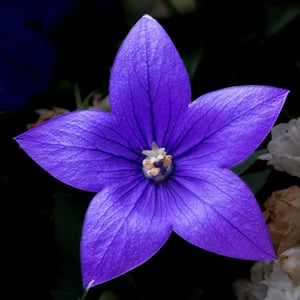
Before opening, balloon flower buds puff up into perfect little balloons. Kids love them. The star-shaped blooms open to about 2–3 inches wide in a soft bluish-purple. Balloon flowers thrive in zones 3–8 and grow 12–30 inches tall. Leave the roots undisturbed — balloon flowers develop deep taproots that resent transplanting.
Dark purple flowers for bold contrast
Dark purple flowers create dramatic focal points. Pair them with chartreuse foliage or white blooms for maximum impact.
Monkshood (Aconitum napellus)
Monkshood produces hooded flowers in inky purple along 3–5-foot spikes. Blooming runs from late summer into fall, filling a gap when many other perennials have finished. Important: every part of monkshood contains aconitine, a potent toxin. Wear gloves when handling the plant. Keep monkshood away from vegetable gardens and areas where pets dig.
Hellebore (Helleborus orientalis)
Hellebores — also called Lenten roses — bloom as early as January in mild climates (zones 4–9). Dark purple cultivars like 'Onyx Odyssey' produce double blooms that face downward. Tilt the flowers up by trimming old foliage in late winter. Hellebores tolerate deep shade, which makes them rare among flowering perennials.
Passion flower (Passiflora incarnata)
Passion flowers look almost alien. Each bloom features a complex corona of purple filaments surrounding the central structure. Passion flowers bloom from June through September in zones 5–9 and produce edible fruit called maypops. The vine grows up to 25 feet in a single season. Spanish missionaries in the 1500s named the flower after the Passion of Christ, linking its 10 petals to the 10 faithful apostles.
Purple dahlia (Dahlia spp.)
Dahlias offer the darkest purples in the flower world. 'Thomas Edison' — introduced in the 1920s — produces dinner-plate-sized blooms (8–10 inches across) in deep magenta-purple. Dahlias grow from tubers planted after the last frost. Dig tubers up before the first hard freeze in zones colder than 8.
Rare purple flowers worth seeking out
Rare purple flower species demand more effort but deliver jaw-dropping results. These rarely appear at big-box garden centers — try specialty nurseries or online growers.
Purple orchid (Cattleya purpurata)
The ghost orchid (Dendrophylax lindenii) blooms white, but the closely related Cattleya purpurata produces stunning purple orchid blooms. Cattleya orchids need 50–70% humidity and bright indirect light. Grow them indoors in most U.S. climates. A healthy cattleya blooms once a year, and each bloom lasts 2–6 weeks.
Sea holly (Eryngium planum)
Sea holly produces metallic, silvery-purple thistle-like flower heads on stiff blue stems. The texture looks more sculpture than flower. Sea holly handles sandy, poor soil and full sun in zones 4–9. Cut stems dry naturally and hold their color for months — a favorite in dried arrangements.
Chocolate cosmos (Cosmos atrosanguineus)
Chocolate cosmos earns its name from a genuine chocolate scent. The flowers bloom in deep brownish-purple from midsummer through fall. Chocolate cosmos grows 12–30 inches tall in zones 7–10. This species went extinct in the wild around 1902, and every cultivated plant today descends from a single clone kept alive through vegetative propagation.
Bee orchid (Ophrys apifera)
Bee orchids mimic the appearance of a female bee to attract male pollinators. The purple-and-brown blooms measure about 1 inch across. Bee orchids grow wild in parts of Europe but rarely appear in U.S. gardens. Specialty growers occasionally stock them for zones 6–8. Germination takes up to 2 years.
Looking for purple blooms?
Browse arrangements from local florists and pick one that suits the occasion.
Violet flowers vs. purple flowers: what's the difference?
People use "violet" and "purple" interchangeably. Technically, violet sits at the shortest wavelength of visible light (380–450 nanometers), while purple mixes red and blue wavelengths. Your eyes see a difference even when you can't name it.
- In practical gardening terms, violet-colored flowers tend to lean bluer, while purple flowers often carry warmer red undertones. Here are some truly violet-toned species:
- Violet (Viola odorata) — the namesake flower, growing just 4–8 inches tall, with edible blooms
- Dwarf iris (Iris reticulata) — a February bloomer standing 4–6 inches high, perfect for rock gardens
- Bellflower (Campanula spp.) — bell-shaped blooms in true violet, thriving in zones 3–8
- Heliotrope (Heliotropium arborescens) — clusters of tiny violet flowers with a vanilla-like scent
- Verbena (Verbena bonariensis) — tall, airy stems topped with violet flower clusters, reaching 4–6 feet
Purple flowers for every U.S. holiday and occasion
- Purple flowers carry enough meaning to fit nearly any event. Here's a quick guide matched to major American occasions:
- Valentine's Day (February 14): Purple roses or purple tulips — these signal enchantment and love at first sight. A dozen purple roses from most florists costs $45–$85 depending on the variety.
- Mother's Day (second Sunday in May): Lilacs, lavender, and light purple hydrangeas. All three bloom naturally in May across most of the U.S.
- Memorial Day (last Monday in May): Purple irises honor remembrance. The iris serves as the birth flower for February, but its association with faith and hope makes it fitting here.
- July 4th: Mix purple petunias with white daisies and red geraniums for a patriotic container planting. All three bloom in summer heat.
- Thanksgiving (fourth Thursday in November): Purple ornamental kale and late-season asters hold up in cool temperatures. Both add texture to fall tablescapes.
- Sympathy and funerals: Deep purple gladiolus, calla lilies, and chrysanthemums. Purple communicates respect and dignity without the starkness of all-white arrangements.

How to care for cut purple flowers
- You just received a bouquet of purple flowers. Now what? Follow these steps to extend vase life by 5–7 days:
- Trim 1 inch off each stem at a 45-degree angle using sharp shears — never scissors, which crush the stem fibers.
- Remove every leaf that falls below the waterline — submerged leaves breed bacteria within 24 hours.
- Fill the vase with lukewarm water (100–110°F) and add the included flower food packet.
- Place the vase away from fruit bowls — ripening fruit releases ethylene gas, which wilts petals faster.
- Change the water completely every 2 days and re-trim stems by half an inch each time.
- Keep the arrangement out of direct sunlight and away from heating vents or air conditioning drafts.
- Quick note on hydrangeas specifically: if a purple hydrangea bloom wilts in the vase, submerge the entire flower head in cool water for 45 minutes. The petals absorb water directly and often perk back up.
Common mistakes when growing purple flowers
- Even experienced gardeners trip up. Here are five frequent errors and how to dodge them.
- Mistake #1: Planting lavender in rich, moist soil. Lavender evolved in rocky Mediterranean terrain. Amend heavy clay soil with coarse sand or perlite. Lavender roots rot in consistently wet ground.
- Mistake #2: Pruning lilacs at the wrong time. Lilac buds form on old wood. Prune after blooming finishes in late spring — never in fall or winter, or you'll cut off next year's flowers.
Mistake #3: Forgetting to stake tall purple flowers. Delphiniums, gladiolus, and monkshood all grow 3–5 feet tall. Wind and heavy rain snap unsupported stems. Install stakes or grow-through rings early in the season, before stems get tall enough to need them.
Mistake #4: Overwatering petunias. Purple petunias need moist soil, but soggy roots invite fungal disease. Water container petunias when the top inch of soil feels dry. In-ground petunias usually need water only when rainfall drops below 1 inch per week.
Mistake #5: Ignoring hardiness zones. A gorgeous purple passion flower vine won't survive a Minnesota winter outdoors. Always check the USDA hardiness zone rating before buying. The USDA interactive map at planthardiness.ars.usda.gov gives your zone down to the ZIP code.

A broader list of purple flowers by shade
Need a quick-reference list? Here are purple flowers organized by shade, from darkest to lightest.
Deep and dark purple flowers
- Monkshood (Aconitum napellus) — zones 3–7, blooms late summer
- 'Thomas Edison' Dahlia — zones 8–11, blooms midsummer through fall
- 'Queen of Night' Tulip — zones 3–8, blooms mid-spring
- Black Bat Flower (Tacca chantrieri) — zones 10–11, tropical
- Purple Calla Lily (Zantedeschia spp.) — zones 8–10, blooms summer
Mid-tone purple flowers
- Clematis 'Jackmanii' — zones 4–8, blooms June–September
- Purple Coneflower (Echinacea purpurea) — zones 3–8, blooms summer
- Catmint (Nepeta 'Walker's Low') — zones 3–8, blooms May–September
- Salvia 'Caradonna' — zones 4–8, blooms May–September
- Lupine (Lupinus spp.) — zones 4–8, blooms late spring
Pale and light purple flowers
- Sweet Pea (Lathyrus odoratus) — annual, blooms spring
- Wisteria (Wisteria sinensis) — zones 5–9, blooms April–May
- Crocus 'Remembrance' — zones 3–8, blooms late winter
- Lisianthus (Eustoma grandiflorum) — zones 8–10, blooms summer
- Scabiosa (Scabiosa columbaria) — zones 5–9, blooms summer through fall
How to pair purple flowers in your garden
- Purple sits opposite yellow on the color wheel, so pairing purple with yellow creates instant visual energy. Try purple salvia behind yellow coreopsis. Or interplant deep purple tulips with daffodils for a spring show.
- For a calming effect, combine purple with blue and white. Lavender next to white Shasta daisies and blue Russian sage creates a Provençal-style border.
- Silver-foliaged plants — lamb's ear, artemisia, dusty miller — make purple flowers glow. The silvery leaves reflect light onto purple petals, intensifying the color.
- Avoid planting purple flowers against red brick walls. The warm background clashes with purple's blue undertones. Stone, white fences, or dark green hedges make much better backdrops.
Your best purple flower picks by garden condition
| Condition | Best purple flowers | Notes |
|---|---|---|
| Full sun (6+ hours) | Lavender, salvia, allium, coneflower | All tolerate heat and some drought |
| Partial shade (3–6 hours) | Hellebore, hydrangea, bellflower | Hydrangea color depends on soil pH |
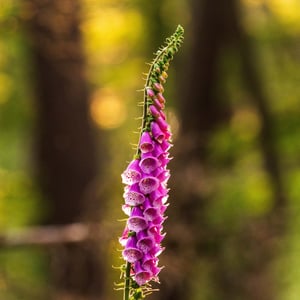
| Deep shade (under 3 hours) | Lungwort, violet, foxglove | Foxglove self-seeds in shaded areas |
| Containers | Petunia, pansy, heliotrope, lisianthus | Use potting mix, not garden soil |
| Dry soil | Catmint, Russian sage, sea holly | All three handle drought after establishing |
| Wet soil | Iris, monkshood, bee balm | Keep soil moist but not waterlogged |
Purple flowers reward you in every season and setting — from the first crocus poking through February snow to the last dahlia bloom before November frost. The key is matching the species to your zone, your soil, and your light. Start with two or three types that fit your conditions instead of buying everything that catches your eye at the nursery. You'll build a more cohesive garden and learn what genuinely thrives in your yard.
Got a purple flower growing right now that didn't make this list? Drop its name in the comments — your fellow gardeners will thank you.
Send flowers today
Choose your bouquet, add a message, and let a local florist hand-deliver it.
FAQ
What do purple flowers symbolize?▾
Purple flowers symbolize royalty, admiration, and dignity. Lighter shades express grace and youthful romance, while deeper purples signal respect and spiritual depth. The specific meaning shifts with the species — lavender means devotion, irises mean faith, and purple roses mean enchantment.
What is the easiest purple flower to grow?▾
Catmint (Nepeta 'Walker's Low') ranks among the easiest. Catmint tolerates drought, poor soil, heat, and cold across zones 3–8. The plant blooms from May through September with minimal deadheading and resists most pests.
Are there purple flowers that bloom all year in the U.S.?▾
No single purple flower blooms 12 months outdoors in any U.S. climate. You can achieve near-continuous purple bloom by staggering species: crocuses in February, irises in April, lavender in June, coneflowers in August, and asters in October.
What purple flowers grow well in shade?▾
Hellebores, lungwort (Pulmonaria), violets, and foxglove all produce purple blooms in partial to full shade. Hellebores even bloom in deep shade as early as January in zones 6–9.
Can I change my hydrangea to purple?▾
Yes. Apply aluminum sulfate to the soil around your hydrangea at a rate of 1 tablespoon per gallon of water during early spring. The aluminum shifts blooms from pink toward purple and blue. Repeat monthly for best results. Soil pH needs to stay below 6.0 for purple tones to develop.
What are some long-stemmed purple flowers for bouquets?▾
Delphinium, gladiolus, liatris, and larkspur all produce long stems suited for tall vase arrangements. Gladiolus stems reach 2–4 feet, and each spike carries 6–8 blooms that open from bottom to top over about a week.