EUR
 GBP
 CAD
 AUD

 Birthday
 Same Day
 Occasions
 Flowers
 Roses
 Plants
 Gifts
 International Flower Delivery
Best Fall Flowers to Plant
- 🌼 Plant fall flowers between late August and mid-October — 6 to 8 weeks before your region's first frost date — so roots establish before winter dormancy kicks in.
- 🪴 Chrysanthemums, asters, sedum, pansies, and Japanese anemones rank among the best perennial flowers to plant in fall because they return each year in Zones 3–9.
- 🍂 Amend soil with 2–3 inches of compost at planting time and mulch 3 inches deep to protect roots through winter, giving spring a head start.
Your garden doesn't have to look tired by September. Fall flowers to plant right now can keep your yard blooming from late August through the first hard frost — and some will come back year after year without replanting. Over 50 species thrive during autumn across USDA Hardiness Zones 3 through 9, so you've got choices whether you garden in Minnesota or Mississippi. This guide walks you through the best annuals, perennials, and shrubs to put in the ground this season, plus the planting tricks and care steps that most gardening sites skip.
What flowers to plant in fall — and why autumn planting works
Fall flowers to plant actually establish roots faster than spring plantings. Here's why. Soil temperature in September and October typically sits between 55 °F and 65 °F across most of the continental U.S. That range encourages strong root growth. Meanwhile, cooler air temperatures reduce transplant shock.
Two more advantages make fall planting smart:
- Less watering. Rainfall increases in most U.S. regions during autumn, so you spend fewer hours dragging out the hose.
- Fewer pests. Japanese beetles, aphid populations, and fungal spores decline sharply after Labor Day.
The USDA Plant Hardiness Zone Map — updated in November 2023 for the first time since 2012 — shifted roughly half of the country into warmer half-zones. Check your new zone at planting time, because your old favorite variety might now share space with subtropical options you didn't have before.

Best fall flowers to plant: annuals that bloom until frost
Annuals give you instant color. You plant them, they flower within days, and they keep going until freezing temperatures shut them down. Here are seven standout annuals for fall.
Marigolds (Tagetes spp.)
Marigolds handle light frost down to about 28 °F. French marigolds stay compact at 6–12 inches tall, while African marigolds can reach 36 inches. Deadhead spent blooms every 5 days to push continuous flowering. Marigolds also repel certain nematodes in garden soil — a bonus worth mentioning.
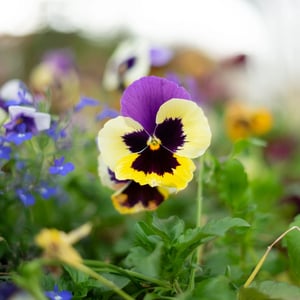
Pansies (Viola × wittrockiana)
Pansies thrive in temperatures between 40 °F and 60 °F. Plant pansies 6 to 9 inches apart in well-drained soil. In Zones 6 through 8, pansies survive mild winters and bloom again in early spring. That makes pansies a two-season investment.
Zinnias (Zinnia elegans)
Zinnias germinate fast — often within 5 to 7 days from seed. Sow zinnias directly into garden beds by mid-August in Zones 5–7 for blooms that last through October. Tall varieties ('Benary's Giant') reach 40–50 inches. Dwarf types ('Thumbelina') top out at 6 inches.
Celosia
Celosia comes in three main forms: crested, plumed, and spiked. All three tolerate heat well, making celosia a strong pick for southern gardens in Zones 8–9. Space plants 10–12 inches apart. Cut celosia stems for indoor arrangements too — the blooms hold color for 10+ days in a vase.
Snapdragons (Antirrhinum majus)
Snapdragons actually prefer cool weather. Plant snapdragon seedlings in early September across Zones 4–7 for fall blooms. Tall cultivars reach 36 inches. Snapdragons come in over 20 color variations, from burgundy to peach.
Sweet alyssum (Lobularia maritima)
Sweet alyssum stays low — usually under 6 inches — and spreads to form a fragrant carpet. Pollinators love sweet alyssum. One plant can spread 12 inches wide. Use sweet alyssum as edging along walkways or in containers.
Ornamental kale and cabbage (Brassica oleracea)
Technically not a flower. But ornamental kale intensifies in color as temperatures drop below 50 °F, producing vivid purples, pinks, and whites. Each rosette spans 12–18 inches. Ornamental kale lasts well into December in Zones 6–8.
Perennial flowers to plant in fall for years of color
Perennial flowers to plant in fall save you money and effort over time. You plant once. The roots overwinter. New growth returns each spring. Fall planting gives perennials a full dormant season to spread roots before summer heat arrives.
Chrysanthemums (garden mums)
Chrysanthemums — mums — dominate fall gardens for good reason. Over 20,000 cultivated varieties exist worldwide. Plant mums at least 6 weeks before your first expected frost so roots anchor properly. In Zone 6, that means getting mums in the ground by mid-September. Space plants 18–24 inches apart. Pinch stems back until mid-July the following year for bushier growth.
Asters (Aster spp.)
New England asters (Aster novae-angliae) grow 3–6 feet tall and bloom in purple, pink, and white from September through November. New York asters (Aster novi-belgii) stay more compact at 1–3 feet. Both species attract monarch butterflies during fall migration. Plant asters in full sun with good air circulation — asters develop powdery mildew in crowded, shady spots.
Sedum / stonecrop (Hylotelephium spp.)
Sedum 'Autumn Joy' reaches about 24 inches tall and shifts color from pale pink in August to copper-red by November. Sedum thrives in poor, rocky soil. Overwatering kills sedum faster than neglect does. Water only during extended dry spells — roughly once every 10–14 days without rain.
Black-eyed Susan (Rudbeckia fulgida)
Rudbeckia spreads reliably through Zones 3–9. The variety 'Goldsturm' (introduced in 1937 by Karl Foerster's nursery in Germany) remains one of the top-selling perennials in the U.S. Each plant produces dozens of golden-yellow blooms from August into October. Space Rudbeckia 18 inches apart.
Japanese anemone (Eriocapitella × hybrida)
Japanese anemones bloom September through October with elegant, single or double flowers in white and pink. Plants reach 2–4 feet tall. Japanese anemones prefer partial shade — an unusual trait among fall bloomers. Give Japanese anemones consistent moisture; the roots spread aggressively once established, so install a root barrier in small beds.
Russian sage (Salvia yangii)
Russian sage produces lavender-blue flower spikes from midsummer well into November. Each plant reaches 3–5 feet tall and wide. Russian sage laughs at drought and poor soil. In fact, rich soil makes Russian sage flop over. Plant in full sun, cut stems to 6 inches in late winter, and new growth emerges by April.
Coneflower (Echinacea purpurea)
Echinacea blooms July through October, bridging summer and fall. Leave spent seed heads standing through winter — goldfinches feed on coneflower seeds during cold months. Plants reach 2–5 feet. Echinacea naturalizes readily, meaning the plant self-sows and expands your patch without extra work.
Goldenrod (Solidago spp.)
Good news: goldenrod does not cause hay fever. Ragweed does. Goldenrod gets blamed because the two plants bloom at the same time. Each goldenrod stem carries hundreds of tiny yellow flowers that attract over 100 species of native bees. Goldenrod grows 2–5 feet tall in Zones 3–9.
Flowers to plant in fall and winter: extending the season
Wondering what flowers to plant in the fall that also handle winter cold? Several species bridge both seasons, especially in Zones 7–9.
Pansies and violas for winter color
Pansies tolerate temperatures down to about 20 °F. In the mid-Atlantic and Southeast, many gardeners plant pansies in October and enjoy blooms through February. Violas (smaller-flowered cousins of pansies) handle even colder snaps — down to 15 °F in some cultivars.
Camellia (Camellia sasanqua)
Sasanqua camellias bloom October through December. These shrubs grow 6–10 feet tall and thrive in Zones 7–9. Plant camellias in acidic soil (pH 5.5–6.5) with afternoon shade. Camellias produce flowers 2–3 inches across in white, pink, and red.
Witch hazel (Hamamelis spp.)
Witch hazel blooms in late winter — January through March — with spidery yellow or orange flowers. The fragrance carries 20 feet or more on still mornings. Witch hazel reaches 15–20 feet tall at maturity. Plant witch hazel in fall so roots develop over winter.
Hellebores (Lenten rose)
Hellebores bloom as early as February, even pushing through snow. Plant hellebore transplants in October or November. Hellebores prefer shade and moist soil. Each plant produces flowers that last 8–10 weeks — far longer than most perennials.
Best fall flowers for containers and pots
Not everyone has garden beds. Containers work beautifully for fall flowers. Use pots at least 12 inches in diameter, and make sure every pot has drainage holes.
Great container picks for fall:
- Calibrachoa (Million Bells) — trailing habit, 8–12 inches long, blooms until frost
- Coral bells (Heuchera) — grown for foliage, not flowers; leaves come in burgundy, lime, peach, and silver
- Ornamental pepper — compact at 8–14 inches, fruits turn red, orange, purple, and yellow
- Dwarf asters — 10–12 inches tall, purple and pink blooms through November
- Trailing verbena — cascades over pot edges, blooms in clusters of purple, red, and white
Swap potting soil annually. Old soil compacts and loses nutrients. Use a fresh mix with perlite for drainage and slow-release fertilizer rated 14-14-14.
Looking for fall blooms without the digging?
Browse arrangements from local florists and pick one that suits the occasion.
When to plant fall flowers by USDA zone
Timing matters more than variety selection. Plant too early, and heat stress kills transplants. Plant too late, and roots don't establish before the ground freezes.
| USDA zone | First frost (approx.) | Best planting window |
|---|---|---|
| Zones 3–4 | Mid-September | Late July – late August |
| Zones 5–6 | Mid- to late October | Late August – mid-September |
| Zones 7–8 | Mid-November | September – early October |
| Zone 9 | Late December | October – mid-November |
Count backward 6–8 weeks from your first frost date. That window gives roots enough time to settle.

5 common mistakes when planting flowers in fall
Mistake 1: planting too deep
Bury the root ball level with the soil surface — not below. Planting too deep suffocates roots and encourages crown rot. This rule applies to mums, asters, and nearly every perennial.
Mistake 2: skipping mulch
Mulch insulates roots through freeze-thaw cycles. Spread 3 inches of shredded bark or straw around plants after the first hard frost. Pull mulch 2 inches away from stems to prevent rot.
Mistake 3: fertilizing too late
Stop feeding perennials after October 1 in Zones 5–7. Late fertilizer pushes tender new growth that freezes. Annuals still benefit from light feeding because annuals won't survive winter anyway.
Mistake 4: ignoring soil drainage
Wet feet kill more fall-planted perennials than cold does. Amend heavy clay soil with 2–3 inches of compost worked into the top 8 inches of soil. Run a simple drainage test: dig a 12-inch-deep hole, fill with water, and time how long draining takes. Aim for 1–3 inches per hour.
Mistake 5: forgetting to water after planting
Cool air tricks people into thinking plants don't need water. Roots still grow actively in 55 °F soil. Water newly planted flowers deeply once a week until the ground freezes. Each watering session should moisten soil 6 inches deep.
Caring for fall flowers through Thanksgiving and beyond
Fall flowers often coincide with Thanksgiving — one of the biggest decorating moments of the year. Here's how to keep your garden and containers looking sharp through late November.
- Deadhead aggressively. Remove spent blooms every 3–5 days. Deadheading redirects energy from seed production back into new flowers.
- Watch for early frost warnings. Cover tender annuals with lightweight fabric (frost cloth or old bedsheets) on nights when temperatures dip below 32 °F. Remove coverings by 9:00 AM so sunlight reaches leaves.
Move containers indoors overnight. Potted plants lose heat faster than in-ground plantings because the pot surface exposes roots to cold air on all sides. Bring containers into a garage or covered porch when overnight lows drop below 28 °F.
Cut back perennials selectively. Leave seed heads on coneflowers, black-eyed Susans, and goldenrod — birds rely on those seeds through winter. Cut back mushy or diseased foliage on everything else to prevent fungal overwintering.


Fall flowers that attract pollinators before winter
Late-season pollinators depend on fall gardens. Monarch butterflies pass through the eastern U.S. between September and November, traveling up to 3,000 miles to overwintering sites in central Mexico. Native bees forage until daily temperatures consistently drop below 50 °F.
The best fall flowers for pollinators include:
- Goldenrod — feeds over 100 native bee species
- Asters — monarch butterflies use asters as nectar fuel during migration
- Sedum 'Autumn Joy' — late-season honeybee magnet
- Salvia (autumn sage) — hummingbirds visit tubular red and coral flowers
- Joe-Pye weed (Eutrochium purpureum) — reaches 5–7 feet, blooms August through October, attracts swallowtail butterflies
Planting even 3–4 pollinator-friendly species makes a measurable difference. A 2019 study from the Xerces Society found that yards with 5+ native flowering species supported 3 times more pollinator visits than lawns without flowers.
Your fall garden starts with one decision
Pick one flower from this guide. Just one. Buy a 4-inch pot or a six-pack of transplants from your local nursery. Get it in the ground this weekend. You'll spend under $5 and maybe 15 minutes digging. By the time you're raking leaves, that single plant will change how your yard feels — and next spring, the perennials will reward the effort all over again.
What are you planting first?
Send flowers today
Choose your bouquet, add a message, and let a local florist hand-deliver it.