EUR
 GBP
 CAD
 AUD

 ✨Boss’s Day✨
 🍭Sweetest Day🍭
 Birthday
 Same Day
 Occasions
 Flowers
 Roses
 Plants
 Gifts
 International Flower Delivery
Iris Flower Meaning & Symbolism
- 🌸 The iris flower carries layered meanings — wisdom, hope, courage, and faith — and each color shifts that message dramatically, so choosing the right shade matters.
- 💜 Purple irises signal royalty and admiration, blue irises express hope and faith, white irises convey purity, and black irises represent strength through mystery.
- 🎁 Irises suit nearly every American occasion from Mother's Day to sympathy gestures, and they last 5–7 days in a vase when you trim stems daily and change water every 48 hours.
The iris flower meaning stretches back over 2,500 years to ancient Greece, where people named the bloom after their goddess of rainbows. You'll find that understanding iris symbolism helps you pick the right color for a birthday, a sympathy arrangement, or a graduation gift — and avoids awkward mix-ups. With more than 300 species across every continent except Antarctica, the iris carries one of the richest symbolic vocabularies in the entire floral world. By the end of this guide, you'll know exactly what each iris color communicates and when to send one.
What does the iris flower symbolize?
Iris flower symbolism centers on three core ideas: wisdom, hope, and courage. Ancient Greeks believed the goddess Iris carried messages between gods and humans by traveling along rainbows. That mythology gave the flower a permanent link to communication and trust.
The French monarchy adopted the iris (often called the fleur-de-lis) as a royal emblem during the Middle Ages, roughly around the 12th century under King Louis VII. That single decision tied the iris to royalty, valor, and divine right for centuries.
Today, Tennessee claims the iris as its official state flower — a designation the state legislature made in 1933. So for Americans, iris symbolism also touches on heritage and regional pride.
Here's a quick breakdown of what iris flowers symbolize across traditions:
- Wisdom — Greek philosophers associated the iris with knowledge and eloquent speech
- Hope — Victorian-era flower dictionaries listed the iris under messages of encouragement
- Faith — Christian iconography placed irises alongside the Virgin Mary in Renaissance paintings
- Valor — French heraldry connected the fleur-de-lis to bravery on the battlefield
- Mourning — Ancient Egyptians placed irises on graves as early as 1,479 BCE, based on iris motifs found at the Temple of Thutmose III
That last point surprises many people. The iris doubles as a sympathy flower in several cultures.

The iris goddess symbol: Greek mythology and beyond
The iris goddess symbol originated with Iris, the Greek deity who served as a personal messenger for Hera. Iris traveled between Mount Olympus and Earth on a rainbow bridge. Greeks planted purple irises on women's graves, believing the goddess would guide departed souls to the afterlife.
That belief had a practical side too. Greek families placed irises on burial sites throughout the 5th century BCE as a literal summons for the goddess. The tradition persisted for hundreds of years.
Beyond Greece, Japanese culture embraced iris symbolism by the 8th century. The Japanese word for iris — hanashōbu — became associated with Boys' Day (now Children's Day, celebrated every May 5). Samurai families hung iris leaves in doorways. The sword-shaped foliage symbolized strength and protection.
In Egypt, pharaohs commissioned iris imagery on palace walls. The Sphinx at Giza sits near ancient garden sites where archaeologists found evidence of iris cultivation dating to roughly 1,500 BCE.
So the iris goddess symbol isn't just Greek — it's a cross-cultural thread connecting communication, transition, and spiritual guidance.



Iris flower meaning by color
Color changes everything. A purple iris says something completely different from a white one. Here's what each shade communicates.
Purple iris meaning
Purple iris meaning revolves around royalty, admiration, and deep respect. Purple dye cost a fortune in the ancient world — roughly 10,000 shellfish produced just 1.4 grams of Tyrian purple pigment. That scarcity made purple an elite color, and the purple iris inherited that prestige.
Give purple irises to someone you genuinely admire. They work beautifully for:
- Congratulating a promotion or professional milestone
- Honoring a mentor or teacher during Teacher Appreciation Week (first full week of May)
- Expressing gratitude to a parent on Mother's Day or Father's Day
Purple iris flower meaning also overlaps with wisdom. A bouquet of 5–7 purple irises makes a thoughtful graduation gift, especially paired with a handwritten note.
Blue iris flower meaning
Blue iris flower meaning focuses on hope, faith, and inner calm. The blue iris became a popular tattoo motif in the early 2000s because people connected its color to trust and spiritual depth.
Blue irises are harder to find than purple ones. True blue cultivars — like 'Blue Magic' and 'Sapphire Beauty' — bloom for just 2–3 weeks in late spring. That scarcity adds emotional weight. Sending blue irises tells someone: "I believe in you."
Blue iris meaning also carries a note of serenity. Therapists' offices and meditation spaces often feature blue iris imagery for exactly that reason.
White iris flower meaning
White iris flower meaning centers on purity, innocence, and sympathy. Florists across the U.S. include white irises in sympathy arrangements more than any other iris color.
White irises work well for:
- Sympathy and memorial services
- Weddings (especially spring ceremonies from April through June)
- New baby celebrations
- Religious occasions like baptisms and confirmations
A single white iris in a bud vase can say more than a dozen roses in the right context. Keep that in mind.
Black iris flower meaning
Black iris flower meaning carries the most mystique. True black irises don't actually exist — the darkest cultivars, like 'Before the Storm' and 'Superstition,' appear deep violet or maroon. Jordan even designated the black iris (Iris nigricans) as its national flower in 1929.
Black irises symbolize elegance, mystery, and resilience. Some people send black irises to acknowledge someone who overcame a difficult chapter. Others use black irises in Gothic-themed floral designs or dramatic event centerpieces.
The rarity of dark iris cultivars also makes black irises a statement of individuality. You're saying: "I see something extraordinary in you."
Yellow and orange irises
Yellow irises radiate warmth and positive energy. Give yellow irises to celebrate friendships or to cheer someone up during a tough week. One note of caution: in parts of Latin America, yellow flowers carry romantic rejection connotations. In the U.S., yellow irises stay firmly in "happiness" territory.
Orange irises signal enthusiasm, passion, and creative energy. These bloom less commonly than purple or blue varieties, so finding fresh orange irises may require a special request from your local florist.
Iris flower symbolism through history
Iris flower symbolism evolved across centuries and civilizations. Here's a timeline of key moments:
Ancient Egypt (c. 1,500 BCE): Pharaoh Thutmose III commissioned iris images on temple walls at Karnak. The iris represented power and connection to the divine.
Ancient Greece (5th century BCE): Greeks named the flower after their rainbow goddess Iris. They planted purple irises on graves and used iris root in medicine.
Medieval France (12th century): King Louis VII adopted the fleur-de-lis — likely a stylized iris — as a royal emblem during the Second Crusade around 1147.
Victorian England (1837–1901): The Language of Flowers (floriography) assigned the iris meanings of faith, hope, and valued friendship. Victorian lovers exchanged irises when words felt too bold.
Modern America (1933–present): Tennessee named the iris its state flower. Today, the American Iris Society — founded in 1920 — registers over 30,000 named cultivars.
That 3,500-year arc shows how iris symbolism adapts while keeping its core identity: a flower that bridges worlds, carries messages, and honors deep emotions.
When to give iris flowers: occasions and U.S. holidays
Irises fit more occasions than most people realize. Here's a practical guide matched to the American calendar.
Spring and summer occasions
- Mother's Day (second Sunday in May): Purple irises honor a mother's wisdom; white irises suit a more understated tribute
- Graduation season (May–June): Blue or purple irises paired with greenery reflect hope and achievement
- Memorial Day (last Monday in May): White or deep purple irises for grave sites carry historic resonance
- Father's Day (third Sunday in June): Bold blue or yellow irises break from the typical "ties and tools" gifts
Year-round occasions
- Sympathy: White irises, alone or mixed with white lilies, carry a quiet, respectful message
- Get well soon: Yellow irises brighten a hospital room without triggering fragrance sensitivities — iris blooms produce a mild, clean scent
- 25th wedding anniversary: Irises serve as the traditional flower for the 25th anniversary — a fact many people overlook
- Housewarmings: A potted bearded iris (which can grow 24–40 inches tall) makes a lasting gift the recipient can plant outdoors
Occasions to think twice
Black irises can confuse recipients who aren't familiar with floral symbolism. Always include a card explaining your intention. And avoid sending yellow irises to someone from a culture where yellow flowers carry negative connotations — ask the florist for guidance.
Looking for graduation flowers?
Browse graduation flowers from local florists and pick one that suits the moment.
How to care for cut irises (tips for the American climate)
Cut irises last 5–7 days in a vase. Proper care extends that window, especially during hot American summers when AC dries indoor air fast.
Day 1: Prep
- Trim 1 inch off each stem at a 45-degree angle using sharp scissors
- Remove any leaves that fall below the waterline
- Fill a clean vase with room-temperature water and add the flower food packet
- Place the vase away from direct sunlight, heating vents, and fruit bowls (fruit emits ethylene gas, which accelerates wilting)
Every 2 days: Refresh
- Pour out old water and rinse the vase
- Refill with fresh, room-temperature water
- Trim another half inch off each stem
- Remove any petals that look brown or droopy
Climate-specific tips
Summers in Phoenix, Houston, or Miami push indoor temperatures even with AC. Keep iris arrangements in the coolest room of your house — ideally between 60°F and 70°F. Irises wilt faster above 75°F.
In dry climates like Denver or Albuquerque (where humidity often drops below 20%), mist the petals lightly once a day. That extra moisture can add 1–2 days of bloom life.
Common mistakes when choosing iris flowers
Mistake number one: picking color based on preference alone. Your favorite shade might send the wrong message. A person grieving doesn't want orange irises screaming "excitement." Match color to context first, then personal taste.
Mistake number two: crowding irises in a vase. Iris blooms measure 3–6 inches across depending on the cultivar. Five stems need a vase at least 4 inches wide at the mouth. Cramped petals bruise and brown within 24 hours.
Mistake number three: mixing irises with strongly scented flowers like stargazer lilies or gardenias. The iris has a delicate, slightly sweet fragrance — especially the bearded varieties. Overpowering partners drown out that subtlety.
Mistake number four: forgetting about timing. Iris season peaks from April through June in most of the U.S. Ordering irises in December means your florist will rely on greenhouse-grown Dutch imports, which cost 30–50% more than seasonal blooms. Plan around seasonality to get the freshest stems.
Iris varieties worth knowing
Over 300 iris species exist. You don't need to memorize all of them, but knowing a few popular types helps you talk to your florist with confidence.
- Bearded irises — the most common garden variety in the U.S., named for the fuzzy "beard" on each lower petal, blooming May through June, heights range from 8 inches (dwarf) to 40 inches (tall)
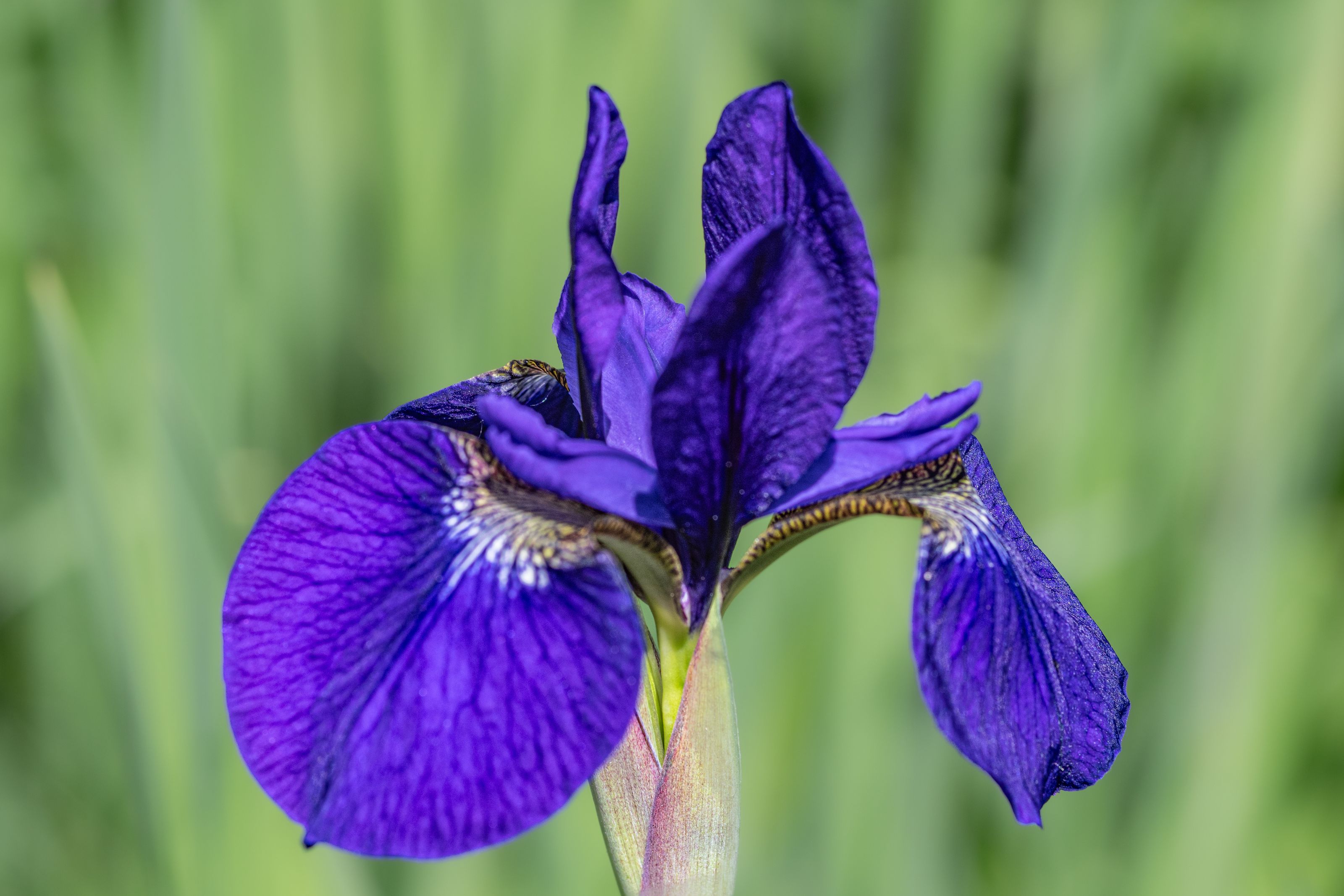
- Siberian irises — slender petals, grasslike foliage, thriving in USDA Hardiness Zones 3–8, extremely cold-hardy and drought-tolerant once established
- Dutch irises — the standard cut flower iris sold by most American florists, growing from bulbs, producing clean stems 18–24 inches tall
- Japanese irises — flat, ruffled blooms up to 10 inches across, preferring wet soil near ponds, blooming in late June through July
- Louisiana irises — native to the Gulf Coast region, thriving in swampy conditions, offering unusual color patterns including bi-tones and plicatas
Bearded and Dutch irises dominate the U.S. gift market. Japanese and Louisiana irises appeal more to gardeners.
Iris symbolism in art, tattoos, and pop culture
Vincent van Gogh painted his famous "Irises" in May 1889 while staying at the Saint-Paul-de-Mausole asylum in Saint-Rémy-de-Provence, France. Sotheby's auctioned that painting in 1987 for $53.9 million — a record at the time. Van Gogh's choice of irises wasn't random. The flower's association with hope and endurance matched the artist's personal struggle.
Iris tattoos rank among the top 20 floral tattoo designs in the U.S. according to multiple tattoo studio surveys from 2023. People choose blue iris tattoos for faith, purple for self-respect, and black for overcoming adversity. The sword-shaped leaves make irises visually striking in linear tattoo compositions.
In literature, the iris appears in Tennessee Williams' work (fitting, given the Tennessee state flower connection) and in numerous haiku by the Japanese poet Matsuo Bashō, who wrote about irises in the 17th century.



Your turn: pick the right iris
Next time you stand in front of a flower case or browse an online catalog, you'll see irises differently. Each petal carries a layered message — shaped by Greek mythology, French royalty, Japanese warrior culture, and 3,500 years of human emotion.
My honest suggestion? Start with purple or blue. Purple irises cover the broadest range of occasions, from admiration to congratulations to sympathy. Blue irises add a hopeful, calming dimension that few other flowers match.
And if someone ever sends you an iris, look up the color before you respond. The sender probably chose that shade on purpose.
Send flowers today
Choose a bouquet, add a message, and a local florist hand-delivers it.