EUR
 GBP
 CAD
 AUD

 ✨Boss’s Day✨
 🍭Sweetest Day🍭
 Birthday
 Same Day
 Occasions
 Flowers
 Roses
 Plants
 Gifts
 International Flower Delivery
Lupine Flower Meaning & Care Guide
- 🌿 Lupine flowers thrive in USDA zones 3–8, fix nitrogen in poor soils, and reach up to 4 feet — making them one of the most rewarding perennials for beginner gardeners.
- 🌱 Sow lupine seeds directly outdoors in early spring or late fall, after scarifying each seed with sandpaper and soaking it for 24 hours to break dormancy.
- 🦌 Deer generally avoid lupine foliage because the plant contains toxic alkaloids, but aphids and powdery mildew remain the two biggest threats to watch for.
The lupine flower belongs to a genus of over 200 species, and it can shoot up to 4 feet tall in a single growing season. You want that kind of drama in your garden — or at least you want to understand why lupine fields across Maine, Texas, and the Pacific Northwest stop traffic every spring. This guide walks you through the lupine plant from root to bloom tip: what lupine flowers symbolize, how to grow them from seed, which colors suit your landscape, and how to keep the plants thriving across USDA zones 3 through 8.
What does "lupine" mean? Origin and etymology
The lupine flower takes its name from the Latin word lupinus, meaning "wolf." Ancient Romans believed the plant devoured soil nutrients the way a wolf devours prey. The irony? Lupines actually feed the soil. As legumes in the Fabaceae family, lupine plants partner with Rhizobium bacteria to fix atmospheric nitrogen into the ground. That relationship enriches depleted earth rather than stripping it.
Merriam-Webster lists two pronunciations: LOO-pin and LOO-pyne. Both work. The British spelling drops the "e" — lupin — so you'll spot both forms in seed catalogs. George Russell, an English horticulturist born in 1857, spent over 25 years hybridizing wild lupines into the vibrant Russell lupine flower varieties sold today. Russell released his first hybrids in 1937. Those cultivars remain among the most popular choices at American nurseries nearly 90 years later.
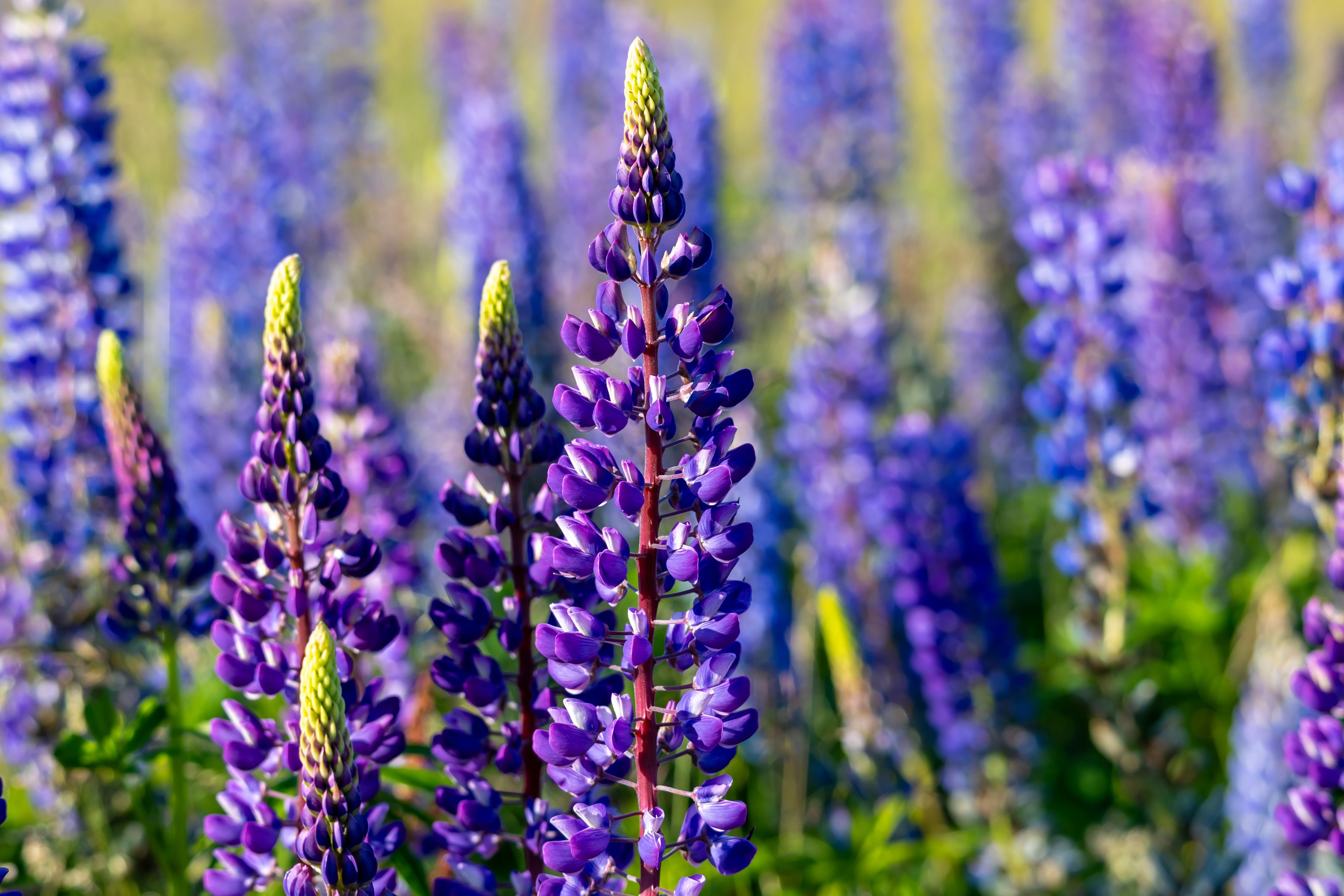
Lupine flower meaning and symbolism
Lupine symbolism varies by culture, but a handful of themes recur across traditions and eras.
Imagination and creativity
Victorian-era floriography linked the lupine flower meaning to imagination. The towering spires and unusual palmate leaves set lupines apart from typical garden blooms, and Victorians associated that distinctness with creative thinking.
Happiness and admiration
In the language of flowers, a gift of lupine flowers signals admiration or deep contentment. A bouquet of blue lupine flowers, for instance, carries a calming, appreciative tone — similar to giving someone a handwritten note of thanks.
New beginnings and resilience
Lupines colonize roadsides, burned forests, and volcanic slopes. Wild lupine flowers famously appeared on Mount St. Helens within years of the 1980 eruption. That ability to pioneer damaged landscapes turned lupine into a symbol of resilience and fresh starts. Graduating students, new parents, and anyone navigating a major life transition can appreciate the metaphor.
Mourning and remembrance
Some Mediterranean traditions tie purple lupine flowers to mourning. A deep violet Russell lupine arrangement can express sympathy without words. Keep this association in mind when you choose colors for celebratory events — stick to pink, yellow, or bicolor varieties for weddings and birthdays.








Lupine plant: anatomy and growth habits
The lupine plant belongs to the pea family (Fabaceae). Over 200 species grow across North America, South America, the Mediterranean, and parts of Africa. Here are the key traits:
- Taproot system: Lupines grow a deep taproot during the first few weeks, often reaching 24 inches or more. That taproot makes transplanting difficult, so direct sowing works best.
- Palmate leaves: Each leaf fans out into 5 to 9 narrow leaflets, giving the foliage a star-shaped silhouette.
- Raceme flower spikes: Individual pea-shaped blooms stack along a central spike. A single spike can carry 50 to 80 tiny flowers.
- Nitrogen fixation: Root nodules house Rhizobium bacteria. The bacteria convert atmospheric nitrogen into ammonium, which neighboring plants then absorb.
- Lifespan: Most perennial lupines live 2 to 5 years. Annual species like Lupinus hartwegii complete their cycle in one season.
Lupine plants typically reach 1 to 4 feet tall, depending on cultivar and growing conditions. Dwarf varieties like the Pixie Mix stay around 12 to 18 inches.
Popular lupine colors and cultivars
Blue lupine flower
The blue lupine flower covers a spectrum from sky blue to deep indigo. Texas bluebonnets (Lupinus texensis) blanket roadsides across the Hill Country every April. The Russell hybrid 'The Governor' produces deep blue-and-white bicolor spikes that reach 36 inches.
Purple lupine flower
Purple lupine flowers range from soft lavender to rich violet. Wild perennial lupine (Lupinus perennis) — the primary host plant for the endangered Karner blue butterfly — blooms in purple across the Great Lakes region. The U.S. Fish & Wildlife Service actively restores wild lupine habitats in Minnesota, Wisconsin, and New York to support Karner blue populations.
Yellow lupine flower
The yellow lupine flower stands out in mixed borders. Annual yellow lupine (Lupinus luteus) originated in the Mediterranean and grows 18 to 24 inches tall. Russell hybrid 'Chandelier' delivers soft yellow spikes on sturdier perennial stems. Yellow lupines pair well with blue salvia and deep purple alliums for high-contrast June displays.
Russell lupine flower
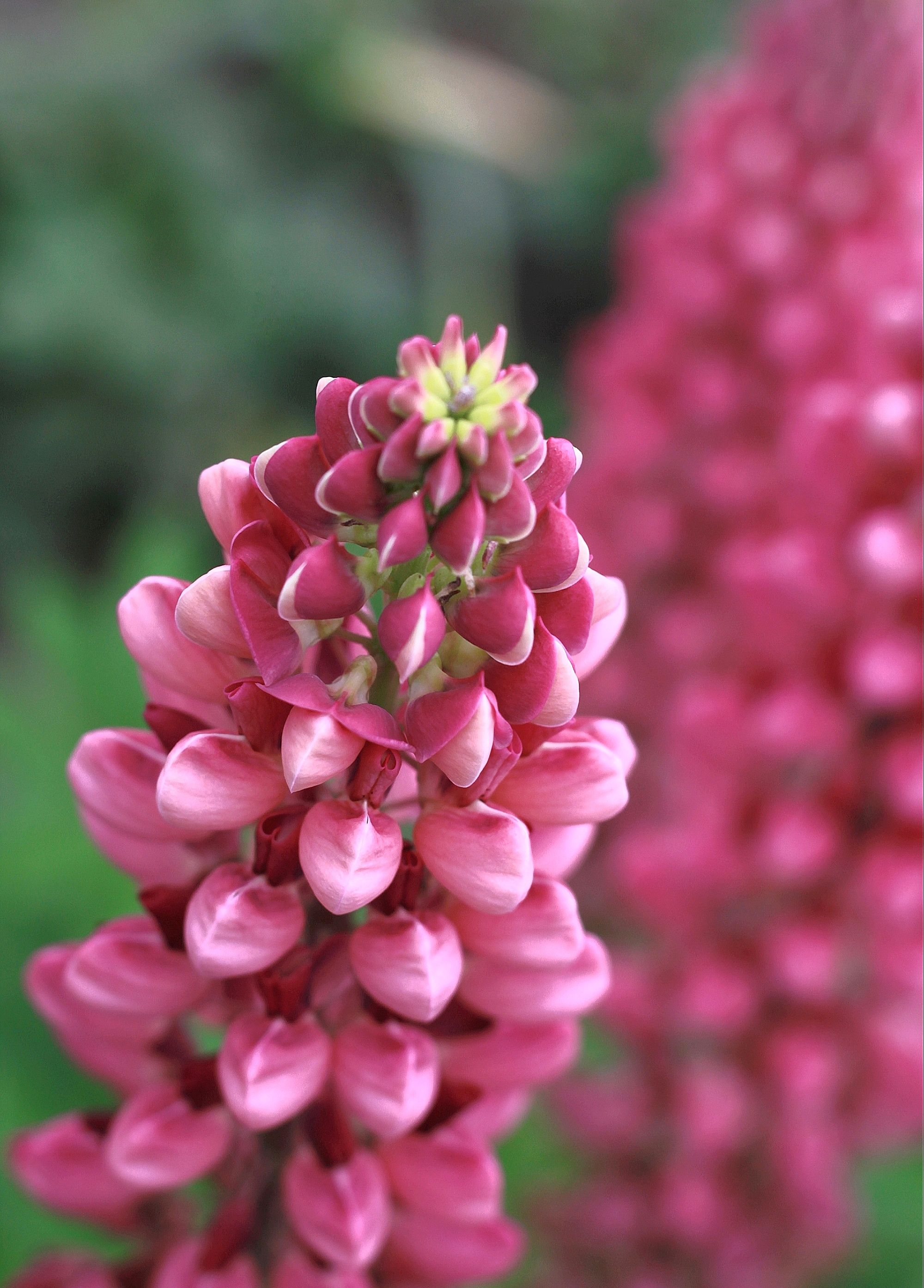
George Russell bred these hybrids for size, color range, and density. Russell lupine flowers come in red, pink, orange, white, bicolor, and nearly every shade between. The classic Russell Mix produces spikes up to 3 feet tall and blooms in late spring through early summer. Russell lupines perform best in zones 4 through 8, prefer full sun, and need well-draining soil with a pH between 6.0 and 7.0.
Wild lupine flower
Wild lupine (Lupinus perennis) grows natively in sandy, open habitats east of the Mississippi River. The U.S. Fish & Wildlife Service lists wild lupine as a critical conservation species. Wild lupine flowers bloom from May through June, stand 12 to 24 inches tall, and display soft blue-to-purple petals. You can find wild lupine seeds at native plant nurseries for about $4 to $8 per packet of 50 seeds.
When to plant lupine seeds
Timing matters. Lupine seeds need cool soil and a period of cold stratification to germinate reliably.
Spring planting
Sow lupine seeds outdoors 4 to 6 weeks before the last expected frost. In USDA zone 5 (covering much of the Midwest), that window typically falls between mid-March and early April. Soil temperature should sit between 40°F and 65°F for best germination.
Fall planting
Many growers prefer sowing in late September through November. Fall-planted seeds undergo natural stratification over winter and germinate the following spring without any prep work. This approach mimics how wild lupine flowers reproduce in nature.
Indoor start
Start lupine seeds indoors 6 to 8 weeks before the last frost. Use biodegradable peat pots or paper pots — the taproot resents disturbance, and peat pots let you transplant the entire container directly into the ground.
How to plant lupine seeds: step by step
Lupine seeds have a hard outer coat. Without prep, germination rates can drop below 30%. Here's how to plant lupine seeds for a strong start:
- Nick the seed coat with a nail file or coarse sandpaper until you see a lighter layer underneath. This process, called scarification, lets water reach the embryo.
- Soak seeds for 24 hours in room-temperature water. Discard any seeds that float — floaters are usually hollow.
- Choose a planting spot that receives 6 or more hours of direct sunlight daily. Lupines tolerate light afternoon shade in zones 7 and 8 where summers run hot.
- Prepare the soil by loosening the top 12 inches with a garden fork. Mix in coarse sand or perlite if your soil holds excess moisture. Lupines hate wet feet.
- Sow seeds ¼ inch deep and space them 12 to 18 inches apart. Cover lightly with soil and water gently.
- Keep the soil moist (not soggy) for the first 2 to 3 weeks until seedlings emerge. Germination usually takes 14 to 30 days.
Skip heavy fertilizers. Lupine plants fix their own nitrogen, and too much nitrogen actually discourages blooming. A light application of bone meal at planting time gives the roots a phosphorus boost without overfeeding.
Looking for mixed bouquets?
Browse mixed bouquets from local florists and pick one that suits the moment.
Where to plant lupine
Lupine flowers thrive in specific conditions. The wrong spot can kill the plant in one season.
Sun exposure
Full sun — at least 6 hours — gives the strongest spikes. Gardeners in Phoenix, Dallas, or other zone 8+ cities should place lupines where they catch morning sun but escape the harshest afternoon heat.
Soil type
Lupines prefer slightly acidic to neutral soil (pH 6.0–7.0). Sandy, well-draining ground works best. Clay soil traps moisture around the taproot and invites root rot. Amend heavy clay with 3 to 4 inches of composted bark and coarse sand before planting.
Landscape ideas
- Cottage garden borders: Plant Russell lupine flowers behind lower-growing perennials like catmint or geranium.
- Wildflower meadows: Scatter wild lupine seeds alongside black-eyed Susans and coneflowers for a naturalized look.
- Container gardens: Use pots at least 12 inches deep and 10 inches wide. Dwarf varieties like Pixie Mix suit containers better than tall Russell hybrids.
- Pollinator strips: Lupine flowers attract bumblebees, honeybees, and hummingbirds. Place lupine plants near vegetable beds to boost pollination of tomatoes and squash.
Lupine plant care: season-by-season guide
Lupine care demands attention at specific points throughout the year. Here's a practical breakdown.
Spring (March–May)
Remove any winter mulch once daytime temperatures stay above 40°F. Watch for aphid colonies on young growth — a strong spray of water from the hose knocks most aphids off. Apply a thin layer (1 to 2 inches) of organic mulch around the base to retain moisture without suffocating the crown.
Summer (June–August)
Deadhead spent flower spikes immediately. Cut each spike back to the first set of healthy leaves. This step encourages a second, smaller flush of blooms in late summer. Water deeply once a week during dry spells — deliver about 1 inch of water per session. Avoid overhead watering, which promotes powdery mildew.
Fall (September–November)
Let the final flower spikes go to seed if you want volunteers next spring. Collect dried seed pods once they turn brown and rattle when shaken. Store seeds in a paper envelope in the refrigerator. Cut back foliage after the first hard frost and apply 2 to 3 inches of straw mulch in zones 3 through 5.
Winter (December–February)
Lupine roots survive winter underground in zones 3 through 8. No active care is needed during dormancy. In zone 3 (northern Minnesota, Montana), a thick mulch blanket protects the crown from freeze-thaw cycles. Avoid salt-contaminated snow runoff — lupines dislike high salinity.
Common lupine problems and how to fix them
Powdery mildew
White, powdery patches appear on leaves in humid conditions. Improve air circulation by spacing plants 18 to 24 inches apart. Treat active infections with a neem oil spray (mix 2 tablespoons of neem oil per gallon of water). Apply in the early morning or late evening.
Aphids
Green or black aphids cluster on new stems and buds. Blast them off with water first. Introduce ladybugs — a single adult ladybug eats roughly 50 aphids per day. Avoid broad-spectrum insecticides, which kill beneficial pollinators too.
Root rot
Soggy soil kills lupine taproots fast. Yellowing lower leaves and a mushy stem base signal trouble. Remove affected plants, improve drainage, and avoid replanting lupines in the same spot for at least 2 years.
Failure to bloom
Young first-year lupine plants sometimes skip blooming entirely. Give them a full year. If a second-year plant still refuses to flower, the soil may contain too much nitrogen. Stop all fertilizer and test the soil pH — values above 7.5 lock out essential micronutrients.
Do deer eat lupine flowers?
Good news: deer generally avoid lupine flowers. Lupine plants contain quinolizidine alkaloids — bitter compounds toxic to many mammals. The ASPCA lists Lupinus as toxic to dogs, cats, and horses.
That said, hungry deer will eat almost anything during a harsh winter. Young seedlings face more risk than mature plants because the alkaloid concentration in tender shoots runs lower. A simple chicken-wire cage around new transplants offers cheap protection during the first season.
Rabbits also tend to leave lupines alone. Slugs, on the other hand, love young lupine leaves. Set beer traps or sprinkle diatomaceous earth around the base in spring.
Lupine flowers for U.S. holidays and occasions
Lupine blooms from late May through July across most of the country. That timing aligns with several key dates.
| Holiday / Occasion | Best lupine color | Notes |
|---|---|---|
| Memorial Day (late May) | Blue or purple | Wild lupine fields peak right around this weekend in New England |
| Mother's Day (2nd Sunday in May) | Pink or bicolor Russell hybrids | Cut lupine spikes last 5 to 7 days in a vase |
| Graduation season (May–June) | Yellow or mixed | Yellow lupine flowers signal new beginnings |
| Fourth of July | Red, white, and blue mix | Combine red Russell lupine, white Noble Maiden, and blue Governor |
| Sympathy arrangements | Deep purple | Muted purple lupine carries quiet respect |
Cut lupine stems in the early morning when the lowest one-third of the spike has opened. Place stems immediately in cool water with a drop of bleach to prevent bacterial growth. Change the vase water every 2 days.






Lupine flowers in cut arrangements: quick care tips
Lupine spikes make dramatic cut flowers. Follow these steps to extend vase life:
- Cut at the right stage. Harvest when about one-third of the florets on the spike have opened. The remaining buds will continue to open in the vase.
- Trim 1 inch off the stem at a 45-degree angle using sharp shears. Dull blades crush the stem and block water uptake.
- Remove lower leaves that would sit below the waterline. Submerged foliage breeds bacteria within 24 hours.
- Use cool, clean water. Add 1 teaspoon of sugar and 2 drops of household bleach per quart of water. The sugar feeds the blooms; the bleach fights bacteria.
- Keep the vase away from fruit bowls. Ripening fruit releases ethylene gas, which speeds wilting. Also avoid direct sunlight and heating vents.
- Expect 5 to 7 days of vase life with proper care. Shorter than roses (7 to 12 days), but the vertical spikes add architectural flair that flat-faced flowers can't match.
Send flowers today
Choose a bouquet, add a message, and a local florist hand-delivers it.