EUR
 GBP
 CAD
 AUD

 Birthday
 Same Day
 Occasions
 Flowers
 Roses
 Plants
 Gifts
 International Flower Delivery
Red Flowers
- 🌺 Red flowers range from tiny pentas under 1 inch across to dinner-plate dahlias spanning 10 inches, and each shade — from light coral to deep burgundy — carries a distinct meaning rooted in centuries of tradition.
- 🌹 Beyond roses, dozens of striking red blooms like amaryllis, poppies, canna lilies, and rare chocolate cosmos thrive across USDA zones 3 through 11, giving you year-round options.
- 🪴 Match the bloom size and shade to your occasion: bright red for Valentine's Day energy, dark red for elegant sympathy arrangements, and light red for casual friendship gifts.
Red flowers grab attention faster than any other color in a garden — and science backs that up. The human eye processes red wavelengths before most other colors, which explains why a single red bloom can anchor an entire landscape. Whether you want to plant a showstopping garden bed, choose a meaningful gift, or simply learn the names behind those gorgeous crimson petals, this guide walks you through more than 30 types of red flowers, their meanings, and practical growing tips tailored to U.S. climates.
What red flowers mean — and why the shade matters
- Red flowers carry layered symbolism. A bright red rose signals romantic passion. A dark red chrysanthemum communicates deep respect. The specific shade shifts the message dramatically.
- Here's a quick breakdown of red flowers and their meanings by shade:
- Bright red — passionate love, desire, courage (classic roses, tulips, gerbera daisies)
- Dark red / deep red — devotion, gratitude, mourning comfort (dark red carnations, burgundy dahlias)
- Light red / coral — friendship, enthusiasm, new beginnings (light red alstroemeria, coral peonies)
- Scarlet — celebration, joy, vitality (scarlet salvia, red zinnias)
Victorian-era "floriography" codified many of these meanings during the 1800s. Senders used specific red blooms to express emotions that social norms forbade speaking aloud. That tradition still shapes how Americans choose flowers for Valentine's Day, Mother's Day, and even Fourth of July arrangements.
One important note: red poppies hold special weight around Memorial Day (the last Monday in May). Veterans' organizations across the U.S. distribute red crepe-paper poppies to honor fallen soldiers — a tradition dating to 1922, when the VFW first sold them nationally.

A complete list of red flowers by type
Red flowers span annuals, perennials, bulbs, shrubs, and even cacti. This list of red flowers covers 30+ species, organized by growth habit so you can find the right match for your garden zone.
Annual red flowers
- Annuals complete their life cycle in one growing season. You replant them each spring, but they reward you with months of nonstop color.
- Zinnia (Zinnia elegans) — Grows 1 to 4 feet tall. Thrives in USDA zones 2–11 as a warm-season annual. Zinnias produce blooms from June through the first frost. Cut stems at a 45-degree angle to encourage more flowers.
- Celosia / Cockscomb (Celosia spp.) — Produces velvety, brain-shaped crests or feathery plumes. Celosia reaches 6 to 36 inches depending on the cultivar. Heat-loving — perfect for Southern and Southwestern gardens.
- Petunia (Petunia spp.) — A staple in hanging baskets across the U.S. Red petunias spread 18 to 24 inches wide. Deadhead spent blooms every few days to keep petunias producing all summer.
- Calibrachoa (Calibrachoa spp.) — Looks like a miniature petunia with 1-inch blooms. Calibrachoa trails beautifully in containers. This annual tolerates heat up to 95°F without wilting.
- Cosmos (Cosmos spp.) — Feathery foliage and daisy-like red blooms. 'Rubenza' is a popular dark red cultivar that grows 24 to 30 inches tall. Cosmos self-seed generously.
- Impatiens (Impatiens walleriana) — Thrives in shade, unlike most red flowers. Impatiens produce 1- to 2-inch blooms continuously from late spring to fall in zones 10–11 (treat as an annual elsewhere).
Perennial red flowers
Perennials return year after year. Many take a full season to establish strong roots before they put on a dramatic show.
Rose (Rosa spp.) — The most recognized red flower name worldwide. Hybrid tea roses average 3 to 6 feet tall. 'Mister Lincoln,' introduced in 1964, remains one of the most fragrant deep red roses available. Prune roses in late February or early March in most U.S. zones.
- Daylily (Hemerocallis) — Each bloom lasts only one day, but a single plant produces 200 to 400 buds per season. 'Pardon Me' is a compact dark red daylily that reaches just 18 inches.
- Bee balm (Monarda didyma) — Native to eastern North America. Bee balm produces spiky, crown-shaped red flowers that attract hummingbirds within minutes. Grows 2 to 4 feet tall in zones 3–9.
- Cardinal flower (Lobelia cardinalis) — Another U.S. native. Cardinal flowers produce 3- to 4-foot spikes of scarlet blooms from July through September. This perennial prefers moist soil and partial shade.
- Coneflower (Echinacea spp.) — The 'Tomato Soup' cultivar produces 4- to 5-inch bright red blooms. Coneflowers are drought-tolerant once established and thrive in zones 4–9.
- Blanket flower (Gaillardia spp.) — Red-and-yellow bicolor petals mimic a Native American blanket pattern. Blanket flowers tolerate poor soil, heat, and humidity. They grow 12 to 18 inches tall.
- Dianthus / Carnation (Dianthus spp.) — Produces fragrant, ruffled flowers with a spicy-sweet scent. Red carnations symbolize admiration and love. Standard carnations grow 18 to 24 inches; border pinks stay under 10 inches.
- Salvia (Salvia spp.) — Red salvia attracts hummingbirds like a magnet. 'Lady in Red' grows about 15 inches tall and blooms from early summer until frost. Perennial in zones 7–11.
- Penstemon (Penstemon spp.) — Tubular red flowers line 2- to 3-foot stems. Penstemon is native to the American West and handles drought well once roots are established.
Red flower bulbs
- Bulbs store energy underground and burst into bloom at specific seasons. Plant them at the right depth — typically 2 to 3 times the bulb's height — for the strongest display.
- Tulip (Tulipa spp.) — Plant tulip bulbs 6 to 8 inches deep in October or November. Red tulips bloom in mid-spring and last 1 to 2 weeks. 'Apeldoorn' is a classic bright red Darwin hybrid.
- Amaryllis (Hippeastrum) — Produces dramatic trumpet-shaped blooms up to 8 inches across. Amaryllis bulbs bloom 6 to 8 weeks after planting. Most Americans grow amaryllis indoors during December for holiday color.
- Dahlia (Dahlia spp.) — Dinner-plate dahlias like 'Arabian Night' produce deep red blooms that span 8 to 10 inches. Dahlias thrive in zones 8–11 as perennials; gardeners in colder zones dig up tubers after the first frost.
- Canna (Canna spp.) — Tropical-looking plants that grow 3 to 6 feet tall with bold red flowers and large paddle-shaped leaves. Cannas perform best in zones 7–10.
Ranunculus (Ranunculus spp.) — Layer upon layer of tissue-thin petals create a rose-like bloom. Each ranunculus corm produces 5 to 7 stems. Plant corms in fall for spring blooms in mild climates, or start them indoors in zone 6 and colder.
Lily (Lilium spp.) — Asiatic lilies in bright red bloom in early summer on 2- to 4-foot stems. 'Monte Negro' is a dark red Asiatic lily with 6-inch flowers. Lilies prefer afternoon shade in zones 8 and warmer.
Red spider lily / Lycoris (Lycoris radiata) — Blooms appear suddenly in September, earning the nickname "surprise lily." Naked stems rise 12 to 18 inches with no foliage during flowering. Hardy in zones 6–10.
Red flowering shrubs and vines
- Shrubs and vines add structure. These woody plants anchor your garden with red blooms for years.
- Azalea (Rhododendron spp.) — Evergreen azaleas produce clusters of 2- to 3-inch red blooms in spring. 'Girard's Rose' and 'Stewartstonian' both display deep red flowers. Azaleas prefer acidic soil with a pH between 4.5 and 6.0.
- Camellia (Camellia japonica) — Blooms from late fall through early spring — a rare off-season performer. Camellia flowers resemble roses and measure 3 to 5 inches across. Grows best in zones 7–9.
Hibiscus (Hibiscus rosa-sinensis) — Tropical hibiscus produces saucer-shaped red flowers up to 6 inches wide. Each bloom lasts just one day, but a healthy plant produces new flowers daily from late spring through fall. Hardy outdoors only in zones 9–11; most Americans grow tropical hibiscus in containers.
- Clematis (Clematis spp.) — 'Rebecca' and 'Niobe' produce velvety dark red blooms on vigorous vines. Clematis vines climb 8 to 12 feet and need a trellis or fence for support.
- Honeysuckle (Lonicera spp.) — 'Dropmore Scarlet' produces bright red tubular flowers that attract hummingbirds from June through September. This vine grows 10 to 20 feet and tolerates zones 3–9.
- Bottlebrush (Callistemon spp.) — Named for its cylindrical flower spikes that resemble bottle brushes. Bottlebrush blooms attract bees and butterflies. Grows as an evergreen shrub in zones 9–11.
Beautiful red flowers that aren't roses
Roses dominate conversations about red flowers, but dozens of equally beautiful red blooms exist beyond Rosa. Here are standout options organized by occasion.
For romantic gestures
- Red tulips communicate a "declaration of love" without the predictability of roses.
- Red ranunculus look lush and layered in hand-tied bouquets.
- Red peonies bloom for only 7 to 10 days in late spring, making them feel rare and intentional.
For sympathy and remembrance
- Dark red carnations express deep love and affection for someone who has passed.
- Red amaryllis conveys strength and determination during difficult times.
- Red gladiolus symbolizes sincerity and moral integrity — gladioli stand 3 to 5 feet tall and command attention in standing sprays.
For casual gifts and friendships
- Red gerbera daisies feel cheerful rather than romantic. Each gerbera bloom measures 4 to 5 inches across.
- Red alstroemeria represents lasting friendship. A single stem produces 3 to 5 blooms, giving a small bunch a full look.
- Red zinnias say "thinking of you" without heavy emotional weight.
Small red flowers worth knowing
- Small red flowers often go unnoticed, but they play important roles in both gardens and arrangements. Florists use these delicate blooms as filler — they add texture without overpowering focal flowers.
- Pentas (Pentas lanceolata) — Star-shaped flowers cluster in 3- to 4-inch heads. Individual blooms measure less than half an inch. Pentas bloom nonstop in zones 10–11 and attract butterflies constantly.
- Sweet William (Dianthus barbatus) — Dense dome-shaped clusters of tiny fringed red flowers. Each cluster spans 3 to 5 inches. Sweet William grows 12 to 24 inches tall and self-seeds reliably.
- Verbena (Verbena spp.) — Produces tight clusters of small 5-petaled flowers on spreading stems. Verbena works well as groundcover or in window boxes. Deadhead every week for continuous blooms.
- Sweet pea (Lathyrus odoratus) — Delicate, ruffled blooms about 1 to 2 inches wide with an intensely sweet fragrance. Red sweet peas climb 5 to 8 feet on a trellis.
- Columbine (Aquilegia spp.) — Spurred, bell-shaped red flowers nod on wiry 2-foot stems. Columbine blooms in late spring and thrives in partial shade across zones 3–9.
Big red flowers that command a room
- Large red flowers create instant drama. Use these showstoppers as focal points in arrangements or as specimen plants in your yard.
- Dinner-plate dahlia — 'Spartacus' produces deep red blooms measuring 10 to 12 inches across. Stake dahlia stems — a single bloom can weigh enough to snap an unsupported stem.
- Amaryllis — Indoor-grown amaryllis bulbs produce trumpet blooms 6 to 8 inches wide on 18- to 24-inch stalks. A single bulb typically sends up 2 stems with 4 blooms each.
- Hibiscus — Tropical hibiscus flowers span 5 to 6 inches. Hardy hibiscus (Hibiscus moscheutos) produces even larger blooms — some reaching 10 to 12 inches in diameter — in zones 4–9.
- Peony (Paeonia) — 'Red Charm' is a bomb-type peony with densely packed petals forming a 6- to 7-inch sphere. Peonies bloom for just 7 to 10 days in May or June, but the display is unforgettable.
- Poppy (Papaver orientale) — Oriental poppies produce crinkled, crepe-paper petals on 3-foot stems. Each bloom measures 4 to 6 inches across. 'Beauty of Livermere' is a deep red cultivar with a dark blotch at the base of each petal.
Rare and unique red flowers
Looking for something beyond the usual? These rare red flowers surprise even experienced gardeners.
Chocolate cosmos (Cosmos atrosanguineus) — Produces deep brownish-red blooms that smell like dark chocolate. Native to Mexico, this species was once considered extinct in the wild. All cultivated chocolate cosmos descend from a single surviving clone. Grow in zones 7–10.
Red hellebore (Helleborus spp.) — 'Anna's Red' blooms in late winter when almost nothing else flowers. Hellebores produce nodding, cup-shaped flowers 2 to 3 inches wide. Deer and rabbits avoid hellebores because the plants contain toxic alkaloids.
Gloxinia (Sinningia speciosa) — Velvety, trumpet-shaped red blooms grow 2 to 3 inches across. Gloxinia thrives as a houseplant in bright, indirect light. The plant goes dormant after blooming — stop watering and let the tuber rest for 2 to 3 months before restarting.
Prickly pear cactus (Opuntia humifusa) — The eastern prickly pear produces waxy red or red-orange flowers in June. This cactus grows wild across the eastern U.S. and tolerates zones 4–10.
Red passion flower (Passiflora coccinea) — Intricate fringed blooms in scarlet red with white-tipped filaments. This tropical vine grows 10 to 15 feet and produces edible fruit in frost-free areas.
Flame lily (Gloriosa superba) — Petals curl backward like flames. Each bloom spans 3 to 4 inches. Flame lily grows from tubers and climbs via tendrils at the leaf tips. Caution: every part of the flame lily plant contains colchicine, making it extremely toxic.
Looking for red blooms?
Browse arrangements from local florists and pick one that suits the occasion.
Red flowers by shade: a visual guide
Different types of red flowers span a wide color spectrum. Here's how to pick the right shade for your needs.
Bright red flowers
Bright red flowers pop against green foliage and work well in patriotic Fourth of July displays, holiday wreaths, and energetic celebration bouquets.
Top picks: red tulips, scarlet salvia, red geraniums, red zinnias, and red gerbera daisies.
Deep red and dark red flowers
Deep red flowers carry a sense of sophistication. Florists use dark red blooms in formal centerpieces, anniversary arrangements, and elegant sympathy tributes.
Top picks: 'Mister Lincoln' roses, 'Arabian Night' dahlias, dark red calla lilies, burgundy ranunculus, and 'Anna's Red' hellebores.
Light red flowers
Light red flowers blend into softer color palettes. Pair them with peach, blush, and cream tones for a romantic or vintage feel.
Top picks: coral peonies, light red alstroemeria, pink-red camellias, coral impatiens, and salmon-colored begonias.
Growing red flowers: practical tips for U.S. gardens
Red flowers grow successfully in every USDA zone — you just need to match the right plant to your region.
Choosing by climate zone
- Zones 3–5 (Upper Midwest, Northern Plains, New England): Plant cold-hardy perennials like bee balm, blanket flower, and daylilies. Start tender bulbs like dahlias indoors 4 to 6 weeks before the last frost date.
- Zones 6–7 (Mid-Atlantic, parts of the Pacific Northwest): Almost any red flower grows here. Roses, peonies, tulips, and coneflowers all perform well. Mulch perennials with 2 to 3 inches of shredded bark each fall.
- Zones 8–9 (Southeast, Gulf Coast, parts of California): Tropical and subtropical options thrive here — hibiscus, cannas, bottlebrush, and camellias. Avoid planting tulips without a 10- to 12-week cold period in the refrigerator first.
- Zones 10–11 (South Florida, Hawaii, coastal Southern California): Grow pentas, bougainvillea, red ixora, and tropical hibiscus year-round. Watch for fungal issues during humid summers — water at the base, not overhead.
Soil and sunlight basics
Most red flowers need 6 to 8 hours of direct sunlight daily. Exceptions include impatiens, columbine, and hellebores, which prefer 3 to 4 hours of morning sun with afternoon shade.
Test your soil pH before planting. Most flowering plants prefer a pH between 6.0 and 7.0. Azaleas and camellias need acidic soil (pH 4.5–6.0) — amend with sulfur or pine bark mulch.
Watering rules
Overwatering kills more container plants than underwatering. Stick your finger 1 inch into the soil. Dry? Water thoroughly. Still damp? Wait another day.
For in-ground beds, most established perennials need about 1 inch of water per week during the growing season. Soaker hoses deliver water efficiently without wetting the foliage, which helps prevent powdery mildew and leaf spot.

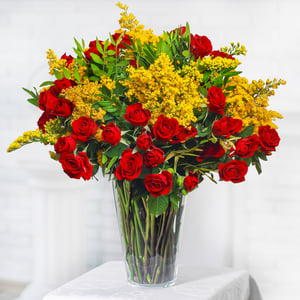
How to keep cut red flowers fresh longer
- You receive a gorgeous bouquet of red flowers. Now what? Follow these steps to extend vase life by 4 to 7 days.
- Trim 1 to 2 inches off each stem at a 45-degree angle using sharp shears — not scissors, which crush the vascular tissue.
- Remove every leaf that sits below the waterline. Submerged leaves breed bacteria within 24 hours.
- Fill a clean vase with lukewarm water (around 100°F) and add the flower food packet. One packet treats about 1 quart of water.
- Place the vase away from direct sunlight, heating vents, and fruit bowls. Ripening fruit releases ethylene gas, which accelerates wilting.
- Change the water every 2 days. Re-trim the stems by half an inch each time you change the water.
- Keep the room temperature between 65°F and 72°F. Air conditioning helps during hot U.S. summers — just avoid placing flowers directly under a cold air vent.
- Roses and carnations tend to last 7 to 14 days with proper care. Tulips last 5 to 7 days. Dahlias and poppies have shorter vase lives — typically 3 to 5 days — so enjoy them right away.
Common mistakes when choosing red flowers
- Avoid these pitfalls:
- Picking only by color, not by meaning. A red chrysanthemum means deep love in the U.S. but signals death in some European and Asian cultures. Know your recipient's background.
- Ignoring bloom season. Peonies bloom naturally only in May and June. Ordering peonies in October means paying a premium for imported stems.
- Forgetting pollinators. Planting only hybrid double-petal varieties leaves bees and hummingbirds with little to eat. Mix in single-bloom salvias, bee balm, and pentas to support wildlife.
- Overcrowding beds. Dahlias need 18 to 24 inches between plants. Roses need 3 to 4 feet. Crowded plants compete for nutrients and develop fungal diseases faster.
- Skipping hardiness zones. A tropical hibiscus planted outdoors in zone 5 will die at the first frost. Check your USDA zone at planthardiness.ars.usda.gov before buying.
Red flowers for every U.S. holiday and occasion
| Occasion | Best red flowers | Why |
|---|---|---|
| Valentine's Day (Feb 14) | Red roses, red tulips, red ranunculus | Classic romance symbols |
| Mother's Day (2nd Sunday in May) | Red peonies, red carnations, red gerbera daisies | Express admiration and gratitude |
| Memorial Day (last Monday in May) | Red poppies, red carnations | Honor fallen service members |
| Fourth of July | Red geraniums, red salvia, red petunias | Pair with white and blue flowers for patriotic displays |
| Thanksgiving (4th Thursday in Nov) | Dark red dahlias, red chrysanthemums, red amaranthus | Rich autumn tones complement harvest tables |
| Christmas (Dec 25) | Red amaryllis, red poinsettias, red roses | Traditional holiday red-and-green palette |
| Sympathy / Funeral | Dark red roses, red gladiolus, red carnations | Communicate deep love and respect |
Your next move
Red flowers give you something no other color can: instant emotional impact. A single red dahlia in a vase on your kitchen counter changes the mood of the whole room. A patch of red bee balm in your backyard draws hummingbirds you'd never see otherwise.
Start with one plant that matches your zone and sunlight. Grow from there. Honestly, the biggest mistake isn't choosing the "wrong" red flower — the biggest mistake is not planting any at all.
What red flower are you most excited to try? Explore the full catalog on MyGlobalFlowers and find one that fits your space.
Send flowers today
Choose your bouquet, add a message, and let a local florist hand-deliver it.
FAQ
What red flowers last the longest in a vase?▾
Red carnations and red alstroemeria last 14 to 21 days with fresh water and trimmed stems. Red roses follow closely at 7 to 14 days. Dahlias and poppies fade faster — expect 3 to 5 days.
What are the best red flowers that aren't roses?▾
Red dahlias, red tulips, red peonies, and red ranunculus all deliver bold color without a single rose petal. For garden beds, try bee balm, cardinal flower, or red salvia.
Do red flowers attract hummingbirds?▾
Yes. Hummingbirds gravitate toward tubular red flowers. Red salvia, bee balm, cardinal flower, honeysuckle, and pentas rank among the strongest hummingbird magnets in U.S. gardens.
What do dark red flowers symbolize?▾
Dark red flowers — like burgundy roses, deep red dahlias, and dark carnations — symbolize deep devotion, lasting commitment, and sometimes mourning or remembrance.
Can I grow red flowers indoors?▾
Absolutely. Amaryllis bulbs thrive on a sunny windowsill and bloom within 6 to 8 weeks. Gloxinia prefers bright, indirect light. Red begonias and red kalanchoe also perform well as houseplants in standard room temperatures (65°F–75°F).
What is the rarest red flower?▾
Chocolate cosmos (Cosmos atrosanguineus) ranks among the rarest. The species was extinct in the wild, and every cultivated plant traces back to one surviving clone. Red jade vine (Mucuna bennettii) from the Philippines is another extremely rare find outside tropical conservatories.