 EUR
EUR
 GBP
GBP
 CAD
CAD
 AUD
AUD

 ✨Boss’s Day✨
 Birthday
 Occasions
 Same Day
 Flowers
 Roses
Roses
 Plants
 Gifts
Gifts
 International Flower Delivery
How to keep flowers alive longer
Fresh cut flowers last 7 to 12 days on average — but the right care routine can stretch that lifespan to a full 2 weeks or more. Knowing how to keep flowers alive longer saves you money and lets you enjoy every bloom you bring home. This guide covers 12 hands-on techniques that florists across the U.S. rely on daily, from stem-cutting angles to water additives and temperature control.
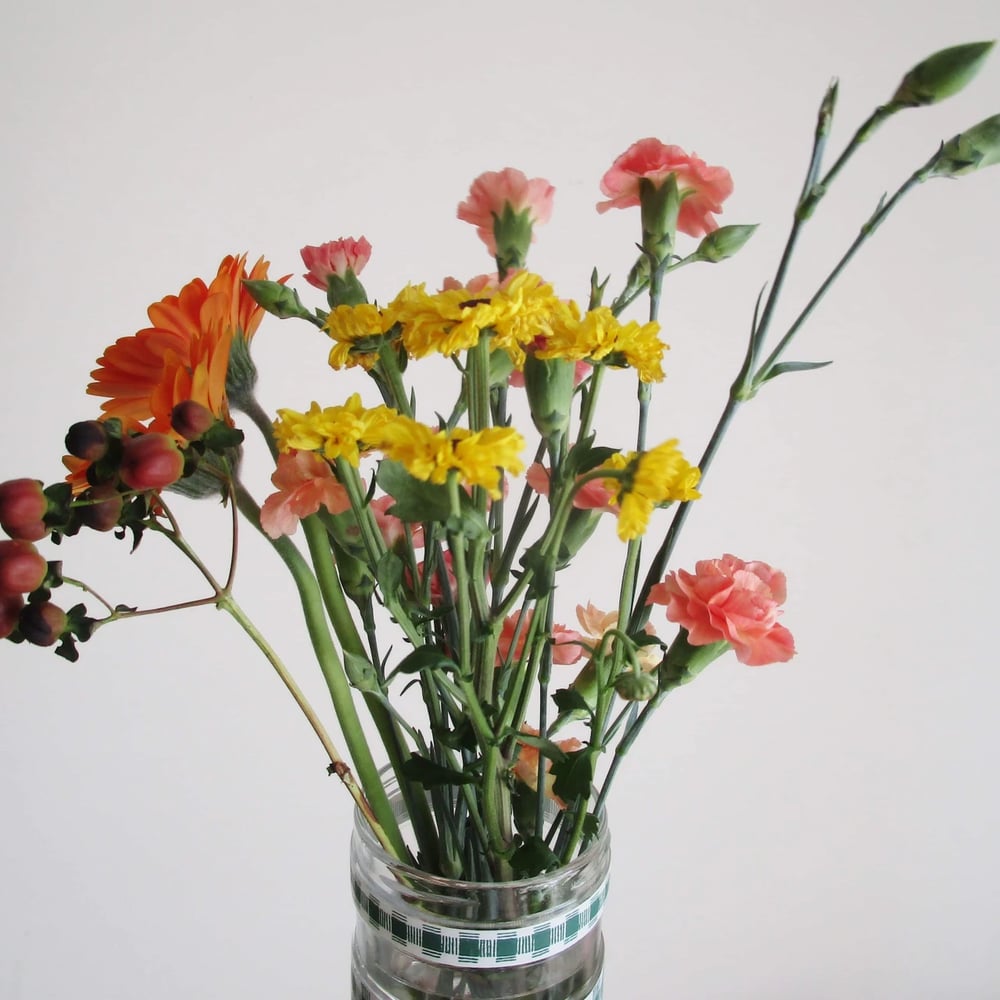
Why fresh cut flowers wilt (and how to keep flowers fresh longer)
Cut flowers lose their water supply the moment you snip the stem. Bacteria build up in the vase within 4 to 6 hours, clogging the stem's vascular system. Air bubbles trapped in the stem block water uptake too. Understanding these 3 enemies — bacteria, air, and dehydration — gives you a clear plan for how to keep fresh cut flowers alive longer.
Temperature matters. A room at 72 °F accelerates wilting twice as fast as a room at 65 °F. Direct sunlight compounds the problem.
Essential supplies for keeping cut flowers fresh longer
Before you arrange a single stem, gather these items. Every tool plays a direct role in how to care for cut flowers.
- Sharp pruning shears or a clean knife (not scissors — scissors crush stems)
- A clean vase scrubbed with 1 teaspoon of bleach per quart of warm water
- Commercial flower food packets (most bouquets include one)
- A thermometer to check water temperature (aim for 100 °F to 110 °F at first fill)
- A spray bottle for misting delicate petals
12 tips on how to keep flowers alive longer in a vase
1. Cut stems at a 45-degree angle
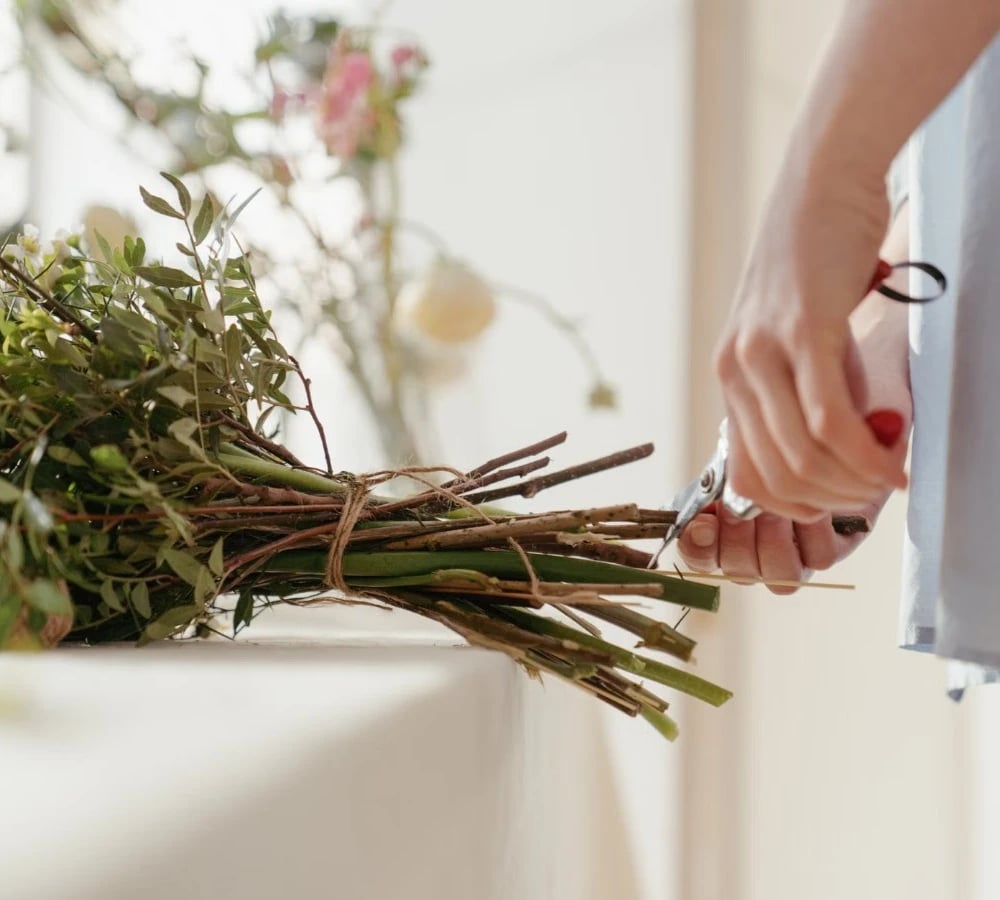
A 45-degree cut exposes more surface area than a flat cut — roughly 40% more. Extra surface area means more water absorption. Re-cut stems every 2 to 3 days to clear bacterial buildup. Use a sharp blade. Dull blades crush the tissue.
2. Remove all foliage below the waterline
Leaves submerged in water decompose fast. Decomposing leaves feed bacteria. Strip every leaf that sits below the vase rim. This single step can add 3 to 4 extra days of freshness.
3. Use warm water for the first fill
Warm water (100 °F to 110 °F) moves up stems faster than cold water because warm water has lower viscosity. Fill the vase about two-thirds full. Let the water cool naturally to room temperature.
4. Add flower food — or make your own
Commercial flower food packets contain three ingredients: sugar for energy, citric acid to lower pH, and a biocide to kill bacteria. One packet treats about 1 quart of water. No packet on hand? Mix 1 tablespoon of sugar, 2 tablespoons of lemon juice, and ½ teaspoon of bleach into 1 quart of lukewarm water. The Kitchn tested 7 methods in a side-by-side comparison, and flower food outperformed every DIY alternative.
5. Change the water every 48 hours
Stale water turns cloudy. That cloudiness signals bacterial growth. Dump the old water, rinse the vase, and refill with fresh solution every 2 days. Consistent water changes rank as the single most effective habit for how to keep cut flowers fresh longer.
6. Keep flowers away from direct sunlight
Sunlight heats the water and speeds up cell breakdown. Place your vase in a cool spot — away from south-facing windows. A countertop 6 feet from the nearest window works well in most U.S. homes.
7. Avoid fruit bowls and produce
Ripe bananas, apples, and avocados release ethylene gas. Ethylene triggers premature petal drop. The University of Massachusetts Amherst Extension recommends keeping flowers at least 4 feet from any ripening fruit.
8. Store flowers in a cool room overnight
Professional florists store arrangements in coolers set between 34 °F and 38 °F. You don't need a walk-in cooler. Move your vase to a cool room — a garage at 55 °F to 60 °F, or a basement — overnight. Lower temperatures slow respiration and extend bloom life by 1 to 3 days.
9. Mist delicate blooms
Roses, hydrangeas, and orchids absorb moisture through their petals. A light mist from a spray bottle once a day keeps petals hydrated. Avoid misting marigolds and zinnias — excess moisture causes mold on fuzzy-textured blooms.
10. Remove wilting flowers immediately
One dying stem releases ethylene that affects every other flower in the vase. Pull wilted blooms as soon as petals droop. This protects the remaining arrangement.
11. Match the vase to the stem length
Stems need support. A vase should cover at least one-third to one-half of the total stem length. Short stems in a tall vase bend and break. Tall stems in a short vase tip over. Most standard bouquets from U.S. florists arrive with stems cut to 14 to 18 inches, so a vase 7 to 9 inches tall fits best.
12. Use a drop of vodka (yes, really)
Vodka slows ethylene production. Add ¼ teaspoon of plain vodka plus 1 teaspoon of sugar to 1 quart of water. ProFlowers tested this method and noted modest improvement in bloom longevity — about 1 extra day compared to plain water alone. Flower food still outperforms vodka, but the trick works in a pinch.
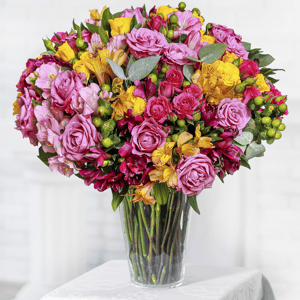
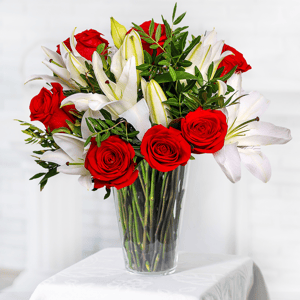
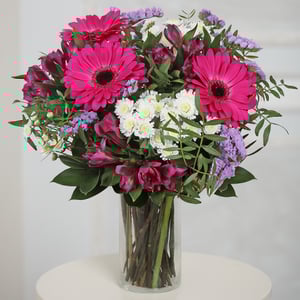
How to care for cut flowers: common mistakes to avoid
Even experienced plant lovers slip up. Watch for these 5 errors.
- ✗Skipping the initial stem cut after buying flowers — stems seal within minutes of the first harvest cut
- ✗Overfilling the vase and submerging lower petals — submerged petals rot within 24 hours
- ✗Placing arrangements near heating vents — forced air at 75 °F or higher dries petals in a single afternoon
- ✗Mixing daffodils with other flowers — daffodil stems excrete a sap that wilts roses and tulips within hours
- ✗Using a dirty vase from a previous arrangement — residual bacteria colonize fresh water immediately
Starting with a fresher bouquet helps
Browse arrangements assembled by local florists on the day of delivery, so your vase life starts at day one.
Quick-reference care chart by flower type
| Flower | Vase life (days) | Water temp at first fill | Special note |
|---|---|---|---|
| Roses | 7–10 | 100 °F | Remove thorns below waterline |
| Tulips | 5–7 | Cold (40 °F) | Tulips keep growing after cutting — re-trim every 2 days |
| Sunflowers | 6–12 | 100 °F | Heavy drinkers — check water level daily |
| Lilies | 10–14 | 100 °F | Snip pollen-bearing anthers to prevent stains |
| Carnations | 14–21 | Room temp | Among the longest-lasting cut flowers |
Popular arrangements worth the extra care
Mixed seasonal bouquets
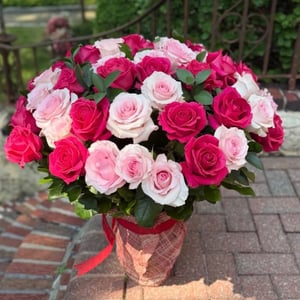
A mixed bouquet typically combines 3 to 5 flower varieties. These arrangements suit birthdays, housewarmings, and "just because" moments. Mixed bouquets demand extra attention — each stem type has a different vase life. Remove shorter-lived stems (like dahlias at 4–5 days) before they affect hardier blooms.
Single-variety rose arrangements
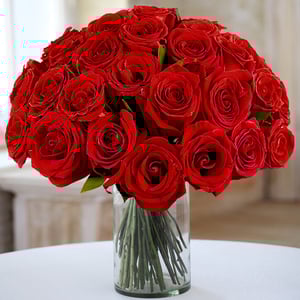
A dozen long-stem roses remain the top-selling cut flower arrangement in the U.S. for Valentine's Day, Mother's Day, and anniversaries. Roses respond especially well to the 45-degree cut method and flower food. Expect 7 to 10 days of bloom with proper care.
Tropical arrangements
Birds of paradise, anthuriums, and protea can last up to 3 weeks. Tropical stems prefer room-temperature water (around 68 °F). Skip overnight cooling for tropicals — cold temperatures damage tropical cell walls.
How to keep fresh flowers alive longer: seasonal considerations in the U.S.
Summer heat above 85 °F shortens vase life by 30% to 50%. Change water daily during July and August. Run your air conditioning to keep indoor temperatures near 68 °F.
Winter brings dry indoor air from central heating. Dry air pulls moisture from petals. Mist your flowers twice a day between November and March. Keep arrangements away from radiators and fireplaces.
Thanksgiving, Christmas, and Valentine's Day drive the three biggest spikes in flower purchases across the U.S. Flowers bought during peak holidays sometimes spend extra time in transit. Give holiday blooms a fresh diagonal cut and clean water the moment you unbox or unwrap the arrangement.
Your next bouquet deserves more than a quick toss into a vase. Spend 5 minutes on a clean cut, fresh water, and a packet of flower food — that small effort turns a 5-day arrangement into a 12-day centerpiece. Which tip will you try first?
Send flowers that arrive fresh
Choose an arrangement, add your note, and let a local florist hand-deliver it fresh.
FAQ
Does aspirin really help keep flowers alive longer?▾
Aspirin lowers the water's pH slightly, which can help stems absorb water. Crush 1 regular aspirin (325 mg) and dissolve the powder in 1 quart of water. The effect is modest. Commercial flower food delivers better results because flower food addresses bacteria, sugar, and pH together.
How often should I re-cut flower stems?▾
Re-cut stems every 2 to 3 days. Trim about ½ inch from the bottom at a 45-degree angle each time. Fresh cuts clear bacterial buildup and re-open the vascular channels.
Can I keep flowers in the refrigerator overnight?▾
Yes — most cut flowers thrive at 34 °F to 38 °F. Move your vase into the refrigerator before bed and take the vase out in the morning. Remove any fruit from the fridge first, because fruit releases ethylene gas.
What water temperature works best for cut flowers?▾
Warm water (100 °F to 110 °F) works best for the first fill. Warm water travels up stems more efficiently. Refills can use room-temperature water. Tulips prefer cold water around 40 °F — tulips are the exception.
Do copper pennies keep flowers fresh?▾
Pre-1982 U.S. pennies contain 95% copper, which acts as a mild fungicide. Post-1982 pennies contain only 2.5% copper — not enough to matter. Flower food outperforms pennies in every controlled test.