 EUR
EUR
 GBP
GBP
 CAD
CAD
 AUD
AUD

 ✨Boss’s Day✨
 Birthday
 Occasions
 Same Day
 Flowers
 Roses
Roses
 Plants
 Gifts
Gifts
 International Flower Delivery
Tropical flowers: types, names, and growing tips for every climate
Tropical flowers bring bold color, dramatic shapes, and sweet fragrance to gardens across USDA Zones 9–12 — and many thrive indoors even in Zone 5. Over 28,000 plant species originate in tropical regions, and at least 40 of those species grow reliably in American homes and yards. This guide walks you through the most popular tropical flower names, care specifics for each type, and practical growing tips so you can pick the right bloom for your space.
What makes tropical flowers different from temperate blooms
Tropical flowers evolved in regions where temperatures rarely dip below 60 °F. Most tropical species need 6–8 hours of bright light daily and humidity above 50%. Temperate garden favorites like roses and tulips go dormant in winter. Tropical plants, by contrast, keep pushing foliage and flowers year-round when you give them warmth and moisture.
Key differences at a glance:
- Bloom size — many tropical flowers span 4–12 inches across, while average temperate blooms measure 2–4 inches
- Foliage — tropical plants carry large, waxy leaves that reduce water loss
- Fragrance — plumeria, jasmine, and ginger release scent most heavily after sunset to attract night-pollinating moths
- Color range — tropical species produce pigments in neon orange, electric pink, and deep crimson that few temperate flowers match
Popular tropical flowers: names, origins, and quick facts
Tropical flower names often sound exotic, but most of these plants adapt well to containers and indoor growing. Below you'll find 12 widely grown types of tropical flowers, each with habitat data and a snapshot of care needs.
Bird of Paradise (Strelitzia reginae)
Bird of Paradise grows natively in South Africa and reaches 3.5–5 feet tall. Each flower head resembles a crane's beak. The plant blooms best when slightly root-bound, so keep it in a snug pot. Outdoor growers in Zones 10–12 see first blooms after 3–5 years from seed.
Hibiscus (Hibiscus rosa-sinensis)
Hibiscus produces blooms up to 8 inches wide. One flower lasts only 24–48 hours, but a healthy plant pushes out new buds daily from late spring through fall. Feed hibiscus every two weeks with a fertilizer high in potassium (look for a 10-4-12 ratio). Hawaiian tropical flowers almost always include hibiscus — Hawaii named the yellow hibiscus (Hibiscus brackenridgei) its state flower in 1988.
Plumeria (Frangipani)
Plumeria carries thick, succulent branches and clusters of 2–3 inch waxy flowers. The fragrance intensifies at night. Plumeria tolerates drought but hates wet feet; plant it in sandy, fast-draining soil. Hawaiians use plumeria in traditional lei-making, stringing 40–50 individual blossoms per garland.
Anthurium (Flamingo Flower)
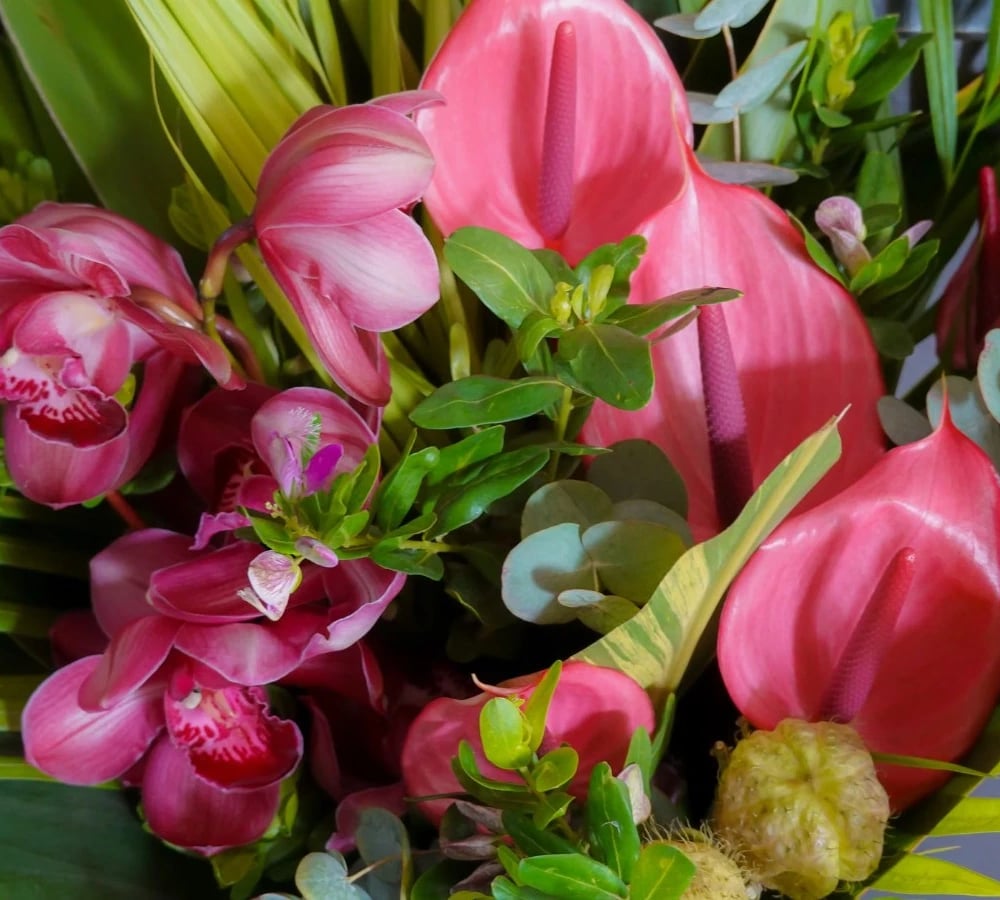
Anthurium displays a glossy, heart-shaped spathe in red, pink, white, or green. A single spathe lasts 6–8 weeks on the plant. This tropical plant with red flowers ranks among the world's top 5 cut-flower exports, with Colombia and the Netherlands supplying over 600 million stems per year.
Orchid (Phalaenopsis and Dendrobium)
Orchids form the largest flowering plant family — roughly 28,000 species exist worldwide. Phalaenopsis orchids bloom for 2–3 months straight and need just 1 ice cube of water per week. Dendrobium varieties prefer brighter light and slightly cooler nights (around 55–60 °F) to trigger flowering.
Heliconia (Lobster Claw)
Heliconia sends up bold, claw-shaped bracts in red, orange, and yellow. Some species reach 15 feet tall outdoors. Heliconia rostrata, the hanging lobster claw, drops its bracts downward — a striking look in large containers. This tropical plant with showy flowers needs consistent moisture and at least 6 hours of direct sun.
Protea
Protea cynaroides, the King Protea, bears flower heads 8–12 inches across. South Africa claims it as the national flower. Protea prefers acidic, phosphorus-poor soil — standard fertilizer can kill the roots. Water protea deeply once a week and let the soil dry between sessions.
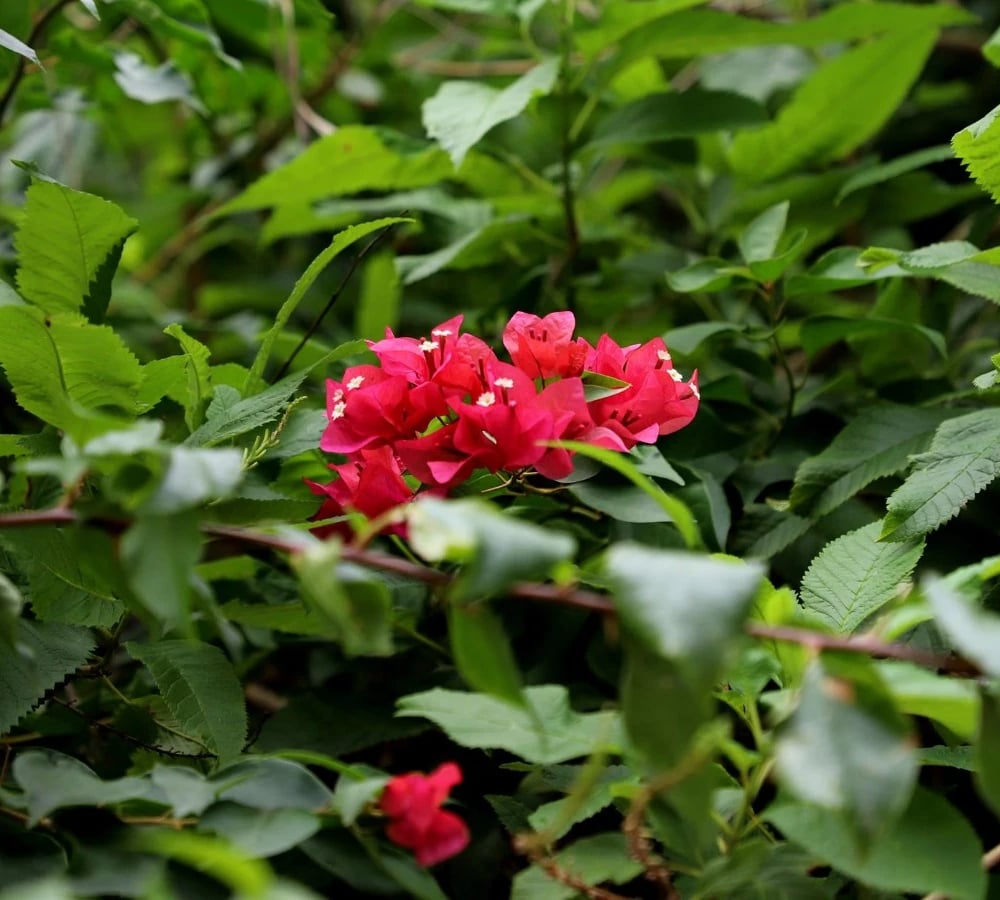
Bougainvillea
Bougainvillea displays vivid papery bracts (not petals) in magenta, purple, orange, and white. A mature vine covers a 20-foot trellis in a single growing season. The plant blooms most vigorously when you stress it slightly — reduce watering for 2–3 weeks, and new bracts explode across the stems.
Ginger (Zingiber and Alpinia)
Ornamental ginger varieties produce cone-shaped or torch-like flower heads. Red ginger (Alpinia purpurata) reaches 6–8 feet tall. Torch ginger (Etlingera elatior) opens waxy pink blooms up to 10 inches wide. Both varieties need rich, loamy soil and weekly feeding during the growing season.
Jasmine (Jasminum)
Jasmine vines carry clusters of small, star-shaped white flowers with an intensely sweet scent. Arabian jasmine (Jasminum sambac) blooms year-round in Zones 9–11. A single mature jasmine plant can produce more than 1,000 flowers during its peak season.
Canna Lily
Canna lilies grow from rhizomes and produce broad, banana-like leaves topped with spikes of 4–5 inch flowers. Plant rhizomes 4 inches deep after the last frost date. Cannas reach 3–6 feet tall by midsummer and keep blooming until the first fall frost. Deadheading spent flower stalks encourages a second flush.
Passionflower (Passiflora caerulea)
Blue passionflower produces one of the most intricate blooms in the plant kingdom — each flower has 10 petals, 5 stamens, and a crown of filaments. The vine grows aggressively and can cover a 6-foot fence in one season. Hardy varieties survive winters down to Zone 6 when you mulch the roots heavily.
Tropical flowers by color: a quick selection guide
Tropical exotic flowers cover nearly every color on the spectrum. Use the table below to match your color preference to specific types of tropical flowers.
| Color | Top picks | Best for |
|---|---|---|
| Red | Anthurium, Red Ginger, Hibiscus | Bold focal points and cut arrangements |
| Pink | Plumeria, Medinilla, Bougainvillea | Romantic garden borders and containers |
| Orange/Yellow | Bird of Paradise, Heliconia, Canna Lily | Warm-toned landscapes and poolside planting |
| White | Jasmine, Moonflower, Gardenia | Evening gardens and fragrance-focused spaces |
| Purple/Blue | Passionflower, Princess Flower, Dendrobium Orchid | Trellises, hanging baskets, indoor displays |
Hawaiian tropical flowers worth growing at home
Hawaiian tropical flowers carry cultural significance beyond their beauty. Plumeria, the lei flower, blooms in white, yellow, pink, and multicolor forms across all Hawaiian islands. Pikake (Arabian jasmine) holds deep meaning in Hawaiian wedding traditions — Queen Ka'iulani named the flower after her pet peacocks in the late 1800s. Red anthurium became Hawaii's commercial flower crop in 1945, and the Big Island still produces roughly 80% of all anthuriums grown in the US.
You can grow all three — plumeria, jasmine, and anthurium — indoors anywhere in the continental US. Place anthurium near an east-facing window. Give plumeria full sun on a south-facing patio from May through September. Bring jasmine inside when nighttime temps drop below 50 °F.
Looking for exotic blooms delivered?
Browse tropical and exotic arrangements from local florists and pick something that stands out in the room.
How to choose the right tropical flowers for your space
Tropical flowers and plants vary wildly in size, light needs, and cold tolerance. Ask yourself four questions before buying:
- How much direct sunlight does your spot receive daily? (Measure it — don't guess.)
- What USDA hardiness zone do you live in? (Check at planthardiness.ars.usda.gov.)
- Do you want a potted houseplant, a container patio specimen, or an in-ground landscape plant?
- How often do you realistically water? Some tropicals need daily moisture; others tolerate weekly neglect.
Indoor growers in Zones 4–7 should start with Phalaenopsis orchids, anthurium, or bromeliads. These three tolerate low humidity better than most tropicals and bloom in indirect light. Gardeners in Zones 9–12 can plant heliconia, ginger, and bird of paradise directly in the ground.
Growing tips for tropical flowers in the US
Soil and drainage
Most tropical flowers demand fast-draining soil. Mix 50% potting soil with 30% perlite and 20% orchid bark for containers. Avoid heavy clay — soggy roots cause root rot within days. Raised beds work well in zones with heavy rainfall, like the Gulf Coast states.
Watering schedule
Water tropicals early in the morning, before 10 AM. Morning watering gives foliage time to dry before nightfall, which reduces fungal problems. During summer in zones 9–12, most tropicals need water every 2–3 days. Indoor plants typically need water once a week. Stick your finger 1 inch into the soil — water only when that top inch feels dry.
Feeding and fertilizer
Feed tropical flowers every 2 weeks from April through September with a balanced liquid fertilizer (20-20-20). Switch to a bloom-boosting formula (10-30-20) once flower buds appear. Stop fertilizing in October. Most tropicals slow their growth during shorter winter days, and unused fertilizer salts damage roots.
Humidity and temperature
Keep indoor humidity at 50–70% for most tropical plants. A simple pebble tray under your pot raises humidity by 10–15%. Misting helps temporarily but doesn't replace real humidity. Group several tropical plants together — they create a microclimate and share moisture through transpiration. Never place tropical flowers near heating vents. Dry, forced air kills flower buds fast.
Winter protection
Bring container tropicals indoors when nighttime temperatures fall below 50 °F. In Zone 8, mulch outdoor heliconia and ginger rhizomes with 4–6 inches of straw before the first frost. Canna lily gardeners in Zones 6–7 should dig up rhizomes after the first frost, dry them for 2 days, and store them in peat moss at 45–50 °F until spring.
Common mistakes when growing exotic tropical flowers
Exotic tropical flowers look tough, but a few missteps kill them quickly. Avoid these errors:
- ✗Overwatering — more tropicals die from soggy roots than from drought; always check soil moisture before adding water
- ✗Ignoring humidity — dry indoor air causes brown leaf tips on anthurium, heliconia, and calathea within 2 weeks
- ✗Placing plants in drafts — cold air from windows and doors stresses tropical foliage and drops buds overnight
- ✗Using heavy garden soil in pots — garden soil compacts in containers and suffocates roots; use a loose, bark-based mix instead
- ✗Skipping the acclimation period — move plants gradually from shade to sun over 7–10 days to prevent leaf scorch
Tropical plant with red flowers: top 4 choices
A tropical plant with red flowers adds instant drama. Here are four standouts:
- Red Anthurium produces glossy, lacquered spathes that last up to 8 weeks per bloom. Anthurium thrives in low-to-medium indirect light and handles air-conditioned rooms better than most tropicals.
- Red Ginger (Alpinia purpurata) sends up tall cone-shaped flower heads on 6–8 foot stalks. Plant red ginger in partial shade in Zones 10–12. The cut stems last 2–3 weeks in a vase.
- Crown of Thorns (Euphorbia milii) blooms continuously — literally 365 days a year in the right conditions. The plant stays compact at 1–2 feet tall and tolerates dry indoor air. Handle it carefully; the sap irritates skin.
- Tropical Hibiscus (red cultivars) opens dinner-plate-sized flowers daily throughout summer. 'Brilliant Red' and 'Red Dragon' rank among the most popular cultivars. Prune hibiscus by one-third in early spring to encourage bushy growth and more flowers.
Tropical flowers and plants for indoor spaces
Tropical flowers and plants transform any room when you match the species to your lighting conditions. East-facing windows suit Phalaenopsis orchids, anthurium, and bromeliads. South-facing windows work for hibiscus, plumeria (during summer), and passionflower vines. North-facing windows limit your options — stick with peace lily or Clivia, both of which bloom in low light.
A 10-inch pot holds most indoor tropicals comfortably for 2–3 years before repotting. When roots circle the drainage holes, move the plant to a pot 2 inches wider. Spring (March–April) gives the best repotting results because the plant enters active growth soon after.
Your climate, lighting, and watering habits matter more than any plant label. Start with one or two forgiving tropical species — anthurium and plumeria make excellent first picks — and expand your collection as you learn what works in your specific space. The reward? Blooms that look like a vacation, right outside your door.
Send exotic flowers today
Choose a tropical arrangement, add your message, and have a local florist deliver it fresh.
Frequently asked questions about tropical flowers
Which tropical flower blooms the longest?▾
Anthurium holds its blooms for 6–8 weeks per spathe, making it one of the longest-lasting tropical flowers. Crown of Thorns also blooms continuously year-round with minimal care.
Can I grow tropical flowers outdoors in northern US states?▾
You can grow cannas, dahlias, and some hardy hibiscus varieties (Hibiscus moscheutos) outdoors through Zone 5. Treat cold-sensitive tropicals as annuals, or grow them in containers and bring them inside before October.
What tropical flowers smell the best?▾
Plumeria, jasmine, and gardenia produce the strongest fragrances. Plumeria's scent carries hints of citrus and coconut. Jasmine intensifies at night. Gardenia smells rich and creamy — one bloom can perfume an entire room.
How do I get my Bird of Paradise to bloom indoors?▾
Bird of Paradise needs 4–6 hours of direct sunlight daily, a root-bound pot, and consistent feeding (every 2 weeks with balanced fertilizer from spring through summer). The plant must reach 4–5 years of maturity before producing its first flower. Patience pays off.
Do tropical flowers attract hummingbirds?▾
Heliconia, hibiscus, canna lily, and trumpet-shaped flowers attract hummingbirds throughout the warm months. Red and orange blooms draw the most visits. Place feeders near your tropical garden to keep hummingbirds coming back regularly.