 EUR
EUR
 GBP
GBP
 CAD
CAD
 AUD
AUD

 ✨Boss’s Day✨
 Birthday
 Occasions
 Same Day
 Flowers
 Roses
Roses
 Plants
 Gifts
Gifts
 International Flower Delivery
Gardenia care: your complete guide to growing healthy, fragrant plants
Gardenia care starts with one truth most guides skip: this plant will punish you for guessing. Gardenia jasminoides — also called Cape Jasmine — needs a soil pH between 5.0 and 6.5, and even a half-point drift toward alkaline territory triggers yellow leaves within weeks. That single detail separates thriving gardenia growers from frustrated ones. Whether you grow a gardenia bush in your Georgia backyard or a potted gardenia tree on a Chicago windowsill, this guide walks you through every step — soil, light, water, winter protection, and the mistakes that kill more gardenias than any pest ever will.
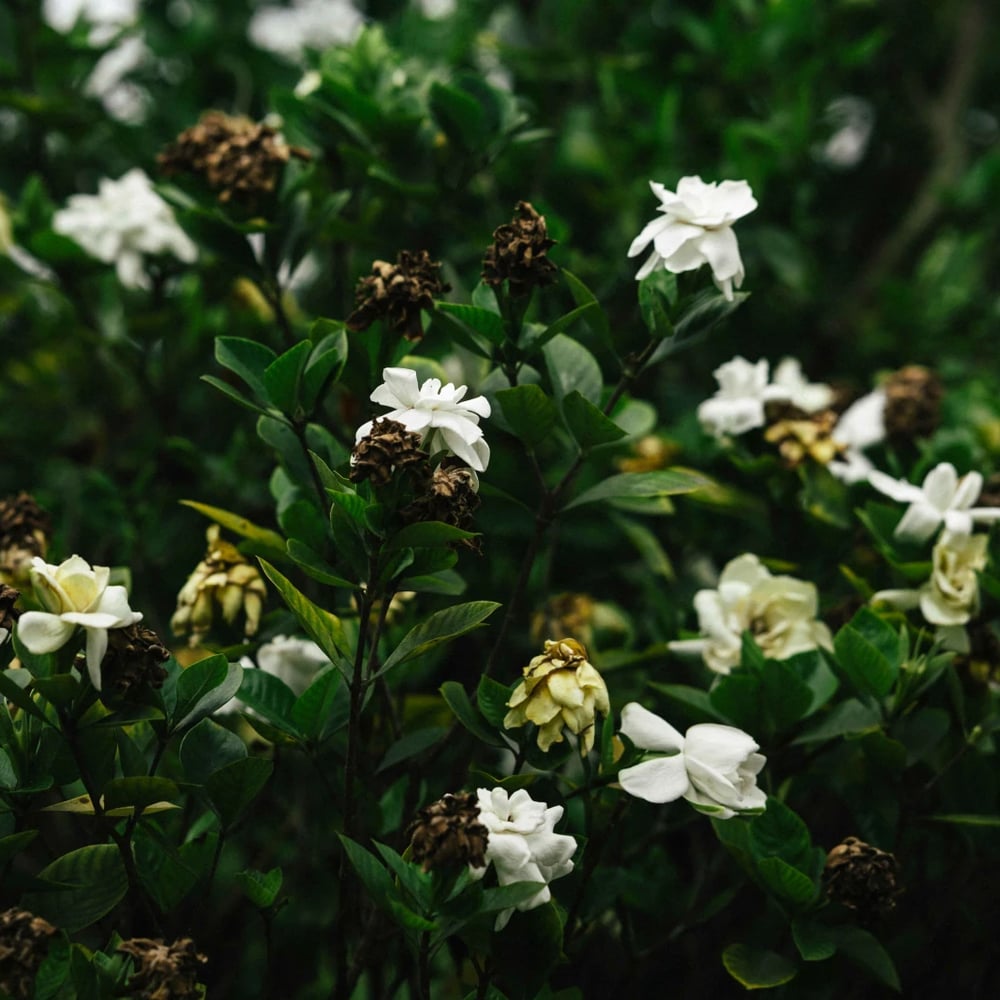
Gardenia growing conditions: what this plant actually needs
Gardenia growing conditions center on mimicking a humid, subtropical climate. The plant originates from East Asia — southern China, Japan, and Taiwan — where warm rain, acidic forest soils, and filtered sunlight shape its natural habitat. Replicate those conditions and you win.
Soil and pH
Test your soil before planting. Gardenias demand a pH of 5.0 to 6.5. A basic $10 soil test kit from any garden center gives you a reading in minutes.
- Mix peat moss into your planting hole to lower pH naturally
- Add sulfur granules at a rate of 1 pound per 100 square feet to drop pH by roughly 1 point
- Top-dress with 2–3 inches of pine bark mulch each spring
- Avoid lime, wood ash, and alkaline amendments near the root zone
Alkaline soil blocks iron absorption. Iron deficiency causes chlorosis — those signature yellow leaves with green veins. You can correct mild chlorosis with chelated iron fertilizer, but the real fix targets the soil itself.
Sunlight
Gardenias need 6 to 8 hours of light daily. In USDA Zones 8 through 11, morning sun with afternoon shade works best. Full afternoon sun in states like Texas and Arizona scorches the leaves.
Indoor gardenias do well near a south-facing or west-facing window. During winter months, a grow light running 12 to 14 hours compensates for shorter days. Place the light about 6 inches above the foliage.
Temperature and humidity
Here's an important detail. Gardenias set flower buds when nighttime temperatures stay between 60°F and 65°F. Daytime temps between 70°F and 75°F keep the plant comfortable. Anything above 85°F stalls bud development, and temps below 55°F damage the plant outright.
Humidity should hover around 50% to 60%. In dry climates — think Denver, Phoenix, or heated winter rooms anywhere in the U.S. — a humidity tray works fast. Set the pot on a tray of pebbles and water. The evaporation lifts moisture right around the leaves.
How to care for gardenia outdoors
Gardenia care outdoors brings different challenges than indoor growing. Wind, rain, temperature swings, and local soil composition all come into play.
Choosing the right spot
Plant your gardenia bush where it receives morning sun. An east-facing garden bed usually delivers that balance. Avoid low-lying areas that collect standing water — gardenias develop root rot in soggy soil within days, not weeks.
Space multiple gardenia bushes 3 to 6 feet apart, depending on the variety. Compact types like 'Radicans' spread about 2 to 3 feet wide. Larger varieties like 'August Beauty' reach 4 to 6 feet in both height and width.
Watering outdoors
Water deeply once a week during the growing season (April through September). Increase to twice a week during heat waves above 90°F. Always water at the base — wet foliage invites sooty mold and fungal leaf spot.
A 2-inch layer of mulch keeps the root zone cool and retains moisture. Pull the mulch 1 inch away from the main stem to prevent bark rot.
Fertilizing schedule
Feed your gardenia every 4 to 6 weeks from March through August. Use an acid-forming fertilizer with a ratio like 15-5-10 or a specialized azalea/gardenia formula. Stop feeding by mid-September — late fertilizing pushes tender new growth that freezes in cold weather.
Honestly, one of the biggest outdoor gardenia mistakes involves fertilizing at the wrong time. A November feeding can kill branches that otherwise would've survived winter.
Gardenia growing zone: where this plant thrives
Gardenia growing zone ranges from USDA Zone 7b through Zone 11. Most varieties flourish in Zones 8 through 10 — the U.S. Southeast, Gulf Coast, and parts of coastal California.
Here's a breakdown by region:
| USDA Zone | Example locations | Gardenia suitability |
|---|---|---|
| 7b | Virginia, North Carolina piedmont | Cold-hardy varieties only ('Kleim's Hardy', 'Chuck Hayes') |
| 8a–8b | Dallas, Atlanta, Charleston | Most varieties thrive with winter mulching |
| 9a–9b | Houston, Jacksonville, coastal California | Year-round outdoor growing |
| 10–11 | South Florida, Southern California, Hawaii | Full outdoor growing, watch for extreme heat |
If you garden north of Zone 7b, grow your gardenia in a container. Bring the pot indoors when nighttime temperatures drop below 55°F — typically by mid-October in the Midwest and Northeast.
Cold-hardy varieties worth trying
The variety 'Kleim's Hardy' tolerates temperatures down to 0°F (Zone 7a) and stays compact at 2 to 3 feet tall. 'Chuck Hayes' handles Zone 7b and rebounds from occasional freezes. 'Frostproof' resists light frost damage and produces buds even after brief cold snaps.
Gardenia care in winter: protecting your plant through cold months
Gardenia care in winter separates experienced growers from beginners. The plant's glossy evergreen leaves look tough, but a single hard freeze below 20°F can kill an unprotected gardenia to the ground.
Outdoor winter protection
- Spread 4 to 6 inches of pine straw mulch around the base before the first frost date
- Wrap the bush loosely in burlap or frost cloth when temperatures drop below 25°F
- Water the root zone deeply 24 hours before a predicted freeze — moist soil holds heat longer
- Avoid pruning from October through February to prevent stimulating vulnerable new growth
For gardeners in Zone 7b, consider planting gardenias against a south-facing brick wall. The wall absorbs daytime heat and radiates warmth through the night, creating a microclimate about 5°F warmer than the open yard.
Indoor winter care
Indoor gardenias struggle most during winter. Forced air heating drops indoor humidity to 20% or lower — far below the plant's 50% minimum.
Place your gardenia in the brightest room. Run a small humidifier within 3 feet of the plant. Keep the thermostat steady; gardenias hate drafts from heating vents. Nighttime room temperatures around 60°F actually help — the plant uses that cool period to set spring buds.
Cut back watering to every 10 to 14 days. Let the top inch of soil dry between waterings. Overwatering during dormancy causes root rot faster than any other season.
Looking for a plant that keeps blooming?
Browse potted plants delivered by local florists and choose one that suits the room and the recipient.
Gardenia plant care: pruning, repotting, and propagation
Gardenia plant care goes beyond just water and sunlight. Pruning shapes the plant, repotting refreshes the root system, and propagation gives you free plants.
When and how to prune
Prune right after the last flowers fade — usually by late July or early August. Gardenias form next year's buds on old wood starting in fall. Pruning after August removes those buds and costs you an entire bloom season.
Use clean, sharp bypass pruners. Cut stems just above a leaf node at a 45-degree angle. Remove:
- Dead or crossing branches that block airflow
- Leggy stems that stretch beyond the plant's natural shape
- Spent flower heads to redirect energy toward root and leaf growth
Skip hedge shears. Gardenias respond poorly to blunt shearing. Selective hand-pruning produces a denser, healthier bush.
Repotting container gardenias
Repot every 2 to 3 years in spring, just before new growth starts. Choose a container 2 inches wider than the current pot. Use an acidic potting mix — a blend of peat moss, perlite, and pine bark fines works well.
Gently loosen any circling roots. Set the plant at the same depth — burying the stem invites crown rot. Water thoroughly after repotting and skip fertilizing for 4 weeks to let the roots settle.
Propagation by stem cuttings
Take 4- to 6-inch cuttings from healthy tip growth in early summer. Strip the lower leaves, dip the cut end in rooting hormone powder, and insert the cutting into a 50/50 mix of perlite and peat moss. Cover the pot with a clear plastic bag to hold humidity near 80%. Roots typically develop in 6 to 8 weeks.
Gardenia bush care: dealing with pests and diseases
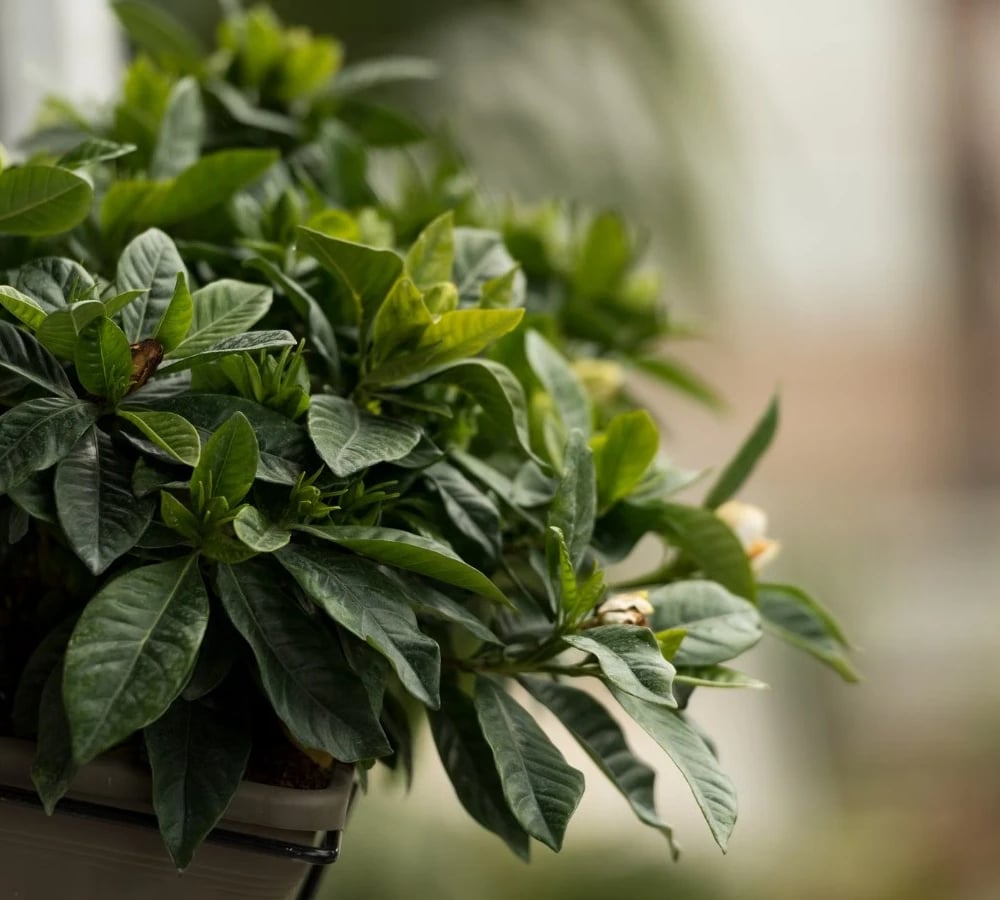
Gardenia bush care includes regular pest scouting. Several insects target gardenias specifically, and catching problems early saves the plant.
Common pests
- Whiteflies cluster on leaf undersides and excrete sticky honeydew; spray neem oil every 7 days for 3 weeks to break the cycle
- Spider mites thrive in dry conditions and leave fine webbing between leaves; boost humidity and spray insecticidal soap
- Mealybugs appear as white cottony masses at leaf joints; dab individual bugs with a cotton swab dipped in 70% rubbing alcohol
- Scale insects form hard brown bumps on stems; scrape off manually and follow up with horticultural oil in early spring
Common diseases
Sooty mold covers leaves with a black film. The mold itself doesn't damage the plant directly — the mold feeds on honeydew from aphids or whiteflies. Eliminate the insects and the mold stops spreading. Wipe leaves with a damp cloth to restore light exposure.
Root rot starts below the soil line. Symptoms include wilting despite moist soil, browning leaf edges, and a mushy stem base. Remove the plant from the pot, trim away dark, soft roots with sterile scissors, and repot in fresh, well-draining mix.
Common gardenia mistakes and how to avoid them
Here's where things get real. Even experienced gardeners trip over these errors.
- ✗Overwatering in winter. The plant grows slowly during cold months and uses far less water. Cut frequency by half compared to summer.
- ✗Wrong soil pH. A gardenia in alkaline soil starves itself no matter how much you fertilize. Test your pH annually. Adjust with sulfur or aluminum sulfate as needed.
- ✗Skipping humidity. Dry air causes bud drop — buds form, swell, then fall off before opening. Frustrating? Absolutely. A pebble tray or humidifier solves the problem in most cases.
- ✗Pruning too late. Prune after August in most of the U.S. and you'll wonder why your plant won't bloom the following spring. Mark your calendar. Prune by early August at the latest.
- ✗Placing near cold drafts. Indoor gardenias near entry doors, single-pane windows, or HVAC vents experience temperature swings of 15°F or more. Move the plant to a stable location away from direct airflow.
Gardenia care for different occasions and gift-giving
Gardenias carry deep symbolism in American culture. The flower represents purity, love, and refinement. Billie Holiday famously wore white gardenias in her hair during performances in the 1930s and 1940s.
A potted gardenia plant makes a meaningful gift for:
- Mother's Day (second Sunday in May) — a living plant that blooms for years beats a cut bouquet
- Housewarming parties — the fragrance freshens any room naturally
- Memorial and sympathy occasions — white gardenias convey respect and remembrance
- Valentine's Day — a single gardenia carries romantic weight without the cliché of red roses
If you receive a gardenia as a gift, remove the decorative foil wrap immediately. Foil traps water and suffocates the roots. Place the plant in bright, indirect light and check the soil moisture daily for the first two weeks.





Gardenia tree care: training a standard form
Gardenia tree care refers to growing a gardenia as a "standard" — a single-trunk form with a rounded canopy on top. Varieties like 'August Beauty' and 'Mystery' work well for this shape because both grow 4 to 6 feet tall.
Train a standard by:
- Selecting the strongest central stem on a young plant
- Removing all side branches below the desired canopy height (typically 18 to 24 inches)
- Staking the main stem with a bamboo pole and soft ties
- Pinching the tips above the canopy line to encourage branching and fullness
- Rotating the pot a quarter turn weekly to promote even growth
A standard-form gardenia needs the same soil, water, and fertilizer as a bush form. The only added task involves regular trimming to maintain that lollipop shape.
Growing a gardenia takes attention. Real attention — not the set-it-and-forget-it kind. But when those creamy white blooms open on a warm June morning and that unmistakable fragrance drifts through your garden, every pH test and humidity check feels worth it. Start with your soil. Get the pH right. Everything else falls into place from there. What variety are you planning to try first?
Send a living gift that lasts
Pick a potted plant or a fresh arrangement, add your message, and let a local florist deliver it to the door.
Your gardenia questions, answered
How often should I water a gardenia?▾
Water outdoor gardenias once a week during the growing season and twice a week in extreme heat. Indoor gardenias need water when the top inch of soil feels dry — roughly every 7 to 10 days in summer and every 10 to 14 days in winter.
Can gardenias survive winter in Zone 7?▾
Cold-hardy varieties like 'Kleim's Hardy' and 'Chuck Hayes' survive Zone 7b winters with heavy mulching and frost protection. North of Zone 7, grow gardenias in containers and bring plants indoors by mid-October.
Why do my gardenia buds fall off before opening?▾
Bud drop typically results from low humidity, inconsistent watering, or temperature swings greater than 10°F between day and night. Stabilize the environment and the plant holds its buds.
What makes gardenia leaves turn yellow?▾
Iron chlorosis from high soil pH causes the most common yellowing pattern — yellow leaves with green veins. Test your soil pH. Apply chelated iron as a short-term fix and amend the soil with sulfur for long-term correction.
Do gardenias grow well in pots?▾
Absolutely. Use an acidic potting mix, choose a pot with drainage holes, and repot every 2 to 3 years. Container gardenias offer a major advantage: you control the soil composition completely.
When do gardenias bloom?▾
Most varieties bloom from May through July. Repeat-bloomers like 'Veitchii' and 'Four Seasons' produce flowers from spring through fall, sometimes pushing out scattered blooms into November in Zone 9 and warmer.